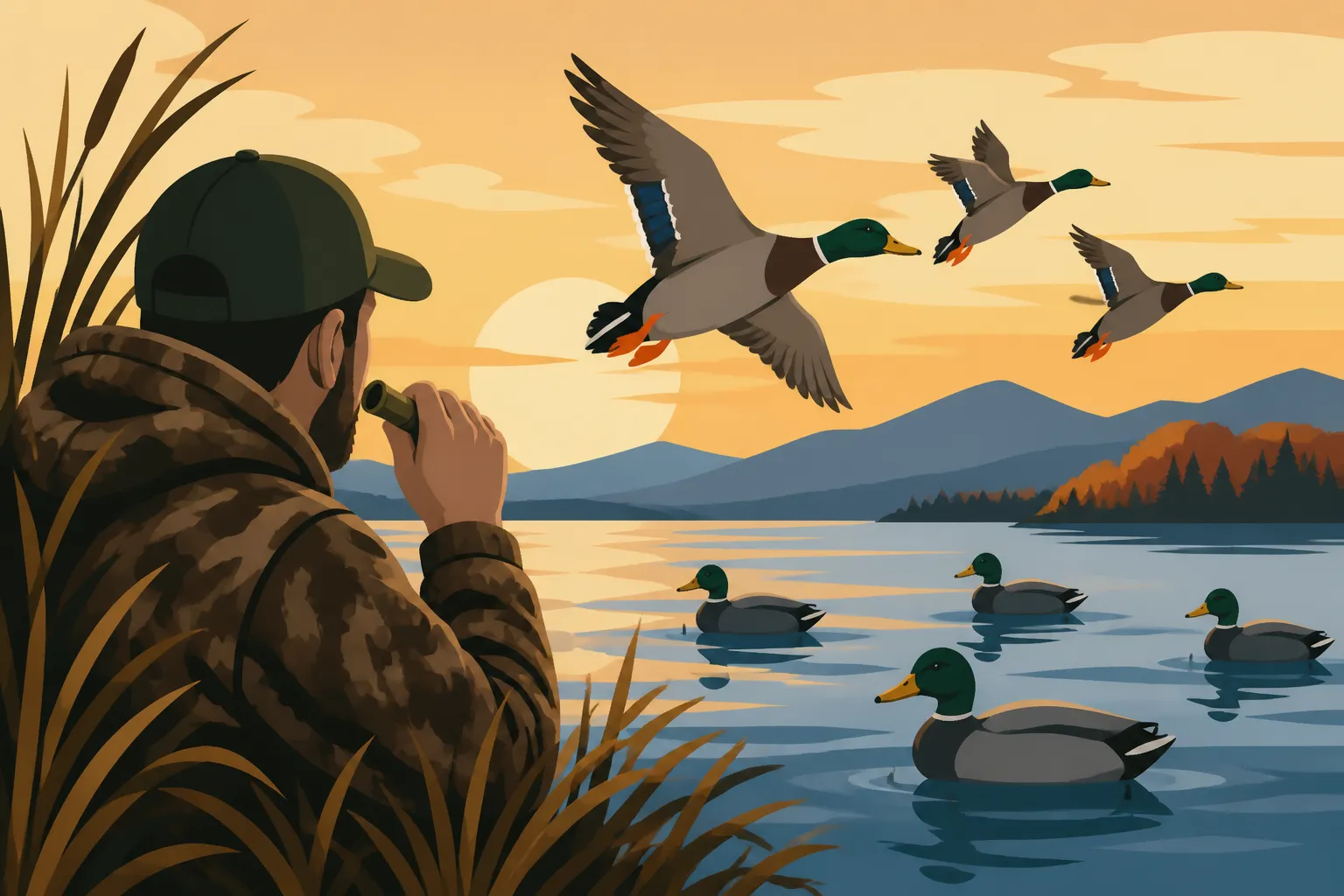
Decoying Mallards on Lake Champlain
There’s something truly special, and uniquely challenging, about pursuing mallards on Lake Champlain. This vast, often unpredictable body of water offers incredible opportunities, but it also presents a formidable learning curve for even seasoned duck hunters. You're not just dealing with a small pond or river; you're contending with shifting winds, strong currents, extensive open water, and mallards that have seen every trick in the book. If you've ever felt frustrated by ducks flaring just out of range, or wondered why your perfectly set spread isn't drawing them in, you're not alone. This guide aims to pull back the curtain on decoying mallards on Lake Champlain, offering proven strategies and insights to help you connect with these wily greenheads.
Understanding Lake Champlain's Mallards and Their Habits
Hunting successfully on Lake Champlain starts with truly understanding the ducks themselves, especially the mallards that call this incredible waterway home, or at least a stopover point. These aren't just any mallards; they're birds adapted to a massive, dynamic environment, and their behavior reflects it.
Mallard Migration and Local Populations on Champlain
Lake Champlain acts like a superhighway on the Atlantic Flyway, channeling thousands of migratory waterfowl through its long, narrow expanse each fall. But it’s not just passing birds we’re after. The lake also supports a robust population of resident mallards that hatch and raise their broods in the countless marshy edges, secluded bays, and river deltas. Early in the season, you’ll primarily be encountering these local birds. They might be a bit less wary initially, having spent their summer largely undisturbed. However, as soon as hunting pressure picks up, they become incredibly educated, often changing their patterns daily.
Then, as September rolls into October and November, the real push begins. Cold fronts sweeping down from Canada bring wave after wave of new, often more naive, migratory mallards. These birds are on a mission, fueled by instinct to find food and safe resting areas. Their patterns are heavily influenced by the weather; a strong north wind or a sudden drop in temperature can completely change where they want to be. Understanding these shifts is critical. For instance, knowing the Vermont Waterfowl Zones and Seasons is essential, as the Lake Champlain Zone has specific dates that dictate when you can even target these early or late-season birds. Being able to distinguish between local birds, which might be more patterned to specific food sources or roosts, and newly arrived migrants, who are often looking for the first safe spot they see, can significantly impact your decoying strategy.
Preferred Habitat and Food Sources
Lake Champlain is a diverse ecosystem, offering mallards a buffet of habitat and food options. They aren't just "waterfowl"; they have preferences. Shallow, protected bays with abundant aquatic vegetation are absolute magnets for them. Think about areas like the Missisquoi Bay or the broader Missisquoi River Delta, where the water is relatively calm and dense stands of pondweed, wild rice, and other submergent plants provide both sustenance and cover. These areas are particularly hot spots in the early season.
As the season progresses and colder weather sets in, mallards often shift their focus. They become increasingly reliant on agricultural fields adjacent to the lake – particularly cut cornfields, soybean fields, and even standing corn that offers refuge. This is where scouting becomes absolutely non-negotiable. Ducks will hit these fields to feed, then often return to the safety of the open lake or protected bays to rest. Their daily commute from feeding grounds to loafing areas often follows specific flyways, which you can identify through diligent observation. Knowing how to read these patterns, perhaps by watching a Reading a Marsh for a Morning Flight, can give you a significant advantage. Don't underestimate the appeal of flooded timber or even smaller beaver flowages and creek bottoms, especially in the later parts of the season when other food sources become scarce.
Crafting Effective Decoy Spreads for Lake Champlain
Decoying mallards on a body of water as expansive as Lake Champlain isn't about simply throwing out a dozen decoys. It's an art and a science, requiring careful consideration of decoy selection, numbers, and spread configurations to mimic a natural, inviting scene.
Decoy Selection and Numbers
When it comes to decoys for Lake Champlain, bigger is often better. Standard-sized decoys can get lost in the vastness of the lake, especially on choppy days. Magnum and super magnum decoys offer much better visibility from the air, drawing the attention of high-flying birds. While you might use a dozen standard decoys on a small farm pond, you'll likely need several dozen, perhaps even 50-100, for effective decoying on Champlain. The sheer scale of the lake demands a larger, more visible presentation.
Consider adding variety to your spread. While mallards are the target, including a few pintail, black duck, or wigeon decoys can add to the realism, making your spread look like a mixed flock enjoying a safe spot. It can also help break up the uniformity and make your setup appear more natural. Motion decoys, such as spinning wing "Mojo" decoys or simple jerk strings, are incredibly effective, especially on calm days when static decoys offer little animation. They create the illusion of active, happy ducks, which is a powerful draw for circling mallards. However, be mindful of overusing them, especially on heavily pressured birds, as they can sometimes flare wary ducks if not used subtly. The key is to make it look alive, but not too perfect or unnatural.
Popular Decoy Spreads and Their Applications
The layout of your decoys is just as important as the decoys themselves. Each spread aims to create an illusion of safety and a clear landing zone for incoming birds.
- The J-Hook or U-Shape: This is a classic for a reason. Imagine a large 'J' or 'U' shape, with the long arm extending downwind. The bend of the 'J' or 'U' forms your landing zone, positioned directly upwind of your blind. Ducks naturally want to land into the wind, so this configuration guides them right into your sweet spot. This spread works exceptionally well on Lake Champlain where wind is almost always a factor.
- The Loose Blob or Scattered Effect: Sometimes, especially in extremely calm conditions or when targeting smaller groups of birds, a more natural, scattered look is better. Instead of a tight formation, deploy decoys in small, loose groups, mimicking how ducks might naturally feed and loaf. This spread requires more attention to wind and current, as your landing zone might be less defined.
- The Family Group: This spread utilizes several small, tight clusters of decoys, each representing a "family" or small feeding group. Place these clusters strategically, with open lanes between them that lead to your shooting zone. This can be very effective for attracting mallards that are looking for companionship and safety within a larger flock.
Always set your decoys so that your prime shooting lane is directly into the wind, forcing birds to commit and land right in front of you. When you're considering a setup, remember that Best Duck Decoy Spread for Lake Champlain can vary significantly based on the exact conditions of the day. Using feeder decoys – those with their heads down as if feeding – mixed with sentry decoys looking alert can add another layer of realism.
Strategic Setup for Lake Champlain Decoying Success
Having the right decoys and a solid spread design is only part of the equation. Your blind setup, calling technique, and overall approach to safety and logistics are equally crucial for a productive day on Lake Champlain.
Choosing the Right Location and Blind Type
Scouting, scouting, scouting! I can’t stress this enough. Before you even think about setting decoys, you need to know where the mallards want to be. This means spending time observing their flight paths, feeding areas, and roosts. Tools like GoHunt can be invaluable for analyzing aerial maps, identifying key habitat features, and even tracking weather patterns that might influence bird movement. Look for pinch points, marsh edges, river mouths, and protected bays where ducks naturally congregate. Remember to consult resources on Scouting Vermont Public Land Before Season to maximize your pre-hunt preparation.
On Lake Champlain, you'll primarily be dealing with two main types of blind scenarios:
- Boat Blinds: For open water or large marsh areas, a well-camouflaged boat blind is often your best bet. These allow you to get into areas inaccessible by foot and provide excellent concealment. Ensure your boat is brushed in thoroughly with natural vegetation from the area – cattails, phragmites, cedar boughs – making it disappear into the background. A poorly hidden boat will flare ducks every time.
- Shoreline Blinds: If you're hunting a shallow point, a small cove, or a brushy island, you might opt for a natural shoreline blind built into existing cover. Again, reinforce it with local vegetation. For field hunting adjacent to the lake, where mallards often go to feed, a Best Layout Blind for a Champlain Valley Field can be incredibly effective, allowing you to disappear into the stubble. Whatever your choice, remember that your blind needs to blend seamlessly. Ducks have incredible eyesight, and they've seen hunters before.
Calling Strategies and Reading the Birds
Calling is another critical component, but it's not about how loud or how often you blow your call; it's about what you say and when you say it. Mallards on Lake Champlain, especially later in the season, are often pressured and can be incredibly wary.
- Basic Calls: Master the hail call (long, loud series to grab attention), the greeting call (shorter, softer series once they're looking), the feed call (chatter and clucks mimicking feeding ducks), and the comeback call (more urgent series when they start to drift away).
- Aggressive vs. Subtle: Early in the season or with naive birds, more aggressive calling might work. But as the season progresses, a softer, more subtle approach, using feed calls and quiet quacks, is often more effective for pressured birds. The goal is to sound like happy, content ducks, not a distressed flock.
- Reading Reactions: This is paramount. Watch how the birds respond to your calls. If they turn and commit, tone it down. If they start to drift, give them a comeback call. If they're cupping their wings and about to land, shut up completely and let the decoys do their work. Overcalling can scare them off just as easily as undercalling can. Don't be afraid to use multiple callers in your group to create a more realistic soundscape, but ensure you're all in sync.
Safety and Logistics on a Large Water Body
Hunting Lake Champlain, particularly as the weather turns colder, demands a heightened awareness of safety and meticulous planning. This isn't a place to cut corners.
- Boating Safety First: Always wear your life jacket, ensure your boat is in top working condition, and carry all required safety gear. Lake Champlain can go from flat calm to dangerously rough in a matter of minutes, especially with strong winds whipping up. Check the marine forecast religiously, and if in doubt, stay on shore. No duck is worth risking your life.
- Anchoring Decoys: Heavy anchors are non-negotiable. The current and wave action on Champlain can easily drag away lighter decoys. Use sturdy line and sufficient weight to ensure your spread stays exactly where you put it. Losing a valuable spread of magnum decoys in a choppy lake is a frustrating experience you want to avoid.
- Retrieving Downed Birds: Think about how you'll retrieve birds, especially if you don't have a dog. A long retriever pole, or a plan to safely motor to a downed bird, is essential. Strong currents can carry a bird surprisingly far and fast.
- Gear and Comfort: Dress in layers, as described in Layering for Vermont's Long Hunting Season. Even if it starts warm, the wind off the lake can be piercingly cold. Waterproof gear is a must. A reliable GPS or mapping app (like GoHunt) is also crucial for navigating in fog, snow, or low light, especially if you're exploring less familiar areas. And don't forget your Best Waders for Lake Champlain Duck Hunting – quality waders will keep you dry and comfortable.
Overcoming Challenges and Adapting to Lake Champlain's Conditions
Hunting Lake Champlain is rarely easy. It demands flexibility and resilience. The birds are smart, and the conditions are constantly changing. Learning to adapt is what separates consistent success from occasional luck.
Dealing with Hunting Pressure and Wary Birds
Mallards on Lake Champlain learn quickly. Early season success can quickly turn into mid-season frustration as the birds become "educated" by constant hunting pressure. They'll flare at the slightest imperfection in your spread or blind, circle high, and often bypass traditional spots.
To combat this, you need to think outside the box:
- Hunt Less Accessible Areas: While everyone else piles into the easy-to-reach spots, consider the areas that require a bit more effort. That might mean a longer boat ride, a tougher retrieve, or walking an extra distance. These out-of-the-way spots often hold less pressured birds.
- Downsize Your Spread (Sometimes): While I mentioned bigger spreads for visibility, there are times when a smaller, more natural-looking spread of high-quality, realistic decoys can be more effective for wary birds. A handful of super magnum feeder decoys can sometimes be more enticing than a hundred less realistic ones.
- Change Your Routine: If you hunt the same spot every weekend, the ducks will pattern you. Vary your locations, your blind setup, and even your calling cadence. Be unpredictable. Consider hunting during the week if your schedule allows, as weekday pressure is typically much lower.
- Focus on the Edges: Instead of setting up in the middle of a prime feeding flat, try hunting the edges where birds transition. This often gives you a better chance at catching them off guard.
Adjusting for Weather, Wind, and Water Levels
Lake Champlain’s weather is notoriously fickle, and successful hunters are those who can read the conditions and adjust on the fly.
- Wind is Your Friend (and Foe): Wind creates movement in your decoys, making them look more alive. Ducks also use the wind to land. A strong wind allows you to create a tight, defined landing zone, pushing birds directly into your setup. However, too much wind makes boat handling difficult and can make setting and retrieving decoys a nightmare. On calm days, you'll need to rely heavily on motion decoys and subtle calling to create any semblance of life in your spread.
- Water Levels: Lake Champlain's water levels can fluctuate, especially after heavy rains or prolonged dry spells. This can expose new feeding areas or flood previously dry ones. Always check the current water levels and adjust your target areas accordingly. A spot that was prime one week might be too shallow or too deep the next.
- Rain and Snow: Don't let a little inclement weather deter you. Overcast, rainy, or snowy days often mean lower-flying birds that are less wary. The reduced visibility can work in your favor, bringing birds into range that might otherwise flare in bright sunshine. These are often the best days for consistent action. Just ensure your gear can handle it, from your Best Rain Gear for a Wet Green Mountain Hunt to keeping your shotgun dry.
Table: Common Lake Champlain Mallard Decoy Spreads
| Spread Name | Description | Best Conditions | Pros | Cons |
|---|---|---|---|---|
| J-Hook/U-Shape | Decoys form a J or U, with the open end facing into the wind, creating a clear landing zone upwind of the blind. | Moderate to strong winds, larger open water areas, typical hunting pressure. | Clearly defines landing zone, forces birds to finish, works well with wind. | Requires ample space, can look unnatural if too uniform. |
| Loose Blob | Decoys are scattered naturally in small, irregular clusters, mimicking a relaxed feeding/loafing flock. | Calm to light winds, less pressured birds, smaller bays or marsh pockets. | Highly realistic, works well for wary birds, adaptable to irregular shorelines. | Landing zone less defined, relies heavily on motion decoys in calm, less visible from afar. |
| Family Group | Multiple small, tight clusters of decoys, each representing a "family" unit, with open lanes between them leading to the blind. | Moderate winds, when ducks are looking for companionship, mid-season pressure. | Invites birds looking for a flock, creates multiple approach options. | Can be complex to set up, open lanes must be carefully aligned with wind. |
| V-Formation | Decoys form a "V" shape with the point facing upwind, usually with the blind at the bottom of the V. | Moderate winds, when birds are flying high, good for guiding birds along a flyway. | Excellent visibility, guides birds efficiently, good for pass-shooting opportunities. | Can be less effective for bringing birds to land directly in the spread. |
Remember, successful decoying on Lake Champlain isn't a static formula; it's a dynamic approach. Be willing to experiment, observe, and learn from every outing. Embrace the challenge, and you'll find that the rewards of decoying these magnificent mallards in the shadow of the Green Mountains are truly unforgettable.
Disclaimer
Hunting is an inherently dangerous activity. This guide provides information for educational purposes only. Always consult and adhere to all local, state, and federal hunting regulations. Ensure you have the proper licenses and permits, and prioritize safety above all else. The author and publisher are not responsible for any accidents, injuries, or legal consequences resulting from the use of this information. Practice ethical hunting and respect wildlife and the environment.