Best Bullet Weight for a Vermont Moose
Hunting a Vermont moose is a once-in-a-lifetime opportunity for most of us, and when you finally draw that coveted tag, the last thing you want to do is leave anything to chance. The sheer size and resilience of these magnificent animals mean that bullet choice, specifically bullet weight, is absolutely critical for an ethical and effective harvest. This guide will walk you through the nuances of selecting the best bullet weight for a Vermont moose, ensuring you're prepared for your hunt of a lifetime.
Understanding the Challenge: Why Moose Hunting is Different in Vermont
Hunting moose in Vermont isn't like chasing whitetails in an open field, or even pursuing bears in the thick cover. A Vermont moose is an entirely different caliber of animal, quite literally, and demands respect in both your approach and your gear choices. Many hunters underestimate their sheer mass and bone structure, leading to less-than-ideal outcomes.
The Anatomy and Resilience of a Vermont Moose
Let's talk about the animal itself. An adult bull moose in Vermont can easily weigh upwards of 800 to 1,000 pounds, with some reports pushing over 1,200 pounds. That's a lot of animal to anchor. Their bone structure, particularly the shoulder and skull, is incredibly dense and thick. A bullet that might zip right through a deer's shoulder could easily glance off a moose's. This isn't just about stopping power; it's about penetration. You need a bullet that can punch through heavy hide, thick muscle, and dense bone to reach vital organs. We're talking about a massive heart and lung cavity, but it's protected by a formidable frame.
Moreover, moose are incredibly tough. They can absorb a tremendous amount of lead and still cover significant ground, often in unforgiving terrain. Picture tracking a wounded moose through a swampy beaver flowage or up a steep, rocky ridge in the Northeast Kingdom. It's an exhausting, potentially dangerous, and often disheartening endeavor. Ethical hunting means doing everything in your power to ensure a quick, clean kill. This starts with understanding the target and equipping yourself appropriately.
Typical Shot Scenarios in Vermont Moose Habitat
When you consider Moose Hunting Vermont's Northeast Kingdom, you're often looking at thick timber, dense spruce bogs, and rolling hardwood ridges. Shots are rarely long-range, wide-open affairs like you might find out west. Instead, expect closer encounters, often under 150 yards, and frequently much closer, sometimes within spitting distance in the dense cover. This means bullet expansion at relatively high velocity is a factor, but penetration through brush or slight deflections off small saplings become a real concern as well.
Imagine you've been calling for hours, maybe even days, with no response. Suddenly, a massive bull steps out of a thick stand of alders at 70 yards, broadside. Your heart is pounding. This isn't the time to question your bullet's ability to perform. Or perhaps you're still-hunting along an old logging road and spot a moose feeding in a clear-cut at 120 yards, but there's a small spruce branch between you and a clean shoulder shot. You need a bullet that carries enough energy and structural integrity to get the job done without fragmenting prematurely or failing to penetrate. These aren't hypothetical scenarios; they are the reality of moose hunting in our Green Mountains.
Factors Influencing Bullet Weight Choice for Moose
Choosing the "best" bullet weight isn't a one-size-fits-all answer; it's a careful balance of several critical factors that need to be considered in the context of Vermont's specific hunting conditions.
Caliber and Energy Transfer
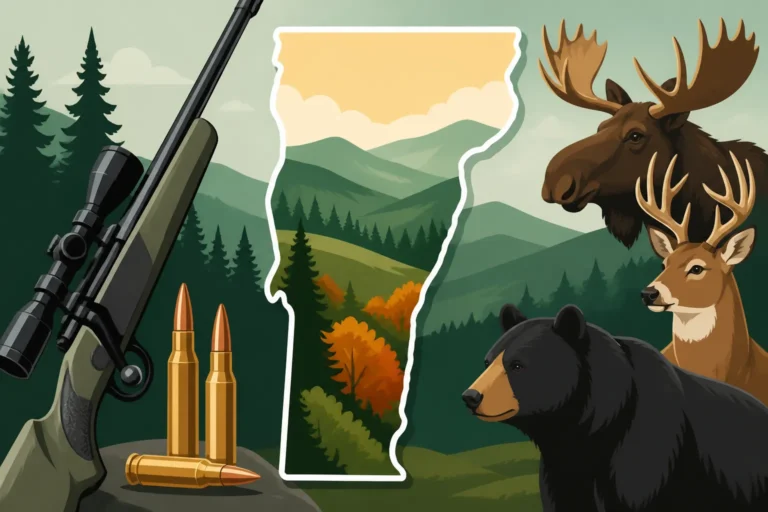
First and foremost, your rifle's caliber dictates the realistic range of bullet weights you can use effectively. While a .270 Win can certainly take a moose, the general consensus for Best Rifle Caliber for Vermont Moose leans towards larger calibers, typically starting at .30-06 Springfield, .300 Win Mag, .338 Win Mag, and even .375 H&H Magnum. Each caliber has an optimal bullet weight range where it performs most efficiently, balancing velocity, energy, and trajectory.
A heavier bullet, all else being equal, generally carries more kinetic energy and momentum. This is crucial for deep penetration. When a bullet strikes a moose, it transfers that energy to the animal, creating hydrostatic shock and tissue damage. A heavier bullet, especially one designed for controlled expansion, maintains more of its weight and energy as it penetrates, creating a larger wound channel deep into the vitals. This isn't about simply punching a hole; it's about maximizing damage to quickly incapacitate such a large animal.
Consider a scenario where you're using a .30-06. A 150-grain bullet might be screaming fast, but it might not have the sectional density or retained energy for optimal penetration on a quartering-away moose, especially if it hits a hip bone. Step up to a 180-grain or even 200-grain bullet in that same .30-06, and you're dramatically increasing your chances of reaching the far lung or exiting the animal, which is always a good sign of complete penetration.
Bullet Construction and Performance
Bullet weight isn't the only component; bullet construction is equally, if not more, important. A lightweight, frangible varmint bullet will disintegrate on a moose's shoulder, regardless of its velocity. For moose, you need a bullet designed for controlled expansion and deep penetration. This usually means a bonded core bullet, a monolithic solid, or a partition-style bullet.
- Bonded Core Bullets: These bullets have their lead core chemically bonded to the copper jacket, preventing separation upon impact. This ensures the bullet retains a high percentage of its original weight, leading to deep penetration while still expanding reliably for significant tissue damage. Examples include Federal Terminal Ascent or Fusion, Nosler AccuBond, and Swift A-Frame.
- Monolithic Solids: These are machined from a single piece of copper or gilding metal. They offer incredible weight retention and penetration, often punching completely through large animals. Expansion is usually achieved through petals that peel back upon impact. Barnes TSX or TTSX are prime examples.
- Partition Style Bullets: These bullets, like the iconic Nosler Partition, feature a partition in the middle of the lead core. The front portion expands rapidly, while the rear portion remains intact, ensuring deep penetration.
A heavier bullet of proper construction will penetrate far more reliably than a lighter one, even if the lighter one is moving faster. Speed kills, but penetration creates the wound channel necessary to anchor a moose quickly and ethically. Many hunters use brands like GoHunt to research bullet performance data and compare options for specific calibers and game. They understand that a quality bullet from companies like Nosler, Barnes, or Hornady is an investment in success.
Range and Trajectory Considerations
While most Vermont moose shots are relatively close, understanding your bullet's trajectory at different weights is still important. Heavier bullets typically have a more arcing trajectory at longer ranges compared to lighter, faster bullets. However, within the typical ranges of 50-200 yards found in Vermont's dense woods, this difference is often negligible.
Consider a shooting lane in a clear-cut or along a utility line. You might have a 150-yard shot. If you've sighted in your rifle with a heavy bullet (say, 200 grains in a .300 Win Mag) to be dead on at 100 yards, it might drop a few inches at 200. With a lighter bullet (165 grains), that drop might be slightly less. But for a moose, the trade-off in penetration and energy for a flatter trajectory at ranges beyond what you'll typically encounter in Vermont is rarely worth it.
It's far more critical to practice with your chosen load at various realistic distances – 50, 100, 150, and 200 yards – and understand its point of impact. Knowing exactly where your bullet will strike at those common ranges, rather than relying on a hyper-flat trajectory at 300 yards you'll likely never shoot, is the key to confidence and ethical shot placement. Remember, the goal is to hit the vitals reliably, not to win a long-range shooting competition.
Recommended Bullet Weight Ranges and Calibers
So, what are we actually talking about when it comes to specific bullet weights for those bigger calibers? Let's break it down by common rifle choices for moose in Vermont.
Common Calibers and Their Optimal Moose Bullet Weights
Here’s a look at some popular calibers and the bullet weights that seasoned Vermont moose hunters often gravitate towards. This isn't an exhaustive list, but it covers the most effective choices for our North American moose.
| Caliber | Minimum Recommended Weight (Grains) | Optimal Weight Range (Grains) | Key Considerations |
|---|---|---|---|
| .30-06 Springfield | 180 | 180-200 | Versatile, excellent penetration with heavy bullets. |
| .300 Win Mag | 180 | 180-200+ | Higher velocity, excellent for reaching vitals. |
| .338 Win Mag | 200 | 200-250 | Heavy hitter, exceptional energy and penetration. |
| .375 H&H Magnum | 250 | 250-300 | Classic dangerous game caliber, overkill for most but effective. |
| .35 Whelen | 225 | 225-250 | Excellent medium-bore, good energy for moose. |
For the .30-06 Springfield, a 180-grain bullet is generally considered the minimum for moose, with 200-grain options being even better. These heavier bullets, especially with bonded or partition construction, ensure you get the penetration needed. You don't want a bullet that simply expands on the surface; you need it to drive deep into the lungs and heart.
With the .300 Win Mag, you have more velocity to play with. This means a 180-grain bullet will still perform admirably, often achieving deeper penetration than a similar 180-grain bullet from a .30-06. However, moving up to 200 grains or even 210-220 grains (if your rifle stabilizes them well) can provide an extra margin of performance that can make all the difference, especially on a tough quartering shot. Many outfitters and experienced moose hunters swear by the 200-grain bullet in a .300 Win Mag.
The .338 Win Mag is where you start getting into serious moose medicine. A 200-grain bullet here is moving at velocities that provide immense energy transfer and penetration. Stepping up to 225-250 grains turns this into an absolute hammer, making it ideal for the largest bulls and toughest shot angles. The recoil is significant, but the results on target are undeniable. Hunters who consistently pursue large game across North America often recommend the .338 Win Mag with a 225-grain bullet, and it's certainly a wise choice for a Vermont moose.
Even if you’re using an application like GoHunt to analyze ballistic data, remember that field performance can vary. Trust reputable bullet manufacturers and focus on consistent accuracy with your chosen load.
Why Heavier is Often Better for Moose
When it comes to moose, the mantra "heavier is often better" holds true. This isn't about simply adding weight for the sake of it, but understanding the physics of impact on a massive animal.
- Increased Momentum and Penetration: A heavier bullet carries more momentum. This momentum is what allows it to drive through thick hide, muscle, and bone, ensuring it reaches the vital organs deep within the animal. Lighter bullets, even if they start faster, tend to shed their energy and slow down more quickly, or even fragment prematurely, reducing their ability to penetrate. Imagine trying to push a small pebble versus a large stone through a thick slab of wood – the larger, heavier object will always penetrate deeper.
- Controlled Expansion: While speed can cause lighter bullets to expand too rapidly or even disintegrate, heavier bullets of proper construction are designed to expand in a controlled manner. This creates a larger wound channel, maximizing tissue damage, but also ensures the bullet stays together, retaining its weight and momentum to continue driving deep. You want a mushroom, not a splatter.
- Reduced Wind Drift (Minor Factor): While not as significant in the typically dense Vermont woods, heavier bullets are less susceptible to wind drift, which can be a minor advantage if you're set up on a clear-cut or powerline right-of-way. However, for most Still-Hunting Green Mountain National Forest Timber scenarios, wind drift is far less of a concern than brush deflection.
Choosing a heavy, well-constructed bullet means you're giving yourself the best possible chance for an ethical, one-shot kill, minimizing the risk of a long, difficult tracking job through unforgiving terrain. That extra peace of mind is invaluable when you've waited years for a Vermont Moose Lottery Application Process success.
Making Your Final Decision and Ethical Considerations
The bullet you choose is arguably the most critical component of your moose hunting gear, second only to your marksmanship. It's an ethical obligation to select a load that is capable of performing humanely.
Practice, Practice, Practice
It cannot be stressed enough: practice with your chosen bullet weight and load. It doesn't matter how "perfect" the bullet is on paper if you can't place it accurately. Get to the range, shoot from various positions you might encounter in the field (standing, kneeling, off a pack), and practice at different distances. Pay attention to how your rifle handles the recoil of heavier loads, and ensure you can consistently hit a dinner-plate sized target at 100-200 yards. This is where you build confidence.
Many hunters use modern optics like a high-quality scope and even rangefinders to dial in their accuracy. But even with the best equipment, nothing replaces trigger time. Consider investing in a spotting scope for the range, it can really help dial in accuracy and fine-tune your shots before the real moment arrives. If you're going to spend time researching on GoHunt, spend even more time at the range.
Ethical Shot Placement and Bullet Trajectory
Even the best bullet weight and construction can't compensate for poor shot placement. For moose, the ideal shot is a broadside lung shot, aiming slightly behind the shoulder, about one-third of the way up the body. This targets the heart and lungs, the largest and most vulnerable vital organs. A quartering-away shot is also viable with a properly constructed heavy bullet, aiming for an exit through the opposite shoulder.
However, shot angles and opportunities in dense Vermont cover are rarely perfect. A moose might present a slight quarter-to, or even be facing directly away if you call it in close. This is where the deep penetration of a heavier, well-constructed bullet becomes absolutely vital. If you hit a shoulder blade, you need that bullet to punch through and still have enough energy to reach the vitals.
Never take a shot you're not confident in. If the angle isn't right, or there's too much brush, wait for a better opportunity. A lost moose is a tragedy, and it's usually preventable with patience and proper preparation. When the moment of truth arrives, you want to be thinking about your breathing and sight picture, not whether your bullet can do its job. Having a reliable mapping app can help if you need to Blood Trailing After Dark in Vermont.
Post-Shot Procedures and Packing Out a Vermont Moose
Even with a perfectly placed shot and an ideal bullet, a moose can still travel a short distance. After the shot, take a moment to compose yourself and listen. Listen for the crash, the sounds of it going down. If you don't hear anything, give the animal at least 30 minutes (or longer if the shot wasn't perfect) before you begin tracking. This allows the animal to expire and avoids pushing it further.
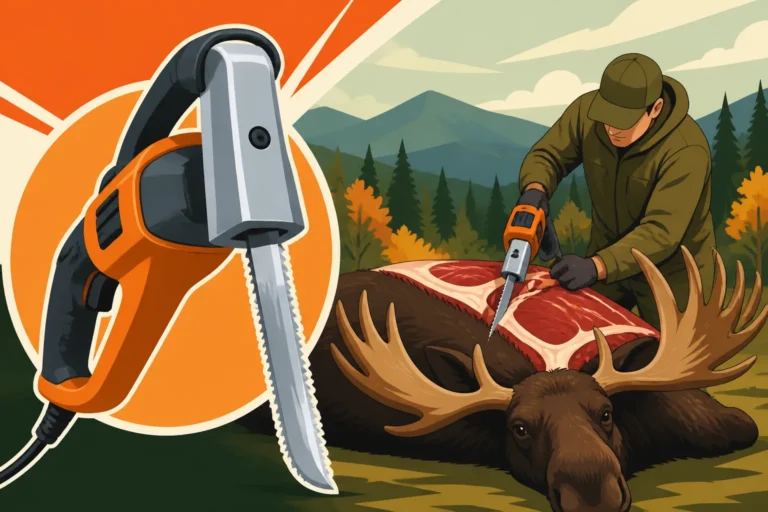
When you do find your moose, the real work begins. Field Dressing a Moose in the Northeast Kingdom is a monumental task, and having a good Best Bone Saw for Moose Quartering and a robust Best Pack for a Northeast Kingdom Moose Hunt are essential. The right bullet weight ensures that when you finally locate that animal, it's down for good, making the process of recovery respectful and manageable. The fewer times you have to track a wounded moose, the better.
Remember, a moose hunt is more than just pulling a trigger. It's an entire experience that demands respect for the animal, the land, and your own capabilities. Choosing the best bullet weight for a Vermont moose is a testament to that respect and your commitment to an ethical harvest.
Disclaimer
This article is for general informational purposes only and does not constitute professional advice. Laws, prices and regulations vary by location and change over time. Consult a qualified professional for guidance on your specific situation.