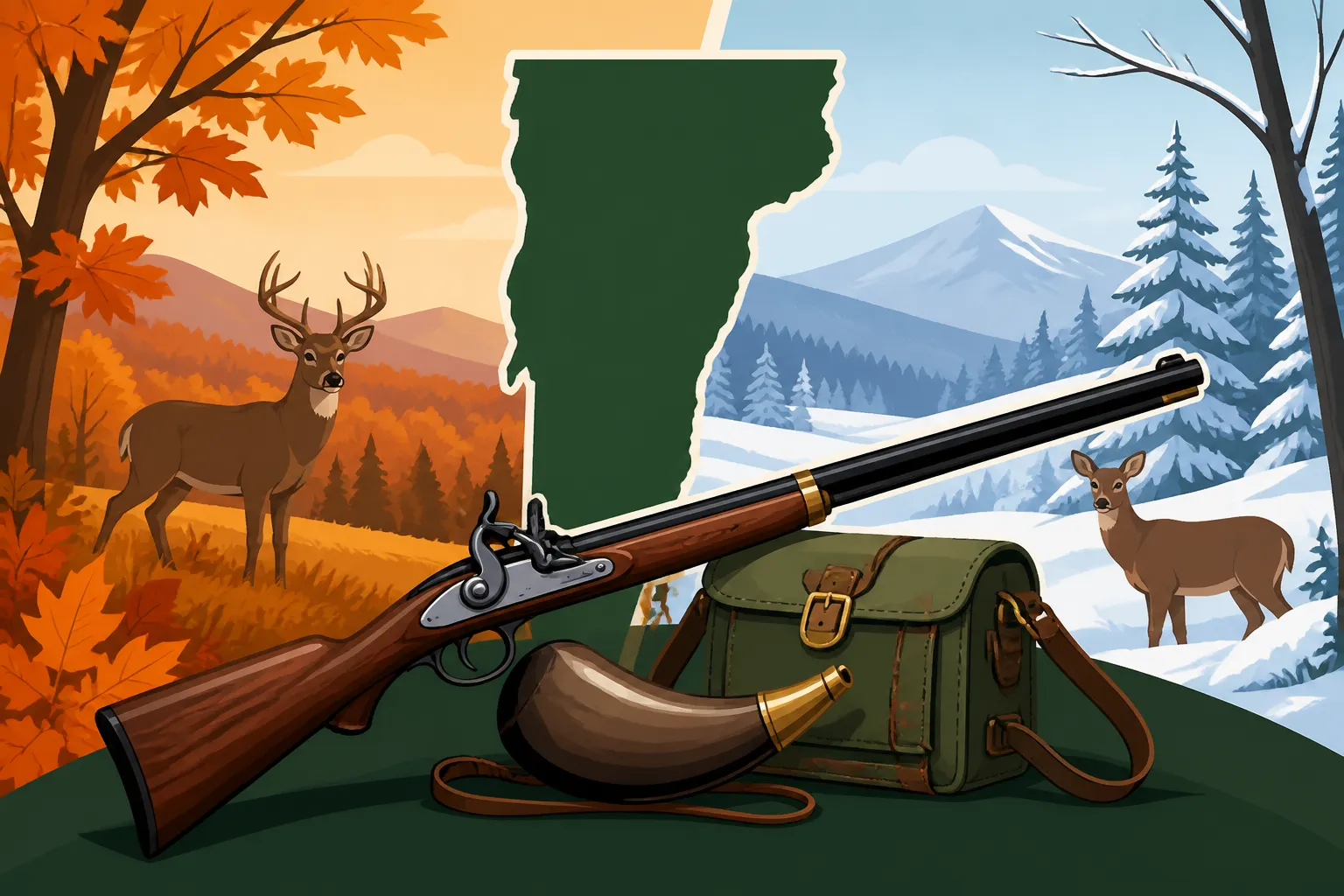
Muzzleloader Gear for Vermont’s Two Seasons
Venturing out for Vermont's muzzleloader seasons can be incredibly rewarding, but if you've ever found yourself shivering in December with a finicky rifle or wondering which projectile is legal for that October antlerless tag, you know the frustration is real. This comprehensive guide is designed to cut through the confusion, helping you perfectly equip yourself for both the early antlerless window and the late-season deer hunt, ensuring you're prepared, compliant, and confident when that opportunity arises.
Understanding Vermont's Muzzleloader Seasons
Vermont offers a unique dual opportunity for muzzleloader hunters, providing distinct seasons that demand different considerations for your gear and approach. It’s not a one-size-fits-all situation, and understanding these nuances is the first step to success. Many hunters find themselves caught off guard by the drastic shift in conditions between the two windows, leading to gear choices that are less than ideal.
The October Antlerless Window
The October muzzleloader season in Vermont is primarily focused on antlerless deer, often serving as a crucial management tool to help control deer populations in specific Wildlife Management Units (WMUs). This season usually falls during a time when foliage might still be holding on in some areas, but the crisp bite of autumn air is undeniably present. Weather can be highly variable, ranging from mild, Indian summer-like days to cold, damp, and even snowy conditions, especially in the higher elevations.
The challenges here are often related to visibility through lingering brush and the need for quick, accurate shots on moving deer in timber. Since it's typically an antlerless-only hunt, the pressure to identify your target correctly is paramount. Hunters often find themselves in situations where a deer might only offer a fleeting glimpse through thick cover, making the right projectile choice for clean kills at closer ranges incredibly important. This is also a fantastic time to scout for the later rifle and muzzleloader seasons, as deer patterns are still relatively predictable around food sources. You'll want gear that allows for quiet movement and quick, reliable firing in varying humidity levels.
The December Late Season
Fast forward to December, and Vermont transforms into a winter wonderland, often blanketed in snow and experiencing significantly colder temperatures. This late muzzleloader season, often running after the general rifle season has closed, presents an entirely different set of challenges and opportunities. Deer are often concentrated in wintering yards, trying to conserve energy, and tracking in fresh snow can be a highly effective tactic. Hunting Vermont's December Muzzleloader Season can be incredibly rewarding for those who brave the cold.
The gear considerations for December shift dramatically. Cold weather performance for your muzzleloader, especially concerning primers and powder, becomes critical. You'll need clothing that provides extreme insulation and moisture protection, and optics that perform flawlessly in low light and biting cold. Reliability under freezing conditions is not just a convenience; it's a necessity. The ground is often frozen, making still-hunting noisy unless there's fresh snow, which itself requires different footwear. The short daylight hours mean that any shot opportunity might come at dusk or dawn, demanding excellent low-light capability from your sights or scope. This season often allows for "any deer" hunting in many WMUs, offering a chance at a buck if you didn't connect earlier in the year.
Choosing Your Muzzleloader: In-line vs. Traditional
The world of muzzleloaders offers a fantastic blend of old-world charm and modern precision. When it comes to hunting in Vermont, you essentially have two main categories to consider, each with its own set of advantages and challenges. The choice often boils down to personal preference, the type of hunting experience you're seeking, and what you prioritize in terms of reliability and accuracy in the field.
Modern In-line Muzzleloaders
Modern in-line muzzleloaders are, for many Vermont hunters, the go-to choice due to their enhanced accuracy, reliability, and ease of use. These firearms are designed with a straight-line ignition system, meaning the primer directly ignites the powder charge without a circuitous path, leading to faster lock times and more consistent ignition. This is a huge benefit when temperatures drop or humidity is high. Brands like CVA, Traditions, and Thompson/Center are popular among hunters for their robust designs and excellent performance. Many in-lines can handle magnum powder charges, extending their effective range significantly compared to traditional models. Best In-Line Muzzleloader for Vermont Hunters is a common question, and you'll find a lot of passionate opinions.
The advantages are clear: they often shoot with remarkable precision, rivaling modern centerfire rifles at closer distances. They're typically easier to load, clean, and maintain, which is a major plus after a long, cold day in the woods. Their enclosed breeches offer better weather protection for the primer, reducing misfires in wet or snowy conditions, a common scenario in Vermont's late season. The ability to mount scopes easily also makes them a strong contender for hunters who need to extend their ethical shooting range or struggle with traditional open sights. However, some traditionalists feel they take away from the "primitive" experience of muzzleloading, but for sheer hunting effectiveness, they're hard to beat. When selecting one, consider barrel length for maneuverability in thick woods, weight for carrying over varied terrain, and the type of ignition system (209 primer is most common and reliable).
Traditional Percussion and Flintlock Options
For those who cherish history, simplicity, and a more challenging hunting experience, traditional muzzleloaders – primarily percussion caps and flintlocks – hold a special allure. While less common in Vermont's modern hunting landscape due to the prevalence of in-lines, they are still legal and provide a deep connection to hunting heritage. Percussion rifles use a cap placed on a nipple to ignite the powder, while flintlocks use a flint striking a frizzen to create sparks that ignite the pan, which then ignites the main charge.
Hunting with a traditional muzzleloader is a commitment to a different pace and skill set. Flintlocks, especially, are notoriously sensitive to moisture, making them a true challenge in Vermont's often damp conditions. Percussion caps offer a bit more reliability than flint, but still require meticulous attention to detail to ensure ignition. The accuracy can be excellent, but often demands more practice and a deeper understanding of the firearm's nuances. Sighting is typically limited to open iron sights, which can be a significant hurdle in low light or at longer distances. However, the satisfaction of harvesting game with a traditional muzzleloader is often described as unparalleled. If you go this route, be prepared for increased maintenance, careful powder handling, and an unwavering commitment to keeping your powder dry, especially if you're out in a December snowstorm. This style of hunting truly tests your woodsmanship and patience, making every successful hunt an even greater achievement.
Ammunition & Projectiles: Making Every Shot Count
Once you've settled on your muzzleloader, the next critical decision is what you'll be loading into it. The projectile and propellant you choose are fundamental to accuracy, stopping power, and ethical hunting. With Vermont's varied terrain and two distinct muzzleloader seasons, selecting the right ammunition can make all the difference in connecting with your deer. It's not just about what's legal, but what performs best in your rifle and for the specific conditions you'll encounter.
Saboted Projectiles for Accuracy and Power
For many modern in-line muzzleloader hunters in Vermont, saboted projectiles are the gold standard. A sabot is a plastic sleeve that allows a smaller diameter bullet (like a .45 or .40 caliber rifle bullet) to be fired through a larger diameter muzzleloader barrel (typically .50 caliber). This design allows the bullet to engage the rifling, leading to exceptional accuracy comparable to centerfire rifles. Once the bullet leaves the barrel, the sabot falls away, and the bullet continues to its target. This system harnesses the aerodynamic efficiency of modern bullets with the power of a muzzleloader. Sabot Choices for an Antlerless-Only Hunt might differ slightly from what you'd use for a big buck.
The benefits of sabots are numerous. They offer superior ballistic coefficients, meaning they fly flatter and retain more energy downrange. This is a significant advantage in areas where you might get a longer shot, or when hunting in more open terrain. They are also easier to load, as the plastic sabot compresses to fit the bore, reducing the need for excessive force. For the October antlerless season, where precise shot placement is key for a clean harvest, saboted bullets deliver consistent accuracy. When choosing a sabot, consider bullet weight and construction. Heavier bullets typically retain more energy, while bonded or copper bullets offer excellent expansion and penetration, ensuring a humane kill. Always test various sabot-and-bullet combinations in your specific muzzleloader to find what shoots most accurately.
Conical Bullets and Patched Round Balls
While sabots dominate the modern muzzleloader market, traditionalists and some in-line users still opt for conical bullets or patched round balls. These projectiles offer a simpler, often more historical, approach to muzzleloading. Conical bullets are solid lead projectiles that are the same diameter as the bore and engage the rifling directly. They come in various weights and designs, from hollow-points to flat-nose.
Patched round balls are exactly what they sound like: a round lead ball wrapped in a lubricated cloth patch. The patch seals the bore, engages the rifling, and falls away upon exiting the barrel. Round balls are generally limited to lower velocities and shorter ranges, but can be incredibly accurate in the right rifle, particularly for flintlocks or percussion rifles with a slower twist rate. They are a classic choice for hunting deer at closer ranges, especially in thick woods, where shots are typically under 75-100 yards. They offer excellent energy transfer at impact, but their ballistic performance drops off quickly past those distances. For the December season, if you're tracking a deer in snow and expecting a close-range shot, a heavy conical can deliver substantial impact. However, both conicals and patched round balls require careful loading to ensure proper seating and engagement with the rifling, and their accuracy can be more sensitive to powder charge variations and bore condition.
Propellants: Black Powder vs. Substitutes
The fuel that drives your projectile is just as important as the projectile itself. For muzzleloaders, you'll be choosing between traditional black powder and its modern substitutes. Understanding the characteristics of each is vital for performance and safety.
Traditional Black Powder: This is the original propellant for muzzleloaders and consists of potassium nitrate, charcoal, and sulfur. It burns differently than modern smokeless powder, creating a large cloud of white smoke and requiring different loading and cleaning procedures. Black powder is corrosive, meaning it must be cleaned from your firearm very soon after shooting to prevent rust and damage. It's available in different granulations (Fg, FFg, FFFg, FFFFg), with FFFg typically used for rifles and Fg/FFg for larger bores or shotguns. For consistent ignition, especially in colder Vermont weather, many traditionalists swear by real black powder. However, its corrosive nature and the distinct smell can be drawbacks for some.
Black Powder Substitutes: Modern substitutes like Pyrodex, Triple Seven, and Blackhorn 209 have gained immense popularity due to their reduced fouling, less corrosive nature (though still requiring cleaning), and often higher velocities. These powders are designed to burn similarly to black powder but are generally cleaner and easier to work with.
- Pyrodex: One of the oldest substitutes, available in granular and pellet forms. It's less corrosive than black powder but still requires prompt cleaning. It can be a bit more sensitive to humidity.
- Triple Seven: Another popular choice, known for its higher energy content, resulting in increased velocities. It burns cleaner than Pyrodex but can leave a hard fouling that requires specific cleaning methods. It's generally stable in varied weather.
- Blackhorn 209: This is considered a "next-generation" substitute, often preferred by hunters seeking the cleanest burn, highest velocities, and least corrosion. It requires 209 shotgun primers for reliable ignition and is non-corrosive (though you should still clean your gun). It's incredibly consistent, making it an excellent choice for hunting in all Vermont conditions, especially during the cold, damp December season. The only downside for some is its higher cost, but the performance often justifies it.
Regardless of your choice, always measure your powder charges accurately, and never mix different types of powder in the field. Consistency is key for accuracy and safe operation.
Optics and Sighting Systems for Muzzleloaders
Whether you're hunting the sparse woods of the Northeast Kingdom or the dense cover of the Green Mountains, seeing your target clearly and placing your shot precisely is paramount. For muzzleloaders, your sighting system options range from classic open irons to advanced scopes, each offering distinct advantages depending on your hunting style and the conditions you expect to encounter in Vermont.
Iron Sights and Fiber Optics
For many traditional muzzleloader enthusiasts, and even some modern in-line users, iron sights are the preferred choice. They offer simplicity, ruggedness, and a connection to the historical roots of muzzleloading. Iron sights typically consist of a front post or bead and a rear notch or aperture. They are incredibly reliable – there are no batteries to die, no lenses to fog, and they can withstand a serious bump without losing zero. This durability is a major plus when still-hunting through thick brush or navigating icy December trails.
However, iron sights have their limitations, primarily in low light conditions and at longer distances. The fine details of a black sight post against a dark background, like a deer in deep timber at dusk, can be incredibly difficult to pick up. For the October antlerless season, when deer might be moving through shadowed woods, this can be a challenge. To combat this, many modern muzzleloaders now come equipped with fiber optic sights. These sights gather ambient light, making the front and rear sight dots glow brightly, significantly improving visibility in low light or against dark backgrounds. This small upgrade makes a world of difference for target acquisition, especially during the critical dawn and dusk periods when deer are most active. While they won't extend your effective range, fiber optic sights dramatically improve the speed and confidence of your shot placement within typical iron sight distances.
Low-Light Scopes and Mounting Considerations
For hunters prioritizing maximum accuracy and extended effective range, especially with modern in-line muzzleloaders, a scope is often the way to go. A quality scope can significantly improve your ability to identify game, especially antlerless deer where positive identification is key, and to place precise shots. This is particularly beneficial during the December muzzleloader season, when legal shooting light is short and deer might be moving through dim timber or at the edges of snowy fields. Best Muzzleloader Scope for Timber Shots is a frequently debated topic among hunters.
When choosing a scope for your muzzleloader, several factors are important.
- Magnification: Since muzzleloaders generally have a shorter effective range than centerfire rifles, extreme magnification isn't usually necessary. A variable power scope like a 1-4x, 2-7x, or 3-9x is often ideal. Lower magnification settings are excellent for quick target acquisition in dense cover, while higher settings provide precision for longer shots in more open areas.
- Light Gathering: This is critical, especially for Vermont's late season. Look for scopes with large objective lenses (e.g., 40mm or 50mm) and high-quality, fully multi-coated optics. These features maximize light transmission, giving you a clearer, brighter image at dawn, dusk, and on overcast days.
- Durability and Waterproofing: Vermont weather is notoriously unpredictable. Your scope needs to be robust, fog-proof, and waterproof to perform reliably in rain, snow, and fluctuating temperatures. Look for nitrogen-purged or argon-purged optics.
- Eye Relief: Muzzleloaders, especially with magnum charges, can have significant recoil. Choose a scope with generous eye relief to prevent the scope from hitting your brow during recoil.
- Mounting: Secure and robust scope rings and bases are essential to maintain zero under recoil. Ensure your mounting system is compatible with your muzzleloader and is installed correctly. Using a torque wrench is highly recommended to prevent over-tightening or under-tightening screws.
Many hunters use the popular GoHunt app for scouting, and a good scope complements that ability by allowing you to make ethical shots on deer you've located using those advanced mapping tools. While a scope adds weight and can be less forgiving in extremely rough handling than iron sights, the advantages in terms of precision and low-light performance often outweigh these considerations for many modern muzzleloader hunters.
Essential Field Gear for Muzzleloader Hunters
Beyond the muzzleloader itself, a suite of specialized gear is crucial for a successful and safe hunt in Vermont. Unlike cartridge firearms, muzzleloaders require specific tools and supplies to be reloaded, cleaned, and protected in the field. Forgetting just one small component can turn a successful shot into a missed opportunity or a ruined hunt.
Reloading on the Go: Primers, Powder, and Bullets
The very nature of a muzzleloader means you'll be reloading in the field. This isn't just about having extra rounds; it's about having the components for those rounds, carefully prepared for quick and reliable use.
- Pre-measured Powder Charges: One of the most critical items. You absolutely do not want to be measuring loose powder with a powder measure in the field, especially in windy, wet, or cold conditions. Pre-measure your powder charges at home and store them in speed loaders or small, waterproof vials. This ensures consistency and minimizes exposure to moisture. If using pelletized powder, pre-loading them into speed loaders is still smart.
- Primers: Whether you use 209 shotgun primers, percussion caps, or flint and pan powder, you need extras. Store them in a waterproof container, away from moisture and impact. A small, sturdy tin or a dedicated primer dispenser works well. For 209 primers, dedicated primer holders are available that keep them secure and dry.
- Projectiles: Carry several extra bullets or patched round balls. Store them in a way that protects their tips and skirts from damage, as even minor deformities can affect accuracy. Speed loaders are excellent for this, or individual waterproof tubes.
- Loading Tool: You'll need a bullet starter (often integrated into a ramrod handle) to get the projectile started down the barrel, and a secure ramrod to seat it firmly on the powder. Some hunters opt for a range rod for more consistent seating during practice, but your rifle's ramrod is what you'll use in the field. A short, durable loading rod can also be an asset if your rifle's ramrod is flimsy or difficult to use.
- Nipple Wrench/Flint-N-Frizzen Tool: For percussion or flintlock rifles, these are essential for maintenance and addressing misfires.
Think through the entire reloading sequence and pack everything needed. You might be cold, rushed, and under pressure, so making the reloading process as streamlined as possible is paramount.
Cleaning and Maintenance Kits
Muzzleloaders, particularly those using black powder or some substitutes, require more immediate attention to cleaning than modern centerfire rifles. Fouling can build up quickly, affecting accuracy and potentially preventing subsequent shots.
- Field Cleaning Swabs/Patches: Carry pre-lubricated cleaning patches or wet wipes specifically designed for muzzleloaders. These can be used to swab the bore between shots to maintain accuracy, or for an initial clean-up after the hunt before a full cleaning at camp or home.
- Bore Brush and Jag: A small, compact cleaning kit with a bore brush and jag for your specific caliber is important. You might not do a full clean in the field, but if you have a stubborn fouling ring, these can be invaluable.
- Nipple Pick/Vent Pick: For percussion or flintlock muzzleloaders, a nipple pick or vent pick is critical for clearing the flash channel, which can become clogged with powder residue. This is often the cause of misfires. Even with in-lines, a small pick can help clear crud around the breech plug.
- Breech Plug Wrench: If your in-line muzzleloader has a removable breech plug (and most do), carry the appropriate wrench to remove it for thorough cleaning at camp. Trying to remove a fouled breech plug without the correct tool is a recipe for frustration and damage.
- Rust Preventative Wipes/Oil: After shooting, even a quick wipe-down with an oiled cloth or a rust preventative wipe can protect your muzzleloader until you can perform a full cleaning. Keeping a Muzzleloader Dry in Late-Fall Rain is crucial, and these wipes help.
Having these items organized in a small, waterproof pouch in your pack means you're prepared for any maintenance issue, preventing malfunctions and ensuring your muzzleloader stays in top condition throughout Vermont's hunting seasons.
Wet Weather Protection for Your Firearm
Vermont weather, especially during the shoulder seasons and late fall, can be wet, cold, and downright miserable. Protecting your muzzleloader from moisture is not just about preventing rust; it's about ensuring reliable ignition.
- Breech Protection: For percussion cap rifles, a small piece of inner tube or a dedicated "nipple protector" can be slipped over the percussion cap and nipple to shield it from rain or snow. For flintlocks, covering the pan with a small leather cover or keeping the hammer at half-cock with the frizzen closed helps protect the priming powder.
- Muzzle Cover: A simple piece of electrical tape, a finger cot, or a dedicated muzzle cover can prevent rain, snow, or debris from entering the bore. Just remember to remove it (or ensure it's designed to be shot through) before taking a shot!
- Firearm Sleeve/Case: When moving between hunting spots or during heavy precipitation, a simple, lightweight firearm sleeve made from waterproof material can provide essential protection. This is especially true if you're out in December and encounter freezing rain.
- Waterproof Pack: Keeping your powder, primers, and other field reloading components absolutely dry within your hunting pack is non-negotiable. Use dry bags or sturdy Ziploc-style bags within your main pack.
Being proactive about moisture protection means you won't be left with a wet patch and a "click" instead of a "bang" when that Vermont buck steps out.
Clothing and Layering for Muzzleloader Seasons
Hunting in Vermont means preparing for every kind of weather imaginable, sometimes all in the same day. For muzzleloader seasons, the variability is particularly pronounced, spanning from crisp autumn days to the deep freeze of late December. Effective layering isn't just about comfort; it's about safety, stealth, and staying focused when that critical moment arrives. Layering for Vermont's Long Hunting Season is a skill every hunter needs to master.
October's Crisp Air and Variable Conditions
The October antlerless muzzleloader season often feels like the tail end of fall, but don't let those sunny forecasts fool you entirely. Mornings can be surprisingly cold, with frost on the pumpkins, while midday might warm up considerably. Then, an afternoon rain shower can quickly drop temperatures and drench you.
- Base Layers: Start with a good moisture-wicking base layer. Synthetics or merino wool are excellent choices. They pull sweat away from your skin, which is crucial for staying warm even when you're moving and generating body heat. A damp cotton base layer will quickly make you miserably cold.
- Mid-Layers: A fleece jacket or a lightweight puffy vest makes for an ideal mid-layer. It provides insulation without excessive bulk, allowing for freedom of movement. You might start the morning with this layer, shed it during a midday stalk, and put it back on if you sit still in a stand.
- Outer Layer: Your outer layer needs to be quiet, breathable, and offer some weather resistance. Softshell jackets are popular for their quiet movement and wind-blocking properties. If rain is in the forecast, a quiet, packable rain jacket is a must. Camouflage patterns that blend with late-season foliage or the muted tones of deep timber work well.
- Headwear and Gloves: A light beanie or baseball cap is good for warmth and sun protection. Lightweight gloves can keep your hands comfortable while still allowing for dexterity to load your muzzleloader or operate optics. You'll also want to carry a pair of heavier gloves for when you sit still.
- Footwear: Waterproof, insulated boots are a must. October can still have wet ground, streams, or early snow. Ensure they are comfortable for walking, as still-hunting is a popular method.
The key to October is versatility. Be prepared to add or shed layers frequently as conditions change, ensuring you never get too hot and sweaty, or too cold and stiff.
December's Deep Cold and Snow
The December muzzleloader season in Vermont is a different beast entirely. We're talking serious cold, often accompanied by significant snow. Your layering system needs to be robust, focused on extreme warmth, and designed to perform in freezing conditions.
- Heavy Base Layers: Upgrade to heavier weight merino wool or synthetic base layers. Consider a full set, including bottoms and a long-sleeve top. This is your foundation for warmth.
- Insulating Mid-Layers: This is where you pile on the warmth. Multiple layers of fleece, a heavy puffy jacket with synthetic insulation or down, or even a thick wool sweater can be used. The goal is to trap as much warm air as possible. You'll often have a very active mid-layer for walking in, and then a heavier, stationary mid-layer for sitting.
- Outer Shell: Your outer layer must be windproof, waterproof, and durable. A heavy parka and insulated bibs or pants are highly recommended. Look for quiet materials that won't rustle loudly in the crisp winter air. Good gaiters can also prevent snow from getting into your boots when trudging through deeper drifts.
- Head, Hands, and Feet: This is where you lose the most heat. A heavy, insulated hat that covers your ears is essential. Warm, waterproof gloves or mittens are non-negotiable. Consider a thinner glove liner for dexterity underneath heavier mittens. For your feet, heavy, insulated, waterproof boots rated for extreme cold are critical, paired with thick wool or synthetic socks. Chemical hand and foot warmers can be a lifesaver for prolonged sitting.
- Blaze Orange: Don't forget your blaze orange. While the specific requirements vary, wearing more is always safer in winter, especially if there's snow cover. How Much Blaze Orange Vermont Requires is something to review carefully.
Remember, dressing for December isn't just about throwing on warm clothes; it's about building an efficient system that allows you to regulate your temperature, stay dry, and remain comfortable enough to focus on the hunt, not the cold.
Safety and Regulations for Muzzleloader Hunting in Vermont
Hunting, by its very nature, carries inherent risks, and muzzleloader hunting has its own unique set of safety considerations alongside the universal rules of firearm handling. In Vermont, specific regulations govern muzzleloader use, and being fully informed is not just good practice—it's the law, and crucial for ensuring a safe and successful experience for everyone.
Blaze Orange Requirements
Visibility is paramount during Vermont's hunting seasons, and blaze orange plays a critical role in hunter safety. The rules around wearing blaze orange apply to muzzleloader hunters, just as they do to rifle hunters, especially when other seasons might overlap. The exact requirements can vary slightly depending on the specific season and whether you are on public or private land, so always check the latest regulations.
Generally, during any open big game season when firearms are legal (which includes both muzzleloader seasons), all hunters are required to wear certain amounts of blaze orange. This typically means a minimum of 50 percent of the hunter's head, chest, and back must be covered with blaze orange clothing. A solid blaze orange hat and a vest are common ways to meet this requirement. The purpose is simple: to make hunters easily visible to other hunters, reducing the risk of accidental shootings. It's not about making you visible to deer – deer don't see colors the way humans do – but about making you stick out like a beacon to other people in the woods. While there may be specific nuances, like Vermont's New Archery-During-Rifle Overlap Rule having its own blaze orange rules for bowhunters, for muzzleloader hunters, bright orange is your friend. Always err on the side of caution; wearing more blaze orange than required is never a bad idea, especially in dense cover or during periods of low visibility.
Safe Handling and Storage
Muzzleloaders, while perhaps appearing simpler than modern firearms, demand the same, if not greater, respect and adherence to safety protocols. Their unique loading and ignition systems mean different considerations for safe handling.
- Always Treat Every Muzzleloader as if it is Loaded: This is the golden rule for all firearms. Even if you've just fired and haven't reloaded, assume it's loaded.
- Control the Muzzle: Always point the muzzle in a safe direction. Never point it at anything you are not willing to destroy.
- Be Sure of Your Target and What is Beyond It: This applies especially in dense Vermont woods. Muzzleloader projectiles can travel significant distances and maintain lethal energy. Positively identify your target before taking a shot, and be aware of potential backstops and what lies beyond.
- Keep Your Finger Off the Trigger Until Ready to Shoot: This prevents accidental discharges.
- Proper Loading Procedure: Always follow the manufacturer's instructions for loading your specific muzzleloader. This includes using the correct powder charge, bullet type, and seating the projectile firmly against the powder charge without creating an air gap (which can be extremely dangerous). Never use smokeless powder in a muzzleloader designed for black powder or its substitutes.
- Discharging a Loaded Muzzleloader: If you finish your hunt and still have a loaded muzzleloader, the safest way to unload it is to fire it into a safe backstop or target. If this isn't feasible, you can remove the breech plug (on most in-lines) to push the projectile out from the breech end, or use a CO2 unloader designed for muzzleloaders. Never attempt to "de-prime" a loaded muzzleloader by removing the primer with a tool.
- Storage: Store your muzzleloader unloaded, locked, and separate from its ammunition (powder, primers, and projectiles). This prevents unauthorized access and accidental use. Store powder and primers in a cool, dry place away from heat sources and ignition.
These safety practices are not suggestions; they are non-negotiable rules that protect you and everyone around you.
Understanding Vermont's Muzzleloader Rules
Vermont's Fish and Wildlife Department sets specific regulations for muzzleloader hunting, and staying current with these rules is essential. Ignorance of the law is never an excuse.
- Permit Requirements: In addition to a valid Vermont hunting license, you will need the appropriate muzzleloader permit for the season you wish to hunt. Vermont Muzzleloader Season Dates are clearly outlined by the department, as are the permits required.
- Legal Weapons: Ensure your muzzleloader meets the legal definition. Generally, this means a firearm loaded from the muzzle, using black powder or approved substitutes, and firing a single projectile. There might be specific restrictions on bullet type or caliber, so always check.
- Legal Hours: Hunting is typically allowed from half an hour before sunrise to half an hour after sunset. Knowing these times is important for ethical shooting light.
- WMU-Specific Rules: Pay close attention to any WMU-specific rules, especially for the October antlerless season. Some WMUs may be antlerless-only, while others may be closed to muzzleloader hunting or have specific permit allocations. Vermont October Muzzleloader Antlerless Window rules can differ by WMU.
- Reporting Requirements: All harvested deer must be legally reported within a specific timeframe, often through an online portal or at a designated check station. Vermont Deer Reporting Requirements are clear and must be followed.
Before heading into the field, always consult the most recent Vermont Hunting and Trapping Guide. Organizations like GoHunt can also be a valuable resource for cross-referencing information and staying updated on any changes or advisories from the Vermont Fish and Wildlife Department. This diligent preparation not only ensures compliance but also enhances your overall hunting experience, allowing you to focus on the pursuit of game rather than worrying about regulatory missteps.
Muzzleloader Gear Comparison Table
To help you visualize some of the key differences and considerations when choosing your muzzleloader setup for Vermont's distinct seasons, here's a handy comparison table. This isn't exhaustive, but it highlights important aspects for your decision-making process.
| Feature | Modern In-line Muzzleloader | Traditional Percussion/Flintlock |
|---|---|---|
| Ignition System | 209 Primer (enclosed) | Percussion Cap or Flint/Frizzen |
| Weather Reliability | High (especially with 209 primers) | Moderate to Low (sensitive to moisture) |
| Typical Accuracy | High (often sub-2" groups at 100 yds) | Moderate (often 3-5" groups at 100 yds, with practice) |
| Effective Range | Longer (150-200+ yds with scopes) | Shorter (75-125 yds with open sights) |
| Ammunition | Saboted bullets, conicals, some round balls | Conical bullets, patched round balls |
| Optic Mounts | Standard scope mounts possible | Usually iron sights only |
| Cleaning Needs | Regular, but often less corrosive fouling | Immediate, highly corrosive fouling |
| Recoil | Moderate to Heavy | Moderate |
| Ease of Use | High (easier loading, less fuss) | Moderate (more nuanced loading, weather sensitivity) |
| Historical Feel | Modern hunting tool | Deep connection to hunting heritage |
| Ideal for Vermont | Both October & December (versatile) | October (drier), or experienced December hunters |
Conclusion: Tailoring Your Muzzleloader Setup for Vermont Success
Vermont's muzzleloader seasons offer a deeply rewarding hunting experience, bridging the gap between traditional methods and modern efficiency. Whether you're drawn to the crisp, often mild days of the October antlerless window or the challenging, snow-covered landscapes of the December late season, having the right gear is paramount. It’s not simply about owning a muzzleloader; it’s about understanding the specific demands of each season and tailoring your setup for maximum effectiveness, reliability, and safety.
From selecting a robust, weather-resistant in-line muzzleloader like those from CVA or Traditions for the demanding December cold, to choosing high-performance saboted projectiles for that critical shot in either season, every piece of gear plays a vital role. Equipping yourself with low-light optics and maintaining a meticulous field cleaning and reloading kit ensures you're prepared for any scenario Vermont's wild country throws your way. Remember to integrate reliable scouting tools like GoHunt into your planning, and always adhere strictly to Vermont's safety and regulatory guidelines, including proper blaze orange display. By thoughtfully assembling your muzzleloader kit, you'll not only enhance your chances of a successful hunt but also deepen your appreciation for the unique challenges and traditions of hunting the Green Mountains.
Disclaimer
This article is for general informational purposes only and does not constitute professional advice. Laws, prices and regulations vary by location and change over time. Consult a qualified professional for guidance on your specific situation.