Optics for Vermont’s Green Mountain Terrain
Hunting in Vermont is an experience unlike any other, filled with breathtaking landscapes, challenging terrain, and the thrill of pursuing game in a truly wild setting. But let's be honest, those beautiful Green Mountains and dense cedar swamps also present some real optical headaches. Whether you're trying to pick out a whitetail buck in a thick maple stand at dawn or spotting a distant moose across a vast Northeast Kingdom bog, the right optics aren't just a luxury—they're a necessity. This comprehensive guide will walk you through everything you need to know about selecting, using, and caring for optics that will give you the crucial edge in Vermont's diverse and often demanding hunting environments.
The Unique Optical Challenges of Vermont's Diverse Landscapes
Vermont's geography is a patchwork of distinct habitats, each demanding different considerations when it comes to your optical gear. What works perfectly for spotting waterfowl on Lake Champlain might be totally inadequate for still-hunting deep in the Green Mountain National Forest. Understanding these specific challenges is the first step toward making smart choices.
Dense Woods and Thick Cover
Picture this: it's a chilly November morning, a light mist hangs in the air, and you're slowly working your way through a mixed hardwood and softwood stand on a piece of Vermont public land. Visibility might be only 50 to 75 yards, if that, with thick saplings and gnarly underbrush creating a maze. In these conditions, traditional wisdom about high magnification often goes right out the window.
The primary challenge here is simply seeing anything clearly and quickly. Low light is a constant companion under heavy canopy, even at midday, and the sheer density of cover means fleeting glimpses of movement, not long, lingering observations. Your optics need to gather as much ambient light as possible without being cumbersome. A wide field of view is paramount, allowing you to scan broad areas for a flick of an ear or the horizontal line of a deer's back that breaks up the vertical monotony of trees. High magnification actually becomes a hindrance, making it harder to track moving game and narrowing your view to a tunnel. Simple reticles in riflescopes are often preferred, as complex ones can get lost against a busy background. And don't forget close-range focus; sometimes that buck is closer than you think, especially when Hunting a Funnel Between Two Woodlots or working a thick bedding area.
Steep Green Mountain Terrain
Now, shift gears and imagine you're perched on a Green Mountain ridge, perhaps overlooking a steep ravine or a distant clear-cut. The elevation changes here are dramatic, and so are the optical requirements. You might be glassing for a bear on an opposite slope a half-mile away, or trying to judge the rack on a buck feeding in a valley bottom.
The challenges in this kind of terrain are multifold. First, there's the sheer distance. Subtle movements become almost imperceptible without good magnification and clarity. Second, judging distance can be incredibly tricky with vertical relief, where a deer on a steep hillside might appear closer or further than it actually is. This is where angle compensation in a rangefinder becomes absolutely crucial. Third, thermals play a huge role; rising air currents in the morning or falling air in the evening can create optical mirage, making distant objects shimmer and distort. Your optics need to provide crisp, clear images with excellent resolution to cut through atmospheric haze. Durability is also a non-negotiable here. A slip on a rocky incline or a bump against a tree can put lesser optics out of commission. You need dependable gear that can withstand the rigors of Climbing to a Green Mountains High-Elevation Bench or navigating rocky logging roads.
Open Fields and Valley Floors
Finally, let's consider the expansive farmlands and broad river valleys that punctuate Vermont's landscape, particularly in areas like the Champlain Valley or parts of the Connecticut River Valley. Here, you might be sitting on a field edge, watching deer emerge from a woodlot at dusk, or trying to identify ducks on a distant pond.
The optical demands here are almost the inverse of dense cover. Distances are often considerable, stretching from a few hundred yards to well over half a mile. Magnification becomes your friend, allowing you to resolve fine details like antler points, body size, or the specific markings on a bird. However, higher magnification also amplifies mirage, making superior glass quality even more important to maintain a clear image. Spotting subtle movement against a uniform background like a cornfield or a hayfield requires patience and excellent resolution. Stabilizing your optics, whether with a tripod for a spotting scope or simply bracing your binoculars, becomes key to preventing image shake at higher powers. Working a Champlain Valley Cornfield Edge or Sitting a Field Edge in Late Season will quickly reveal the value of quality glass with sufficient magnification.
Essential Optics for Every Vermont Hunter's Kit
No matter what game you pursue in Vermont, there are a few core optical tools that form the bedrock of a successful and ethical hunt. These aren't just "nice-to-haves"; they're fundamental pieces of gear that will improve your chances and enhance your experience.
Binoculars: Your Primary Scouting Tool
Many hunters mistakenly view binoculars as secondary to their riflescope. In reality, a good pair of binoculars is arguably the most important optical tool you own. They are your primary scouting device, your constant companion for observation, and your safety net for identification. Think about it: how many hours do you spend glassing compared to the few seconds your eye is actually behind the riflescope?
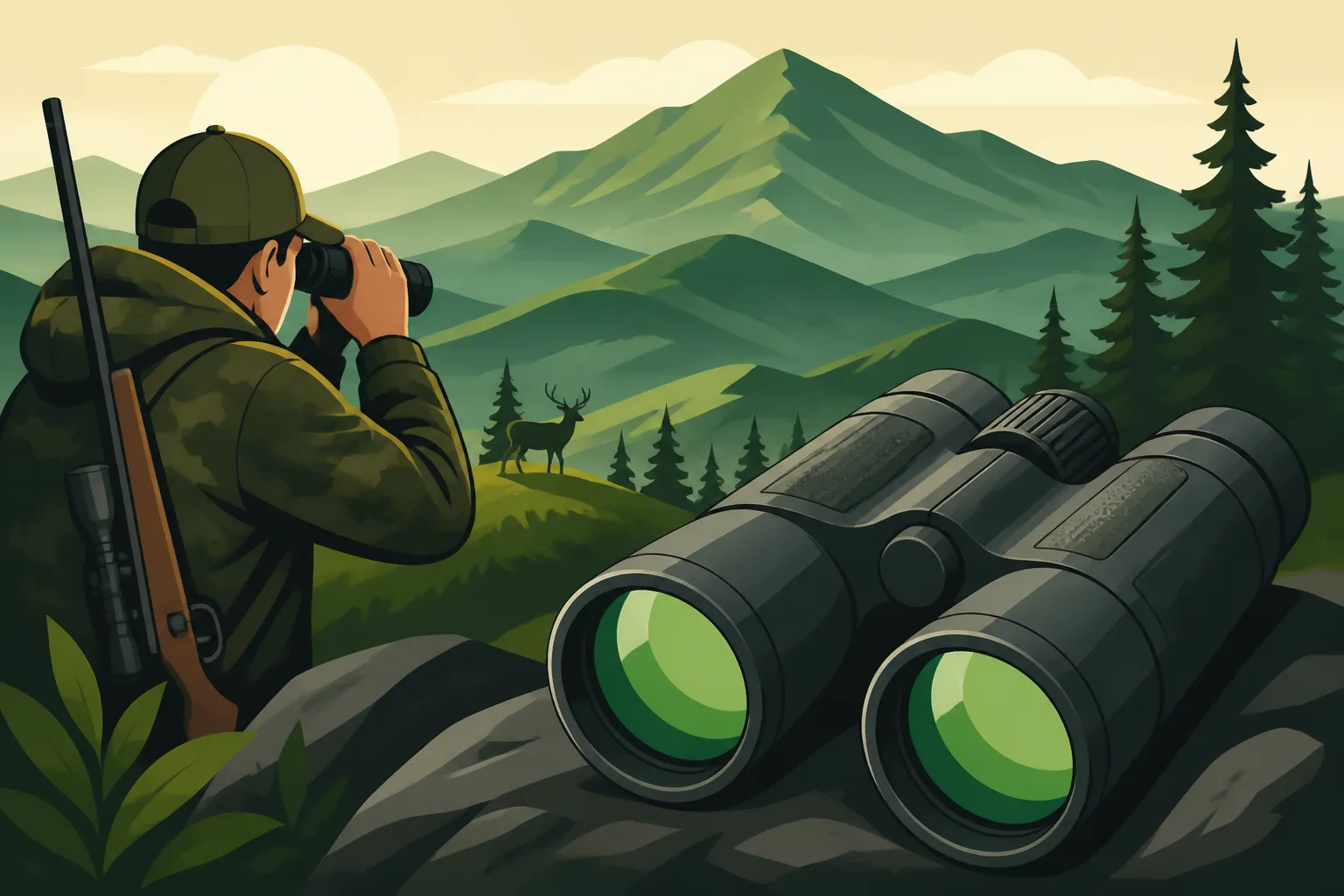
Binoculars are essential for locating game, whether you're scanning a distant hillside for a deer or trying to pick out turkeys in a field. They help you identify the species, gauge size, and, most importantly, determine if an animal is legal to harvest. This is critical in Vermont, where antler point restrictions, antlerless permits, and judging bear size are all part of the game. For general deer and bear hunting in Vermont, an 8×42 or 10×42 binocular is a sweet spot. The first number (8x or 10x) refers to magnification, and the second (42mm) is the objective lens diameter. An 8x offers a wider field of view and is steadier to hold freehand, great for dense cover or general scanning. A 10x brings things a bit closer and offers more detail for open country but can be shakier without support. Pay attention to eye relief, especially if you wear glasses, and ensure they are fog-proof and waterproof for Vermont's often-damp conditions. When you're Scouting Vermont Public Land Before Season, a good pair of binoculars will save you countless steps and greatly increase your efficiency.
Riflescopes: Precision for the Moment of Truth
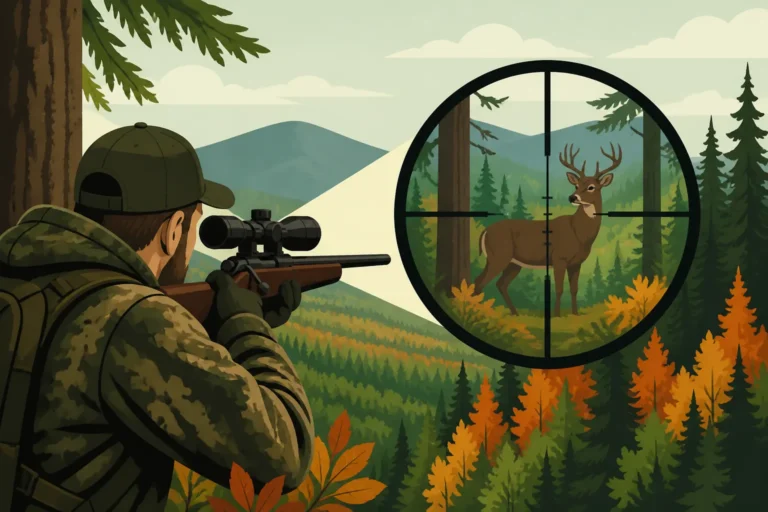
When the moment of truth arrives, your riflescope is what bridges the gap between you and an ethical shot. Its importance cannot be overstated. A clear, bright, and reliable riflescope ensures accuracy, allows for precise shot placement, and helps you make a clean, humane harvest. In Vermont, where shots can vary from tight timber to longer across-valley distances, versatility is key.
For most deer hunting scenarios in Vermont, a riflescope with a magnification range from 3-9x or 4-12x is highly versatile. A lower power (like 3x or 4x) is perfect for quick target acquisition in thick woods, allowing for a wider field of view if a deer pops out close. The higher end (9x or 12x) provides enough magnification for longer shots, whether across a cut field or down a logging road. The objective lens size (e.g., 40mm or 44mm) dictates how much light enters the scope; larger means brighter image in low light, which is crucial during legal hunting hours at dawn and dusk. Consider a scope with good low-light performance, which often comes down to quality glass and coatings. Reticle choice is also personal, but a simple duplex or a ballistic reticle can serve you well. Turrets should be easy to adjust but also hold zero reliably. When discussing Best Rifle Caliber for Vermont Whitetails, the accompanying scope should always be part of the conversation, as the two work in tandem for optimal performance.
Rangefinders: Closing the Distance with Confidence
In a state like Vermont, with its rolling hills, steep ravines, and variable terrain, accurately judging distance by eye can be incredibly difficult, and frankly, unreliable. This is where a laser rangefinder becomes an indispensable tool. It takes all the guesswork out of yardage, allowing you to focus on shot placement with confidence.
Modern rangefinders are compact, lightweight, and incredibly precise. For hunters in Vermont, the most critical feature to look for is angle compensation. This is because shooting uphill or downhill, even at the same linear distance, requires a different hold due to the effects of gravity on the projectile's trajectory. A rangefinder with angle compensation (sometimes called "true ballistic range" or "horizontal distance") will give you the effective horizontal distance to the target, which is what your bullet actually responds to. This feature is absolutely essential when Rangefinders for Vermont's Green Mountain Ridge Shots become your reality. Look for a rangefinder that is easy to use with one hand, has a fast readout, and can reliably range out to at least 500-800 yards for deer-sized targets, as brush and trees can sometimes limit maximum effective range. A scan mode is also useful for ranging multiple objects or a moving animal.
Specialized Optics for Specific Vermont Pursuits
While binoculars, riflescopes, and rangefinders are the holy trinity for most Vermont hunters, certain hunting styles or game species might call for more specialized optical equipment. These tools are designed to excel in niche situations, providing capabilities that general-purpose optics might lack.
Spotting Scopes: For Distance and Detail
For the dedicated long-range scout, the serious big game hunter pursuing moose, or anyone who spends extended periods observing distant terrain, a spotting scope can be a game-changer. These high-magnification instruments aren't for carrying around your neck while still-hunting, but rather for setting up on a tripod to meticulously dissect a distant landscape.
A spotting scope typically offers significantly higher magnification than binoculars, often ranging from 15x to 60x or even higher, paired with large objective lenses (60mm to 85mm). This power allows you to resolve incredibly fine details from extreme distances, which is invaluable for identifying specific antler characteristics on a buck, determining the legal points on a moose rack, or checking for rubs and scrapes on a distant hillside. In Vermont, where Glassing a Clear-Cut for a Bull Moose in the Northeast Kingdom might involve scanning vast tracts of regenerating timber, a spotting scope is almost a necessity. It lets you confirm whether that dark shape is a moose or a boulder, and whether that moose is a bull worth pursuing. When choosing, consider if you prefer an angled or straight eyepiece (angled is generally more comfortable for extended viewing from a seated position), and invest in a stable, lightweight tripod, as hand-holding a spotting scope is impossible.
Archery Sights: Pinpoint Accuracy Up Close
For the bowhunter, the "optic" on their bow is their sight, and it's just as critical for precision as a riflescope is for a rifle. Archery in Vermont, particularly during the Bowhunting Vermont's Expanded Archery Season or when Bowhunting During Vermont's Rifle Season, demands absolute accuracy at shorter ranges.
Archery sights come in various configurations, each with its own advantages. Fixed-pin sights are common, featuring multiple pins (e.g., 3-5 pins) set for different yardages (e.g., 20, 30, 40, 50 yards). These offer quick target acquisition without adjustment, ideal for fast-paced hunting. Single-pin movable sights allow you to dial in the exact yardage to your target, offering a cleaner sight picture with only one pin, but requiring an extra step to adjust. Hybrid sights combine aspects of both. Key features to look for include bright fiber optic pins for low-light visibility (critical in Vermont's dense woods), micro-adjustments for precise tuning, and a built-in level to prevent canting the bow. The housing should be durable and weather-resistant. Some advanced bow sights incorporate rangefinding capabilities directly into the sight, offering an all-in-one solution for quick shots, which can be a serious advantage when seconds count.
Muzzleloader Sights: Bridging Old and New
Muzzleloader hunting in Vermont has a rich tradition, offering specific seasons and unique challenges. The optics for muzzleloaders can range from traditional iron sights to modern low-power scopes, bridging the gap between old-world hunting and contemporary precision. When Muzzleloader Deer Hunting in Vermont, especially during the October antlerless or December seasons, having reliable sights is paramount.
Many muzzleloader hunters still prefer open iron sights or more precise peep sights, which are incredibly robust and reliable in all weather conditions. They are also compliant with many traditional muzzleloader regulations. However, for those seeking increased accuracy, especially in low light or at longer ranges, a low-magnification scope (e.g., 1-4x, 2-7x, or fixed 4x) designed for muzzleloaders can be a significant advantage. These scopes typically have parallax set for shorter ranges common with muzzleloaders and are built to withstand the unique recoil characteristics. They are also often purged with nitrogen to prevent internal fogging, which is a common issue during Vermont's cold, damp late-season hunts. Protecting the lenses from rain and snow with flip-up caps is a wise investment. The decision often comes down to personal preference, hunting style, and the specific regulations of the muzzleloader season you're participating in.
Key Optical Features and What They Mean in Vermont
Understanding the terminology and implications of various optical features is crucial for making an informed purchase. These aren't just technical specifications; they directly translate to how well your optics will perform in the real-world conditions you'll encounter while hunting in Vermont.
Magnification and Field of View
These two characteristics are intrinsically linked and represent a fundamental trade-off in optical design. Magnification, simply put, is how much closer an object appears through the optic. A 10x binocular makes an object appear ten times closer than it would to your naked eye. Field of view (FOV) is the width of the area you can see through the optic at a given distance (usually measured in feet at 100 yards).
- Higher Magnification (e.g., 12x or 15x binoculars, 9x+ riflescopes) gives you more detail and is excellent for identifying game at long distances across open fields or wide valleys. However, it significantly narrows your field of view. This means you see less peripheral area, making it harder to find and track moving targets, especially in dense cover. It also amplifies hand shake, making a stable rest or tripod essential.
- Lower Magnification (e.g., 8x binoculars, 1-4x riflescopes) provides a much wider field of view. This is incredibly beneficial in Vermont's thick woods, allowing you to quickly scan for movement and acquire targets that might only offer a brief glimpse. It's also steadier to hold freehand. The trade-off, of course, is less detail at longer distances.
For a Vermont hunter, the key is balance. For Still-Hunting Green Mountain National Forest Timber, a wider field of view from lower magnification optics is almost always preferred. If you're primarily Glassing a Clear-Cut for a Bull Moose in open terrain, higher magnification will be your friend. GoHunt often advises hunters to consider their primary hunting style and terrain when making these choices.
Objective Lens Size and Light Gathering
The objective lens is the front lens of your binocular or riflescope—the one furthest from your eye. Its size directly impacts the amount of light that enters the optic, which is critical for performance in the low-light conditions common during hunting hours.
- Larger Objective Lenses (e.g., 50mm binoculars, 56mm riflescopes) can gather more light. This results in a brighter image, especially at dawn, dusk, or under heavy canopy where ambient light is scarce. Since game animals are most active during these low-light periods, maximizing light gathering can give you precious extra minutes of usable viewing time. However, larger objective lenses also mean a heavier, bulkier optic, which can be less comfortable to carry and mount.
- Smaller Objective Lenses (e.g., 32mm binoculars, 36mm riflescopes) are lighter and more compact. While they gather less light, modern glass technology and coatings can significantly mitigate this disadvantage. They are often preferred for ultralight setups or in situations where compact size is prioritized over absolute low-light performance, such as carrying a bow for Hunting the Regular Archery Opener in October.
For Vermont hunters, especially those sitting in deep timber waiting for deer at first light or last light, the ability to gather light can literally be the difference between making a confident shot and letting an animal walk.
Coatings, Glass Quality, and Durability
These three factors are often overlooked but are arguably some of the most important aspects of any optical purchase. They directly influence image quality, clarity, and the longevity of your investment in Vermont's demanding environment.
- Coatings: Modern optics use multiple layers of anti-reflective coatings on lens surfaces to reduce glare, enhance light transmission, and improve contrast. Fully multi-coated lenses are the gold standard, providing the brightest, clearest images. These coatings also protect against scratches and repel water, which is incredibly useful when hunting in Vermont's notorious rain, snow, and fog.
- Glass Quality: Not all glass is created equal. Higher quality glass (often designated as ED for Extra-low Dispersion, or HD for High Definition) minimizes chromatic aberration (color fringing) and spherical aberration, resulting in a sharper, clearer image with truer color reproduction. This is especially noticeable at higher magnifications and in challenging light conditions. Better glass means you can discern details that might be blurry or indistinguishable through lesser optics.
- Durability: Vermont hunting is tough on gear. From scrambling over rocks and fallen timber to enduring freezing rain and heavy snow, your optics need to be built to last. Look for optics that are waterproof (usually nitrogen or argon purged to prevent internal fogging and sealed against moisture) and shockproof (designed to withstand impacts). A robust housing, often rubber-armored, provides extra protection and a better grip. You don't want your expensive optic failing you when you're miles into the backcountry on a Packing for a Northeast Kingdom Moose Hunt.
Optimizing Your Optics for Vermont Conditions
Having the best optics won't do you much good if they're not properly set up, maintained, and used intelligently in the field. Vermont's variable weather and rugged terrain demand attention to detail when it comes to getting the most out of your optical equipment.
Proper Mounting and Zeroing Your Riflescope
A riflescope is only as good as its mounting. A high-quality scope improperly mounted or zeroed is a recipe for frustration and missed opportunities. This is a step where rushing or cutting corners simply isn't an option for ethical hunting in Vermont.
First, invest in quality scope rings and bases. They don't need to break the bank, but cheap, flimsy mounts can easily shift under recoil or impact, ruining your zero. Ensure the rings are properly aligned and torqued to the manufacturer's specifications. Proper eye relief—the distance your eye needs to be from the eyepiece to see a full, clear image—is critical. Too close and you risk "scope bite"; too far and you'll have a constricted field of view. This is especially important for Legal Firearms for Deer Hunting in Vermont, which can have stout recoil. Once mounted, the next crucial step is zeroing. Start with a bore-sighting, which gets you on paper at close range. Then, head to the range and perform a thorough live-fire zero, typically at 100 yards, verifying accuracy and making any necessary adjustments to windage and elevation. Don't forget to practice shooting from various field positions you might encounter in Vermont, not just from a bench. Temperature fluctuations throughout the season can sometimes cause minor shifts in zero, so a quick check before a hunt, especially after a significant temperature swing, is always a good idea.
Carrying and Protecting Your Optics in the Field
Vermont weather can be notoriously unpredictable, turning from crisp sunshine to driving rain or heavy snow in a matter of hours. Protecting your optics from these elements, and from the inevitable bumps and scrapes of navigating rugged terrain, is essential for their performance and longevity.
For binoculars, a good quality chest harness is invaluable. It keeps your binoculars secure, readily accessible, and protected against swings and knocks while walking. Brands like GoHunt often highlight such practical gear. It distributes the weight comfortably across your shoulders rather than putting strain on your neck. For riflescopes, flip-up lens caps or stretchy neoprene covers are a must. They protect the objective and eyepiece lenses from moisture, dust, and scratches, ensuring clear vision when you need it most. When traveling to and from your hunting area, consider a hard case for your rifle and scope to prevent damage during transport. In the field, if you're hiking into a remote area, perhaps for Hunting Bear Through the Long September Season or a Packing for a Northeast Kingdom Moose Hunt, keep your lenses clean with a dedicated lens cloth and cleaning solution, never your shirt sleeve, which can scratch delicate coatings. Preventing fogging on external lenses can often be achieved with anti-fog solutions or simply by keeping your optics under your jacket until needed to minimize temperature differences.
Understanding Wind and Thermals for Optical Performance
While optics don't directly control wind or thermals, understanding how these environmental factors impact what you see through your glass is key to making accurate observations and confident shots in Vermont.
- Mirage: On warmer days, especially over open fields or dark surfaces like asphalt, rising heat can create a shimmering, wavy distortion known as mirage. Through high-magnification optics, mirage can make distant objects appear to dance or blur, making it difficult to discern fine details or judge exact bullet impact points. Learning to "read" mirage can actually help you estimate wind direction and speed at longer ranges, but for precise viewing, it's often best to wait for cooler conditions or find an angle that minimizes the effect. This is particularly relevant when Glassing a Clear-Cut for a Bull Moose on a warm early fall day.
- Wind Drift: While your optics don't directly account for wind drift, they are crucial for judging it. A good quality spotting scope or high-power binocular allows you to observe distant wind flags, swaying branches, or even the movement of grass to gauge wind speed and direction along your bullet's flight path. This information, combined with your rangefinder's precise distance, lets you make the necessary windage adjustments or hold-offs with your riflescope. In Vermont's steep country, Wind and Thermals in Steep Green Mountain Terrain can create highly localized wind currents, making careful observation through your optics even more critical before taking a shot. Paying attention to these subtle atmospheric cues through your optics can save you from a frustrating miss.
Budgeting for Quality Optics and Making Smart Choices
Let's face it, hunting gear can get expensive, and optics are often one of the biggest investments. Navigating the vast market of binoculars, riflescopes, and rangefinders can be overwhelming. However, by understanding where to prioritize your spending and how to maintain your gear, you can make smart choices that deliver performance without necessarily breaking the bank.
The "Buy Once, Cry Once" Philosophy
This old adage holds particularly true for optics. While it might be tempting to save a few dollars by opting for cheaper binoculars or a budget riflescope, the long-term cost and frustration can far outweigh the initial savings. Think about it: a blurry image, poor light transmission, or a scope that loses its zero in the middle of a hunt can completely ruin your experience and lead to an unethical shot.
Investing in quality optics from reputable brands means you're getting superior glass, better coatings, more robust construction, and often, a better warranty. This translates to clearer images, brighter views in low light, greater durability in tough Vermont weather, and consistent performance year after year. While the initial outlay might seem steep, a high-quality optic will often last decades, proving to be a much more economical choice than repeatedly replacing cheaper, underperforming models. Many experienced hunters, after years of trying various options, eventually gravitate towards this philosophy, recognizing that their optics are a direct link to the animal they pursue. GoHunt provides excellent resources and reviews to help hunters research and compare quality optics.
Prioritizing Your Optical Needs
Not everyone needs top-tier optics for every single piece of gear. The key is to prioritize where your optical investment will make the biggest impact based on your specific hunting style, the game you pursue, and the terrain you frequent in Vermont.
- Binoculars often get the most use. They are your primary scouting and observation tool. A high-quality binocular that provides clear, bright images and holds up to abuse is an excellent place to start your optical investment. You'll spend far more time looking through them than your riflescope.
- Riflescopes are next in line. While a quality riflescope is crucial, you might not need the absolute highest magnification or most advanced features if you primarily hunt thick timber with short shot opportunities. However, never skimp on reliability and clarity here.
- Rangefinders are incredibly useful. Even a mid-range rangefinder that reliably gives you accurate distances with angle compensation is a huge asset.
- Spotting scopes are a specialized tool. Unless you're routinely glassing extreme distances for very specific targets (like moose or high-country bears), this might be an area where you can save money, or even skip, if your budget is tight.
For a new Vermont hunter just starting out, prioritize a good pair of 8×42 or 10×42 binoculars and a reliable 3-9×40 riflescope. These will cover the vast majority of deer, bear, and turkey hunting scenarios across the state, from Reading a Green Mountain Deer Yard to hunting a Champlain Valley farm edge.
Maintenance and Longevity
Even the highest quality optics will eventually degrade in performance or fail if not properly cared for. Good maintenance habits will extend the life of your expensive equipment and ensure it performs optimally every time you take it into the Vermont woods.
The most critical aspect of optic maintenance is lens care. Always use a dedicated lens cleaning cloth and solution. Never wipe lenses with your fingers, shirt, or any abrasive material, as this can scratch the delicate coatings. Dust and grit should be blown off or gently brushed away before wiping. After a wet hunt, ensure your optics are completely dry before storing them, especially in a case. Even waterproof optics can develop issues if moisture is allowed to sit on external surfaces for extended periods. Periodically check all mounting screws on your riflescope to ensure they haven't loosened. Store optics in a climate-controlled environment, away from extreme heat, cold, or humidity. If you notice any internal fogging, a loose reticle, or other performance issues, it's usually best to send the optic back to the manufacturer for service. Attempting DIY repairs can void warranties and cause further damage. By being diligent with care, your investment will serve you faithfully for many seasons to come.
| Optic Type | Typical Magnification Range | Best Use in Vermont | Key Consideration for Vermont |
|---|---|---|---|
| Binoculars | 8x-12x | General scouting, game identification, scanning thick cover | Wide field of view, low-light performance, durability |
| Riflescopes | 3-9x, 4-12x, 2-7x | Precision shooting for deer, bear, moose | Clarity, reliability, appropriate magnification range |
| Rangefinders | N/A (distance measurement) | Accurate distance measurement, especially in varied terrain | Angle compensation, speed, weather resistance |
| Spotting Scopes | 15x-60x | Long-range observation, trophy assessment (moose, distant deer) | High resolution, stable tripod compatibility, objective size |
Disclaimer
This article is for general informational purposes only and does not constitute professional advice. Laws, prices and regulations vary by location and change over time. Consult a qualified professional for guidance on your specific situation.