Vermont Legal Firearms for Deer Hunting
Navigating the specific regulations around legal firearms for deer hunting in Vermont can feel like trying to hit a moving target sometimes. Between changing seasons, weapon-specific rules, and the constant need to ensure you're compliant, it's easy to get overwhelmed. This comprehensive guide is here to untangle the complexities, clearly outlining what firearms are permissible for harvesting white-tailed deer in the Green Mountain State, so you can head into the woods with confidence and clarity.
Understanding Vermont's Core Firearm Regulations for Deer
Vermont has a rich hunting heritage, and with that comes a structured approach to how different firearms are permitted during various deer seasons. It’s not just about grabbing your favorite rifle; it’s about understanding the nuances that ensure fair chase, public safety, and sound wildlife management.
Rifle Season Specifics for Deer Hunting
When most folks think about deer hunting, the image of a rifle in hand often comes to mind. Vermont's regular rifle season, typically a two-week window in November, is a cornerstone of the deer hunting calendar. This is when centerfire rifles are the primary legal means for taking deer. The key here is "centerfire," meaning rimfire cartridges like the .22LR are not permitted for deer hunting due to insufficient power for humane harvesting.
For centerfire rifles, there aren't explicit minimum caliber or energy requirements in Vermont, but common sense and ethical hunting dictate that hunters should use calibers capable of a clean, humane kill on a deer. Popular choices among Vermont hunters include .30-06 Springfield, .308 Winchester, .270 Winchester, and 7mm-08 Remington. These calibers offer a good balance of power, range, and relatively manageable recoil, making them effective in the varied terrain you'll encounter, from dense softwood thickets to more open hardwood ridges. The vast majority of shots in Vermont are taken within 100-150 yards, so extreme long-range setups aren't usually necessary.
When it comes to ammunition, soft-point, expanding, or hollow-point bullets are generally preferred and widely used, as they are designed to expand upon impact and transfer energy efficiently, leading to a quicker, more ethical harvest. Vermont law does not specify a maximum magazine capacity for rifles used in deer hunting, but ethical considerations and practical field use often lead hunters to utilize standard five or ten-round magazines. Fully automatic weapons are, of course, strictly prohibited, and while semi-automatic rifles are legal, they must still comply with all other regulations. It’s always a good idea to double-check the latest regulations published by the Vermont Fish & Wildlife Department as rules can occasionally be updated. For detailed information on this critical period, you might want to review Vermont Rifle Season Dates.
Shotgun and Muzzleloader Considerations
Beyond the traditional rifle season, shotguns and muzzleloaders play significant roles in Vermont's deer hunting landscape, each with its own specific rules and seasons. These alternative firearms offer different challenges and experiences, often extending the hunting opportunities beyond the rifle window.
Shotguns are legal for deer hunting in Vermont, but with an important distinction: only slugs are permitted for deer. Buckshot, birdshot, or any other type of scattered shot is strictly prohibited for deer. Shotgun slugs, such as Foster-type or sabot slugs, are powerful projectiles designed for harvesting deer at closer ranges, typically up to 100-150 yards, depending on the firearm and ammunition. Many hunters in areas with dense cover or where rifle use is restricted (though less common for deer in Vermont, more for other species in specific zones) opt for shotguns. Modern slug guns, especially those with rifled barrels and optic sights, can be surprisingly accurate.
Muzzleloaders, however, offer dedicated seasons and a more traditional hunting experience. Vermont provides a specific muzzleloader season, usually in October for antlerless deer, and a December season that often allows for either-sex hunting. During these seasons, legal muzzleloaders can be either traditional cap-and-ball or flintlock rifles, or more modern in-line designs. The critical regulations revolve around the projectile and ignition. Hunters typically use patched round balls or conical projectiles, including saboted bullets, which are essentially modern rifle bullets encased in a plastic sleeve that falls away after exiting the barrel. Black powder or approved black powder substitutes (like Pyrodex or Triple Seven) are the only propellants allowed. Smokeless powder is strictly forbidden in muzzleloaders used for hunting. Percussion caps or flintlock systems are the standard ignition methods. Many hunters enjoy the challenge and historical connection of muzzleloader hunting, often finding it to be a more deliberate and primal experience. For specific season details, be sure to check out Vermont Muzzleloader Season Dates and Hunting Vermont's October Antlerless Muzzleloader Window.
Navigating Crossbows and Archery During Firearm Seasons
The landscape of hunting tools is always evolving, and Vermont has adapted its regulations to incorporate modern equipment like crossbows, while also creating unique opportunities for traditional archery hunters to participate even during firearm seasons. Understanding these specific rules is crucial for staying legal and safe.
Crossbow Regulations
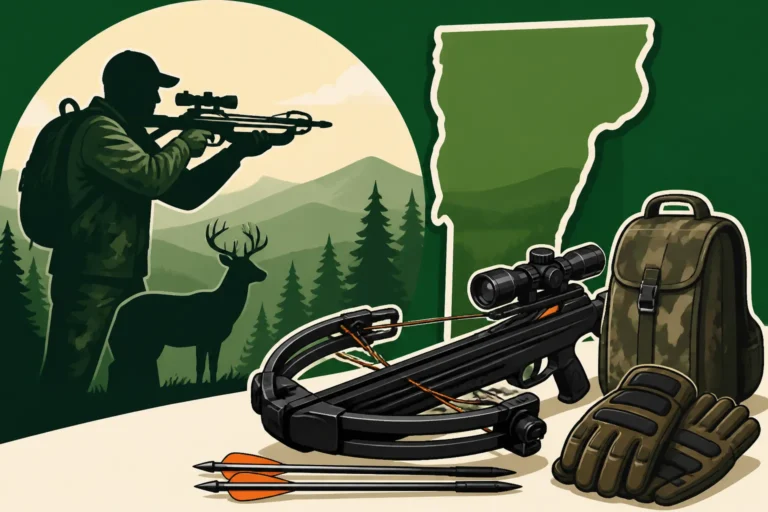
Crossbows have gained significant popularity, offering a blend of archery and firearm characteristics. In Vermont, crossbows are legal for deer hunting during all established archery seasons, as well as during the regular firearm season for those who hold a valid hunting license for that period. This broad allowance reflects a recognition of crossbows as an effective and accessible hunting tool.
However, there are specific equipment requirements to ensure ethical hunting practices. While minimum draw weights aren't explicitly stated in Vermont regulations as they once were, hunters are expected to use crossbows capable of propelling a bolt with sufficient force for a humane kill. The bolts themselves must be at least 16 inches long, fitted with a broadhead that has at least two fixed cutting edges or a mechanical broadhead with a minimum expanded width of 7/8 inch. These specifications ensure the projectile has adequate penetration and cutting diameter. Crossbows equipped with a scope are perfectly legal and widely used, helping hunters with accurate shot placement.
It's important to remember that when using a crossbow during a firearm season, you must still adhere to all other firearm season rules, such as wearing blaze orange. The flexibility of crossbow use means more hunters can participate in various seasons, which can be a real benefit for those who might have physical limitations preventing them from drawing a traditional compound or recurve bow. For a comprehensive look at the equipment specifics, you can refer to Vermont Crossbow Equipment Rules.
Archery During Rifle Season
For years, bowhunters had to hang up their bows once the rifle season rolled around. However, Vermont has introduced an "archery during rifle season overlap," which has been a welcome change for many. This allows licensed archers to continue hunting deer with their bows even when rifle hunters are in the woods.
This overlap creates extended opportunities but also necessitates heightened safety awareness. The primary safety regulation is the requirement for archers to wear blaze orange during this period, mirroring the rules for firearm hunters. This ensures maximum visibility and reduces the risk of accidents. It’s not about blending in; it's about being seen by everyone else. While you might be accustomed to full camouflage during a dedicated archery season, safety trumps stealth when rifles are in play. Many archers choose a full blaze orange vest over their camo outer layer to meet this requirement.
The types of archery equipment permitted during this overlap are the same as those for regular archery season: traditional longbows, recurves, and compound bows. Arrows must be fitted with broadheads that meet the state's minimum cutting edge and width requirements. This unique season structure allows dedicated bowhunters more time in the woods and creates an interesting dynamic where different hunting methods coexist. Understanding the practicalities of Bowhunting During Vermont's Rifle Season is key to making the most of this extended opportunity. Always double-check the specific dates for this overlap, as they can vary slightly from year to year. For more on the specifics of this rule, consider reading Vermont's New Archery-During-Rifle Overlap Rule.
Important Safety and Legal Considerations Beyond the Weapon
While knowing what firearm to use is paramount, ethical and legal hunting in Vermont involves much more than just the weapon itself. A responsible hunter understands that regulations extend to ammunition, safety apparel, and even how they interact with the land and fellow outdoorsmen.
Ammunition and Magazine Capacity
When it comes to ammunition for deer hunting in Vermont, the primary focus is on ensuring a humane harvest. As mentioned earlier, centerfire rifle cartridges with expanding bullets are the standard. This means bullets designed to mushroom upon impact, transferring their energy to the animal quickly and efficiently. Full metal jacket (FMJ) or military-style non-expanding bullets are generally considered unethical for deer hunting due to their tendency to pass through an animal with minimal energy transfer, leading to a less humane kill and potentially longer tracking jobs. While not explicitly illegal for hunting in Vermont, ethical hunters avoid them.
Regarding magazine capacity, Vermont law does not specify a maximum capacity for centerfire rifles used for deer hunting. This means that hunters can legally use magazines that hold more than 5 or 10 rounds, although most hunting scenarios do not require such capacity. It's worth noting that certain states do have magazine capacity restrictions for hunting, so it’s a detail hunters should always be aware of if they hunt across state lines. The philosophy in Vermont leans towards allowing hunters the equipment they choose, provided it is used safely and ethically.
It’s also crucial to remember that certain substances are strictly prohibited. For instance, Vermont has a ban on Vermont's Rule Against Urine-Based Deer Lures, aimed at preventing the spread of Chronic Wasting Disease (CWD). This might seem unrelated to firearms, but it's part of the broader regulatory framework designed to protect the state's deer herd, and responsible hunters stay informed about all such rules.
Blaze Orange and Public Land Rules
Safety is always the top priority in the field, and wearing blaze orange is non-negotiable during most firearm deer seasons in Vermont. This vibrant color makes hunters highly visible to one another, significantly reducing the risk of accidental shootings. Vermont law requires hunters to wear a minimum amount of blaze orange (or blaze pink, which is also legal) above the waist and visible from all sides. This typically means a hat and an outer garment, like a vest or jacket.
The specific requirement regarding How Much Blaze Orange Vermont Requires is critical to adhere to, as failure to do so can result in fines and is simply unsafe. Even when still-hunting slowly through the woods, this bright color stands out against the natural backdrop, making you easily identifiable as a human hunter.
When hunting on public lands, which Vermont has in abundance, there are additional considerations beyond just your weapon and clothing. Hunters must be aware of safety zones around dwellings, schools, and public buildings where discharging a firearm is prohibited. Always consult local ordinances and the Vermont Fish & Wildlife Department regulations for specific setback distances. Using mapping apps like GoHunt can be incredibly helpful for identifying property lines and public land boundaries, ensuring you don't inadvertently trespass or hunt too close to restricted areas. Before heading out, taking the time for Scouting Vermont Public Land Before Season using these tools can make all the difference. Knowing your hunting location thoroughly and respecting property lines and safety zones is just as important as knowing your firearm.
The Importance of Hunter Education
Understanding firearm legality is just one piece of the puzzle; knowing how to safely and responsibly handle those firearms is another. This is where hunter education comes into play. Vermont mandates hunter education for most individuals born after January 1, 1970, before they can purchase a hunting license. This course covers far more than just firearm regulations.
Hunter education teaches critical skills like firearm safety, ethical hunting practices, wildlife identification, basic first aid, and the responsibilities that come with being a hunter. It's not just a hoop to jump through; it's a foundational experience that instills a lifelong commitment to safety and conservation. For new hunters, or even seasoned hunters looking for a refresher, understanding Who Needs Vermont Hunter Education and enrolling in a course is invaluable.
The emphasis on education ensures that hunters entering Vermont's woods are not only aware of legal firearms but also possess the knowledge to use them responsibly, minimizing risk to themselves, fellow hunters, and the public. These courses are often taught by volunteer instructors with decades of field experience, offering practical advice that goes beyond the textbook.
A well-educated hunter is a safe hunter, and a safe hunter is a responsible steward of Vermont's rich hunting tradition. Combining this education with modern tools, such as the Vermont Fish and Wildlife App, can help hunters stay informed about the latest regulations, Vermont Deer Reporting Requirements, and even locate prime hunting spots like Reading a Green Mountain Deer Yard.
| Firearm Type | Permitted Season(s) | Ammunition/Projectile Requirements | Key Restrictions/Notes |
|---|---|---|---|
| Centerfire Rifles | Regular Rifle Season (typically Nov.) | Expanding, soft-point, or hollow-point bullets. No rimfire. | No explicit minimum caliber, but ethical use implies sufficient power. No magazine capacity limit. |
| Shotguns | Regular Rifle Season, Archery, Muzzleloader | Slugs ONLY (Foster, Sabot, etc.). NO buckshot or birdshot for deer. | Effective range typically less than rifles. Often used in areas with dense cover. |
| Muzzleloaders | October Antlerless Muzzleloader, December Muzzleloader Season | Patched round balls, conical projectiles, or saboted bullets. Black powder or approved substitutes ONLY. | No smokeless powder. Traditional (flintlock/cap-and-ball) or in-line designs. |
| Crossbows | All Archery Seasons, Regular Rifle Season | Bolts (min. 16 inches) with broadheads (min. 2 fixed cutting edges or 7/8" expanded mechanical). | Must adhere to blaze orange rules during rifle season. No explicit draw weight. |
| Vertical Bows | All Archery Seasons, Regular Rifle Season Overlap | Arrows with broadheads (min. 7/8" cutting diameter, fixed or mechanical). | Must adhere to blaze orange rules during rifle season overlap. |
Disclaimer
The information provided in this guide is intended for general informational purposes only and does not constitute legal advice. Hunting regulations in Vermont can change, and it is the hunter's responsibility to consult the most current Vermont Fish & Wildlife Department regulations and state laws before engaging in any hunting activities. Always verify specific dates, rules, and requirements directly with the official authorities.