Vermont Crossbow Equipment Rules
Navigating the specifics of hunting regulations can feel like a labyrinth, especially when it comes to equipment that sometimes straddles the line between traditional and modern. Many hunters in Vermont, whether seasoned archers or those exploring new methods, often find themselves scratching their heads over what's allowed with crossbows. This guide aims to clear up all that confusion, offering a comprehensive breakdown of Vermont's crossbow equipment rules to ensure you're compliant and confident in the field.
Understanding Vermont's Stance on Crossbows
For many years, the discussion around crossbows in hunting has been a hot topic, filled with passionate debates on both sides. Vermont, like many other states, has evolved its regulations to reflect changing hunter demographics, advancements in technology, and conservation goals. It's easy to feel lost in the shuffle of rules, especially if you're coming from a state with different policies, but understanding Vermont's specific approach is the first step.
Historical Context and Recent Changes
The journey of crossbow acceptance in Vermont's hunting seasons hasn't been a straight line. Historically, many states, including Vermont, considered crossbows separate from traditional archery equipment, often lumping them in with firearms or restricting their use to specific disability permits. The argument often centered on the perceived "ease of use" and extended range compared to vertical bows, raising concerns about fair chase and deer herd management. However, over time, as crossbow technology advanced and more hunters, including those with physical limitations or those looking for a different challenge, expressed interest, the Vermont Fish and Wildlife Department began to re-evaluate. This led to a gradual, but significant, shift, bringing crossbows into broader use within the state's archery seasons, recognizing them as a legitimate and ethical hunting tool when used properly. These changes have aimed to expand opportunities for hunters while maintaining the integrity of the archery season.
Why the Regulations Exist
The regulations governing crossbow equipment aren't there to make your life harder; they're thoughtfully designed to ensure ethical hunting practices, promote hunter safety, and maintain a fair chase environment for the quarry. For example, rules around minimum draw weight ensure that an animal can be taken humanely with sufficient kinetic energy. Similarly, prohibitions on certain sighting systems or broadhead types are put in place to prevent unfair advantages or to ensure the equipment used leads to quick, clean harvests. These rules are a balancing act, reflecting input from traditional archers, crossbow users, and wildlife biologists, all working towards a sustainable and respectful hunting tradition. It’s a constant effort to adapt to new technologies while upholding the core values of hunting, ensuring both hunter and animal welfare are prioritized.
Specific Equipment Regulations for Crossbows
Now let's get down to the nitty-gritty of what you can and can't use when you head out with your crossbow in Vermont. These specific rules are crucial for compliance, and honestly, they're designed for both your safety and the welfare of the game you pursue. Don't skip these details; they make all the difference in having a legal and ethical hunt.
Draw Weight and Bolt Requirements
Vermont's regulations on crossbows are quite specific when it comes to the power and projectiles. For starters, your crossbow must have a minimum draw weight of 125 pounds. This isn't just an arbitrary number; it's set to ensure that the crossbow generates enough force to deliver a lethal blow, promoting quick and humane harvesting of game. You can't just pick up any crossbow off the shelf and assume it's good to go; always check the manufacturer's specifications to confirm it meets or exceeds this 125-pound threshold. Anything less powerful simply isn't considered ethical for big game in Vermont.
When it comes to the bolts (which are essentially crossbow arrows), there are also clear guidelines. They must be at least 16 inches in length, again, to ensure proper flight stability and penetration. More importantly, they must be tipped with a broadhead that has at least two fixed cutting edges or a retractable broadhead with at least two cutting edges that open upon impact. These broadheads must be at least 7/8ths of an inch wide when expanded. This means mechanical broadheads are generally permissible as long as they meet the minimum cutting diameter when deployed. This particular detail is critical, as broadhead design directly impacts terminal performance. Hunters often spend a lot of time testing different broadheads to find the perfect match for their setup, ensuring clean passes. If you're wondering which specific types are best suited, checking out a guide on Best Broadhead for Vermont Whitetails can provide valuable insights. Remember, while crossbows offer different dynamics, the underlying principle of ensuring a clean kill remains paramount, and proper bolt and broadhead selection is a huge part of that.
Sighting Systems and Accessories
The modern crossbow can be outfitted with a variety of accessories, and thankfully, Vermont's rules are fairly accommodating when it comes to sighting systems. You are absolutely allowed to use magnified scopes, red dot sights, or holographic sights on your crossbow. This is a big advantage for many hunters, especially those with aging eyes or those who appreciate the precision these optics offer for longer shots. Unlike some states that might restrict magnification for traditional archery, Vermont recognizes that scopes enhance accuracy, contributing to more ethical shots.
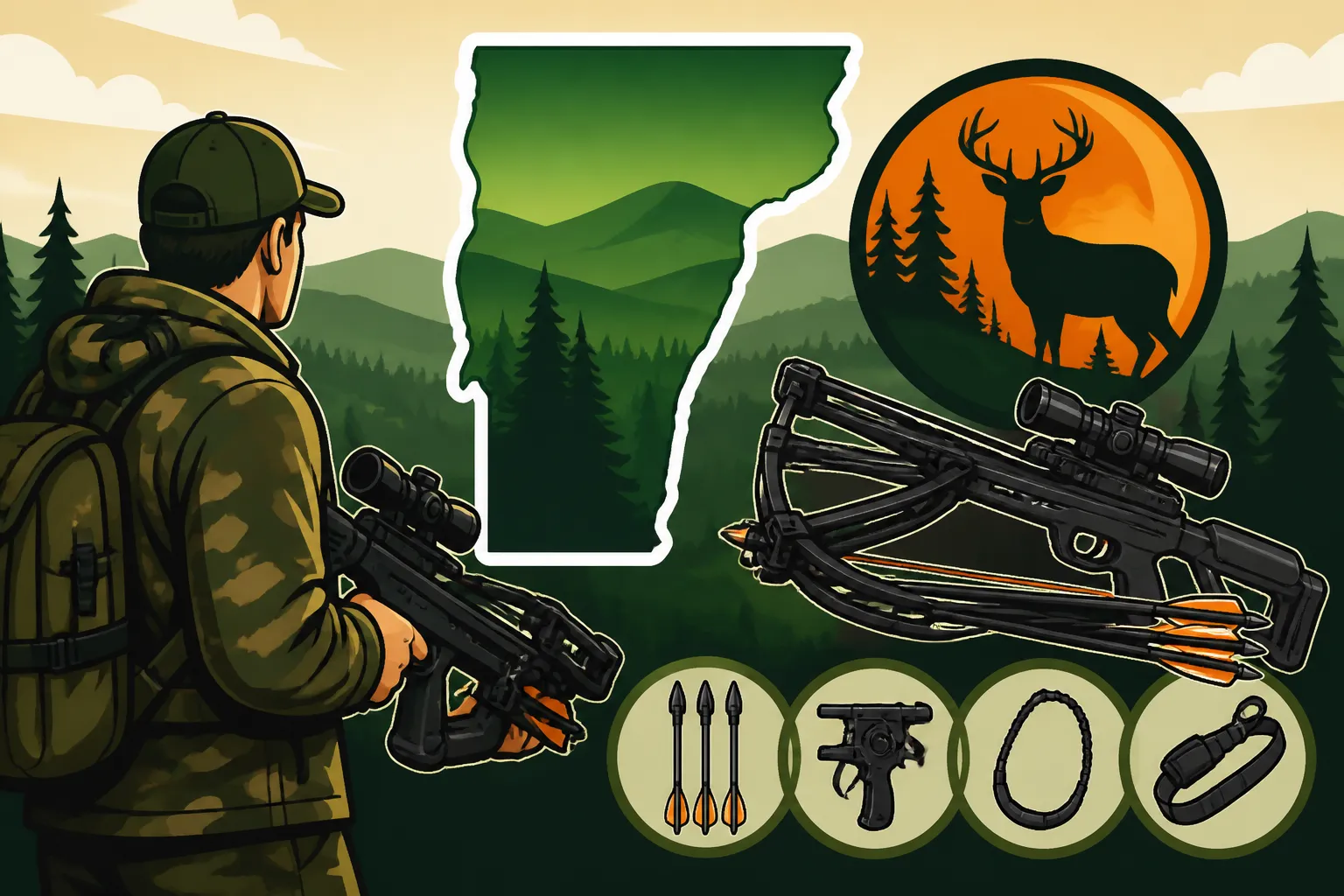
However, there are still some boundaries. Electronic rangefinders are legal to use in the field, whether standalone or integrated into your optic, but artificial light sources that illuminate your target or the aiming point on the target are generally prohibited. This means no laser sights that project a dot onto the animal. The spirit of the law here is to maintain a level of challenge and prevent reliance on technology that might give an unfair advantage, particularly in low light conditions. You can also use things like quivers, slings, and cocking aids – essentially anything that helps with the safe and efficient operation of your crossbow without directly illuminating the target itself. It’s about leveraging technology for accuracy and accessibility, but not for overcoming the natural challenges inherent in hunting.
Crossbow Hunting During Different Vermont Seasons
One of the areas that often trips up hunters is understanding how crossbows fit into Vermont's diverse hunting calendar. It's not a one-size-fits-all situation, and knowing the specifics for each season is paramount to staying legal and having a successful hunt. The rules can vary, so let's break down where and when your crossbow can join you in the field.
Archery Season Specifics
Crossbows are fully legal for hunting deer during Vermont's regular archery season. This means you can pursue whitetails with your crossbow right from the Hunting the Regular Archery Opener in October through to its conclusion. This period offers a fantastic opportunity to hunt before the pressure of rifle season, often coinciding with excellent early-fall conditions and deer patterns. This inclusion is a significant boon for many hunters, including those who may find it physically challenging to draw and hold a compound or recurve bow for extended periods.
However, it's not just about the regular season. Vermont also has an Bowhunting Vermont's Expanded Archery Season in certain areas, typically urban or suburban settings, where crossbows are also permitted. These expanded zones often have unique regulations regarding antlerless permits and specific boundaries, so it's always crucial to check the specific details for the Wildlife Management Unit (WMU) you plan to hunt. The flexibility to use a crossbow in these diverse archery scenarios means more opportunities to fill your tag, but it also means a higher responsibility to know the nuances of each season and location. For example, during any archery season, whether regular or expanded, you'll still need to carry your valid Vermont hunting license and an archery deer tag.
The Archery-Rifle Overlap
This is a critically important area to understand, as Vermont implemented a significant change allowing Vermont's New Archery-During-Rifle Overlap Rule in recent years. This means that, for a portion of the November rifle season, archers – including crossbow hunters – can also be in the woods. However, there's a vital safety requirement: if you are crossbow hunting during the rifle season overlap, you must wear at least 400 square inches of blaze orange or blaze pink. This is non-negotiable and designed for the safety of all hunters in the woods, given the increased visibility needed when firearms are also in use.
The ability to use your crossbow during this overlap period provides a unique opportunity, especially as it often coincides with the peak of the deer rut in early-to-mid November. This can be a prime time for deer activity, and having the option to hunt with your crossbow during this window is a fantastic advantage. However, because it's a mixed-weapon season, extra vigilance is required. Hunters need to be acutely aware of their surroundings, clearly identify targets, and understand shot angles, especially with the added complexity of other hunting methods occurring simultaneously. Apps like GoHunt can be exceptionally useful during this period, allowing you to quickly verify boundaries, check for recent rule updates, and even mark other hunters' locations if you're hunting with a group.
Muzzleloader and Youth Seasons
While crossbows are primarily associated with archery season, it's worth noting their potential interaction with other specialized seasons. For instance, during the youth and novice hunting weekend, young hunters and their mentors can pursue deer. The rules for Vermont Youth and Novice Weekend Rules are designed to be flexible and introduce new hunters to the sport safely. While firearms are typically the primary weapon during these weekends, crossbows can also be a viable option for youth or novice hunters, provided they meet the standard crossbow equipment rules and the individual hunter holds the appropriate licenses and permits. It's an excellent way to introduce new hunters to the precision and skill involved in archery hunting without the full physical demands of a traditional bow.
It's important to clarify that crossbows are generally not permitted during Vermont's dedicated muzzleloader seasons. These seasons, such as the Vermont Muzzleloader Season Dates, have specific weapon requirements that strictly define what is considered a legal muzzleloader. Crossbows do not fall under this definition, as they operate on a different principle entirely. So, while you might find yourself out in the woods during a muzzleloader season, if your intent is to use a crossbow, you'll need to confirm that you're within an active archery season window and complying with those specific regulations. Always double-check the Vermont Fish and Wildlife Department's most current regulations for each specific season to avoid any misunderstandings.
Maintaining Your Crossbow for Optimal Performance
Just like any piece of hunting equipment, a crossbow needs proper care and maintenance to perform reliably and safely. Neglecting your crossbow can not only lead to accuracy issues but, more importantly, can compromise safety in the field. A well-maintained crossbow is a safe and effective crossbow, giving you confidence when that crucial shot opportunity arises.
Regular Inspection and Care
Routine inspection is the cornerstone of crossbow maintenance. Before and after every hunting trip, and certainly before the season even begins, take the time to thoroughly inspect your crossbow. Start with the strings and cables; these are under immense tension and are prone to wear. Look for fraying, nicks, or any signs of damage. If you notice anything suspicious, it’s best to have them replaced by a professional. You should also regularly wax your string to prolong its life and reduce friction, following the crossbow manufacturer's recommendations.
Next, check all screws and bolts. Vibration from shooting can loosen fasteners, so give them a snug tighten (but don't overtighten!) with the appropriate tools. Inspect the limbs for cracks or delamination, especially near the riser. The rail where your bolt sits needs to be kept clean and lightly lubricated with a product specifically designed for crossbow rails to ensure smooth, consistent bolt release. Pay attention to your trigger mechanism as well, ensuring it's functioning smoothly and safely. A crossbow that isn't regularly cared for can lead to inconsistent shots or, in the worst-case scenario, a misfire, which is a risk no hunter wants to take.
Storage and Transportation Best Practices
How you store and transport your crossbow plays a huge role in its longevity and readiness. When not in use, store your crossbow in a cool, dry place, ideally in a padded case to protect it from dust, moisture, and accidental bumps. Avoid extreme temperatures, as these can negatively affect materials like limbs and strings. It's also a good practice to de-cock your crossbow if it's going to be stored for an extended period, as leaving it cocked puts constant stress on the limbs and string, which can reduce their lifespan. However, always follow your manufacturer's specific instructions on de-cocking, as some models are designed to be stored cocked.
For transportation to and from your hunting spot, always use a dedicated crossbow case. This protects your investment from damage, but more importantly, it ensures safety. In Vermont, like most places, it's generally required that all hunting implements be cased and unloaded when transported in a vehicle. For a crossbow, this means it should be uncocked and bolts removed. This prevents accidental discharge and ensures that your equipment isn't mistaken for being "ready to fire" while in transit. Being diligent with storage and transportation not only extends the life of your crossbow but also demonstrates responsible gun (or rather, archery) ownership, which is something every hunter should strive for.
Common Misconceptions and Clarifications
The world of hunting, especially when new equipment or regulations are introduced, can be rife with rumors and misunderstandings. Crossbows are no exception, and there are several common misconceptions that circulate among hunters. Clearing these up is vital for informed decision-making and ensuring a legal and enjoyable hunting experience in Vermont.
Crossbows as Firearms vs. Archery Equipment
Perhaps the most persistent misconception is whether a crossbow is classified as a firearm or archery equipment. In Vermont, for the purpose of hunting regulations, crossbows are firmly considered archery equipment. This is a crucial distinction, as it dictates the seasons they can be used in, the types of licenses required, and even some of the safety protocols. While they might look more like a rifle to some casual observers, their propulsion method (a bowstring and limbs) and projectile (a bolt) align them with traditional bows in the eyes of the law.
This classification means that when you are hunting with a crossbow, you are operating under the rules of archery season, not firearm season (unless it's during the specific Archery-Rifle Overlap, where additional blaze orange rules apply). This impacts everything from legal hunting hours to setback distances from dwellings, which can differ between archery and firearm regulations. Understanding that your crossbow falls under the umbrella of archery equipment helps clarify many other aspects of the regulations, particularly for those who might be transitioning from solely rifle hunting and need to wrap their heads around the nuances of archery-specific rules.
Age and Permit Requirements
Another area of confusion can revolve around who is allowed to use a crossbow and what permits are necessary. The good news is that, for general hunting, if you are legally able to hunt with a traditional bow in Vermont, you are generally able to hunt with a crossbow, provided you meet the minimum age and hunter education requirements. There isn't a separate "crossbow permit" beyond the standard archery deer tag. You'll need a valid Vermont hunting license with an archery endorsement to hunt with a crossbow for deer during the archery seasons.
For youth hunters, the rules for Vermont Youth and Novice Weekend Rules apply, meaning young hunters can use crossbows under the direct supervision of a licensed adult mentor. This makes crossbows an excellent tool for introducing younger generations to hunting, as they can focus on aiming and safety without the added physical challenge of drawing a traditional bow. Similarly, while there used to be specific disability permits required for crossbow use, the general legalization of crossbows has largely integrated them into the broader archery framework, making access easier for all hunters. However, all hunters, regardless of age or physical ability, must complete Vermont Hunter Education Requirements before being issued their first hunting license. It's always best to check the Vermont Fish and Wildlife Department's website or their latest hunting guide for the most current information regarding age-specific rules or any special permits for certain conditions, as regulations can occasionally be updated.
Getting Started: Hunter Education and Licensing
So, you're ready to embrace crossbow hunting in Vermont! That's fantastic. It's a rewarding pursuit that combines precision, patience, and a deep connection to the outdoors. But before you head afield, there are a couple of crucial steps you need to take to ensure you're hunting legally and safely. These aren't just bureaucratic hurdles; they're foundational elements for responsible hunting.
Mandatory Hunter Education
Before you can even think about buying a hunting license in Vermont, you absolutely must complete a certified hunter education course. This is a statewide requirement for anyone born after January 1, 1970, and it's a vital program that teaches everything from firearm and archery safety to wildlife conservation, ethical hunting practices, and basic first aid in the field. Even if you've been hunting for years in another state, if you're new to Vermont, you'll need to demonstrate proof of prior hunter education or take a Vermont course.
For crossbow hunters, specifically, the standard hunter education course covers the necessary safety principles that apply broadly to all hunting methods. While there isn't a separate "crossbow education" course, the fundamentals of shot placement, animal anatomy, blood trailing, and ethical conduct taught in the general hunter education course are directly applicable. This education ensures that every hunter heading into the Vermont woods, regardless of their chosen weapon, possesses a baseline understanding of safety and responsibility. You can find information on upcoming courses or how to provide proof of prior education through the Vermont Fish and Wildlife Department's website.
Licensing and Permit Acquisition
Once you've got your hunter education squared away, it's time to get your hands on the necessary licenses and permits. To hunt with a crossbow for deer during the archery season in Vermont, you'll need two main items: a valid Vermont hunting license and an archery deer tag. Residents have several options, including a Vermont Resident License Options that bundles different hunting privileges. Non-residents, too, have tailored options for their needs, often costing a bit more, which you can learn more about by checking out Vermont Nonresident License Options.
You can purchase your licenses and permits online through the Vermont Fish and Wildlife Department's portal, at various license agents across the state, or by mail. It's quick, relatively easy, and the funds generated directly support wildlife management and conservation efforts in Vermont. Remember to always carry your license and tags with you while hunting, as enforcement officers can and do check. Failure to produce valid documentation can lead to fines and legal trouble, so don't risk it! Keep your documents handy, perhaps as a digital copy on your phone or in a durable waterproof pouch, ensuring that when you're out there enjoying the chase, the only thing you have to worry about is making that perfect, ethical shot.
| Crossbow Equipment Rule | Requirement | Notes |
|---|---|---|
| Minimum Draw Weight | 125 pounds | Ensures sufficient kinetic energy for a humane harvest of big game. |
| Minimum Bolt Length | 16 inches | Essential for stable flight and proper broadhead deployment. |
| Broadhead Type | Fixed or Mechanical | Must have at least two cutting edges and be a minimum of 7/8ths inch wide when expanded/fixed. |
| Sighting Systems | Scopes, Red Dots, Holographic sights allowed | Magnified optics are legal; enhances accuracy. |
| Laser Sights | Prohibited | Artificial light sources to illuminate the target or aiming point are generally not allowed. |
| Hunter Education | Mandatory | Required for those born after Jan 1, 1970, before purchasing a license. |
| License & Tag | Valid Hunting License & Archery Deer Tag | Necessary for all crossbow hunting during specified seasons. |
| Blaze Orange/Pink | 400 sq. inches required during Archery-Rifle Overlap | Crucial safety measure when hunting concurrently with firearm hunters. |
Disclaimer
Please remember that hunting regulations, seasons, and equipment rules can change. While this guide is compiled to be as accurate and up-to-date as possible, it is ultimately the hunter's responsibility to consult the most current Vermont Fish and Wildlife Department regulations before heading afield. Always refer to the official hunting guide or their website for the definitive and most recent information.