Vermont Crossbow Equipment Requirements
The world of hunting gear can feel like a labyrinth, especially when you're trying to figure out the exact legalities for a specific state and weapon. Many Vermont hunters, whether new to archery or looking to extend their season options, often find themselves scratching their heads over the precise rules governing crossbows. This guide is here to untangle those specific requirements, ensuring you're fully compliant and ready for your next hunt.
Understanding Vermont's Legal Definition of a Crossbow for Hunting
It might seem obvious what a crossbow is, but in the eyes of Vermont's Fish and Wildlife Department, there are specific legal parameters that define what constitutes a "legal" crossbow for hunting purposes. These aren't just arbitrary rules; they're designed to ensure humane and ethical harvesting of game, as well as hunter safety. When you’re considering bringing a crossbow into the field, you’re essentially stepping into a regulated zone that aims to maintain fair chase principles and minimize wounding loss.
Defining Legal Crossbow Features
Vermont regulations are quite clear about the characteristics a crossbow must possess to be considered legal for hunting. It's not enough to just buy one off the shelf; you need to verify its specifications. The law specifies certain mechanical aspects that distinguish a hunting-legal crossbow from other types, like those used purely for target shooting that might not meet the required kinetic energy or other standards for dispatching game quickly and humanely. This distinction is vital because using an illegal weapon, even unknowingly, can lead to significant penalties.
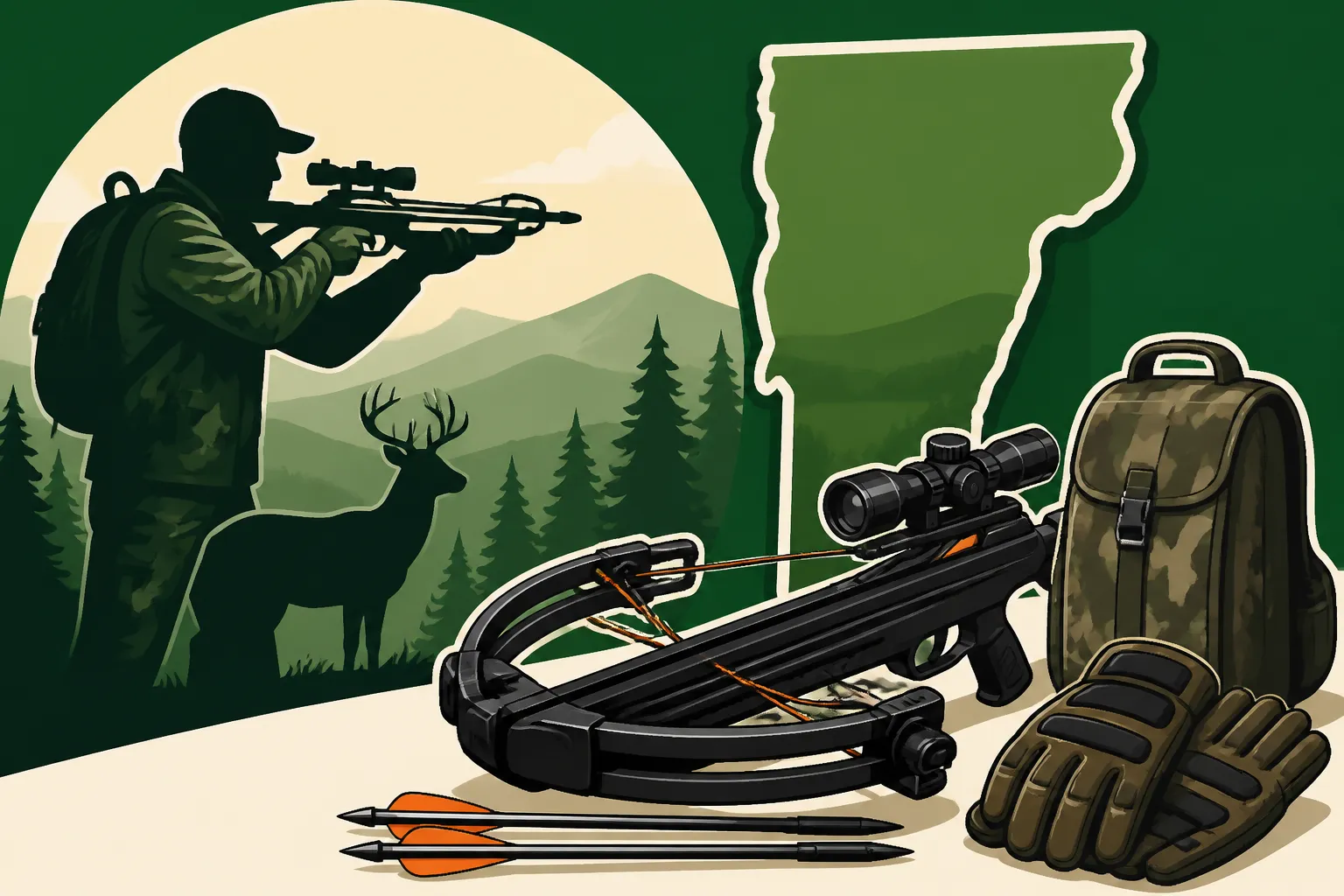
Typically, a legal crossbow in Vermont must have a minimum draw weight, designed to ensure sufficient power for an ethical kill. While specific numbers can change, generally you're looking at a requirement that ensures the bolt travels with enough force to penetrate and deliver a quick, clean harvest on deer-sized game. Beyond draw weight, there are often specifications for the trigger mechanism, which must be designed to prevent accidental discharge, often requiring a minimum pull weight and a functional safety. These are critical details that even seasoned hunters can overlook if they're transitioning from traditional archery equipment.
Another often-overlooked aspect is the stock design. Crossbows are meant to be shouldered and fired, much like a firearm, and their stock must meet certain dimensional criteria. This isn't just about comfort; it's about stability and ensuring the weapon can be handled safely and effectively in hunting situations. If you're using a planning tool like GoHunt to map out your season, it's a great place to double-check that your equipment aligns with current state guidelines before you even head to the woods. You might also want to consult resources like Vermont Crossbow Equipment Rules to ensure you're up to date on any changes.
Prohibited Modifications and Features
Just as there are requirements for what a crossbow must be, there are also clear prohibitions on what it cannot be or have. These are in place to prevent unfair advantages or unsafe practices. For instance, any crossbow with a draw weight that is self-adjusting or that falls below the minimum threshold is likely illegal. The idea is to standardize the equipment to maintain a level playing field and ensure animals are taken ethically. You can't just slap a scope on any old device and call it a hunting crossbow; it must meet the foundational criteria first.
Automatic loading mechanisms or devices that allow for multiple shots without manually resetting the string are generally strictly forbidden for hunting. This is a crucial element of fair chase – hunting is about skill and precision, not rapid-fire technology. Similarly, certain types of laser sights or other electronic targeting systems that might provide an unfair advantage beyond traditional optics could be restricted. Always refer to the most recent Vermont Fish and Wildlife regulations, as technology evolves rapidly, and laws are updated to keep pace with new innovations.
It's also worth noting that some states have rules about lighted nocks or illuminated reticles in scopes, though these typically pertain to visibility rather than outright prohibition. However, if any modification alters the fundamental nature of the crossbow from a single-shot, manually cocked device into something more akin to an automatic firearm, you'll almost certainly find it disallowed. The best rule of thumb is, if it sounds too good to be true, it probably is. When in doubt, call the Vermont Fish and Wildlife Department directly for clarification, because ignorance of the law is never an excuse.
Specific Requirements for Crossbow Components
Once you have a general understanding of what defines a legal crossbow, it's time to dive into the nitty-gritty of its individual components. Each part, from the bolt itself to the broadhead affixed to it, plays a critical role in the hunting process and is subject to its own set of rules. Missing a single detail here could render your entire setup non-compliant, wasting your time and potentially putting you in legal jeopardy.
Bolt and Arrowhead Specifications
The projectile launched from your crossbow is just as regulated as the crossbow itself. Vermont mandates specific requirements for bolts (often called arrows) to ensure they are appropriate for hunting game. These aren't just any old target bolts. Typically, hunting bolts must have a minimum length and weight, ensuring they fly true and carry enough momentum to penetrate an animal cleanly. Using bolts that are too light or too short might result in poor accuracy or insufficient penetration, leading to wounded game and an unethical harvest.
Perhaps even more critical are the broadhead specifications. For big game like deer, Vermont regulations require fixed-blade or mechanical broadheads that meet specific cutting diameter requirements. This is where many hunters can get tripped up. Fixed-blade broadheads usually need a minimum cutting width, often around 7/8ths of an inch, to ensure a wide enough wound channel for quick bleeding and ethical dispatch. Mechanical broadheads, which deploy upon impact, also have minimum deployed cutting diameters. It's not enough for them to be mechanical; they must meet the size requirement when open.
You can't use target points, blunts, or any other non-broadhead projectile for hunting big game. These are simply not designed to harvest an animal cleanly and would be considered unethical and illegal. Ensure your broadheads are razor-sharp before every hunt. A dull broadhead is one of the quickest ways to cause suffering and lose an animal. When packing your gear for hunting the regular archery opener in October, double-check every broadhead in your quiver.
Sighting and Accessory Regulations
Modern crossbows can be equipped with a variety of sighting systems and accessories, but not all are legal for hunting in Vermont. The most common sighting devices are scopes, which are generally permitted. However, rules often prohibit scopes that project a beam onto the target, such as a laser sight, as these can be seen as providing an unfair advantage. Similarly, night vision or thermal imaging scopes are typically illegal for hunting during legal shooting hours, as they remove the element of fair chase by allowing hunters to see game in conditions where the animal has a natural advantage.
Flashlights or other artificial lights attached to a crossbow are also almost universally prohibited when hunting, especially at night or during legal shooting hours for spot-and-stalk situations. The intent here is to prevent 'jacklighting' of game, which is illegal and unethical. While some states allow certain illuminated reticles within a scope, it’s always best to verify the specific details with Vermont Fish and Wildlife. The general principle is that any accessory that removes the natural advantage of the animal or allows for hunting in unfairly advantageous conditions is likely disallowed.
Other accessories like dampeners, quivers, or slings are typically permitted as they do not affect the fair chase aspect of the hunt. However, ensure that any attached accessory does not impede the safe operation of the crossbow or violate any other rule. For hunters looking to ensure their entire setup is fully compliant, exploring the Vermont Fish and Wildlife app can be incredibly helpful for accessing regulations on the go, or platforms like GoHunt that integrate regulatory information into their planning tools.
| Component | Vermont Hunting Requirements (General Guidelines) | Important Considerations |
|---|---|---|
| Crossbow | – Minimum Draw Weight (varies, but sufficient for ethical kill) | Ensure your model meets state kinetic energy/draw specs. |
| – Functional Safety Mechanism | Must prevent accidental discharge. | |
| – Trigger Pull Weight (often minimum threshold) | Designed for safety and preventing hair triggers. | |
| – Fixed Stock | Must be shouldered for firing. | |
| Bolt | – Minimum Length and Weight (specifics may vary) | Ensures stability, penetration, and ethical energy transfer. |
| – No Explosive or Poisoned Bolts | Strictly prohibited. | |
| Broadhead | – Fixed-Blade or Mechanical (expandable) | Target points, blunts, etc., are illegal for big game. |
| – Minimum Cutting Diameter (e.g., 7/8" for fixed, 7/8" deployed for mechanical) | Essential for humane harvest. Check specifics annually. | |
| Sights | – Magnified Scopes (generally permitted) | Verify no light projection (lasers) or night vision. |
| – No Night Vision or Thermal Imaging | Prohibited for hunting during legal hours. | |
| – No Artificial Lights (flashlights) | Prohibited on crossbow for hunting purposes. | |
| Accessories | – Quivers, Slings, Dampeners (generally permitted) | Must not impede safe operation or violate other rules. |
Always consult the most current Vermont Fish & Wildlife hunting regulations booklet or website for precise, up-to-date information, as regulations can change.
Using Crossbows During Vermont's Hunting Seasons
Vermont's hunting regulations define when and where crossbows can be used, and these rules have seen some significant evolution over the years. Gone are the days when crossbows were strictly limited to specific special seasons or for disabled hunters only. Now, they've been integrated more broadly, offering more opportunities for hunters to participate, but it's crucial to understand the nuances of their seasonal application.
Permitted Hunting Seasons and Game Species
Currently, crossbows are generally legal for hunting all game species for which vertical bows are permitted, during the established archery seasons. This means you can typically use your compliant crossbow during the regular statewide archery seasons for deer, bear, and turkey. This expanded opportunity has been a game-changer for many hunters, including those who may have physical limitations that prevent them from drawing a traditional compound or recurve bow, but still want to enjoy the challenge and satisfaction of bowhunting.
For deer, this includes the full archery season, which stretches from early October well into December, overlapping with other seasons. You'll find yourself able to hunt deer throughout this period, from the crisp mornings of October when the leaves are turning, through the peak rut in early-to-mid November, and into the colder, late-season opportunities. Remember, even during the archery season, you still need to adhere to bag limits and antler point restrictions if they are in effect for the specific Wildlife Management Unit (WMU) you are hunting. When thinking about Bowhunting Vermont's Expanded Archery Season or Hunting Vermont's Regular Archery Season Into December, a crossbow offers a distinct advantage for many.
Bear hunters also have increased flexibility, with crossbows allowed during Vermont's long bear season explained, which typically runs from early September through November. For turkeys, crossbows are legal during both the spring and fall archery turkey seasons. This flexibility means that if you're proficient with a crossbow, you have extensive opportunities across multiple species throughout much of the fall hunting calendar. It's a great tool for those looking to maximize their time in the field.
Crossbow Use During Firearm Seasons
One of the most significant changes in recent Vermont hunting regulations is the allowance for crossbows during portions of the firearm seasons, specifically during the Archery-Rifle Overlap. This new rule has generated a lot of discussion and excitement among hunters. Previously, if you wanted to hunt during the rifle season, you had to switch to a firearm. Now, if you prefer or are limited to a crossbow, you can continue to use it during this specific overlap window.
However, this doesn't mean you can just wear your regular camo and head out. When hunting with a crossbow during any portion of the rifle season, you are still bound by the blaze orange requirements that apply to firearm hunters. This means you must wear the legally mandated amount of blaze orange, typically a minimum of 500 square inches above the waist, including a hat. This is a crucial safety measure that protects all hunters in the field. Ignoring this rule, even if you’re using a crossbow, can lead to fines and a dangerous situation. Learning about Hunting Vermont's New Archery-Rifle Overlap is vital for staying legal and safe.
The intent behind allowing crossbows during the rifle season overlap is to provide more continuity for hunters, particularly those who rely on them due to physical considerations. It allows them to participate more fully in the broader hunting opportunities that traditionally favored firearm users. This means you could be sitting in your stand, crossbow in hand, while rifle hunters are also in the woods, highlighting the absolute necessity of adhering to blaze orange rules and being hyper-aware of your surroundings. For more details on what that means for deer, you can find useful information on Bowhunting During Vermont's Rifle Season.
Practical Considerations for Crossbow Hunters in Vermont
Beyond the legal definitions and seasonal allowances, there are several practical considerations that crossbow hunters in Vermont should keep in mind. These tips can help ensure a safer, more enjoyable, and more successful hunting experience, especially given Vermont's diverse and sometimes challenging terrain and conditions.
Safety First: Handling and Transport
Safety should always be your top priority, and crossbows, despite their "bow" designation, share many safety characteristics with firearms. Just like a rifle, a crossbow should always be treated as if it's loaded. Keep the safety on until you are ready to shoot, and never point it at anything you do not intend to shoot. When cocking a crossbow, always ensure it is done safely and according to the manufacturer's instructions. Many crossbows require significant force to cock, and improper technique can lead to injury.
When transporting a crossbow in a vehicle, Vermont law requires it to be unloaded, uncocked, and encased or in a secure carrying case. This is similar to firearm transport laws and is critical for public safety. You can't just throw an uncocked, uncased crossbow in the back of your truck. This regulation prevents accidental discharge and ensures that the weapon isn't readily accessible for immediate use, a common sense rule that keeps everyone safer. If you’re heading out to hunt a Champlain Valley dairy farm edge, make sure your crossbow is properly secured before you hit the road.
Always be aware of your backdrop when taking a shot. Crossbow bolts can travel a significant distance with considerable force, so knowing what's beyond your target is paramount. In Vermont's often densely wooded terrain or rolling farmlands, this means being acutely aware of potential houses, roads, or other hunters. Remember, even with a crossbow, the firearms discharge setback rules still apply, meaning you cannot shoot within a certain distance of occupied dwellings without permission.
Scouting, Setup, and Ethical Shot Placement
Effective scouting remains paramount for crossbow hunting in Vermont. Just like with a vertical bow, getting close to your quarry is key. Crossbows, while often having a slightly longer effective range than many traditional bows, are still short-range weapons compared to rifles. You'll want to focus on identifying travel corridors, feeding areas, and bedding sites. Tools like onX Hunt, mentioned by GoHunt, can be invaluable for pinpointing property lines, topo features, and potential bottlenecks when you're scouting Vermont public land before season.
When setting up your stand or blind, consider the effective range of your crossbow and your personal comfort level. For deer, ethical shot placement is crucial, meaning aiming for the vital organs – the heart and lungs. Practice regularly to ensure you can consistently hit a vital zone target out to your maximum ethical hunting range. Don't push your limits in the field. If you wouldn't take the shot on the practice range, don't take it when an animal is standing in front of you.
Consider the shot angle, especially from a treestand. Shooting straight down can reduce the chances of hitting vitals cleanly, often resulting in a single lung hit or shoulder injury. Broadside or quartering-away shots generally offer the best angles for a lethal pass-through. Patience and waiting for the right shot are hallmarks of ethical hunting. Whether you're setting up on a dairy farm field edge or still-hunting Green Mountain National Forest timber, the principles of careful shot placement remain the same for crossbows as they do for other archery equipment.
Maintenance and Gear Longevity
Proper maintenance is critical for the longevity and safe operation of your crossbow. Regular waxing of the string and cables is essential to reduce friction and prevent wear. Inspect your limbs for any cracks or stress fractures, and ensure all screws and bolts are tight before each use. A well-maintained crossbow is a reliable crossbow. Failure to maintain it can lead to mechanical failures in the field, which could result in a missed opportunity or, worse, an unsafe situation.
Store your crossbow uncocked if possible, or at least relieve tension on the string if the manufacturer recommends it. Leaving a crossbow cocked for extended periods can weaken the limbs and string, reducing its performance and lifespan. Keep it in a dry, temperate environment to prevent rust or material degradation. Regularly check your bolts and broadheads for damage; bent bolts or dull broadheads should be replaced or sharpened.
Investing in a good crossbow case will protect your equipment during transport and storage, safeguarding your investment from bumps and scrapes. Treat your crossbow with the respect it deserves as a precision hunting tool, and it will serve you well through many Vermont seasons. From the moment you buy a license through Vermont's online portal to the final walk to your stand, every step of your crossbow hunting journey benefits from careful attention to detail.
Disclaimer
Please note that hunting regulations, seasons, and requirements can change. While every effort has been made to provide accurate and up-to-date information in this guide, it is the hunter's responsibility to verify all regulations with the Vermont Fish and Wildlife Department directly before heading afield. This content is for informational purposes only and does not constitute legal advice.