Vermont’s Rule Against Urine-Based Deer Lures
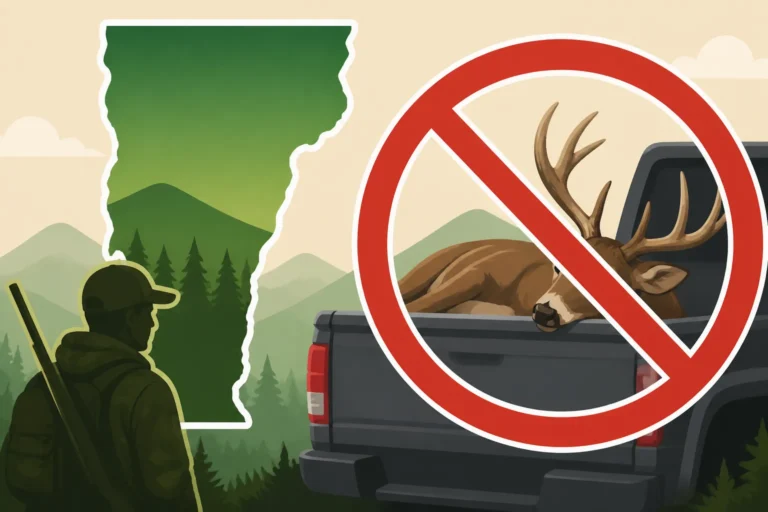
It’s a familiar scenario for many deer hunters: you’re meticulously setting up your stand, carefully hanging a wick or dousing a mock scrape with a potent deer lure, convinced this is the secret sauce to draw in that elusive buck. But if you're hunting in Vermont, that tried-and-true bottle of deer urine might just land you in hot water. Vermont has taken a firm stance against urine-based deer lures, a decision that can catch many a seasoned hunter off guard. This comprehensive guide is here to unravel the why, what, and how of Vermont's rule against urine-based deer lures, helping you understand the regulations and adapt your hunting strategies to stay compliant and successful.
The Critical Need to Prevent CWD in Vermont
For generations, using natural deer urine to attract deer has been a staple in many hunters' playbooks. It's often seen as a way to "talk" to deer in their own language, mimicking the scents of other deer in the area. So, when a state bans such a long-standing practice, it’s understandable that hunters feel a mix of frustration and confusion. You might be thinking, "What's the big deal? It's just pee!" But for wildlife biologists and conservationists, the "big deal" is an insidious, fatal neurological disease known as Chronic Wasting Disease (CWD).
Vermont's rule against urine-based deer lures isn't some arbitrary decision; it's a proactive, science-backed measure to protect our cherished deer herd from a truly devastating threat. This isn't just about controlling one small aspect of hunting; it's about safeguarding the future of deer hunting in the Green Mountain State. The state has put a lot of effort into its Vermont's CWD Prevention Rules and maintaining Vermont's CWD-Free Deer Herd.
Understanding Chronic Wasting Disease and Prion Transmission
Chronic Wasting Disease is a transmissible spongiform encephalopathy (TSE) that affects deer, elk, and moose. It's often likened to "mad cow disease" in cattle, slowly and inevitably attacking the brain and nervous system of infected animals. The result is a deterioration of body condition, abnormal behavior, and ultimately, death. What makes CWD so terrifying for wildlife managers is that it’s always fatal, there’s no cure, and it can spread from animal to animal and persist in the environment for years.
The disease is caused by abnormal proteins called prions. These prions are shed by infected animals through saliva, urine, feces, and decomposing carcasses. Crucially, these prions can remain infectious in the soil and plants for incredibly long periods, effectively turning contaminated areas into persistent infection zones. The fear with urine-based lures, especially those sourced from deer farms, is that they could inadvertently contain these prions, even if the source animal didn't show symptoms yet. Transporting a urine-based lure from an area with CWD into a CWD-free state like Vermont creates a direct pathway for these resilient prions to enter our environment, potentially infecting our healthy deer. This is a primary concern for Vermont Deer and Moose Disease Monitoring.
Vermont's Proactive Stance on CWD Prevention
Vermont Fish & Wildlife has maintained a vigilant stance on CWD, understanding that an ounce of prevention is worth a pound of cure, especially with a disease as relentless as this. Despite the inconvenience to hunters, the ban on natural urine-based lures is a relatively small price to pay for protecting a healthy and vibrant deer population. Vermont has remained CWD-free, a testament to these stringent measures.
The agency's proactive approach extends beyond just lures. There are also strict Vermont Carcass Import Restrictions to prevent the accidental introduction of prions from deer harvested in CWD-positive states. Every year, the state conducts extensive CWD surveillance, testing hundreds of deer statewide to ensure the disease hasn’t quietly crept in. This continuous monitoring and the adoption of preventative regulations are critical for safeguarding our wildlife resources and ensuring that future generations can enjoy healthy deer hunting opportunities.
Navigating What's Banned and What's Still Permitted
So, you understand why the ban is in place, but now comes the practical question: what exactly does "urine-based deer lure" encompass, and what can you still use? This is where many hunters get tripped up, thinking that any scent attractant is off-limits. Fortunately, that’s not the case. Vermont's regulations are specific, designed to mitigate CWD risk without completely handcuffing hunters who rely on scent to enhance their success.
It’s about being informed and making smart choices. You might be accustomed to picking up a bottle labeled "doe estrus" or "dominant buck urine" at your local sporting goods store. Now, if that bottle contains natural deer by-products, it’s a no-go in Vermont.
Defining "Urine-Based" and "Natural Deer Lures"
The core of the regulation targets products derived from deer or other cervids (like elk or moose). This primarily means lures containing natural deer urine, but also extends to other natural bodily fluids or parts that could potentially harbor CWD prions. The key differentiator is whether the product originated from an animal. If it did, and it's intended to attract deer, it's likely banned.
This includes:
- Natural Deer Urine: The most common form of banned attractant. This is urine collected from captive deer, often marketed as specific scents like "doe in estrus" or "buck grunt."
- Other Natural Cervid Fluids: While urine is the main focus, any product containing blood, gland secretions, or other biological fluids from deer or other cervids falls under the same restriction.
- Animal-Based Glandular Lures: Some lures use natural glandular secretions or tarsal gland extracts. If these are derived directly from deer, they are also prohibited.
The intent is clear: to prevent the introduction of CWD prions that might be present in any biological material from deer, particularly those that may have come from captive facilities where CWD outbreaks have occurred. It's a broad stroke to cover all potential biological vectors for the disease.
Permitted Attractants and Alternatives for Vermont Hunters
Fear not, scent strategies are not entirely out the window! While urine-based lures are off the table, Vermont hunters still have a variety of legal and effective alternatives. The emphasis here is on synthetic or plant-based products, which carry no CWD risk because they don't originate from actual deer.
Here's what you can still use:
- Synthetic Deer Lures: These are manufactured to mimic natural deer scents but contain no actual deer by-products. Companies like Tink's, Code Blue (their synthetic lines), or Wildlife Research Center offer synthetic versions of estrus, dominant buck, or curiosity scents. Read the label carefully to ensure it explicitly states "synthetic" or "non-animal origin."
- Food-Based Attractants: Lures that smell like acorns, apples, corn, or other natural food sources are generally permitted, provided they don't contain actual food that would constitute illegal baiting (check local baiting regulations, as they can differ). Scents that simulate a ripe apple orchard can be incredibly effective, especially when Hunting a Standing Apple Orchard.
- Scent Eliminators: Products designed to mask or eliminate human odor are not only legal but highly recommended. Brands like Scent Killer, Dead Down Wind, and Ozonics systems are all fair game. In fact, with the absence of deer urine, scent control becomes even more critical for success.
- Mineral Blocks/Licks (with caveats): While not direct lures, mineral blocks can attract deer. Be sure to check Vermont's specific regulations on mineral supplement placement, as rules can vary regarding duration and location, especially on public lands or during certain seasons.
When purchasing any scent product, always double-check the label for "synthetic," "non-animal," or "plant-based" assurances. If there's any ambiguity, err on the side of caution or consult the Vermont Fish & Wildlife Department directly. Many hunters find digital resources like those found on GoHunt invaluable for verifying current regulations.
Table: Prohibited vs. Permitted Deer Attractants in Vermont
| Feature | Prohibited Deer Attractants (Urine-Based) | Permitted Deer Attractants (Alternatives) |
|---|---|---|
| Origin | Derived from deer or other cervids (urine, blood, glands) | Synthetic, plant-based, or food-mimicking (no animal by-products) |
| CWD Risk | High potential for CWD prion transmission | No CWD prion transmission risk |
| Examples | "Doe in Estrus" natural urine, "Dominant Buck" natural urine, | Synthetic doe estrus, synthetic buck urine, acorn scents, apple scents, |
| natural glandular lures from deer. | vanilla extract (as curiosity lure), commercially available food lures. | |
| Legal Status | Illegal for use or possession while hunting in Vermont | Legal for use in Vermont, subject to other baiting/feeding regulations. |
| Primary Purpose | Mimic specific deer scents for attraction | Mimic deer scents, food sources, or eliminate human odor |
Adapting Your Hunting Strategy in a Lure-Free Landscape
The ban on urine-based lures might feel like losing a tool in your hunting arsenal, especially if you've relied on them for years. But think of it as an opportunity to sharpen other skills and focus on fundamental hunting principles that are often more effective anyway. Vermont's deer are wild, smart, and constantly on the move, and successful hunting here often boils down to understanding their natural behavior, not just trying to trick them with a bottle.
This isn't just about avoiding a fine; it's about evolving as a hunter. The absence of traditional lures compels you to become a better scout, a more patient observer, and a master of concealment and scent control. And let's be honest, those skills are far more rewarding in the long run than simply pouring out a bottle.
Enhanced Scouting and Natural Observation
Without the crutch of urine lures, your focus should shift dramatically to understanding deer movement and behavior on a deeper level. This means more time in the woods before the season, not just during it. Scouting Vermont Public Land Before Season becomes paramount.
- Reading the Landscape: Deer movements are largely dictated by food, water, and cover. Learn to identify natural funnels between bedding and feeding areas. A ridge-top saddle, a narrow strip of timber connecting two larger woodlots, or a natural pinch point near a stream crossing are all prime locations for ambush, no lure needed. You can learn a lot from Reading Aerial Photos for Green Mountain Deer.
- Food Sources: Pay close attention to mast crops like acorns and beech nuts. If it's a good acorn year, deer will be concentrated where those trees are dropping their bounty. Conversely, Hunting After a Poor Acorn Year requires a different strategy, often focusing on browse and remaining green forage. Find old apple orchards or overgrown fields with browse, and you've found a natural deer magnet.
- Sign, Sign, and More Sign: Fresh tracks, rubs, scrapes (natural ones!), and droppings tell a story. Learning to read Scrape Lines Along a Logging Road or understanding what makes a buck leave a rub line can lead you directly to where he's traveling. The absence of a "hot" scrape to doctor up means you need to find the real hot scrapes and understand why they're there.
- Bedding Areas: Knowing Where Vermont Bucks Bed in Thick Cover is gold. Often, it's the thickest, nastiest cover on a leeward slope or a dense softwood stand. Once you identify these areas, you can set up downwind on travel corridors leading to or from them.
Platforms like GoHunt provide excellent mapping tools that can help you identify these natural features and potential deer highways from your couch, before you even step foot in the woods. Their detailed satellite imagery and property line overlays are invaluable for planning your approach and identifying overlooked pockets of cover.
Mastering Scent Control and Stealth
If you can't bring deer to you with their own scent, the next best thing is to ensure they don't know you're there. Scent control isn't just a buzzword; it's a critical component of successful deer hunting, and even more so when you're relying on natural movement.
- Personal Hygiene: It starts at home. Wash your hunting clothes in scent-free detergent. Shower with scent-free soap and shampoo before heading out. Store your hunting clothes in sealed bags or containers, away from everyday odors.
- Wind Direction: This is arguably the most crucial factor. Always hunt with the wind in your favor, blowing your scent away from where you expect deer to approach. Understanding Wind and Thermals in Steep Green Mountain Terrain is essential, as thermals can carry your scent uphill in the morning and downhill in the evening, regardless of surface wind.
- Strategic Entry and Exit: Your approach and departure from your stand can blow an entire hunt. Plan your entry and exit routes to be as quiet and scent-free as possible, avoiding bedding areas or known travel routes where deer might be active. For example, if you're Hanging a Stand on a Champlain Valley Field Edge, make sure your path in doesn't cross the field where deer might feed.
- Natural Cover and Blinds: Maximize your natural concealment. Use the topography and vegetation to your advantage. If you're Using a Ground Blind on Public Land, brush it in thoroughly to break up its outline. The goal is to blend seamlessly into the environment, making it impossible for deer to see or smell you.
- Calling and Decoys (Non-Urine): While urine lures are out, calling can still be highly effective. Grunt tubes, bleat cans, and rattling antlers can mimic deer sounds and pique a buck's curiosity, especially during the rut. Just make sure to use these sparingly and realistically. Decoys (especially for bowhunting) can also work to draw deer into range, provided you set them up appropriately and legally.
By embracing these fundamentals, you'll not only adapt to Vermont's lure ban but likely become a more skilled and successful hunter overall. It forces a deeper connection to the landscape and the animals, which is, after all, a huge part of why we hunt.
Final Thoughts and Staying Informed
Vermont's rule against urine-based deer lures is a prime example of how wildlife management adapts to new scientific information and emerging threats. While it might represent a change in routine for some hunters, it's a necessary step to protect a resource we all value. The Green Mountain State is committed to maintaining a CWD-free herd, and every hunter plays a vital role in that effort.
It's absolutely essential to stay up-to-date with the latest hunting regulations. Laws can change, and interpretations can be clarified. The Vermont Fish & Wildlife Department website is your most reliable source for current information. Checking it before each season, or even periodically throughout the year, is just good practice. Remember, ignorance of the law is not an excuse.
Embrace the challenge, sharpen your skills, and enjoy the unparalleled beauty and hunting opportunities Vermont has to offer. By respecting these regulations, you're contributing directly to the health of our deer herd and ensuring that hunting traditions can continue for generations to come.
Disclaimer
This article is intended for informational purposes only and does not constitute legal advice. Hunting regulations are subject to change. Always consult the most current Vermont Fish & Wildlife Department regulations and official guides before participating in any hunting activities.