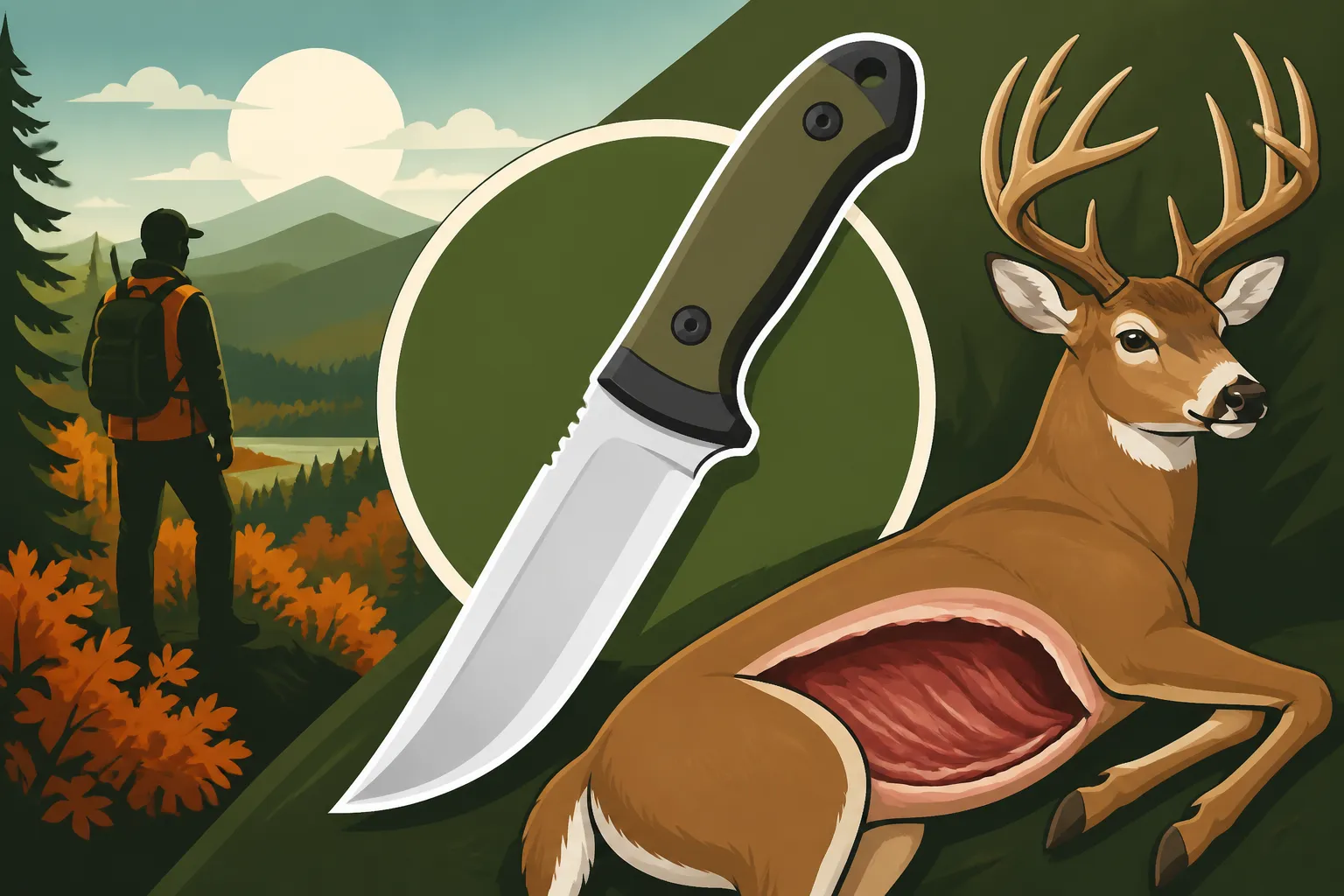
Best Knife for Field Dressing a Whitetail
There's nothing quite like the rush of a successful deer hunt in Vermont – that moment when you walk up on your buck or doe, heart pounding, adrenaline still coursing through your veins. But after the initial excitement, the reality sets in: it's time to get to work. Field dressing a whitetail quickly and efficiently is crucial for preserving the meat, especially in our often unpredictable New England weather. This guide will walk you through everything you need to know to choose the best knife for the job, ensuring you're prepared for this vital part of your hunting experience.
What Makes a Great Field Dressing Knife?
Choosing the right knife for field dressing isn't just about grabbing the sharpest blade you own; it's about finding a tool designed for the specific, messy, and often challenging task at hand. You need something reliable, easy to handle, and safe to use when conditions might be cold, wet, or slippery. Thinking about these key features before you head into the woods can save you a lot of headache and hassle when it truly counts.
Blade Design and Material
The blade is, of course, the heart of any good hunting knife. For field dressing, you're not looking for a tactical combat blade, but rather something practical and purpose-built. A blade length between 3 to 5 inches is often considered ideal. Too long, and it becomes cumbersome and harder to control for intricate cuts around the organs. Too short, and it can struggle with larger, tougher hides.
Many hunters prefer a blade with a slight curve or a drop-point design. These shapes offer a good balance of cutting edge for slicing and a fine point for initial penetration, without being overly aggressive. A gut hook, while popular on some models, isn't strictly necessary but can be a convenient addition for unzipping the hide without puncturing internal organs. Stainless steel is often the material of choice for field dressing knives because of its corrosion resistance. You'll be dealing with blood, moisture, and grime, and a stainless blade holds up much better against rust and makes cleanup far easier than high-carbon steel, though high-carbon can hold an edge longer. The trade-off is often worth it for the ease of maintenance in the field.
Handle Ergonomics and Grip
When you're field dressing a deer, your hands are going to get messy. There’s no way around it. Blood, fat, and cold can make even a perfectly dry grip feel slippery, and the last thing you want is your hand sliding up onto the blade. This is why handle ergonomics are paramount. Look for a handle that fills your hand comfortably, providing a secure, non-slip grip even when wet or bloody.
Materials like rubberized synthetics, textured G-10, or even certain types of stabilized wood with aggressive checkering are excellent choices. Avoid smooth, polished handles that offer little purchase. Finger grooves can be helpful for some, but ensure they fit your hand naturally, as ill-fitting grooves can actually cause discomfort and reduce control. A good handle will also often have a guard or bolster that prevents your hand from slipping forward onto the sharp edge, a critical safety feature when you're working quickly under pressure. Remember, you're not just making a few cuts; you're often working in awkward positions, and a secure grip is vital for both safety and efficiency.
Sheath and Carry System
The best knife in the world is useless if you can't carry it safely and access it quickly when needed. The sheath plays a critical role in both protection and practicality. For a fixed-blade knife, a sturdy sheath made of Kydex, leather, or a durable synthetic material is essential. It should hold the knife securely, preventing it from falling out while you're hiking through thick brush or climbing over logs, yet allow for easy, one-handed draw.
Consider how the sheath attaches to your belt or pack. Some hunters prefer a high-ride sheath for quick access, while others like a dangler style that moves with them more freely. For folding knives, a good pocket clip or a dedicated belt pouch is important. Regardless of the type, the sheath should protect the blade from the elements and from accidentally cutting you or your gear. After all, a sharp knife is a dangerous thing if it's not properly secured, especially when you're navigating the varied terrain of the Green Mountains. A reliable sheath ensures your knife is always where you expect it to be, ready for action.
Different Knife Styles for Different Hunters
Just like every hunter in Vermont has their preferred rifle, bow, or muzzleloader, there are different knife styles that cater to individual preferences and hunting situations. What works perfectly for one person might be cumbersome for another, and understanding the pros and cons of each type can help you make an informed decision.
Fixed Blade Knives
Fixed blade knives are the traditional workhorses of the hunting world, and for good reason. They are generally considered the most robust and reliable option for field dressing. With a full-tang design (where the blade steel extends through the entire handle), they are incredibly strong and less prone to breakage than folding knives. There are no moving parts to clog with blood or dirt, making them easier to clean and inherently more durable in demanding conditions.
The simplicity of a fixed blade means it's always ready; no fumbling to open it with cold, gloved, or bloody hands. They often come with excellent sheaths that allow for secure and accessible carry. Many Vermont hunters choose a fixed blade for its dependability when Field Dressing a Deer in Cold Weather or when needing to Drag a Deer Out of a Steep Ravine. The main "downside" is that they are less compact than folders, requiring a belt or pack carry, but for many, the trade-off for reliability is well worth it. Companies like Buck Knives and Benchmade offer a range of fixed blades popular among hunters, known for their quality and edge retention.
Folding Knives
Folding knives offer a significant advantage in terms of portability and discreet carry. They tuck neatly into a pocket or a small pouch on your pack, taking up minimal space. Modern folding knives are incredibly strong, with advanced locking mechanisms like liner locks, frame locks, and back locks designed to prevent accidental closure during use. For many hunters, a quality folder serves as an excellent all-around utility knife that can double for field dressing.
However, folding knives do come with their own set of considerations. The pivot point and internal mechanisms can become a trap for blood, hair, and grit, making thorough cleaning more challenging. While strong, they are generally not as robust as a full-tang fixed blade, and there's always a slight risk of the lock failing, though this is rare with reputable brands and proper maintenance. If you opt for a folder, choose one with a simple, easy-to-clean design and a strong, reliable lock. It’s a great option for light carry or as a backup, but always be mindful of keeping those moving parts clean, especially when you might be working on a downed deer far from camp.
Replaceable Blade Knives
Replaceable blade knives have gained immense popularity in recent years, especially among those who prioritize a razor-sharp edge without the need for frequent sharpening in the field. These knives typically use standard utility or surgical-style blades that can be swapped out once they dull, giving you a fresh, scalpel-sharp edge every time. This is incredibly convenient, especially if you're not adept at sharpening or if you're dealing with multiple animals.
Brands like Outdoor Edge and Havalon are well-known for their replaceable blade systems. The benefit is obvious: always having an incredibly sharp blade for precise, clean cuts, which is great for delicate work or skinning. The primary drawback is durability. These blades are often very thin and can be fragile, prone to snapping if twisted or used for prying. They also present a safety concern with handling and disposing of used blades, especially with cold, fumbling fingers. While excellent for specific tasks like skinning or meticulous cuts, many hunters still prefer a more robust fixed blade for the initial, tougher work of opening up the chest cavity and cutting through thicker tissue. Consider them a specialized tool that complements a more general-purpose hunting knife rather than replacing it entirely for all field dressing tasks.
| Knife Type | Pros | Cons | Ideal Use Cases |
|---|---|---|---|
| Fixed Blade | Most durable, no moving parts to fail, easy to clean, reliable grip. | Less compact, requires dedicated sheath, potentially heavier. | Primary field dressing, heavy-duty tasks, cold/wet conditions. |
| Folding Knife | Compact, easy to carry, versatile for general utility. | Moving parts can clog, harder to clean thoroughly, less robust than fixed blades. | Backup knife, general utility, lighter field dressing tasks. |
| Replaceable Blade | Always razor-sharp edge, no sharpening needed, lightweight blades. | Blades can be fragile/snap, safety concerns with blade changes, not for prying. | Skinning, precise cuts, meticulous caping, light field dressing. |
Caring for Your Field Dressing Knife
You've invested in a good knife, and it's become a trusted companion in the Vermont woods. Just like your rifle or your bow, it deserves proper care and maintenance to ensure it performs flawlessly season after season. A dull, dirty, or rusted knife isn't just inefficient; it can be dangerous.
Cleaning and Sanitizing
The moment you finish field dressing your deer, the clock starts ticking on cleaning your knife. Blood and tissue can dry and cling to the blade and handle, becoming much harder to remove later. If left for too long, it can also lead to corrosion, even on stainless steel. As soon as you're done, or as soon as practically possible, wipe down the blade and handle thoroughly.
Back at camp or home, a more rigorous cleaning is in order. Use warm, soapy water and a stiff brush to remove all traces of blood, fat, and hair. Pay close attention to any nooks and crannies on the handle, and especially the pivot area if it's a folding knife. Some hunters even use a mild bleach solution or rubbing alcohol for a final sanitizing step, particularly if they process multiple animals or are concerned about pathogens. Always rinse thoroughly with clean water, then dry the knife completely with a towel before storing. For folders, make sure to get water out of the pivot. This meticulous cleaning ensures your knife is ready for its next job and helps prevent the spread of any potential game diseases.
Sharpening and Edge Maintenance
A sharp knife is a safe knife, and it's also a far more effective knife. Trying to field dress a deer with a dull blade is not only frustrating but vastly increases the risk of slipping and cutting yourself. The adage "a dull knife causes more accidents" holds true in the field. You don't need to be a professional sharpener, but knowing how to put a good working edge on your knife is a critical skill for any Vermont hunter.
There are many sharpening systems available, from simple pull-through sharpeners to ceramic rods, whetstones, and guided systems. Whichever you choose, practice maintaining a consistent angle. For most hunting knives, an edge angle between 20-25 degrees per side is a good starting point, offering a balance of sharpness and durability. It’s a good idea to touch up your blade before each hunt and certainly after each field dressing. Even a quick pass on a ceramic rod or strop can restore a working edge and extend the time between full sharpening sessions. Some modern knives, like those from GoHunt, are designed with materials that hold an edge exceptionally well, reducing the frequency of extensive sharpening. Always finish by testing the edge—it should slice through paper cleanly without tearing.
Storage and Rust Prevention
Proper storage is the final piece of the puzzle for knife care. After cleaning and drying, your knife should be stored in a way that protects both the blade and the user. For fixed blades, a dry, well-fitting sheath is ideal. Avoid storing knives long-term in damp leather sheaths, as leather can hold moisture and actually cause rust. Kydex or synthetic sheaths are often better for long-term storage in fluctuating humidity.
If you're storing the knife for an extended period, especially in a humid environment like a camp in the Northeast Kingdom, consider applying a thin coat of rust-preventative oil to the blade. Food-grade mineral oil works well if you're concerned about using petroleum-based products on a knife that will contact game meat. Store knives in a dry place, away from direct sunlight or extreme temperature changes. Never just toss your knife into a toolbox or gear bag where it can get dinged, dulled, or worse, become a hazard. Treating your knife with respect, from the moment you make that critical first cut to putting it away for the season, ensures it will be ready to serve you faithfully on many more successful hunts.
Practical Tips for Field Dressing in Vermont
Field dressing isn't just about the knife; it's about the process, the environment, and being prepared for the realities of hunting in Vermont. Our variable weather, dense cover, and often remote public lands mean you need a plan that goes beyond just having a sharp blade.
Preparing for the Unexpected
Hunting in Vermont means being ready for anything. You might be deep in the Green Mountain National Forest Timber or along a Champlain Valley Dairy Farm Edge, and conditions can change rapidly. When you head out, think about what you’ll need after the shot. Beyond your knife, always carry a small sharpening stone or ceramic rod for touch-ups, disposable gloves (nitrile are excellent) to maintain hygiene and a secure grip, and a few paper towels or a small rag for initial cleanup. A piece of cordage can be useful for tying legs out of the way, and a small headlamp is absolutely critical, even if you plan to be back before dark, because field dressing often takes longer than anticipated.
Many hunters use mapping apps like those often integrated into platforms like GoHunt to mark the location of their downed deer. This isn't just for retrieval; it can help you find a suitable, relatively flat and clean spot to perform the field dressing, away from main trails or areas with heavy leaf litter that might contaminate the carcass. Having a plan for how you'll get the deer out, whether by dragging, quartering, or with a game cart, will also influence how much field dressing you do on site.
Technique and Efficiency
The goal of field dressing is to remove the internal organs quickly and cleanly to allow the carcass to cool down, preserving the meat. While there are many videos and diagrams available, the basic steps are fairly consistent. Start by making an incision from the sternum to the pelvis, carefully cutting only through the hide and abdominal wall to avoid puncturing the gut. Many prefer to use two fingers as a guide inside the cavity to keep the blade away from the organs.
Once the cavity is open, sever the esophagus and trachea up towards the chest, and then work your way back, carefully detaching organs from the body cavity. For whitetails, it’s often easiest to roll the deer onto its back, then straddle it to keep it stable. Be methodical and deliberate, especially around the anus and rectum, ensuring you cut cleanly around these areas to prevent contamination. If you're new to it, consider practicing on a small game animal or reviewing some detailed guides. Remember that minimizing contact between the gut contents and the meat is paramount for hygiene and meat quality. After the organs are removed, elevate the deer if possible to allow blood to drain, and prop open the cavity with a stick to promote airflow and cooling.
Dealing with Cold and Warm Weather
Vermont's hunting seasons can span a wide range of temperatures, from warm September days during Hunting Vermont's Expanded Archery Zones in September to frigid December hunts during Hunting the December Muzzleloader Season. Field dressing strategies need to adapt to the weather.
In cold weather, your primary concern is preventing the carcass from freezing too quickly on the outside before the internal heat dissipates, which can trap heat and spoil meat. You still want to get the guts out and cool the animal, but you might not need to worry about flies as much. Make sure the cavity is open for airflow. If you're going to hang it for a short time, hanging it by the head can help drain blood. In warmer weather, speed is absolutely critical. Get those guts out immediately. Flies and bacteria multiply rapidly in warm temperatures, so cooling the meat down is your top priority. Consider quartering the deer if you're far from your vehicle and need to get the meat into coolers quickly. Placing bags of ice inside the cavity can also help accelerate cooling if you have them available at your vehicle. Regardless of temperature, minimizing the time between the shot and getting the guts out is the single most important factor in ensuring high-quality venison. This is also where understanding deer behavior and habitat, as covered in Reading a Green Mountain Deer Yard, can help you plan for a quick recovery and dressing process near accessible points.
Disclaimer
This article is for general informational purposes only and does not constitute professional advice. Laws, prices and regulations vary by location and change over time. Consult a qualified professional for guidance on your specific situation.