Best Safety Harness for a Treestand Hunt
Every year, countless hunters across Vermont head into the woods, climbing into treestands with a mix of anticipation and excitement. But the sobering truth is that falls from elevated stands remain a leading cause of serious injury, and even death, in our hunting community. Many of us have heard the stories, or perhaps even had a close call ourselves, that instant of panic when you slip or lose your footing. This guide is dedicated to breaking down why a high-quality safety harness isn't just a suggestion, but an absolute necessity for any treestand hunter, exploring what makes one truly effective, and how to use it correctly to ensure you come home safely after every hunt in the Green Mountains.
The Non-Negotiable Necessity of a Safety Harness
Let's face it, we all know someone, or maybe it's even been us, who's thought, "Nah, I don't need a harness for this quick hunt." Or perhaps you've opted for a simple strap around your waist, thinking it's enough. But the statistics, and the devastating personal stories, tell a different tale. Falls from treestands happen in an instant, often when you least expect them – reaching for an arrow, shifting your weight to get a better shot, or even just climbing up or down in the dark. The consequences can range from broken bones and paralysis to fatal head injuries. It's not about being unlucky; it's about being unprepared for a moment of human error or equipment failure.
The peace of mind that comes with being properly secured is invaluable. Imagine you're on a cold, blustery November morning, perched high in a maple, waiting for that big buck to appear. Your hands are a little numb, and as you try to adjust your binoculars, you slip. Without a harness, that quick movement turns into a terrifying plunge. With a proper full-body harness, that slip becomes a momentary jolt, followed by the immense relief of being caught, suspended, and able to recover. It allows you to focus on the hunt itself, knowing that a simple mistake won't end your season, or worse. For more on navigating the colder months, check out Cold-Weather Sitting Strategy in the Northeast Kingdom.
This isn't about fear-mongering; it's about embracing a fundamental piece of gear that saves lives. Just as you wouldn't head into the backcountry without a knife or a compass, you shouldn't climb into a treestand without a harness. It's an investment in your well-being, and frankly, an investment in the peace of mind of your loved ones back home. We're out there to enjoy nature, pursue game, and make memories, not to become a statistic.
Understanding the Anatomy of a Quality Safety Harness
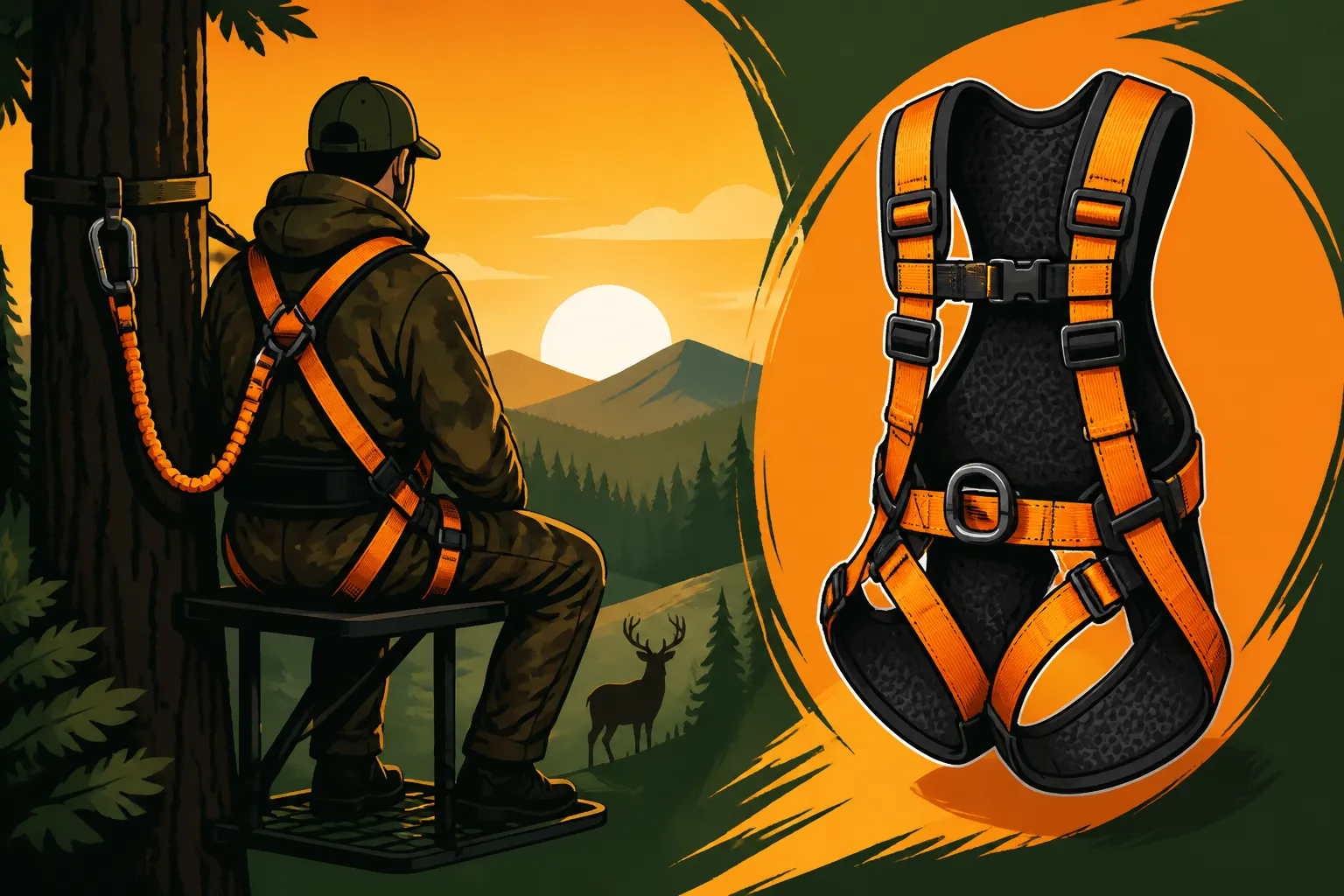
Not all safety harnesses are created equal. When you're looking for one that truly offers robust protection, especially given the variable terrain and weather we experience here in Vermont, it's crucial to understand its core components. A proper full-body safety harness is far more than just a belt; it's an engineered system designed to distribute impact forces and keep you upright if a fall occurs.
The foundational element is the full-body design. Unlike older, waist-only harnesses, a full-body harness wraps around your shoulders, torso, and legs, much like a rock climbing harness. This comprehensive design is critical because it prevents what's known as "suspension trauma" or "harness hang syndrome." If you fall and are suspended by a waist-only belt, the pressure on your femoral arteries can restrict blood flow, leading to serious health issues, often within a surprisingly short amount of time. A full-body harness keeps you upright, allowing blood to circulate more freely, buying you precious time to self-rescue or wait for assistance.
Next up is the tether, often a short, sturdy strap that connects the harness to the tree. This is your lifeline. A good tether needs to be strong, durable, and ideally, incorporate some shock-absorbing qualities. When a fall happens, the initial impact can be jarring. Some tethers have integrated bungee-like sections or stitching designed to tear in a controlled manner, dissipating the energy of the fall and reducing the sudden jerk on your body. The tether should be adjustable, allowing you to maintain just enough slack to comfortably move and shoot, but not so much that you free-fall a significant distance before it catches you.
A feature that is absolutely essential, but often overlooked, is the suspension relief strap. This small, often brightly colored strap or loop deploys after a fall. Once suspended, you can step into this strap, relieving pressure on your legs and allowing you to stand up slightly, preventing suspension trauma. Many harnesses come with one integrated, but if yours doesn't, or if it's difficult to access, you can purchase aftermarket versions. Practicing deploying and using this strap before you ever need it in an emergency is vital.
Finally, consider the buckles and padding. Quick-connect buckles, often found on the leg straps and sometimes the chest, make donning and doffing the harness much easier, especially when layering up for a cold morning hunt. Look for robust, metal buckles that inspire confidence. Padding, while adding a bit of bulk, significantly enhances comfort during long sits, particularly when you're Hunting a Ridge-Top Saddle for Rutting Bucks or on a sustained all-day hunt. Padded leg straps and shoulder straps prevent chafing and discomfort, which can be a real distraction if you're trying to stay still and quiet. Brands like GoHunt often feature thoughtful design elements like these to enhance both safety and hunter comfort.
Key Features to Look for in a Vermont Treestand Harness
When you're outfitting yourself for a treestand hunt in Vermont, whether it's for deer, bear, or turkey, specific considerations should guide your choice of a safety harness. Our hunting conditions, from dense hardwoods to open field edges and the varied climate, demand a harness with particular attributes.
First, comfort and fit are paramount. You're going to be wearing this harness for hours, potentially from before dawn until after dusk. A harness that chafes, bunches, or is difficult to adjust will quickly become a nuisance, increasing the temptation to loosen it improperly or even take it off. Look for designs that offer adjustability in multiple areas – shoulders, chest, and legs – to ensure a snug yet comfortable fit over different layers of clothing. Since Layering for Vermont's Long Hunting Season is a way of life, your harness needs to accommodate everything from a light early-season jacket to a heavy late-season parka. Some harnesses even have modular padding that can be added or removed depending on the weather and your layering strategy.
Durability and weather resistance are also critical. Vermont's seasons can throw everything at you: pouring rain, freezing sleet, heavy snow, and strong winds. Your harness will be exposed to these elements. Materials should be tough, resistant to abrasion from tree bark or brush, and ideally, quick-drying. While no harness is completely impervious, look for heavy-duty stitching, robust webbing, and corrosion-resistant metal hardware. A harness that holds up to the rigors of frequent use in damp, cold conditions will give you confidence season after season. Many experienced hunters find that researching different models on platforms like GoHunt can provide valuable insights into how various harnesses perform in real-world scenarios across diverse hunting conditions.
| Feature | Importance for Vermont Hunters | What to Look For |
|---|---|---|
| Full-Body Design | Essential for preventing suspension trauma during extended hangs. | Wrap-around shoulder, torso, and leg straps; no waist-only options. |
| Adjustable Tether | Accommodates varying tree sizes and allows movement for shots. | Strong, shock-absorbing material; easily adjustable length. |
| Suspension Relief | Critical for post-fall circulation, buying time for self-rescue. | Integrated strap or deployable loop; practice using it. |
| Quick-Connect Buckles | Facilitates easy donning/doffing, especially with cold fingers. | Robust, metal, easy-to-operate clasps; secure locking mechanism. |
| Comfort Padding | Enhances endurance during long sits in cold weather. | Padded shoulders and legs; breathable material; non-bulky. |
| Durability | Withstands harsh weather, abrasion from tree bark, and frequent use. | Heavy-duty nylon or polyester webbing; robust stitching. |
| Weight | Important for mobile hunters or those with long walks in. | Lighter models for pack-in hunting; balanced distribution. |
Another often-overlooked feature is ease of use and quiet operation. Modern harnesses have come a long way from the clunky, noisy models of old. Look for designs that minimize metal-on-metal contact, as a rattling buckle can spook game faster than almost anything else. Simple, intuitive buckle systems mean you won't be fumbling in the dark or with cold fingers, which is especially important when you're trying to get set up quietly before legal shooting light. If you're using a Best Climbing Stand for Vermont Hardwoods or a Best Ladder Stand for a Field Edge, the harness should integrate seamlessly with its attachment system, allowing for smooth, silent transitions. Brands often highlight "silent" buckles or fabric wraps to address this common hunter concern. Checking out user reviews on sites like GoHunt can give you a realistic picture of how quiet a harness truly is in the field.
Finally, consider the weight and bulk. If you're doing a lot of Still-Hunting Green Mountain National Forest Timber or heading deep into public land, every ounce in your pack matters. While safety is the priority, some harnesses are designed to be lighter and more packable without sacrificing strength. Assess your typical hunting style: are you sitting close to the truck, or are you hiking miles to your stand location? Your harness choice should reflect this.
Proper Use and Fit for Maximum Safety
Having the best safety harness in the world means absolutely nothing if it's not used correctly. This isn't just about putting it on; it's about a complete system of usage that ensures you're protected from the moment your feet leave the ground until they return to it. We've all seen hunters who haphazardly strap on a harness or leave buckles undone, and it completely defeats the purpose.
First and foremost, read the manufacturer's instructions. I know, I know, it sounds basic, but every harness has nuances in how it's designed to be worn and connected. Some models have specific ways to route straps, or unique buckle systems. Taking a few minutes to review the manual before you're standing in the dark at 4 AM trying to get dressed is crucial. This is also where you'll find information on weight limits and recommended inspection procedures.
Achieving the correct fit is critical. A harness should be snug, but not uncomfortably tight, and certainly not loose enough to allow significant movement.
- Shoulder Straps: Adjust these so the harness sits high on your back, with the D-ring (where your tether attaches) positioned between your shoulder blades. It shouldn't ride low or restrict arm movement.
- Leg Straps: These should be tightened so they are snug around your upper thighs, but still allow for comfortable walking and climbing. You should be able to slide a flat hand under them, but no more. Too loose, and you risk a dangerous jolt or even slipping out in a fall. Too tight, and you'll quickly become uncomfortable.
- Chest Strap: This secures the shoulder straps and prevents them from slipping. It should be across your sternum, not too high on your neck or too low on your stomach.
Once the harness is on and properly adjusted, the next step is connecting to the tree. Always use a high-quality tree strap or rope, rated for human weight, that you wrap around the tree above your head once you're in the stand. The tether from your harness then connects to this tree strap. The goal is to minimize the amount of free-fall distance. The tether should be just long enough to allow comfortable movement in your stand, but not so long that you could hit the stand's platform or the ground if you fall. Many hunters fail by having their tether too long, or by connecting it too low. The rule of thumb is: stay connected from the moment your feet leave the ground when climbing, until they touch back down. This means using a climbing line or separate tether during ascent and descent, which many harnesses don't include but are essential.
Finally, practice, practice, practice! Don't wait for an emergency to figure out how to deploy your suspension relief strap or how to self-rescue. Put your harness on, connect to a sturdy object at ground level (like a strong beam in your garage, with a spotter present), and simulate a fall. Experience what it feels like to hang, and practice using that relief strap. This familiarity can be the difference between a scary incident and a life-threatening one. Knowing how to efficiently Recovering a Deer From a Steep Ravine is one thing, but knowing how to recover yourself from a fall is far more critical.
Maintenance and When to Replace Your Harness
A safety harness isn't a "set it and forget it" piece of gear. Like any critical safety equipment, it requires regular inspection and proper care to ensure it remains reliable season after season. Ignoring these aspects can compromise its integrity, putting you at risk when you least expect it.
Regular inspections are paramount. Before every hunting season, and ideally before every single hunt, take a few minutes to thoroughly examine your harness.
- Webbing and Stitching: Look for any signs of fraying, cuts, excessive wear, or damaged stitching. Pay close attention to areas around buckles and adjustment points. Even minor damage can compromise strength.
- Buckles and Hardware: Check all metal components for rust, corrosion, cracks, or deformation. Ensure that all buckles engage smoothly and securely, and that no springs or locking mechanisms are sticky or damaged.
- Tether and Tree Strap: These components are subject to a lot of stress. Inspect them for any nicks, cuts, abrasions, or sun damage. Pay attention to any signs of discoloration or stiffness, which can indicate material degradation.
- Suspension Relief Strap: Confirm it's present, properly stored, and deploys easily. You don't want to be fumbling with a tangled strap after a fall.
Proper storage extends the life of your harness. After each season, or if it gets wet, ensure your harness is completely dry before storing it. Store it in a cool, dry place, away from direct sunlight, chemicals (like fuel or solvents), and pests. Extreme temperatures, UV exposure, and certain chemicals can degrade webbing materials over time, weakening the harness even if there are no visible signs of damage. Don't just toss it in a heap in the corner of your garage; hang it up, folded neatly, in a breathable bag or container. This is particularly important for gear that sees heavy use, like when you're Scouting Vermont Public Land Before Season and handling it a lot.
So, when should you replace your harness? This is a question many hunters grapple with, especially when their harness still "looks fine."
- After a Fall: This is non-negotiable. If your harness has ever caught you in a fall, even a small one, it must be retired immediately. The webbing, stitching, and shock-absorbing components are designed to withstand one major impact. Once that impact occurs, its structural integrity is compromised, even if visible damage isn't apparent. Don't gamble with your life; replace it.
- Visible Damage: Any significant fraying, cuts, tears, rust, or deformation of hardware means it's time for a new one. Don't try to repair it yourself; professional repairs are usually not an option, and DIY fixes are dangerously unreliable.
- Manufacturer's Recommended Lifespan: Most manufacturers provide a recommended lifespan for their harnesses, typically between 3-5 years, regardless of how often it's used or how pristine it looks. This accounts for material degradation over time due to environmental exposure, even during storage. Check your harness's manual or tag for this critical information. If you're unsure, or if your harness is older than five years and lacks specific guidance, it's always safest to replace it. A good general rule is to follow the guidance provided by reputable brands that GoHunt often reviews and recommends.
Investing in a new harness every few years is a small price to pay for your safety. Think of it as preventative maintenance for your most important piece of hunting gear. Just like you wouldn't use expired climbing rope, you shouldn't use an outdated or compromised safety harness. Staying safe in the stand means you'll be back in the woods, pursuing Vermont's abundant game, for many seasons to come.
Disclaimer
This article is for general informational purposes only and does not constitute professional advice. Laws, prices and regulations vary by location and change over time. Consult a qualified professional for guidance on your specific situation.