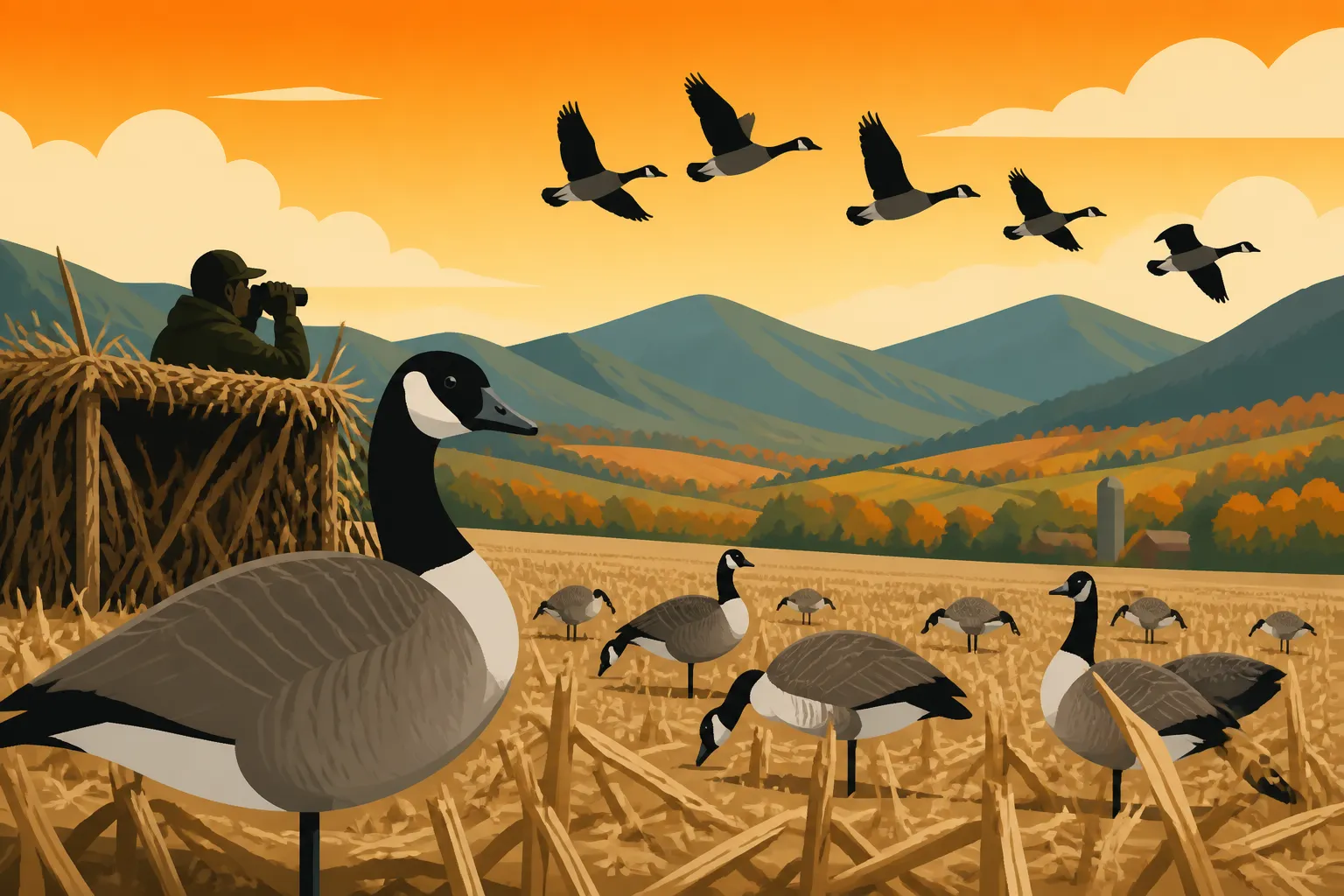
Goose Decoy Spreads for a Champlain Valley Field
There’s nothing quite like the sight of a big flock of Canada geese cupping their wings, preparing to commit to your spread in a wide-open Champlain Valley field. But let's be honest, getting them to do that consistently can feel like trying to herd cats – especially when they’ve seen it all before. This guide is all about giving you the insights and strategies you need to set up goose decoy spreads that fool even the wariest birds in Vermont's iconic Champlain Valley.
Understanding Champlain Valley Geese and Their Habits
Hunting geese in the Champlain Valley is a unique challenge and a truly rewarding experience. It’s not just about tossing out a few decoys; it’s about understanding the geese themselves, their routines, and how they react to the world around them. These birds are survivors, and they learn quickly.
Local Goose Behavior and Pressure
Vermont's Champlain Valley is home to a robust population of resident Canada geese. These are the birds that breed here, spend their summers raising broods, and often stick around until the deep freeze. They're smart, savvy, and they've likely encountered hunters before. This means they're often more wary than their migratory cousins who might just be passing through. They recognize common decoy patterns, shy away from suspicious-looking blinds, and can pinpoint an anomaly in a field from incredible distances.
Adding to this complexity is the migratory push that starts to arrive from further north as the seasons change. These new arrivals can sometimes be a bit more forgiving, but they quickly pick up on the local pressure. When you’re scouting, pay close attention not just to where the geese are, but how they’re acting. Are they flying high and wide around certain fields? Are they landing quickly and nervously, or are they feeding calmly for extended periods? These observations, perhaps aided by tools like the GoHunt app for marking observations, are crucial to understanding their daily patterns and the level of hunting pressure they've experienced. Remember, geese aren’t just looking for food; they’re looking for safety while they feed.
Reading the Landscape: Feed and Roost
Geese in the Champlain Valley operate on a fairly predictable daily cycle: they fly from a safe roosting area, typically a large body of water, to a feeding field, and then back again. Your success hinges on identifying these key locations. Lake Champlain itself, along with larger rivers like the Winooski or Missisquoi, and even substantial farm ponds, serve as primary roosting spots. They feel secure there, away from predators, especially at night.
The feeding fields are where the real action happens. In the Champlain Valley, you'll most often find geese in cut cornfields, particularly after the harvest, as they feast on dropped kernels. They also gravitate towards winter wheat fields, alfalfa, and even lush pastures. Scouting involves not just driving around, but getting out and looking for actual evidence: fresh droppings, disturbed stubble, and even the "goose slime" left on plants where they’ve been grazing. This is where Hunting a Champlain Valley Dairy Farm Edge or Hunting a Standing Corn Field for Deer can offer insights into how agricultural fields draw in wildlife, including waterfowl. The more recent and concentrated the sign, the better the field. Pay attention to how geese enter and exit these fields—they usually follow consistent flight lines that you can use to position your spread effectively.
Seasonal Movements and Migration
The goose hunting season in Vermont unfolds in distinct phases, each presenting different opportunities and challenges. Early in the season, often starting in September, you're primarily targeting resident birds. These geese might be in smaller family groups or larger flocks that have spent the summer together. They know the area intimately, and you’ll need to be extra meticulous with your setup.
As October and November roll around, the migration really kicks in, bringing in fresh waves of geese from Canada. These birds can sometimes be less wary, offering incredible hunting opportunities, but they also bring with them larger, more formidable flocks that can be incredibly challenging to decoy. You might see thousands of birds moving through, but getting them to commit can still be tough. This is when understanding Vermont Waterfowl Zones and Seasons becomes critical, as different zones can have varying dates and bag limits.
Later in the season, typically December and potentially into January (depending on when the water freezes solid), the focus shifts to cold-weather birds. These geese are incredibly focused on high-energy foods to survive the cold, making cut cornfields even more attractive. However, deep snow can cover these food sources, pushing geese to specific, often limited, areas where they can find forage. This can concentrate birds, making it easier to pinpoint their feeding areas but also increasing competition with other hunters.
Essential Decoy Types for Field Hunting
When it comes to building an effective goose decoy spread, you’ve got a variety of tools at your disposal. Each type of decoy brings something different to the table, and knowing when and how to use them can drastically improve your success.
Full-Bodied Decoys: The Realism Factor
Full-bodied decoys are, as the name suggests, three-dimensional replicas of geese. They are designed to look incredibly lifelike from all angles, making them a favorite for hunters targeting wary birds. Their primary advantage is realism. When a flock of geese is circling high above, often times, the detailed feather patterns, natural colors, and realistic poses of full-bodied decoys are what seal the deal, convincing them that the field below is indeed safe and full of happy, feeding birds. Many of these come with flocked heads or even full flocking on the body, which reduces shine, a major deterrent for keen-eyed geese. Poses vary, from contented feeders with heads down, to vigilant sentries with heads up, and even resting birds.
The trade-off, however, is that full-bodied decoys are typically bulkier, heavier, and more expensive than other types. This means that setting up a large spread of full-bodies can be a significant undertaking, both in terms of physical effort and financial investment. They take up more space in your vehicle and trailer, and they require more time to deploy and retrieve. Hunters often use them for smaller, highly realistic spreads or mix them in with other types to add crucial realism to the front of a spread, especially near the kill hole where birds will get their closest look. For instance, putting a few perfectly flocked, relaxed full-body feeders right in front of your blind can be incredibly effective when birds are nearing the landing zone.
Shell Decoys: Portability and Numbers
Shell decoys offer a fantastic middle ground between realism and practicality. These are essentially the top half of a goose, designed to sit low to the ground and simulate feeding or resting birds. While they don't offer the full 3D profile of a full-bodied decoy, they are significantly lighter, stackable, and generally more affordable. This allows you to deploy a much larger number of decoys for a fraction of the weight and cost, helping you create the illusion of a massive feeding flock.
The key to using shell decoys effectively is understanding their strengths and weaknesses. From a distance or at certain angles, they might not look as realistic as full-bodies. However, when deployed correctly, especially with varied heights (using stakes of different lengths), they can create an impressive sense of depth and movement within your spread. Many hunters use shell decoys to build the bulk of their spread, then sprinkle in full-bodied decoys closer to the landing zone to add that critical touch of realism. They’re excellent for mimicking large feeding groups, where the sheer number of birds is as important as the individual realism. Some hunters even take the time to flock the backs of their shell decoys to reduce shine and add texture, further enhancing their appeal to incoming geese.
Silhouettes and Windsocks: Budget and Movement
For hunters looking to maximize numbers on a budget or add critical motion, silhouettes and windsocks are invaluable. Silhouettes are two-dimensional, flat cutouts of geese, usually made from plastic or corrugated material. Their biggest advantages are extreme portability, ease of setup, and low cost. You can carry dozens of silhouettes in a small bag, and deploying them takes mere minutes. They're excellent for quickly expanding the perceived size of your flock, making it look like hundreds of geese are in the field. However, their two-dimensional nature means they only look realistic from specific angles; from the side, they can disappear. Therefore, strategic placement, often perpendicular to the expected flight path, is key.
Windsock decoys, on the other hand, are masters of movement. These consist of a printed head and a lightweight fabric bag that catches the wind, inflating and deflating to mimic a feeding goose. Their movement is their superpower. Even in a slight breeze, windsocks will bob, weave, and twitch, adding an incredible amount of lifelike motion to your spread, which can be irresistible to circling birds. They are incredibly light and affordable, allowing for massive spreads with minimal effort. The downside is that they can look unnatural in dead calm (no movement) or extremely high winds (flapping erratically), and they are generally less durable than hard plastic decoys. Many hunters find success by using windsocks to create the impression of a large, active feeding flock, especially on windy days, and pairing them with a few full-bodies or shells for added realism up close. It’s all about creating that dynamic, inviting scene.
Designing Effective Decoy Spreads
The way you arrange your decoys in the field is just as important as the decoys themselves. Geese are keenly observant, and a poorly designed spread can signal danger. The goal is always to create a scene that looks natural, inviting, and safe for incoming birds.
The Classic 'U' or 'J' Spread
One of the most tried-and-true goose decoy patterns is the 'U' or 'J' spread. The principle behind these designs is simple: create a funnel that naturally guides incoming geese to land right in front of your hidden position. Imagine the main body of your decoys forming the arms of a U or the curve of a J, with the open end of the shape facing into the wind. Geese, like most birds, prefer to land into the wind, as it gives them more lift and control for a soft touchdown.
For a 'U' spread, you'll place the bulk of your decoys in two diverging lines, creating a wide-open gap in the middle. Your blinds will typically be at the closed end of the 'U', facing out towards the open gap. This encourages geese to fly over your head or approach from the sides, and then bank into the wind to land directly in the "pocket" you've created. A 'J' spread is similar but offers a slightly angled approach, which can be useful if the geese are consistently approaching from a particular direction or if the field topography dictates it. The number of decoys can vary, but even a dozen can form a basic U, with larger spreads using hundreds. The key is to make the funnel clear and inviting, leaving a generous landing zone that looks unpressured.
Family Groups and Feeding Pockets
Geese are incredibly social animals, and they almost always feed in groups, often forming distinct family units within a larger flock. Mimicking this natural behavior is crucial for realism. Instead of scattering your decoys uniformly across the field, try clustering them into smaller "family groups" of three to seven birds. Vary the poses within these groups: a few feeders with heads down, one or two sentries with heads up, and perhaps a couple of relaxed or resting birds. This creates a much more dynamic and believable scene than a perfectly symmetrical grid.
Within your main 'U' or 'J' spread, you can create multiple "feeding pockets" – smaller clusters of decoys that simulate different groups of geese spread across the field. These pockets should have natural breaks between them, just as real geese would space themselves out while foraging. This technique helps to break up the monotony of a large spread and adds to the illusion of a bustling, safe feeding ground. The idea is to make the entire scene feel alive and unthreatening, giving incoming birds multiple points of interest and reassurance. Remember, geese don't just land; they often circle and observe before committing, so a natural-looking spread from all angles is paramount.
Landing Zones and Kill Holes
This is perhaps the single most critical element of your spread: the landing zone, or "kill hole." This is the specific, open space within your decoy spread where you want the geese to ultimately commit and land. Its placement is paramount. Geese need a comfortable, unobstructed space to set their wings and settle down. If your decoys are too dense in the landing area, or if it simply looks too small, they will often flare off, refusing to commit.
Typically, the kill hole should be positioned directly into the wind, around 15 to 25 yards from your blinds. This distance provides ideal shotgun range for most hunters, allowing for clean, ethical shots. The landing zone itself should be completely clear of decoys, but surrounded by them. The surrounding decoys act as a welcoming committee, convincing the incoming birds that this is a safe spot to join their comrades. As you set up, visualize the birds' final approach. They’ll come into the wind, drop their feet, and aim for that open patch. Make sure there are no obstacles, no suspiciously bright objects, and that your concealment is impeccable. When laying out your Layout Blind Hunting a Champlain Valley Field setup, always prioritize the kill hole and work backward to place your blinds effectively.
Advanced Strategies and Considerations
Once you've mastered the basics of decoy types and spread patterns, it's time to layer in some advanced tactics that can make all the difference, especially when dealing with those highly educated Champlain Valley geese.
Motion Decoys and Flagging
Movement is life, and in the world of goose hunting, movement equals attraction. Static decoy spreads can only do so much, especially on calm days. This is where motion decoys and flagging come into play. Motion decoys, such as battery-operated flapping-wing decoys, head-bobbers, or even simple jerk strings, add a dynamic element that screams "live birds!" They mimic the subtle movements of geese feeding, preening, or adjusting their positions, which can be incredibly enticing to circling flocks. Placing these strategically within your spread, especially near the landing zone, can make your setup appear much more active and natural.
Goose flagging is another powerful tool. A goose flag is essentially a fabric wing or pair of wings on a stick that you manually wave to simulate a goose flapping its wings, either landing, taking off, or calling attention to itself. When a distant flock catches your eye, a few well-timed flags can grab their attention and pull them your way. As they get closer, subtle flagging can act as reassurance, encouraging them to commit. However, there's an art to flagging; over-flagging can look unnatural and spook birds. It’s often best used sparingly and realistically, mimicking the calm, natural movements of geese. Many seasoned hunters will tell you that the difference between a high fly-by and birds with feet down often comes down to effective flagging, a skill often discussed in detail among the GoHunt community as they share their own field experiences.
Concealment and Blinds
You can have the most realistic decoys and the perfect spread, but if your concealment is compromised, you might as well be waving a giant red flag. Geese have incredible eyesight, and they'll spot anything out of place. Achieving truly effective concealment is absolutely critical for success in the open fields of the Champlain Valley.
Layout blinds are the workhorse for field hunters. These low-profile blinds allow you to lie down flat in the field, becoming virtually invisible when properly brushed in. The key to success isn't just owning a good layout blind, it's taking the time to "brush it in" thoroughly. This means gathering local vegetation – corn stalks, grass, stubble – and weaving it into the blind's stubble straps until the blind disappears into the surrounding field. Break up any straight lines, cover shiny spots, and make sure no dark holes or unnatural shadows betray your position. If you're using an A-frame blind, ensure it's equally well-camouflaged and positioned to blend with a fencerow or tree line. Remember, the birds will be looking directly down at your spread, and if they see a lump that doesn't belong, they're gone. When considering your gear, checking out options like Best Layout Blind for a Champlain Valley Field can help ensure you're starting with a solid foundation for concealment.
Calling and Decoy Interaction
Calling isn't just about making noise; it's about communicating with the geese and complementing your decoy spread. A well-placed call can seal the deal, while poor calling can ruin an otherwise perfect setup. Understanding when and how to call effectively is an art form that takes practice.
At long range, loud greeting calls and honks are used to grab attention and let distant flocks know there are other geese in the field. As birds get closer, your calling should become more subtle and reassuring. Soft clucks, murmurs, and feeding gabble can convince hesitant birds that everything is safe. It's about painting a vocal picture that matches your visual picture. If your spread shows hundreds of birds actively feeding, your calling should reflect that peaceful, contented chatter. If you're trying to coax a small group that's circling warily, a few soft, pleading clucks might be more effective than aggressive honking. Experiment with different calls and sequences, paying close attention to how the birds react. The interaction between your calling and your decoys should be seamless, convincing geese that they're approaching a natural, safe haven. It's a fundamental part of Waterfowl Hunting Vermont's Three Zones strategy, regardless of the specific zone you're in.
Field Setup and Execution
All the planning, scouting, and gear in the world won't matter if you don't execute flawlessly in the field. Goose hunting is often a game of precise movements, timing, and constant adaptation.
Scouting the Field: Where to Place Your Spread
Scouting is the single most important step in goose hunting, especially in the Champlain Valley where birds are smart and fields are plentiful. You can't just pick any field; you need to find the field the geese are currently using. Start by driving the back roads, especially at dawn and dusk, watching for geese flying from roost to feed. Once you spot active fields, get permission from the landowner – this is non-negotiable in Vermont. Then, get boots on the ground. Walk the field, looking for fresh droppings, tracks, and disturbed stubble where geese have been feeding. Pay attention to how concentrated the sign is and where the birds seem to be spending the most time. This is where apps, like those supported by GoHunt, can be incredibly useful for marking active areas, flight paths, and property lines.
The specific spot within that field matters, too. Look for high spots that offer good visibility, or slight depressions that might offer a little more cover for your blinds. Consider the sun's position – you want the sun at your back if possible, so incoming birds have to look into it. Most importantly, identify the natural flight lines the geese are using to enter and exit the field. Setting up your spread directly under these established flight paths will give you the best chance of interception. Remember, Scouting Vermont Public Land Before Season is just as vital for waterfowl as it is for deer; knowing where the game wants to be is half the battle.
Setting Up in Varying Wind Conditions
Wind is a goose hunter's best friend. Geese, being heavy birds, always prefer to take off and land into the wind for maximum lift and control. This natural tendency dictates the orientation of your entire decoy spread. Your kill hole, the sweet spot where you want the geese to commit, must be positioned directly into the prevailing wind. If the wind is blowing from the north, your kill hole should be to the north of your blinds, so geese approach from the north and land towards you.
On windy days, the movement of your windsocks and motion decoys will be enhanced, adding realism. However, extremely high winds can make birds fly lower and faster, and make your decoys look a little too frantic. On calm days, the challenge increases. Without natural wind movement, your decoys can look flat and lifeless. This is when motion decoys, jerk strings, and aggressive flagging become even more crucial to generate that irresistible lifelike movement. Always be aware of the wind direction and velocity, and be prepared to adjust your spread or even your blinds accordingly. A shift in wind often means a shift in bird approach, so flexibility is key.
Adjusting Your Spread During the Hunt
It’s a rare day when a goose hunt goes exactly as planned from the moment you set up. Geese are intelligent and their behavior can change based on pressure, time of day, and weather. The most successful hunters are those who are willing to adapt and make adjustments throughout the hunt. If birds are consistently flaring off at a certain point, or if they’re landing short or long of your kill hole, take a moment to observe why.
Are they seeing your blinds? Are your decoys too sparse or too dense in a particular area? Is your calling off? Don't be afraid to make changes. This might mean adding a few more full-bodied decoys to the edge where they're flaring, moving a family group to break up a "wall" they're avoiding, or even shifting your blinds a few yards to get a better angle or more cover. Sometimes, simply adding a new "family group" to the side they are shying away from can provide the reassurance they need. The ability to read the birds and react quickly is a hallmark of a veteran goose hunter. You’ll learn more from watching how geese react to your spread than from any book or video.
Adapting to Conditions and Post-Hunt Care
The unpredictability of Vermont weather means you'll often be hunting in a variety of conditions. Knowing how to adapt your strategy and care for your gear will ensure you're ready for anything the Champlain Valley throws at you.
Hunting in Rain, Snow, and Fog
Vermont weather can turn on a dime, and successful goose hunters need to be prepared for anything.
Rainy Days: Geese often love to fly and feed in the rain. Light rain can make them less wary, as their vision might be slightly impaired, and they might be more focused on feeding. Your decoys can get wet and heavy, so ensure they're designed to shed water and avoid excessive shine. On the flip side, rain often cleans dust and grime off decoys, making them look fresher.
Snowy Conditions: Snow can drastically change the landscape. A fresh blanket of snow can concentrate geese into the few available food sources, making them easier to locate. The white background also provides excellent contrast for your decoys, making them stand out. However, you'll need to clear snow off your decoys regularly to keep them visible and looking natural. This is where windsocks can be particularly effective, as the wind helps clear them.
Foggy Mornings: Fog limits visibility, which means geese will often fly lower and might not see your spread until they are much closer. This can lead to incredible, close-range decoying opportunities. On the other hand, it also means your decoys won't be seen from as far away, so calling becomes even more important to draw birds in. Short-range calling and subtle flagging can be highly effective in dense fog. Always prioritize safety in foggy conditions, ensuring you know where other hunters might be.
Decoy Maintenance and Storage
Your decoy spread is a significant investment, and proper care will extend its life and maintain its effectiveness for many seasons to come. After each hunt, especially in muddy Champlain Valley fields, clean your decoys. Mud and grime can dull colors, add unnatural shine, and make your decoys look less appealing. A simple hose-down and scrub can make a huge difference. For flocked decoys, be gentle to preserve the flocking. Regularly inspect your decoys for damage—cracks, chipped paint, or broken stakes. Repair these as needed to prevent further deterioration. A small touch-up paint kit for shells and full-bodies can keep them looking fresh.
When storing your decoys, protect them from harsh elements. Dedicated decoy bags or slotted bags are excellent for preventing rubbing and chipping, especially for flocked decoys. Store them in a cool, dry place to prevent mold and mildew growth. Keeping them organized not only prolongs their life but also makes your next setup much faster and more efficient. Think of your decoys as tools; well-maintained tools perform better.
Legal Considerations for Decoy Spreads
Beyond the practical aspects of decoy spreads, it's essential to always be aware of and abide by all legal regulations. In Vermont, and throughout the United States, using live decoys is strictly prohibited. Your decoys must be artificial. Familiarize yourself with local ordinances regarding hunting distances from roads, dwellings, or property lines, even if you have permission to hunt a specific field.
Ensure you have all the necessary permits and licenses, including your Vermont Migratory Bird Certification and a Vermont Federal Duck Stamp Requirement, which are mandatory for waterfowl hunting. Understanding Vermont Duck and Goose Bag Limits is also critical, as limits can vary by species and season. Adhering to these rules isn't just about avoiding fines; it's about upholding ethical hunting practices and ensuring the future of our waterfowl resources for everyone in Vermont. Always double-check the current regulations before heading afield, because laws can change.
Disclaimer
This article is for general informational purposes only and does not constitute professional advice. Laws, prices and regulations vary by location and change over time. Consult a qualified professional for guidance on your specific situation.