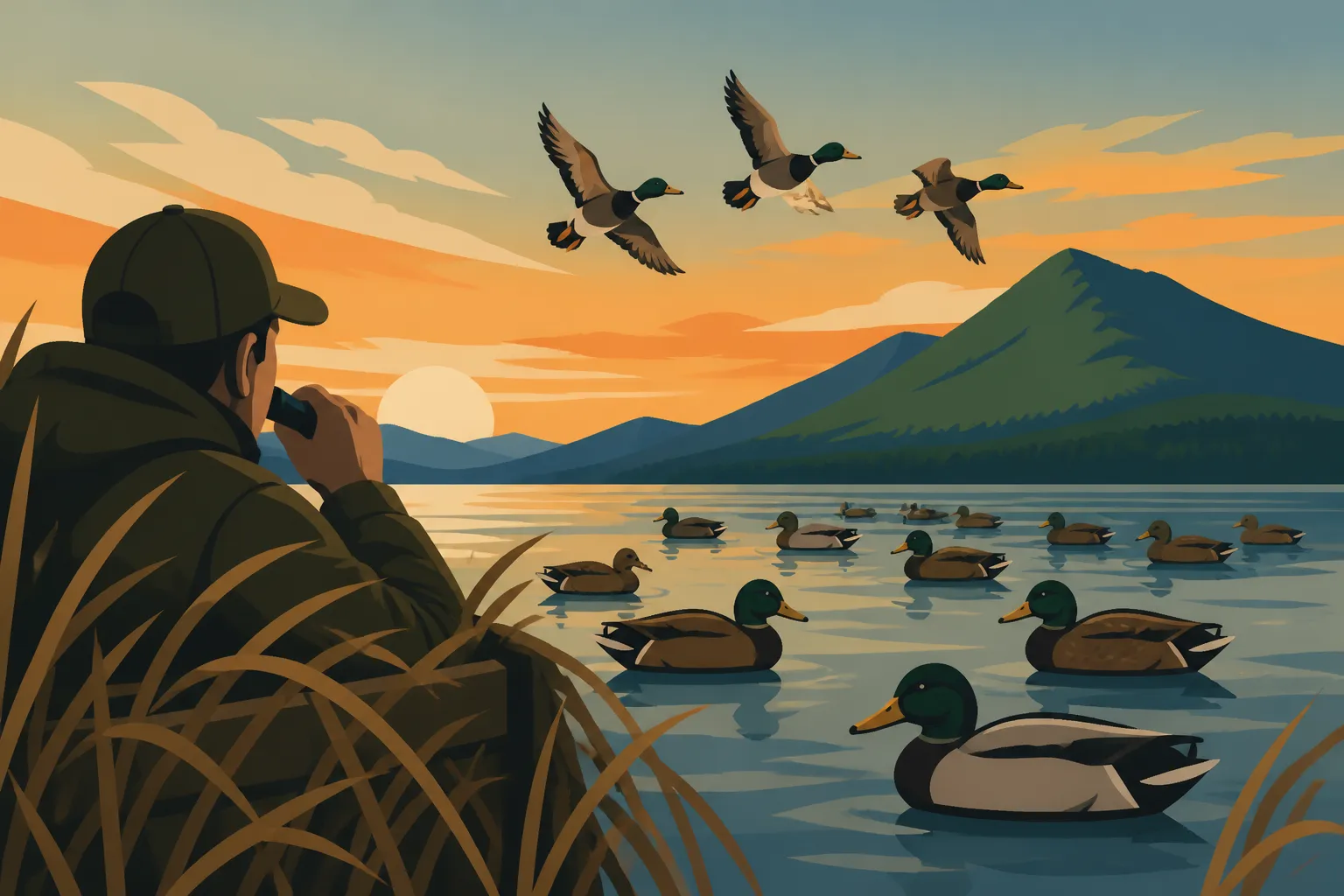
Duck Decoy Spreads for Vermont’s Lake Champlain
Hunting ducks on Lake Champlain isn't just about showing up with a shotgun and a few plastic birds; it's a chess match against some of the wariest waterfowl in the Northeast. Many hunters get frustrated, setting out dozens of decoys only to watch flight after flight "cup" their wings a hundred yards out, never committing. This guide is here to walk you through the nuances of effective duck decoy spreads specifically tailored for the vast, varied, and often challenging waters of Lake Champlain, helping you draw those birds in close for a clean shot.
Understanding Lake Champlain's Unique Challenges for Duck Hunters
Lake Champlain is a beast, plain and simple. It's not your typical farm pond or small river. Its immense size, diverse habitats, and sometimes brutal weather patterns make duck hunting here a whole different ballgame. If you've ever felt like your decoys just aren't cutting it, you're not alone; it's a common struggle against a truly unique environment.
The Vastness and Variability
Imagine trying to hide a needle in a haystack – that's often what it feels like for ducks trying to find your spread amidst the sheer scale of Lake Champlain. This lake stretches for miles, offering everything from wide-open, deep-water expanses to shallow, reedy bays, protected coves, and river mouths. Each of these distinct environments requires a different approach when it comes to your decoy setup. What works beautifully in a sheltered marsh on the southern end might be utterly useless out on the broad lake near Burlington. The problem isn't usually your decoys themselves, but rather matching the spread to the specific micro-habitat you're hunting on any given day. You need to consider what types of food and cover are available in that particular spot, and what kind of ducks are likely to be using it.
For instance, hunting a shallow, vegetated bay near Missisquoi Bay, you might be targeting dabblers like mallards and wood ducks, and your spread should reflect that natural feeding behavior. But move a few miles out into the deeper, open waters of the broad lake, and you're suddenly looking for divers like scaup and goldeneyes, which feed in a completely different manner. Hunters often struggle because they try a one-size-fits-all spread, but Champlain demands a more adaptive mindset. You'll need to develop an eye for these subtle differences, perhaps even using a mapping tool like GoHunt to scout specific access points and identify key habitat features from home before you ever launch the boat.
Pressured Birds and Their Habits
Champlain's ducks, particularly as the season progresses, are among the smartest you'll encounter. They've seen it all, run the gauntlet of hunting pressure from Quebec all the way down the Atlantic Flyway, and they've developed a keen sense of what looks "off." Early in the season, you might get away with a simpler spread, but by mid-October or November, those birds have had multiple close calls and will often "hang up" far outside your effective shooting range. This is incredibly frustrating, watching a flock circle majestically, seemingly interested, only to flare at the last minute because something in your spread or concealment just wasn't quite right.
This wariness means you can't just throw out a haphazard blob of decoys and expect results. You need to create an illusion of safety, a perfect landing strip, and a gathering of content, feeding birds. Think about how a real flock behaves: they land into the wind, often in a clear pocket, and associate with others that look relaxed. Your spread needs to mimic this precisely. A lack of motion, too many decoys of one species when another is prevalent, or a spread that doesn't account for how birds want to land can all send those educated Champlain ducks packing. Understanding this pressure is key to leveling up your decoy game and turning those frustrating fly-bys into committed drops into the pocket.
Weather and Water Conditions
If you've spent any time on Lake Champlain, you know the weather can change on a dime. A calm, glassy morning can quickly turn into a white-capping gale, and water levels can fluctuate, especially in river delta areas. These conditions directly dictate not only how you hunt but also what kind of decoy spread you can effectively deploy. Strong winds and currents can tangle lines, flip lightweight decoys, and make it nearly impossible to keep a tidy spread. Moreover, visibility can drop rapidly with fog or squalls, impacting how far birds can see your setup.
Consider a blustery November day on the broad lake. A small, static spread might be lost in the chop and spray, unable to attract attention. Conversely, in a calm, clear backwater, too many decoys or ones that don't look natural can make birds wary. You need to think about how your decoys will appear in different light, wind, and water conditions. For example, bright, high-contrast decoys might be great on a dark, choppy day, but too flashy on a calm, sunny morning. Your choice of decoy weights, line length, and the overall resilience of your setup are paramount when battling Champlain's often unpredictable temperament. Having sturdy anchors and enough line is critical, especially when Decoying Mallards on Lake Champlain in deeper, more open water.
The Foundation: Essential Decoy Types for Lake Champlain
Building an effective decoy spread for Lake Champlain starts with understanding the different types of decoys and what role each plays. It's not just about quantity; it's about selecting the right species and motion to create the most convincing illusion possible.
Mallards and Black Ducks: Your Bread and Butter
For any dabbler hunting on Lake Champlain, whether you're tucked into a marsh or on a calm bay, mallard and black duck decoys are absolutely indispensable. These are the most common puddle ducks you'll encounter, and they serve as the foundation of almost any successful Champlain spread. Mallards, with their vibrant green heads and distinct plumage, are easily recognizable and act as a universal attractant. Black ducks, often seen alongside mallards, offer a slightly more subdued, realistic touch, especially for more wary birds that might be looking for a less flashy group.
You'll want a good number of these, typically forming the bulk of your spread. Don't be afraid to mix and match. A spread heavy on mallards is great, but adding in a significant number of black duck decoys can make it look more natural and diverse. Think about how real ducks interact: they feed, they preen, they loaf. You can represent this with different decoy positions – feeders, uprights, and resting birds. For a typical day hunting a bay or marsh, starting with at least a dozen mallards and half a dozen black ducks is a solid starting point. These decoys draw the initial attention and signal to approaching birds that this is a safe place for their own kind to settle down.
Diver Decoys for Open Water
When you venture out into the deeper, more expansive waters of Lake Champlain, especially areas where the bottom drops off quickly or where current is more pronounced, you're primarily targeting diver ducks. Species like greater and lesser scaup (bluebills), ringnecks, canvasbacks, and goldeneyes are common visitors, and they require a different type of decoy to appeal to them. These birds don't feed in the same shallow-water manner as mallards; they dive for their food, often in large rafts. Therefore, your diver decoys need to reflect their typical behavior and appearance.
Diver decoys are often darker in profile, with bold white sides on some species (like scaup and canvasbacks) that are highly visible from a distance on open water. They are designed to stand out against the chop and glare of the lake. When setting out diver spreads, think big and think visibility. Diver spreads are often much larger than dabbler spreads, sometimes involving dozens or even hundreds of decoys to mimic a massive raft of birds. Positioning these decoys to take advantage of the prevailing wind and current is crucial, as divers will almost always land into the wind. Having a dedicated set of diver decoys, especially scaup and ringnecks, is non-negotiable for success in the mid-lake or deeper sections of Champlain, particularly during the late season when migrating divers are at their peak.
Confidence Decoys and Motion
Sometimes, ducks just need a little extra convincing, a subtle cue that everything is truly safe and natural. That's where confidence decoys and motion devices come into play. Confidence decoys aren't necessarily the target species, but rather birds that ducks commonly associate with safety and undisturbed feeding. For instance, a few Canada goose decoys placed slightly apart from your duck spread can signal "all clear" to high-flying ducks. Similarly, coot or merganser decoys can add to the illusion of a diverse, thriving wetland ecosystem. These aren't meant to be shot over, but rather to enhance the overall realism of your setup.
Motion is arguably even more critical. A static spread, no matter how perfectly placed, can look lifeless, especially on a calm day. Ducks have excellent eyesight and will quickly spot the lack of movement. This is where Mojo Decoys for Vermont Puddle Ducks and similar spinning-wing decoys become game-changers. The flash of their wings mimics a bird landing or stretching, providing a crucial visual attractant that can pull ducks from far distances. Jerk strings, which allow you to create ripples and subtle decoy movement from your blind, are also incredibly effective, especially for wary birds just outside the pocket. Even simply adding a few feeder decoys that sit low in the water, appearing to dabble, can add realism. Combining these elements creates a dynamic, lifelike scene that is much harder for discerning ducks to resist.
Classic Decoy Spreads for Lake Champlain's Diverse Habitats
No single decoy spread works everywhere on Lake Champlain. The beauty of hunting this incredible body of water lies in its diversity, and your decoy strategies need to be just as varied. Let's look at some classic spreads that have proven effective in different Champlain habitats.
The J-Hook or Fish Hook for Shoreline Hunting
When you're tucked into a shoreline blind, whether it's along the edge of a bay, a river mouth, or a point, the J-hook (or fish hook) spread is a time-tested winner. This spread is designed to create a natural landing zone right in front of your blind, guiding incoming birds exactly where you want them. Imagine the shape of a capital 'J' or a fish hook lying on the water: the long "shank" of the J extends out from your blind, with the "hook" curving inwards towards your shooting pocket.
The idea here is to create a funnel. Ducks naturally want to land into the wind, and the long arm of the J-hook should extend upwind. As birds approach, they follow the line of decoys, circling around the "hook" and settling into the open water pocket created by the curve, directly in front of your position. This spread works exceptionally well in areas with a prevailing wind, as it forces birds to commit to the landing zone rather than circling endlessly. For instance, if you're set up on a point with a westerly wind, the long arm would extend west, and the curve would bring birds into the protected lee created by the point. You'll want to use your mallard and black duck decoys primarily here, maybe with a few feeder decoys at the bend of the hook to reinforce the idea of a safe feeding area. Ensure your blind is well-camouflaged, as ducks will be looking directly into your setup as they commit. Brushing In a Blind on a Field Edge principles can easily be adapted to a shoreline hide.
The V-Spread or U-Spread for Open Water
For those wide-open stretches of Lake Champlain, especially when targeting divers or even dabblers using open water for loafing, the V-spread or U-spread is highly effective. These spreads are designed for maximum visibility from a distance and provide clear landing zones for birds approaching from multiple directions. The basic concept is to create a large V or U shape with your decoys, with the open end of the V or U facing upwind, directly into the flight path of incoming ducks.
The two arms of the V (or the curved bottom of the U) act as a visual beacon, drawing birds' attention from afar. The open pocket within the V or U is your designated landing zone. Birds will see the large concentration of decoys, feel the safety in numbers, and naturally want to set down in the protected "pocket" of open water. This spread is particularly effective for diver hunting, where you might deploy 30, 50, or even more decoys to mimic a large raft. You can mix species here: scaup, ringnecks, goldeneyes on the outside arms for visibility, and a few mallards or black ducks closer to the pocket for confidence. Pay close attention to the wind direction; the open end of your V or U absolutely needs to be aligned upwind to give birds a natural landing approach. This is crucial when hunting broad stretches where ducks aren't hugging shorelines.
The Blob or Cluster for Marshy Areas
In the shallow, vegetation-rich marshy areas and sloughs that dot parts of Lake Champlain, a "blob" or "cluster" spread often outperforms more geometric arrangements. Unlike open water, where visibility is key, in a marsh, ducks are looking for natural pockets of calm water where they can feed and rest amongst the reeds and emergent vegetation. A tight, somewhat irregular cluster of decoys mimics this natural gathering much more effectively than a perfectly spaced line.
The blob spread involves placing your decoys in a relatively dense, somewhat random group. Think of a natural loafing area where ducks would congregate. You'll want to use primarily mallards and black ducks, with a good mix of uprights, resters, and especially feeder decoys. These feeder decoys, with their heads down, suggest calm, undisturbed feeding, which is a powerful attractant. The key is to create a sense of naturalness, avoiding any straight lines or overly precise spacing. You're trying to replicate a small, contented flock. You can even break up the main blob into two or three smaller clusters with a shooting lane in between. This allows you to adapt the spread to small openings in the reeds or around beaver lodges. The success of this spread heavily relies on good concealment in the surrounding vegetation, because ducks will be landing right in your face. For areas with heavy cover, refer to strategies for Reading a Marsh for a Morning Flight.
The X-Spread or Cross for Diver Hunting
For targeting divers in moderately open water or where currents might be a factor, the X-spread or Cross spread can be incredibly effective. This spread takes advantage of a diver's natural tendency to land into the wind, but it also gives them options, attracting birds from a wider arc of approach. Imagine a large 'X' shape made of decoys, with your blind situated at one of the outer points or along one of the arms.
The four arms of the 'X' reach out, providing excellent visibility from multiple directions. The center of the 'X' forms your primary landing zone. What makes this particularly useful for divers is that it offers multiple "lanes" for birds to approach and commit to, regardless of slight shifts in wind direction. If the wind is coming from the north, birds will likely approach down the northern arm into the center. If it shifts to the northwest, they still have an arm to follow. This adaptability is critical on Champlain where winds can be fickle. You'll primarily use diver decoys – scaup, canvasbacks, goldeneyes – making sure they are tightly rigged to withstand any current or chop. Sometimes, adding a few single "outlier" decoys further from the main X can give the impression of a larger, more spread-out flock, adding to the confidence factor for wary birds.
Advanced Tactics and Considerations for Champlain Decoys
Once you've mastered the basic spreads, it's time to refine your approach with advanced tactics. Lake Champlain demands more than just putting out plastic birds; it requires strategic thinking, an understanding of waterfowl behavior, and a commitment to realism.
Reading the Wind and Current for Optimal Placement
This is, hands down, the most crucial advanced tactic for hunting Lake Champlain. Ducks always land and take off into the wind. Period. If your landing zone isn't perfectly oriented into the prevailing wind, ducks will either circle endlessly, land outside your spread, or simply flare. Hunters often get this wrong, and it’s a primary reason for missed opportunities. Before you ever deploy a single decoy, you need to assess the wind direction and velocity. Toss some grass or dust in the air, watch the flags, or even use a small wind indicator.
But it's not just the wind; on a large body of water like Champlain, current can be just as influential, especially near river mouths, narrow channels, or where lake currents are strong. You might have a light wind, but a strong current can still pull your decoys downstream. You need to account for both. Your landing zone should not only be upwind but also in an area where the current won't push landing birds away from your pocket. Sometimes, this means setting your spread slightly upstream or upcurrent from your blind, anticipating where the ducks will naturally drift. Practicing how to "read" the water and air before setting a single decoy will drastically improve your success rate. This dynamic understanding of the environment is what separates a good decoy setter from a great one.
Adding Motion and Realism
As mentioned earlier, a static spread is a dead spread, especially for those highly educated Champlain ducks. Motion adds a critical dimension of realism that stationary decoys simply can't achieve. Think about what ducks do when they're content: they preen, they tip up to feed, they flap their wings, they swim. Your spread needs to convey this same sense of life and activity.
Spinning-wing decoys, like those from Mojo, are fantastic for drawing attention from a distance, particularly for dabblers. The flashing wings are an undeniable visual magnet. However, don't overdo it, especially on bright, calm days or for pressured birds, as too much unnatural motion can sometimes spook them. Often, one or two well-placed spinners are enough. Complement these with jerk strings, which allow you to create subtle ripples and movement among your floating decoys. A well-timed tug can make your decoys look like they're feeding or swimming, mimicking natural behavior. Consider also using specialized feeder decoys that sit low in the water with their heads down, or even fully flocked decoys that absorb glare better and appear more lifelike. The goal is to make your spread indistinguishable from a flock of live, unbothered ducks.
Concealment and Blind Placement
Even the most perfect decoy spread will fail if your blind gives you away. Ducks have incredibly sharp eyesight, and they will pick out unnatural shapes, movements, or glare from a long distance. Effective concealment is paramount, especially on Lake Champlain where birds often approach from wide-open skies. Your blind needs to disappear into the background, whether you're using a natural shoreline setup, a boat blind, or a layout blind in a field.
When scouting a spot, always think about your blind's silhouette against the skyline and the surrounding cover. Can you blend it into cattails, shoreline brush, or an existing tree line? Are you silhouetted against a bright sky or water? If you're hunting open water, a well-brushed boat blind or specialized layout blinds, as discussed in Layout Blind Hunting a Champlain Valley Field, are essential. Use natural vegetation from the area to "brush in" your blind, making it look like part of the landscape. Even a small piece of natural cover can make a huge difference. Furthermore, remain absolutely still when birds are approaching, and only move when it's time to take the shot. No matter how convincing your decoys are, a duck's primary instinct is to avoid danger, and a poorly concealed hunter is the most obvious sign of danger.
Adapting Your Spread Throughout the Season on Lake Champlain
Lake Champlain's duck hunting season is long and dynamic, spanning from early September's resident birds to late-season migrants battling freezing temperatures. The type of ducks you'll encounter, their behavior, and their susceptibility to certain tactics change dramatically, meaning your decoy spreads need to evolve right along with the calendar.
Early Season: Smaller Spreads, More Aggressive Calling
When the season kicks off in September, you're primarily dealing with local, resident birds that haven't faced much hunting pressure. These ducks are often more curious and less wary than their migratory cousins. This is the time when you can often get away with smaller, less elaborate decoy spreads. A dozen to two dozen mallard and black duck decoys, perhaps with a few wood ducks if you're in timbered areas, is usually more than sufficient.
The key in the early season is often aggressive calling. Ducks are still establishing their territories and are more responsive to loud, enthusiastic hails and chuckles. Your decoys serve to give them a visual target once they've been pulled in by the call. Focus on creating a welcoming, safe landing zone within your spread, and don't be afraid to use a spinning-wing decoy or two to draw attention. The water is usually warmer, and you're less likely to deal with ice, giving you more flexibility with decoy placement. Think about Hunting Vermont's Expanded Archery Zones in September as an example of early-season opportunities where less can often be more in terms of decoys.
Mid-Season: Larger, More Varied Spreads, Finessed Calling
As October gives way to November, Lake Champlain transforms. Migratory birds from Canada and farther north begin to arrive in earnest, bringing with them a wealth of experience with hunters. These ducks are much warier and require a more sophisticated approach. This is the time to increase the size and diversity of your decoy spread. You'll want more decoys to mimic a larger, more confident flock, which acts as a greater visual draw.
Start incorporating diver decoys if you're hunting open water, as species like scaup, ringnecks, and goldeneyes become more prevalent. Mix in confidence decoys like geese or coots. Pay extra attention to realism, adding motion with jerk strings or subtle spinner use. Your calling should become more finessed – less aggressive, more conversational. Soft quacks, feeding chuckles, and contentment calls are often more effective than loud hails for these pressured birds. They're looking for a safe haven, not a party. Spacing your decoys appropriately for the habitat and ensuring your landing zone is perfectly aligned with the wind becomes absolutely critical. This is where a hunter's true skill with decoys starts to shine.
Late Season: Minimalist, Natural Spreads, Ultra-Realistic Presentation
By late November and into December, Lake Champlain hunting can be brutal, but incredibly rewarding. The remaining ducks are the toughest, most educated birds on the flyway, and they've survived weeks of constant pressure. Water temperatures plummet, ice can become a factor, and birds are focused purely on survival: finding food, resting, and conserving energy. Your decoy strategy needs to reflect this hyper-awareness and the harsh conditions.
Often, a minimalist approach works best. Instead of trying to impress with sheer numbers, focus on ultra-realism. A small, tight cluster of impeccably lifelike decoys, particularly full-flocked ones, can be more effective than a sprawling, less convincing spread. Use primarily mallard and black duck decoys, or divers, depending on the specific location and the species you're targeting. Feeder decoys are paramount, signaling undisturbed contentment. Motion is still important, but often with jerk strings to create subtle ripples rather than flashy spinners that might look unnatural in the cold, clear air. Your calling should be minimal and extremely soft – just enough to get their attention, but not so much that it sounds suspicious. Concealment is absolutely non-negotiable, and you'll need all your Cold-Weather Sitting Strategy in the Northeast Kingdom know-how to stay hidden and comfortable. This is when your attention to every small detail makes all the difference.
Gear and Maintenance for Longevity on Champlain
Investing in quality decoys and rigging for Lake Champlain hunting is a must. The harsh environment, frequent transport, and constant exposure to water mean your gear takes a beating. Proper selection and maintenance will ensure your decoys last for seasons to come.
Anchor Systems and Lines
The deep, often turbulent waters of Lake Champlain demand robust anchor systems and lines. Forget lightweight cord and small lead weights if you're hunting open water or areas with strong currents. Weak rigging is a recipe for tangled lines, lost decoys, and a ruined hunt. You'll want heavy-duty decoy line, ideally braided nylon or similarly strong material that resists abrasion and tangling. The length of your line is also critical; it needs to be long enough to reach the bottom with ample slack, allowing your decoys to ride naturally with the waves and current without pulling under.
For weights, mushroom anchors or heavier lead keel weights are preferred, especially for diver hunting where you might be in 10-20 feet of water or more. For open water spreads, even a light chop can cause decoys with insufficient weight to drift or flip. Consider using Texas-rigs for easier deployment and retrieval, especially if you're setting out a large number of decoys. These setups allow you to quickly clip and unclip decoys from a main line, keeping everything organized. Having reliable knots and swivel clips is also essential to prevent tangles and ensure your decoys stay where you put them, no matter how much Champlain decides to churn.
Decoy Bags and Transport
Transporting decoys to and from Lake Champlain can be a logistical nightmare without the right gear. Decoy bags are not a luxury; they are a necessity for protecting your investment and making your life easier. Hauling dozens of decoys in a boat or truck without proper storage leads to scuffed paint, broken keels, and tangled lines.
Look for large, durable mesh or slotted decoy bags. Mesh bags allow water to drain, preventing mildew and keeping your decoys lighter. Slotted bags are excellent for protecting individually painted decoys, preventing them from rubbing against each other and preserving their finish. Consider a large decoy cart or sled if you have a long walk to your launch, especially if you're packing gear for Best Waders for Lake Champlain Duck Hunting and all the other essentials. Investing in a good quality decoy bag will prolong the life of your decoys, keep them looking realistic, and streamline your setup and teardown process, saving you valuable hunting time and frustration in the field.
Repair and Repainting
Even the best decoys will eventually show signs of wear and tear, especially when used frequently on a rough lake like Champlain. Scuffs, dings, fading paint, and even minor punctures are inevitable. Ignoring these issues will diminish the realism of your spread over time, making it less effective for wary ducks.
Regular inspection and maintenance are key. Keep a small repair kit on hand, including marine-grade epoxy or adhesive for fixing cracks or detached keels. For paint touch-ups, a good set of decoy paints (often acrylic-based) and brushes can work wonders. Pay close attention to high-wear areas like keels and bodies that rub together. You might not need to repaint an entire decoy, but touching up dull spots or adding fresh white to a diver's side can significantly enhance its visibility and appeal. Many hunters even fully repaint their decoys every few seasons to keep them looking fresh and lifelike. This ongoing care ensures that your decoy spread continues to be a convincing illusion for the ducks of Lake Champlain, giving you an edge season after season.
| Decoy Spread Type | Ideal Lake Champlain Habitat | Primary Target Species | Key Features & Advantages |
|---|---|---|---|
| J-Hook / Fish Hook | Shorelines, points, protected bays with a defined wind | Mallards, Black Ducks, Wood Ducks | Creates a natural funnel; guides birds into a specific landing zone directly in front of the blind. Best with consistent wind direction. |
| V-Spread / U-Spread | Open water, broad lake expanses | Scaup, Ringnecks, Canvasbacks, Goldeneyes | High visibility from a distance; offers a clear, large landing pocket. Open end must be upwind. Great for large rafts of divers. |
| Blob / Cluster | Shallow marshes, vegetated sloughs, calm backwaters | Mallards, Black Ducks, Teal | Mimics natural loafing/feeding; creates a sense of contentment and safety. Effective in small openings in vegetation. Emphasizes feeder decoys. |
| X-Spread / Cross | Moderately open water with potential for shifting winds or currents | Divers (Scaup, Ringnecks), also adaptable for dabblers | Attracts birds from multiple approach angles; offers several landing options. More adaptable to subtle wind shifts than a pure V. |
Disclaimer
This article is for general informational purposes only and does not constitute professional advice. Laws, prices and regulations vary by location and change over time. Consult a qualified professional for guidance on your specific situation.