Hunting a Corn Silage Field Edge
The crunch of frosted field corn underfoot, the crisp air of a Vermont autumn morning – there's nothing quite like the feeling of settling into a stand on the edge of a freshly cut corn silage field. But for many hunters, these seemingly perfect spots can be frustratingly inconsistent. Deer seem to vanish after the chop, or only appear at night. This guide is here to unravel the mysteries of hunting a corn silage field edge in Vermont, helping you understand deer movement, master your scouting, and strategically place yourself for success when those whitetails finally step out.
Decoding Deer Behavior Along Corn Silage Edges
Hunting a corn silage field edge isn't just about finding a place to sit; it's about understanding the complex dance deer perform around this agricultural goldmine. These fields are magnets for deer, but their appeal and how deer utilize them shifts dramatically throughout the season, especially as the corn transitions from towering stalks to a chopped-up buffet.
The Allure of Corn Silage: Food, Cover, and Seasonal Changes
When the corn stands tall, it's an impenetrable fortress, offering incredible thermal cover and security. Deer will bed right inside those rows, often moving only a few yards to feed on the milky ears. For an early season bowhunter, this can be incredibly challenging, as deer have little reason to leave their leafy sanctuary. They're literally living in the supermarket aisle.
However, once the silage chopper comes through, everything changes. Suddenly, that dense cover is gone, replaced by a wide-open expanse. But don't despair! The field still holds immense appeal. The harvest leaves behind a treasure trove of dropped ears and residual kernels, creating an irresistible food source that deer will work diligently, often for weeks. This is particularly true in areas where natural mast crops, like acorns or beechnuts, might be scarce. The deer know exactly where to go for an easy meal, and that's often right there in the freshly cut field. They’ll visit these fields with a regularity that hunters can exploit, especially during the crucial hours around dawn and dusk.
Navigating the Edge: Travel Routes and Funnels
Deer are creatures of habit and efficiency. While they'll certainly venture out into the open to feed, they prefer to do so from the safety of cover. This makes the edge of a corn silage field a high-traffic highway. Think of it as the deer's equivalent of a service road alongside a major interstate. They'll use these edges to travel from their bedding areas in nearby woodlots, swamps, or thick brush to the primary feeding zone in the field.
These travel routes aren't random. Deer will often utilize natural funnels, such as narrow strips of timber connecting larger woodlots to the field, old fence lines, or subtle dips in the terrain that offer a bit of concealment. They'll skirt these edges, often just inside the tree line, only stepping into the open field when they feel secure enough. Identifying these specific entry and exit points is paramount. Hunting a Funnel Between Two Woodlots is a great parallel here, as the same principles apply to how deer enter and exit a field from the security of timber. Look for areas where the timber comes to a point or a bottleneck before opening up to the field – these are natural magnetic points for deer movement.
Strategic Scouting: Before and After the Chop
You can’t just show up on opening day and expect success on a corn silage field edge. The real work begins long before the season, and it continues right up until you climb into your stand. Diligent scouting, both before and after the harvest, will give you a significant advantage.
Pre-Harvest Recon: Identifying Key Activity
Even before the silage cutter makes its first pass, you should be out there, binoculars in hand. During late summer and early fall, deer are already frequenting these fields. They're accustomed to moving in and out, establishing patterns that might carry over, at least initially, after the harvest. Spend evenings glassing from a distance, watching where deer enter and exit the standing corn. Pay close attention to subtle shifts in terrain or particular hedgerows they seem to favor.
This is where digital mapping tools become your best friend. An app like onX Hunt allows you to view detailed aerial imagery, helping you identify potential pinch points, subtle funnels, and areas of dense cover adjacent to the cornfield. You can mark these observations right on your phone, creating a digital trail of intel. Knowing property boundaries with onX Hunt is also crucial here, especially if you're hunting near private land or a neighbor's property. You want to know exactly where you can legally access and hunt. Look for those connecting timber lines, swamps, or even small creek bottoms that lead directly to the corn. These are the arteries deer will use to get to their prime food source.
Post-Harvest Clues: Reading Fresh Sign
Once the silage is cut, the field transforms into an open book, revealing secrets that were previously hidden. Now is the time to walk the edges, literally reading the ground. Fresh tracks leading into the field, particularly those of larger deer, will tell you exactly where they’re entering and exiting. Look for areas with concentrated droppings, indicating a consistent feeding spot. Scrapes and rubs along the timber edge, particularly during the pre-rut and rut, are like neon signs pointing to active buck travel. Reading a Green Mountain Deer Yard is about winter yards, but the principle of finding concentrated sign remains true for any seasonal habitat.
Pay special attention to any remaining strips of corn or areas where the chopper might have missed some stalks; these spots can become immediate hot zones for feeding. If there's standing water in the field, deer will often use those edges as well. As you scout, continue to update your onX Hunt map with fresh sign. Pinpoint where you find fresh tracks, where rubs are popping up, and where the most droppings are concentrated. This real-time data will help you refine your stand placement and understand the most current deer movement patterns.
Setting Up for Success: Stand Placement and Timing
Effective stand placement on a corn silage field edge is a blend of science and art. It requires careful consideration of wind, thermals, and the deer's natural inclinations. Getting it wrong can spook deer before they even get close, turning a promising spot into a dead zone.
Optimizing Your Stand or Blind Location
The single most critical factor in choosing your setup is the wind. Deer have an incredible sense of smell, and if your scent is blowing into their approach or feeding area, your hunt is over before it begins. Always hunt with the wind in your favor, blowing your scent away from where you expect deer to approach. This might mean having multiple stand locations for different wind directions, or being willing to shift plans on the fly.
Beyond the wind, consider concealment. Whether you choose a treestand or a ground blind, you need to blend into your surroundings. For treestands, pick a tree that offers good cover from both behind and above. Position yourself to overlook a likely entry point, a distinct trail, or a funnel. Height can give you an advantage, but too high and you might stand out. Ground blinds offer excellent concealment and warmth, but require careful brushing in to look natural. Brushing In a Blind on a Field Edge offers excellent tips for making your ground blind disappear into the landscape.
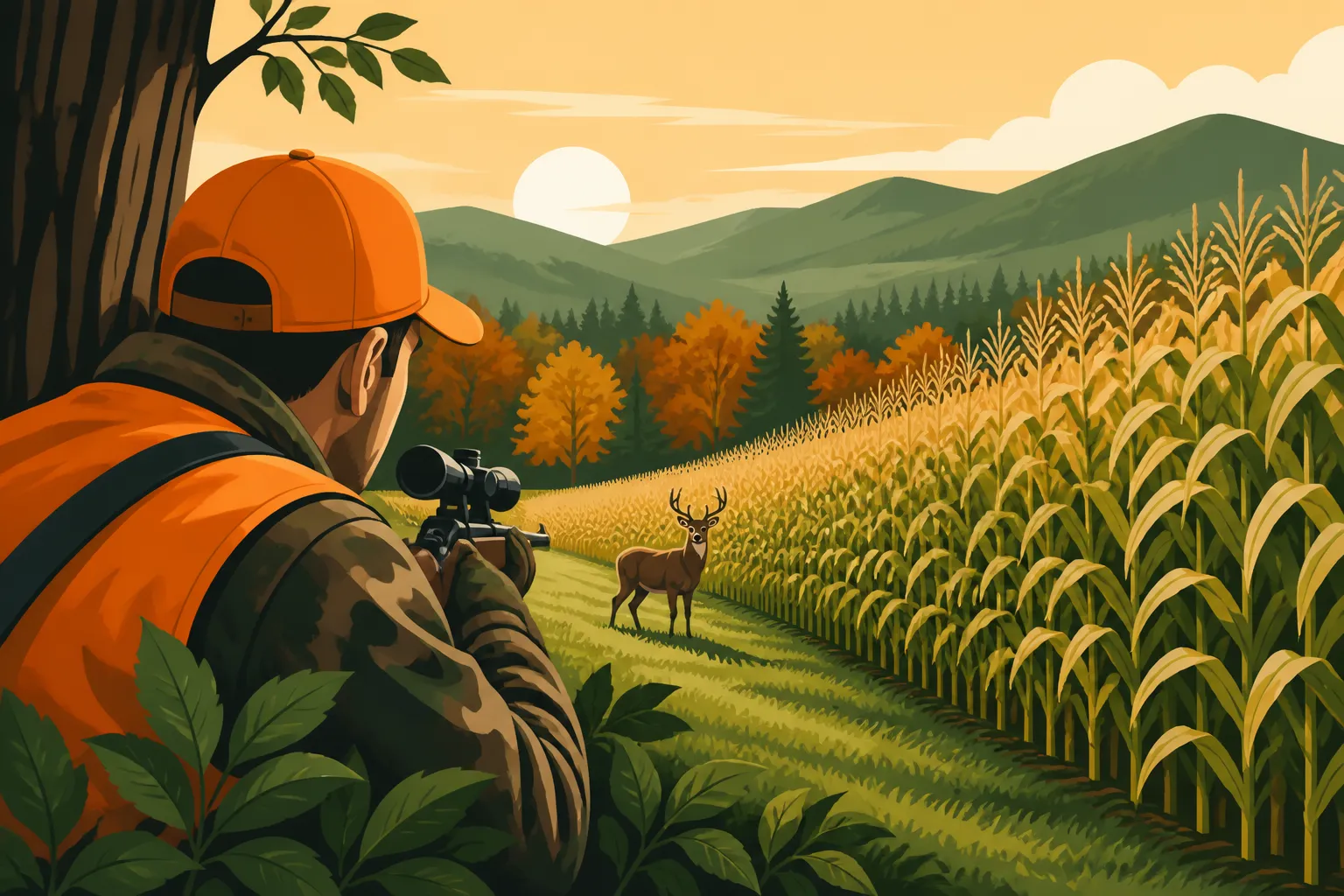
Think about the deer's approach. They will almost always approach a field edge from cover, moving slowly and cautiously before stepping into the open. Position your stand or blind to intercept them before they fully commit to the open field. This often means setting up 10-20 yards inside the timber line, giving you a shot opportunity while they still feel safe. Also, consider your entry and exit routes. You need to be able to get to and from your stand without spooking deer that might already be in the field or approaching it.
Timing Your Strike: Morning, Evening, and Weather's Influence
Deer are most active at dawn and dusk, and this holds especially true for field edges. Evening hunts are often productive as deer leave their bedding areas to feed in the silage field. Mornings can be great too, catching deer as they transition back to cover after an overnight feeding session. However, deer are often more reluctant to linger in the open after full daylight, so morning hunts might require you to be in position well before first light and be ready to make a quick decision.
Weather plays a huge role. Cold fronts following warm spells can really get deer on their feet. A light rain can mask your approach and scent, making for excellent hunting conditions. During the peak of the rut, bucks will cruise these field edges, scent-checking for does. An aggressive doe estrus call or a rattling sequence can sometimes draw a curious buck out of the timber and towards the edge. Hunting the Rut in Early-to-Mid November provides more insights into this critical period.
Here’s a quick overview of timing considerations:
| Factor | Morning Hunt | Evening Hunt |
|---|---|---|
| Deer Activity | Catch deer returning to bedding from overnight feeding | Catch deer leaving bedding to feed |
| Light Levels | Critical to be in stand well before first light | Prime activity often occurs in last hour of daylight |
| Wind/Thermals | Thermals often drop in morning, rising later | Thermals often rise then drop as evening cools |
| Approach | Need stealthy approach in complete darkness | Can approach in fading light, but risk spooking |
| Success Rate | Can be feast or famine; depends on deer lingering | Often more consistent as deer commit to feeding |
Essential Gear for an Edge Hunt
Having the right gear won't guarantee success, but it will certainly make your time on the stand more productive and enjoyable. For hunting a corn silage field edge, certain items become absolutely indispensable.
Optics and Mapping for Precision and Safety
You're going to be glassing an open area, often at varying distances, so good optics are non-negotiable. A quality pair of 10×42 binoculars will be your best friend for scanning the field for movement, identifying deer, and judging antlers at a distance. Don't skimp here; clear glass makes a world of difference in low light conditions. A rangefinder is equally important, allowing you to accurately judge distances to various points in the field and your shooting lanes, removing guesswork when the moment of truth arrives.
And as mentioned before, a reliable mapping app is essential. onX Hunt isn't just for pre-season scouting; it's vital in the field. It helps you confirm property lines, navigate to your stand in the dark, and discreetly mark the location of a downed deer. If you're hunting private land, having confirmation of the property boundary keeps you legal and out of trouble. For those venturing onto public lands that border agricultural fields, apps like this, or even the Scouting With the Vermont Fish and Wildlife App, can show you public/private land interfaces and access points, making sure you know exactly where you stand.
Staying Concealed and Comfortable
Concealment is critical, especially when hunting a field edge where deer have a clear view into the timber. Your camouflage pattern should match the dominant vegetation in the transition zone, usually a blend of hardwoods and brush. Consider using a facemask or face paint to break up your outline. Layering your clothing is also crucial for Vermont's unpredictable weather. Early season might call for light, breathable layers, while late season demands serious insulation to stay warm during long, cold sits. Remember, comfort helps you stay still and focused longer. Layering for a Wet Green Mountain Day can offer more insights into dressing for Vermont's variable climate.
Don't forget scent control. Even if the wind is perfect, minimizing human odor is always a good idea. Use scent-eliminating sprays, wash your hunting clothes in scent-free detergent, and store them in airtight bags. Finally, ensure your entry and exit are as quiet and discreet as possible. Deer are incredibly sensitive to noise, and stomping through crunchy leaves will alert them to your presence long before you reach your stand. Plan your routes, use natural terrain features for cover, and move like a ghost. This attention to detail, from the moment you leave your vehicle to the second you climb into your stand, will drastically increase your chances of success.
Disclaimer
This article is for general informational purposes only and does not constitute professional advice. Laws, prices and regulations vary by location and change over time. Consult a qualified professional for guidance on your specific situation.