Vehicle Rules on Vermont Public Land
It's incredibly frustrating when you're trying to do the right thing, meticulously planning your hunt on Vermont's beautiful public lands, only to be left guessing whether you can legally drive your truck down that dirt road or if your ATV is permitted on a particular trail. The rules about vehicle access can feel like a tangled mess, varying from one piece of public property to the next, and making a mistake can lead to fines or even losing access. This comprehensive guide will untangle the complexities of vehicle rules on Vermont public lands, helping you understand where you can drive, what types of vehicles are allowed, and how to ensure you're always in compliance, keeping your outdoor adventures smooth and lawful.
Understanding the Lay of the Land: Types of Public Access and Vehicle Regulations
Vermont's public lands offer incredible hunting opportunities, from the expansive Green Mountain National Forest to numerous state forests and Wildlife Management Areas. However, each of these land categories often comes with its own set of rules regarding vehicle access. It's not a one-size-fits-all situation, and what's perfectly fine in one area might be a strict no-go just down the road. Understanding these distinctions is the first step toward staying on the right side of regulations and ensuring you don't inadvertently spoil your hunt or damage fragile ecosystems.
Differentiating Between Roads, Trails, and Off-Road Travel
One of the biggest sources of confusion for hunters is the difference between various access routes. A "road" to one person might be a "trail" to another, and the legal implications are vastly different. Generally, a road refers to a route maintained for public vehicle travel, often marked with road numbers or names. These are typically where your truck or SUV is allowed, subject to specific signage like "seasonal road" or "gate closed." However, many of these roads eventually transition into something less defined.
Trails, on the other hand, are typically designed for foot traffic, bicycles, or sometimes specific motorized uses like snowmobiles in winter, but very rarely for full-sized hunting vehicles like trucks or ATVs during hunting seasons. These paths are often narrower, less maintained, and clearly marked as trails. Trying to drive a full-sized vehicle down a designated hiking or multi-use trail is almost always illegal and can cause significant environmental damage, as well as being highly dangerous to other users.
Off-road travel is precisely what it sounds like: driving a motorized vehicle anywhere off a designated road or trail. This is almost universally prohibited on Vermont public lands for hunting purposes. The goal of land managers is to protect sensitive habitats, prevent erosion, and preserve the wild character of these areas. So, even if it looks like a short cut, resist the urge to drive through the woods to get closer to your stand. The penalties for off-road violations can be substantial, not to mention the irreparable harm it can do to the land and other wildlife. When you’re scouting Vermont public land before the season, take note of access points and never assume you can drive where there isn’t a clear, designated road.
Specific Rules for Green Mountain National Forest
The Green Mountain National Forest (GMNF) is a vast expanse of federal land, spanning across central and southern Vermont, offering incredible opportunities for deer, bear, and moose hunting. Its sheer size and varied terrain mean that vehicle rules can be quite nuanced. In the GMNF, access typically falls into categories: open roads, seasonally gated roads, and designated motorized trails. Most GMNF roads are open to licensed vehicles unless otherwise marked or gated. However, many smaller "forest roads" are subject to seasonal closures, especially in spring during mud season or late fall/winter when snow accumulation makes them impassable or vulnerable to damage.
It's crucial to understand that even if a gate is open, signage will dictate whether your vehicle is permitted. You'll often see signs indicating "No Motorized Vehicles Beyond This Point" or "Foot Traffic Only." Many of these forest roads, particularly those leading deeper into the backcountry or wilderness areas, are closed to vehicles year-round, serving as access points for foot traffic only. The GMNF actively manages its road system, and their website or local ranger stations are excellent resources for current road status. Always plan to park your truck and hike in, especially if you're venturing into more remote sections. Remember, while you might see a "road" on an old paper map, it might now be designated as a foot trail. Using tools like onX Hunt layers for Vermont land status can be incredibly helpful here.
For hunters considering using ATVs or UTVs, the GMNF has very strict regulations. Generally, ATVs and UTVs are not permitted for hunting access off the few designated, marked trails that are specifically for OHV use, and these are typically recreation-focused, not set up for hunting access. The common perception that public lands are open for ATV exploration is simply not true in most of the GMNF. If you're wondering about ATV rules on Vermont forest roads, the answer for the vast majority of GMNF land is "no" when it comes to hunting access beyond established public roads.
Vehicle Rules on State Forests and Wildlife Management Areas (WMAs)
Vermont's State Forests and Wildlife Management Areas (WMAs) are managed by the Vermont Department of Forests, Parks and Recreation and the Vermont Fish and Wildlife Department, respectively. While they share common goals of conservation and public access, their specific vehicle rules can differ from federal lands and even from one WMA to another. Generally, vehicle access on State Forests is restricted to established, maintained roads, similar to town and state highways. Many of these roads may also be seasonally gated, especially during mud season or winter to protect road integrity and promote non-motorized recreation.
WMAs are specifically managed for wildlife habitat and public hunting, fishing, and trapping. Due to their specific purpose, vehicular access on WMAs tends to be even more restricted than on State Forests or the GMNF. Most WMAs have designated parking areas at their perimeter, and any travel beyond that point is typically by foot. You will rarely find designated roads or trails open to ATVs or UTVs on WMAs for general hunting access. The primary objective is to maintain quiet, undisturbed habitats for wildlife and a fair chase experience for hunters. If you're planning on hunting Vermont Wildlife Management Areas, expect to do a lot of walking once you leave the parking lot.
For instance, at a WMA like Victory Basin in the Northeast Kingdom, you might find a main access road, but once you pull off into a designated parking area, you'll be on foot. The same goes for other significant WMAs, like Little Ascutney WMA or Dead Creek WMA. Always look for specific signs at the entrance of a WMA or State Forest, and consult the Vermont Fish & Wildlife website for detailed maps and regulations pertaining to that particular area. It’s always better to over-prepare and assume restricted access than to be surprised or, worse, cited for a violation.
Navigating Access: Permitted Vehicles and Restrictions
Understanding the general categories of public land and their overarching philosophies about vehicle use is a great start, but let's dive into the specifics of which vehicles are permitted and under what conditions. The type of vehicle you drive profoundly impacts where you can legally go on Vermont's public lands, and often, what you think might be a "minor shortcut" can lead to serious repercussions.
Passenger Vehicles on Open Roads: What to Know
For most hunters, their trusty truck, SUV, or even a sedan is the primary mode of transport to and from public hunting lands. On Vermont's public lands, conventional passenger vehicles are generally permitted on any road that is open to the public and not explicitly restricted. This includes paved state highways, well-maintained dirt town roads that pass through public land, and many designated forest roads within the Green Mountain National Forest or State Forests. The key here is "open to the public and not explicitly restricted."
Look for signs. Always. A simple "Road Closed" or "No Through Traffic" sign means exactly that. Gates are also a clear indicator. If a gate is closed and locked, that road is off-limits to vehicles, even if it looks perfectly passable. Don't be tempted to park and walk around a gate to drive further; that's still a violation. Many forest roads are seasonal, meaning they might be open in summer and early fall but close as winter approaches or during spring mud season to prevent damage. Pay attention to dates if they're listed. When parking, always pull completely off the traveled portion of the road and ensure you're not blocking any gates, access points, or private driveways. Being courteous and legal with your parking can make a big difference in maintaining good relations with landowners and fellow outdoor enthusiasts. For hunters using apps like GoHunt or Scouting Vermont Public Land Before Season, many of these applications feature overlays that clearly depict open roads versus gated or closed routes, which can be a lifesaver for planning.
ATV and UTV Use: Where They're Allowed (and Where They're Not)
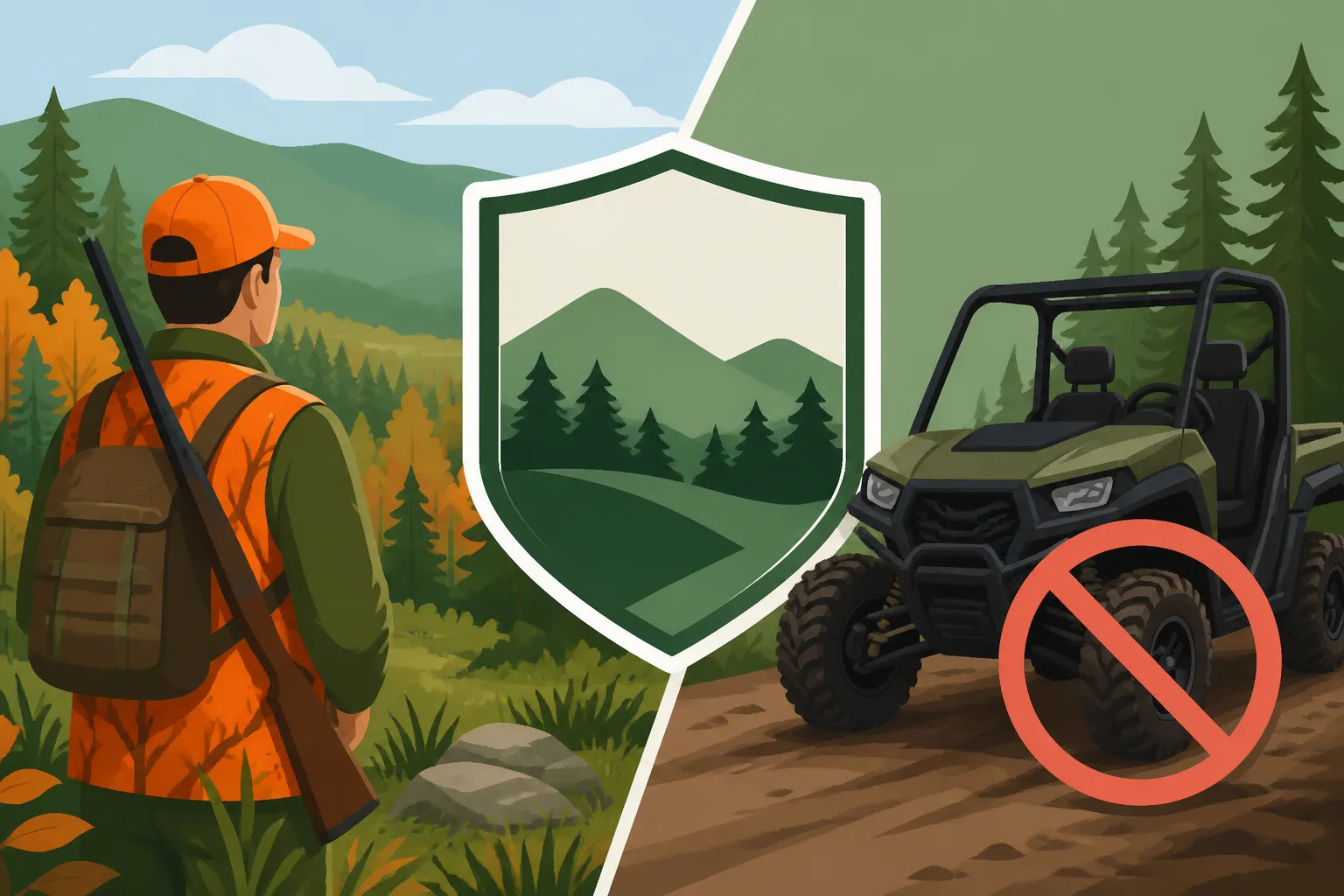
This is perhaps the area of greatest misunderstanding and frequent violations among hunters. The simple truth is that, for the vast majority of Vermont's public hunting lands, ATVs (All-Terrain Vehicles) and UTVs (Utility Terrain Vehicles) are not permitted for general hunting access or off-road travel. While Vermont does have a network of designated ATV trails, these are typically managed by ATV clubs, are often on private land with specific agreements, and are geared towards recreational riding, not accessing hunting grounds. It's rare to find designated ATV trails within public hunting areas that allow for direct access to prime hunting spots.
The rationale is clear: ATVs and UTVs can cause significant habitat disturbance, soil erosion, and noise pollution, which negatively impact wildlife and the hunting experience of others seeking solitude. They can also create new, unauthorized trails, further degrading the landscape. If you own an ATV or UTV, you must assume they are prohibited on public hunting lands unless you see very clear, specific signage indicating otherwise for a designated trail. This is a crucial distinction. Don't rely on assumptions or what you've seen others do; rely on official signage and regulations. Ignorance of the rules is not an excuse. You might be able to transport your ATV on a trailer to an approved trail system, but driving it directly into most WMAs or the depths of the GMNF for hunting is simply not allowed.
Electric Bikes and Other Motorized Devices
With advancements in technology, new forms of personal transportation are emerging, and their legality on public lands often lags behind. Electric bicycles (e-bikes) are a prime example. Currently, the regulations surrounding e-bikes on public lands in Vermont can be a bit of a gray area, often depending on how they are classified. Some federal and state agencies categorize certain classes of e-bikes as "motorized vehicles," which would restrict their use to areas where traditional motorized vehicles are allowed. This typically means open roads.
However, other interpretations might allow lower-powered e-bikes on trails designated for non-motorized uses, provided they adhere to speed limits and don't exert excessive environmental impact. The best advice here is to always check with the specific land management agency for the area you intend to hunt. Do not assume that because it has pedals, it's treated the same as a traditional bicycle. The motor, however small, can change its classification. The spirit of the rules often aims to preserve non-motorized recreational experiences and protect sensitive areas, and e-bikes, with their ability to travel further and faster than a traditional bike, can challenge that intent. As for other motorized devices, like electric scooters or mini-bikes, they are almost universally prohibited on public trails and off-road areas for hunting access, falling under the same restrictions as ATVs.
Practical Strategies for Staying Legal and Ethical
Navigating vehicle rules on Vermont public lands doesn't have to be a constant source of anxiety. With a bit of preparation and the right tools, you can confidently plan your hunting trips, knowing you're in compliance and showing respect for the land and fellow outdoor enthusiasts. Being proactive not only protects you from legal trouble but also helps preserve access for everyone in the long run.
Utilizing Mapping Apps for Designated Routes and Boundaries
In today's digital age, mapping applications have become indispensable for hunters, and they are particularly useful for understanding vehicle access. Tools like onX Hunt and GoHunt provide incredibly detailed satellite imagery and property boundary overlays that are invaluable. Before you even leave the driveway, pulling up your onX Hunt app can show you the class 4 roads and designated access points, helping you visualize where you can drive legally. These apps often feature layers that indicate public versus private land, various land management designations (like GMNF vs. WMA), and sometimes even specific road closures or gates.
For instance, you might spot a promising-looking logging road on a contour map. By switching to the satellite view and checking the public land overlay on your GoHunt app, you might find that the road is clearly gated at the public land boundary, or that it’s actually a snowmobile trail that is not open to wheeled vehicles in hunting season. This foresight allows you to plan your parking, determine your walk-in distance, and avoid trespassing or violating vehicle rules. Some apps even allow users to add notes or markers, sharing real-time information about access conditions, though always cross-reference with official sources. Relying on these apps, especially with their offline map capabilities for areas with no cell service, is one of the best ways to ensure you stick to approved routes and boundaries. Checking Finding Vermont Property Lines on your app is a critical step before venturing out.
Parking Protocol and Minimizing Impact
Proper parking is often an overlooked aspect of vehicle rules, but it’s critical. When you arrive at a public land access point, always use designated parking areas if they exist. If not, pull your vehicle completely off the main road, ensuring it's not obstructing traffic, a gate, or any private driveways. Leaving sufficient room for other vehicles to pass, including farm equipment or emergency services, is not just common courtesy, it’s often a legal requirement. Nothing sours local relations faster than a hunter's truck blocking a farmer's access to their fields or an emergency vehicle.
Beyond the legal aspect, consider the environmental impact. Parking directly on fragile vegetation, in wet areas, or creating new "parking spots" by driving off the established shoulder can cause erosion and damage. Aim to park on stable, gravelly, or hardened surfaces. Also, consider the visual impact: a cluster of trucks at a popular trailhead can indicate heavy hunting pressure. Sometimes, by finding ground others walk past, you can also find less-conspicuous parking a little further down the road, making your presence less obvious to other hunters and leaving a lighter footprint. When you park, make sure your vehicle is secure, as you might be leaving it for many hours, sometimes overnight if you're doing a multi-day hunt.
Reporting Violations and Understanding Enforcement
Unfortunately, despite clear rules, vehicle violations on public land do occur. From ATVs tearing up non-motorized trails to trucks bypassing gates, these actions not only damage the environment but also jeopardize public access for responsible hunters. If you witness a vehicle violation, it's important to report it to the appropriate authorities. In Vermont, this would typically be a State Game Warden or a U.S. Forest Service Law Enforcement Officer, depending on the land. Try to gather as much information as possible: vehicle type, license plate number, location, time, and a brief description of the offense. Do not engage the individuals directly, as this can escalate a situation unnecessarily.
Understanding the enforcement is also important. Violations of vehicle rules on public lands can carry significant penalties, including fines, vehicle impoundment, and even revocation of hunting privileges. The Vermont Fish and Wildlife Department, along with the Forest Service, takes these regulations seriously to protect natural resources and ensure fair access for all. They have the authority to issue citations and pursue legal action. Familiarize yourself with the regulations for the specific area you plan to hunt by visiting the Vermont Fish and Wildlife website or the GMNF site. By doing so, you're not just staying out of trouble; you're actively contributing to the sustainable future of hunting and public land access in Vermont. Remember, ethical hunting extends beyond the field to how we respect the land and its rules.
| Vehicle Type | Common Access on Green Mountain National Forest | Common Access on State Forests | Common Access on Wildlife Management Areas |
|---|---|---|---|
| Passenger Vehicle (Truck/SUV) | Permitted on open, designated roads. Check for seasonal closures/gates. | Permitted on open, designated roads. Check for seasonal closures/gates. | Primarily restricted to designated parking areas and main access roads. Foot traffic beyond. |
| ATV/UTV | Generally prohibited for hunting access off designated, limited OHV trails. | Generally prohibited for hunting access. | Generally prohibited for hunting access off designated parking. |
| Electric Bike (e-bike) | Varies by classification. Assume restricted to motorized routes unless specified. | Varies by classification. Assume restricted to motorized routes unless specified. | Assume restricted to main access roads/parking areas. Check specific WMA rules. |
| Snowmobile | Permitted on designated, marked snowmobile trails during winter season only. | Permitted on designated, marked snowmobile trails during winter season only. | Generally permitted on designated snowmobile trails during winter season only. |
Disclaimer
This article is for general informational purposes only and does not constitute professional advice. Laws, prices and regulations vary by location and change over time. Consult a qualified professional for guidance on your specific situation.