Hunting a Hillside Apple Orchard
There’s nothing quite like the feeling of finding that perfect deer hunting spot, especially one that others might overlook. So many hunters focus on big agricultural fields or deep timber, but if you've ever spent time rambling through Vermont's hillsides, you know there's a hidden gem often nestled in those rolling landscapes: the old apple orchard. It can be incredibly frustrating to scout and come up empty, or to feel like deer vanish after the initial rush of the season, but this guide is all about helping you unlock the secrets of these productive, often forgotten, deer magnets, giving you a fresh perspective on a classic food source.
The Irresistible Pull of a Vermont Apple Orchard for Whitetails
Imagine a deer’s ideal buffet: sweet, readily available carbohydrates that pack a punch of energy, sitting right in their backyard. That’s precisely what a good apple orchard offers to Vermont whitetails. These aren't just pretty trees; they are power-packed attractors that can hold deer, especially once the acorns start to thin out.
Why Deer Crave Apples: Nutritional Value and Availability
From the moment the apples start to ripen and drop in late summer, they become a primary draw. What makes them so appealing? It’s a combination of sugar content and digestibility. While acorns are a fantastic protein and fat source, apples are pure, quick energy. Deer need those calories to pack on fat reserves for the lean winter months, and apples provide it in spades. You’ll see deer change their patterns almost overnight when a good apple crop starts to hit the ground. They’ll pass up browse and even fresh green growth to gorge themselves on fallen fruit. Different varieties, from early-dropping transparents to late-season storage apples, will dictate when the peak attraction occurs, often extending the productive window from September right into November, or even beyond the first hard freezes.
Think about it: a deer needs to put on weight. If they have to choose between browsing on woody stems that are tough to digest and don't offer much caloric return, or slurping up a sweet, fermented apple, the choice is obvious. This is especially true after the initial flush of green growth has matured and become less palatable. The unique flavor profile and easy energy make apples an almost addictive food source. I’ve seen deer practically live in an old orchard once the fruit starts dropping heavily, only leaving to bed down nearby or grab a drink of water.
Identifying Productive Orchards: Old Homesteads vs. Modern Plantings
Not all apple orchards are created equal, especially when it comes to hunting. You’ll typically encounter two main types in Vermont:
- Old Homestead/Abandoned Orchards: These are the gems. Often found around old cellar holes or abandoned farmsteads, these trees can be decades old, gnarled, and thick with branches. They might be overgrown with brush and small saplings, making them look less like a manicured orchard and more like a dense thicket with apple trees scattered throughout. These are fantastic because they offer both food and cover. Deer feel much more secure feeding in these wilder spots. The varieties are often heritage types, which can have unique dropping schedules and tastes.
- Modern Plantings/Active Commercial Orchards: These are usually well-maintained, with trees pruned and rowed neatly. While they certainly have apples, hunting them can be challenging due to less cover, potential human activity (apple picking), and landowner restrictions. If you find one that's no longer actively picked, or is far from a main road, it can still be productive, but usually, the abandoned spots are better.
The key is distinguishing between them. An abandoned orchard will likely be surrounded by mixed timber, maybe a stone wall, and show signs of neglect – fallen trees, dense undergrowth. An active orchard will have mowed lanes, sometimes fencing, and perhaps even buildings nearby. Focus your efforts on those forgotten, overgrown patches. They offer a much better blend of food, cover, and a sense of security for wary whitetails. When I'm Scouting Vermont Public Land Before Season, I'm not just looking for deer sign, I'm specifically looking for these tell-tale clusters of old apple trees.
Decoding Deer Movement in and Around Apple Orchards
Finding an apple orchard is one thing; understanding how deer use it is another. Deer don't just wander aimlessly into an orchard; their movement is calculated, often dictated by wind, cover, and their desire for security. Learning to read the subtle cues they leave behind can make all the difference between a frustrating sit and a successful hunt.
Key Sign to Look For: From Browsing to Rubs and Scrapes
When you're walking through an apple orchard, you're looking for a story written on the ground and on the trees.
- Browsing: Freshly clipped apple shoots or broken branches, especially on the younger trees within the orchard. Deer also leave behind obvious signs on the fallen fruit itself – half-eaten apples, bite marks, or even just the mushy remnants where they've thoroughly cleaned up. Pay attention to whether the browsing is consistent or sparse.
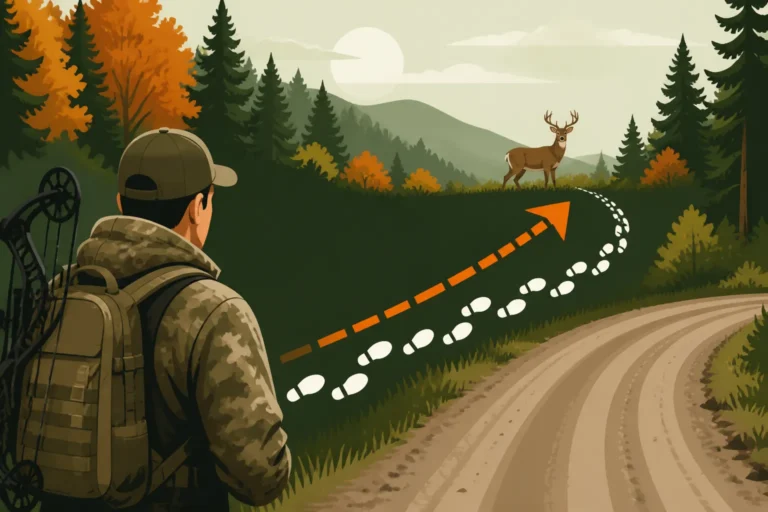
- Trails: Look for distinct trails leading into and out of the orchard, particularly from dense cover. Deer, being creatures of habit, will often use the same paths repeatedly. These trails might be faint, or they could be beaten down to bare earth, indicating heavy use. Check for tracks, especially after a rain or a light snow, which will show you the freshness of the activity. Consider if the trail leads to a Reading a Green Mountain Deer Yard or a thick bedding area.
- Rubs and Scrapes: While not exclusive to orchards, finding rub lines on small saplings or fresh scrapes along the orchard edge, particularly where it transitions into timber, is a huge indicator of buck activity. Bucks will often create these signs as they travel to and from preferred food sources, leaving their scent and marking their territory. A fresh scrape under an apple tree is like a neon sign for a rutting buck.
It’s all about putting together the puzzle pieces. Are the tracks fresh? Are the rubs shiny and new? Is there consistent browsing on the lower branches of the apple trees? The more fresh sign you find, the more confidence you can have in the spot.
Understanding Bedding and Travel Corridors Near the Apples
Deer don't usually bed in the middle of an open orchard, especially in daylight. Their primary concern is security. Instead, they'll often bed in thick cover nearby – a dense stand of pines, a blowdown, a swampy area, or even just a thicket of multi-flora rose and cedar on a secluded hillside. These bedding areas provide concealment from predators and adverse weather.
- Proximity to Cover: Look for the densest cover within 50 to 200 yards of the apple trees. This is where deer will spend their daytime hours, waiting until dusk or during periods of low pressure to move out and feed. A south-facing slope with thick evergreens can be a prime bedding location during colder weather, offering both warmth and security. For insights on what constitutes good cover, you might want to read about Where Vermont Bucks Bed in Thick Cover.
- Funnels and Bottlenecks: Deer will almost always take the path of least resistance when traveling between bedding and feeding. Look for natural funnels – narrow strips of woods between fields, saddles in ridges, or even a deep drainage ditch that provides cover. The edges of the apple orchard itself, where it meets a dense woodlot, can act as a natural funnel. These are prime locations to set up, as you can intercept deer as they transition. Mapping tools like onX Hunt can be incredibly useful for identifying these funnels and predicting deer movement patterns from bedding areas to the orchard. I've often used the satellite imagery to zoom in and identify potential transition lines.
Your goal is to figure out the exact routes deer use to access the apples and where they feel safe enough to linger. This understanding will directly inform your stand placement and overall hunting strategy.
Crafting Your Hunting Strategy for a Hillside Apple Orchard
Once you’ve done your scouting homework and identified a promising orchard and the deer sign within it, it’s time to think about how you’re going to hunt it. Hunting a hillside apple orchard isn't just about showing up; it's about making smart choices regarding your approach, setup, and execution to minimize disturbance and maximize your chances.
Optimizing Stand Placement and Entry/Exit Routes
This is where the rubber meets the road. A poorly placed stand or a noisy entry can blow an entire hunt before it even begins.
- Wind and Thermals: On a hillside, wind and thermals are your absolute masters. As the sun rises, thermals typically rise uphill; as it sets, they fall downhill. You need to position your stand so that your scent is carried away from where you expect deer to approach and feed. This often means setting up on the leeward side of the hill or slightly downwind of a major travel corridor. Always check the prevailing wind, but also be aware of the subtle shifts that thermals bring. Understanding Wind and Thermals in Steep Green Mountain Terrain is paramount here.
- Stand Height and Angle: In an old, gnarled apple tree, finding a good stand location might be tricky. You might need to set up in a larger hardwood or pine adjacent to the orchard, overlooking the apple trees. Aim for a height that gives you a good shooting lane to the feeding area, but also allows you to remain concealed. The angle of your shot to the primary feeding zone is critical. You want to be able to make a clean, ethical shot.
- Entry and Exit: This is often overlooked. Your approach to the stand must be as quiet and scent-free as possible. Use natural terrain features, ditches, or dense cover to conceal your movement. Walk with the wind in your face to avoid pushing deer out of the area before you even get settled. Your exit should be equally discreet, especially if you plan to hunt the spot multiple times. Try to avoid walking directly through the feeding area or blowing deer out on your way back to the truck. This is similar to strategies like considering Entry Routes Through a Cut Cornfield, where minimizing disturbance is key.
Here's a quick comparison of orchard types and their hunting implications:
| Orchard Type | Characteristics | Hunting Challenges | Hunting Opportunities | Ideal Hunting Method |
|---|---|---|---|---|
| Abandoned Homestead | Overgrown, thick cover, old gnarled trees, varied apple drop | Dense brush, limited clear shooting lanes, difficult access | Excellent cover for deer, consistent food source, less pressure | Treestand (edge), Still-hunting |
| Semi-Managed Small | Some pruning/maintenance, often near residences, good variety | Potential human activity, property line concerns, less natural cover | Reliable food, often good deer numbers if undisturbed | Treestand (discreet), Ground blind |
| Commercial/Active | Highly managed, clear rows, frequent human presence, uniform crop | High human disturbance, minimal cover, access issues, spray residue | Abundant food (if picking stops), late-season potential | Still-hunting (post-harvest), Permission only |
Still-Hunting and Stalking Approaches in Orchard Terrain
While a treestand is a popular choice, sometimes the best strategy in an old, brushy apple orchard is to still-hunt or even spot-and-stalk. This is particularly effective in abandoned orchards where the dense undergrowth provides excellent cover for you, too.
- Still-Hunting: Move incredibly slowly, taking a step or two, then pausing for several minutes to scan, listen, and observe. Use your binoculars constantly. Focus on shaded areas, thickets, and any movement among the trees. The key is patience and an ability to blend into the environment. The gnarled branches and often irregular spacing of old apple trees can make it easy for a deer to blend in, so look for horizontal lines (a deer's back) against the vertical lines of trees.
- Stalking: If you spot a deer feeding from a distance, and the wind is right, a slow, deliberate stalk can be effective. Use the apple trees, thick brush, and any dips in the terrain to conceal your approach. Be mindful of dry leaves or twigs underfoot that can give away your position. This works best when deer are actively focused on feeding, their heads down, providing small windows for you to move.
- Ground Blinds: If still-hunting isn't your style, or if the cover allows for it, a well-brushed-in ground blind can be incredibly effective, especially in those overgrown abandoned orchards. It provides concealment and allows you to move slightly without being detected. For tips on setting these up, consider reading Using a Ground Blind on Public Land. The critical thing is to set it up well in advance if possible, to let deer get used to its presence.
Remember, the goal is to be part of the landscape, not an intrusion. Your movements, scent, and sounds all contribute to how successful you'll be.
Timing is Everything: When to Hunt Vermont's Apple Orchards
Deer behavior around apple orchards is highly seasonal. The calendar, coupled with local conditions, plays a massive role in when these sweet spots are hot, warm, or cold. Knowing when to hit an orchard can make all the difference, especially in Vermont where seasons can shift quickly.
Early Season Opportunities: Before the Main Drop
When the expanded archery season rolls around in September, or the regular archery opener in October, you might find some early-dropping apple varieties already on the ground. At this stage, deer might not be gorging yet, but they’ll be checking the trees regularly. They're still transitioning from summer patterns, but the allure of the first sweet fruit is strong.
- Scouting for Early Drops: Look for apples that have fallen due to wind, insect activity, or early ripening. Deer will browse on lower branches of the trees and pick up any early drops. You might find less concentrated activity, but the deer that are there can be less wary.
- Morning vs. Evening: Early in the season, deer often feed in the late evening and early morning, retreating to thick cover during the day. Consider an evening hunt when deer are moving out of their beds to feed, or a morning hunt catching them as they transition back. This is an excellent time to use your onX Hunt app to mark potential early-dropping trees and monitor them through trail cameras.
This period is about being proactive and finding those first signs of activity, rather than waiting for the full-blown apple craze.
Peak Action: The Prime Apple Drop Window
This is the sweet spot, typically from late September through October and often well into November, depending on the apple varieties and the weather. This is when the majority of the apples are ripe and falling to the ground, creating an irresistible buffet.
- High Traffic: Expect concentrated deer activity. Multiple deer, including bucks, will visit these orchards daily, often at all times of the day, particularly if hunting pressure elsewhere is low or if you have a secluded orchard. This is an opportune time to catch bucks on their feet during daylight.
- Rutting Activity: As the rut approaches in early to mid-November, bucks will still visit orchards, especially if does are present. They might scent-check, leave rubs and scrapes, and even spar with other bucks. While it’s not their primary focus during the peak chasing phase, the orchard remains a known congregating point. This is also a fantastic time to consider tactics like Rattling and Grunting Vermont Bucks near these prime food sources, as bucks might be cruising for does.
- Weather Influences: A cold front can kick deer activity into high gear, driving them to feed more intensely to prepare for colder temperatures. This makes hunting Deer After a Cold Front particularly effective in an orchard. Conversely, warm, stagnant weather might slow down daytime movement.
During this peak window, patience and consistent pressure (or lack thereof, if you can manage it) are key. Be ready for action, as deer can show up at any time.
Late Season Scratches: Finding Leftover Fruit
Don’t write off an apple orchard just because the leaves are gone and the ground is frozen. Even after the first snow, these spots can still be surprisingly productive, providing crucial Late-Season Food Sources for Vermont Whitetails.
- Frozen Delights: Apples that are frozen and then thaw slightly can become a fermenting treat that deer still seek out. They might not be as numerous, but the deer that find them will often return.
- Under the Snow: Sometimes, apples will be covered by a light snow, but deer know they're there. They'll paw through the snow to get to the fruit underneath. Look for these pawed-up areas as a clear sign of continued activity.
- Focus on South-Facing Slopes: During the late season, south-facing slopes get more sunlight, which can cause apples to thaw faster or prevent them from freezing solid as quickly. Deer will often prefer these warmer, sunnier spots.
Late-season hunting in an apple orchard demands persistence. You might not see the same numbers as during the peak drop, but the deer you do encounter will be heavily focused on feeding, often making them less skittish. Even a few overlooked, frozen apples can be enough to draw a hungry deer during the tough winter months.
This knowledge, combined with careful scouting and strategic hunting, can turn a simple hillside apple orchard into one of your most consistent and rewarding hunting spots in Vermont.
Disclaimer
This article is for general informational purposes only and does not constitute professional advice. Laws, prices and regulations vary by location and change over time. Consult a qualified professional for guidance on your specific situation.