Hunting a Covered Bridge Crossing
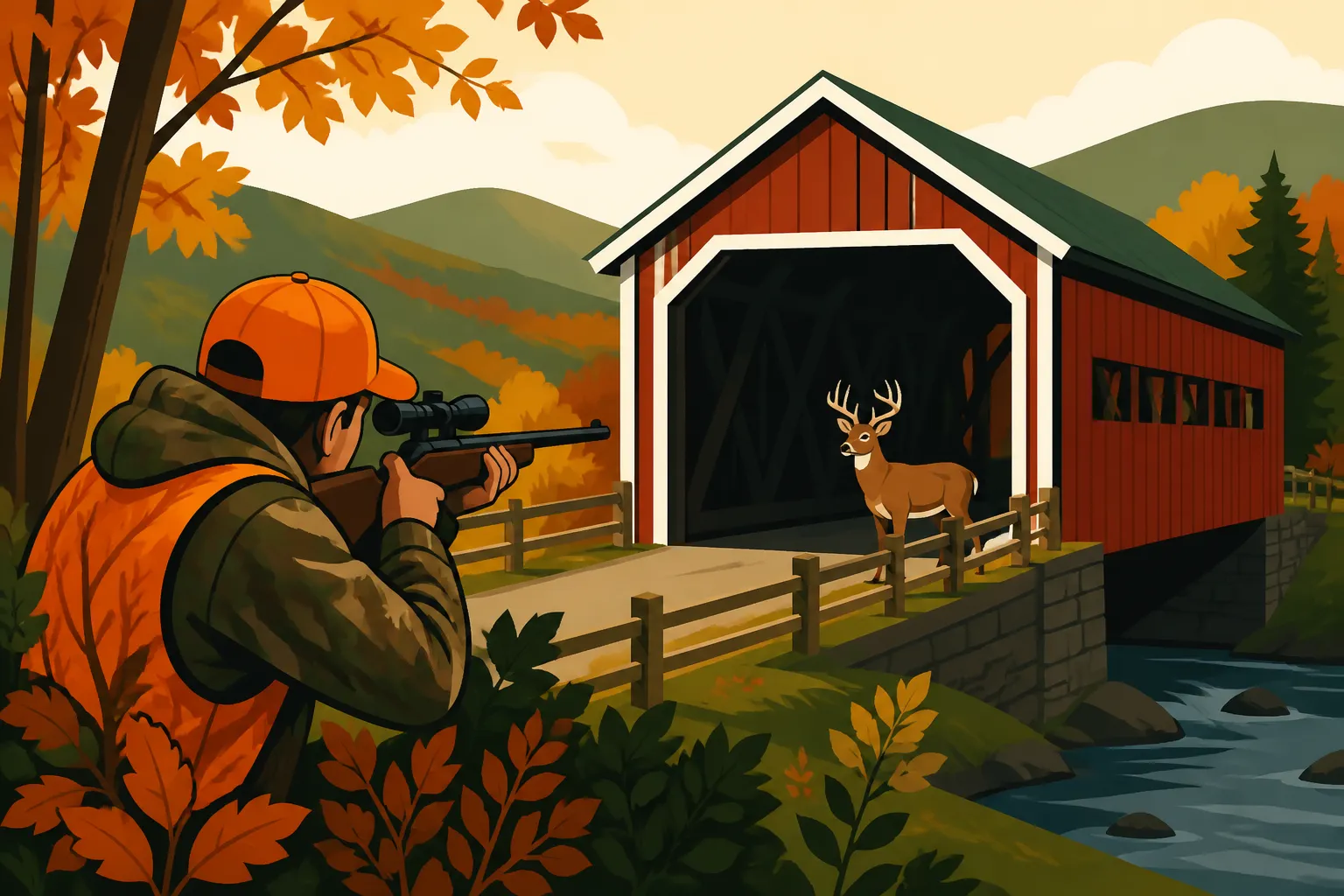
You've been out scouting, driving down a quiet Vermont backroad, and there it is: an old covered bridge, a classic slice of Green Mountain charm. Maybe it spans a trickling creek, or perhaps a wider river, connecting two woodlots or a patch of timber to a distant field. Your first thought might be, "That's pretty," but if you're like me, a veteran hunter, your second thought is, "I wonder what uses this as a crossing?" Hunting around a covered bridge crossing presents a unique set of challenges and opportunities, demanding careful scouting, respect for property, and an understanding of how wildlife interacts with these often-picturesque, yet sometimes surprisingly productive, landscapes. This guide will walk you through how to approach hunting these distinctive Vermont locations, focusing on maximizing your chances while navigating the specific considerations that come with them.
Understanding the "Crossing": Why Covered Bridges Matter to Game
A covered bridge isn't just a nostalgic piece of architecture; it often marks a significant natural feature – a water crossing. Rivers and creeks act as natural travel corridors for deer, bear, turkeys, and even small game. They provide water, cover along their banks, and often carve out terrain that creates natural funnels. The bridge itself, while a human creation, becomes part of this landscape.
Natural Funnels and Travel Corridors
Think about a river or a creek. What happens when it bottlenecks into a crossing point? All the wildlife traveling up or down that waterway, or attempting to cross it, will naturally gravitate towards the easiest and safest point. A bridge, even a covered one, often represents exactly that. Deer, for example, might prefer to cross a narrow, shallower section of a creek near a bridge rather than brave a wider, deeper, or swifter current upstream or downstream. These structures can effectively condense game movement, turning a broad travel pattern into a narrow, predictable funnel.
I've seen it firsthand in places like the Huntington River valley. Deer will follow the river bottom, moving between bedding areas on the hillsides and feeding in lower elevation fields. When they encounter a wider stretch of water, they'll often stick to the bank until they find a solid, easy crossing. Sometimes, that crossing is right at an old covered bridge, even if it means skirting a nearby road. It's about efficiency for them. They're looking for the path of least resistance. These areas can become natural bottlenecks, especially when the surrounding terrain is steep or thick. Hunting a Funnel Between Two Woodlots becomes a very literal concept when a waterway divides two prime habitats and a bridge offers the primary crossing.
Edge Habitat and Food Sources
Beyond the water itself, covered bridge areas frequently offer a rich mix of edge habitat. You often find these bridges in transition zones: where a dense woodlot meets a field, where a winding river emerges from deeper timber, or where a small agricultural patch abuts more wild terrain. These "edges" are goldmines for wildlife. Deer love edges for browse and cover. Turkeys will often roost in trees along riverbanks and feed in nearby fields or open woods. Small game, like squirrels and rabbits, thrive in the diverse vegetation found along these transitional strips.
Consider a bridge that connects a maple sugarbush on one side to an old apple orchard on the other. That's a double whammy for deer. They'll bed in the dense cover of the sugarbush, browse on the edges, and then move across the bridge area to hit the fallen apples in the orchard. Even if the immediate area around the bridge is mowed or maintained, the approaches to it, the creek banks, and the adjacent timber can be prime habitat. These bridges are often found in picturesque settings, which sometimes means they're also near small agricultural operations or abandoned homesteads that still produce food sources like wild apples, berries, or mast crops that deer absolutely crave.
Scouting the Terrain Around Vermont's Covered Bridges
Hunting a covered bridge crossing effectively requires meticulous scouting, both from afar and on the ground. You need to understand the lay of the land, identify potential game trails, and assess human activity in the vicinity. This is where modern tools really shine, but nothing beats boots on the ground.
Digital Reconnaissance: Mapping the Opportunities
Before you ever step foot near a covered bridge, spend some serious time with digital mapping tools. Applications like onX Hunt or GoHunt are invaluable for this kind of specific, hyper-local scouting. You can zoom in on a covered bridge and immediately see the surrounding landownership. Is it public land? Is it private? If it's private, who owns it? This is crucial, as Getting Private Land Permission in Vermont is often the difference between a successful hunt and a wasted effort.
Look for green zones (public land) or parcels that connect larger blocks of timber. See where creeks flow and how the terrain changes around the bridge. Are there steep ravines that would force deer to use the bridge area? Are there dense conifer stands nearby that could serve as bedding areas? Identify potential pinch points, saddles, or benches that lead to or away from the bridge. Look for logging roads or old trails that might cross the bridge or parallel the waterway, as these are often used by both humans and wildlife. I've found that the layers showing topography and aerial imagery are especially helpful. You can often pick out subtle deer trails or worn paths leading directly to a crossing point if you know what to look for on an aerial photo. Reading Aerial Photos for Green Mountain Deer isn't just for vast tracts of timber; it's incredibly useful for these smaller, specific features too.
Boots on the Ground: Confirming the Sign
Once you've done your digital homework, it's time for some old-fashioned legwork. Your goal is to confirm what the maps suggest and find fresh sign. Walk the banks of the waterway, both upstream and downstream from the bridge. Look for tracks in the mud, rubs on trees, and fresh scat. Pay close attention to any trails that lead directly to the bridge or pass under it if the bridge allows.
During your scouting, also consider how Wind and Thermals in Steep Green Mountain Terrain might affect scent dispersal around the bridge. If the bridge is in a valley, thermals will typically drop in the morning and rise in the evening, carrying your scent accordingly. Knowing this will help you pick a stand location that keeps your scent out of the primary travel corridors. Observe the type of vegetation present. Are there mast trees like oaks or beech? Are there natural browse plants that deer prefer? The more time you spend on the ground, the more you'll understand the daily patterns of the game in that specific area. Remember, you're looking for the best crossing points, not just any crossing.
Navigating Legalities and Public Perception Near Bridges
Hunting near human infrastructure like a covered bridge demands an extra layer of awareness regarding regulations and public perception. Vermont has strict rules about where you can discharge a firearm or bow, and these areas often have increased human activity.
Understanding Setback Rules and Posted Land
One of the most critical aspects of hunting near any structure or road in Vermont is adhering to discharge setback rules. You cannot discharge a firearm or bow within a certain distance of an occupied dwelling, school, or church, or across a public highway. While a covered bridge itself might not be an "occupied dwelling," it's almost always near roads and often residential properties. It's your responsibility to know these distances and ensure your shot will be safe and legal. Always consult the latest Vermont Fish & Wildlife regulations for exact figures. Vermont Firearms Discharge Setback Rules are non-negotiable and designed for public safety.
Furthermore, many covered bridges are located on or adjacent to private land. Even if the road leading to the bridge is public, the land on either side often isn't. Vermont Trespass and Permission Law is clear: you need explicit permission to hunt private land. This is where your onX Hunt maps come in handy, allowing you to identify landowners. Always get written permission if possible, and be extremely clear about the areas you'll be hunting. The last thing you want is a confrontation with a landowner or a game warden because you assumed a small woodlot next to a public bridge was fair game.
| Consideration | Importance for Covered Bridge Hunting |
|---|---|
| Discharge Setbacks | Critical due to proximity to roads, homes. |
| Private Land Permission | Often required as bridges are frequently near private holdings. |
| Public Perception | High visibility means extra care in appearance and conduct. |
| Local Ordinances | Some towns may have stricter rules than state law. |
| Access Routes | Identify legal parking and walking access to avoid trespassing. |
Managing Public Visibility and Ethics
Covered bridges are often scenic attractions. You might encounter tourists, photographers, or local residents out for a stroll. When hunting in these areas, you're highly visible, and public perception matters. Always practice the highest ethical standards. This means dressing appropriately (especially wearing blaze orange or pink during rifle season, even if bowhunting during the Hunting a Bow During the Rifle Season Overlap), parking legally, being discreet, and being courteous to anyone you encounter.
Avoid drawing attention to yourself. If someone asks what you're doing, politely explain you're hunting legally and safely, but don't overshare details of your spot. It's often best to plan your hunts for times when human activity is lower, such as very early mornings or late evenings, especially mid-week. Hunting Pressure on Vermont Public Land is a real thing, and highly visible spots near roads or landmarks often see more casual hikers or dog walkers, even if the land is technically public and huntable. A good rule of thumb is to avoid setting up directly at the bridge itself, but rather to focus on the approaches and the natural funnels created by the terrain leading to or from the bridge. This gives you some distance from non-hunters and usually puts you in a better position for game movement anyway.
Effective Hunting Strategies for Covered Bridge Areas
Once you've scouted, secured permission, and understand the legal landscape, it's time to think about tactics. Hunting a covered bridge crossing is often about patience, stealth, and using the terrain to your advantage.
Stand Placement and Still-Hunting
Given the potential for funneling deer or other game, strategic stand placement is paramount. Look for pinch points created by the creek and the topography leading to the bridge. A classic setup might be a treestand overlooking a well-used game trail along the creek bank, 50-100 yards upstream or downstream from the actual bridge. This puts you in a prime travel corridor but keeps you away from the immediate human activity at the bridge itself. You want to be far enough away from the road for safety and legal reasons, but close enough to intercept game using the crossing.
Always consider your wind direction, especially in these valley-like settings where thermals can be tricky. Reading a Green Mountain Deer Yard isn't always about finding a wintering concentration, but understanding how deer use micro-terrain features, even small ones, year-round. They'll hug creek banks, duck under brush, and use any cover available.
Still-hunting can also be very effective in these areas, particularly if there's sufficient cover along the creek banks or in adjacent timber. By moving slowly, stopping frequently to listen and observe, you can often pick up on subtle deer movement. Focus on areas where trails converge or where there are obvious signs of frequent travel. Remember to use the topography and vegetation to break up your silhouette. If the bridge crosses a wider, open area, still-hunting might be less effective than a well-placed stand.
Focusing on Specific Game Movement and Time
Deer tend to be crepuscular, meaning they move most during dawn and dusk. These times often align perfectly with lower human activity around covered bridges. Target your sits for early mornings, before the first car crosses, and late evenings, as the last tourist leaves. Deer will often wait until after dark to use more exposed crossings, so catching them on the move to or from cover during legal light is key. Entry Routes Through a Cut Cornfield or Hunting a Standing Apple Orchard might lead directly to the covered bridge area, making those food sources excellent indicators of game movement patterns.
During the rut in early-to-mid November, buck movement increases significantly. They'll be on the prowl, checking traditional doe travel routes, and a natural funnel like a covered bridge crossing can be a hotspot. This is when rattling or grunting might even prove effective, drawing a curious buck into view. For turkeys, look for areas where they might fly across the river or creek to roost or feed. Fall turkey flocks might use these crossings as they move between different mast-producing areas. Working a Fall Flock Apart Statewide With a Bow could involve intercepting them as they move across a funnel near a bridge. Small game, like squirrels, will often be active throughout the day, so scouting for their activity can sometimes provide a bonus.
Ultimately, hunting a covered bridge crossing isn't about the bridge itself, but the natural choke points and diverse habitat it often highlights. With careful planning, respect for the rules, and a keen eye for deer sign, these picturesque spots can offer some surprisingly rewarding hunting experiences in Vermont.
Disclaimer
This article is for general informational purposes only and does not constitute professional advice. Laws, prices and regulations vary by location and change over time. Consult a qualified professional for guidance on your specific situation.