Hunting a Lake Champlain Marsh
One of the most thrilling, yet often frustrating, experiences for a waterfowl hunter in Vermont is navigating the expansive and often enigmatic marshes of Lake Champlain. These wetlands can be incredibly productive, but they present unique challenges in terms of access, navigation, and understanding bird behavior. This guide is designed to cut through that confusion, helping you successfully plan, scout, and execute a productive and safe waterfowl hunt in these remarkable Vermont marshlands.
Understanding Lake Champlain's Marsh Ecosystem for Waterfowl
Lake Champlain’s marshes are truly special places, offering a diverse array of habitats that attract myriad waterfowl. But to hunt them effectively, you first need to understand what makes them tick and why birds choose to be there.
Unique Characteristics of Champlain Marshes
When you picture a marsh along Lake Champlain, don't just think of a soggy field. These are dynamic ecosystems, a beautiful and complex blend of emergent vegetation, shallow open water, and often subtle changes in depth that dictate where birds feed and rest. You'll find vast expanses of cattails, phragmites, and wild rice, interspersed with pockets of clearer water, mudflats, and channels. It's a maze, and that's precisely what makes it so appealing to ducks and geese seeking refuge and sustenance.
The character of these marshes is heavily influenced by lake levels. When the water is high, areas that might usually be dense, impassable vegetation become accessible by boat, opening up new hunting opportunities. Conversely, low water can expose vast mudflats, concentrating birds and making certain areas wadable, though often mucky. Understanding these fluctuations, even season to season, is crucial for planning. A spot that was hot last year might be bone dry, or too deep, this year.
This diverse habitat isn't just a pretty picture; it's a buffet and a fortress for waterfowl. Mallards, black ducks, and wood ducks are common inhabitants, dabbling in the shallows for submerged vegetation and invertebrates. You'll also encounter various species of teal, especially during early migrations, and increasingly, Canada geese utilizing the marsh edges and adjacent fields. Each species has its preferences, but the overall richness of the Champlain marsh environment makes it a prime destination for a variety of game birds.
Waterfowl Behavior in Marsh Habitats
Ducks and geese aren't just passing through these marshes; they rely on them for several critical needs throughout their migration and even during resident breeding periods. These wetlands are vital feeding grounds, particularly for dabbling ducks that can tip up in shallow water to reach aquatic plants, seeds, and small invertebrates. Areas with abundant wild rice, smartweed, or pondweeds become magnets for hungry birds, especially when cold fronts push them south and they need to refuel.
Beyond food, the dense cover provided by cattails and reeds serves as an invaluable resting and loafing area. After a long flight or a morning of intense feeding, ducks often seek out secluded pockets within the marsh to preen, digest, and simply relax away from disturbance. These "loafing areas" can be frustratingly close to where you’re set up, but just out of sight. It's why knowing the lay of the land, even the hidden nooks and crannies, is so important.
Finally, Lake Champlain and its surrounding marshes play a critical role as a major staging area on the Vermont Waterfowl Hunting on the Atlantic Flyway. During the peak of migration, these wetlands can hold thousands of birds, offering both food and security before they continue their journey south. Understanding these patterns – when different species typically arrive, how long they stay, and how weather affects their movement – is key to successful marsh hunting. They might be here today and gone tomorrow, or hunkered down waiting out a storm.
Scouting and Accessing Prime Marsh Locations
The thought of tackling a vast marsh can be intimidating, but with smart scouting and a clear understanding of access, you can find your sweet spots. It's all about breaking down the big picture into manageable pieces.
Pre-Season Digital and On-the-Ground Scouting
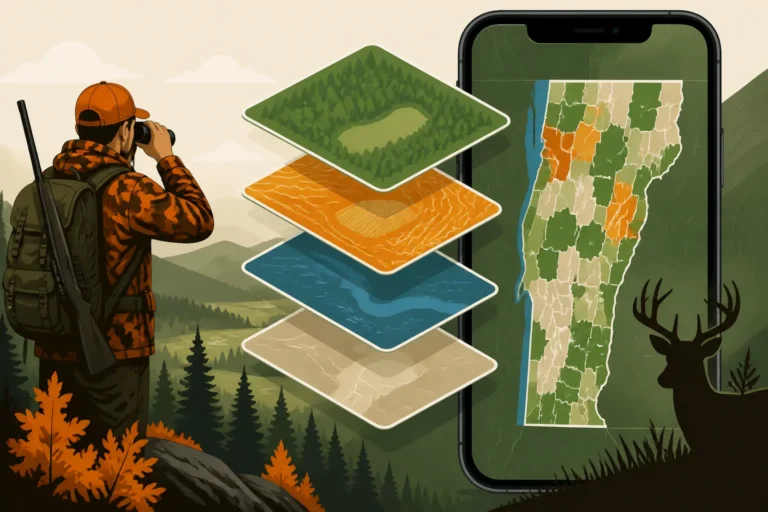
Before you even think about loading decoys, you need a plan, and that plan starts with meticulous scouting. Begin with digital tools. Apps like onX Hunt are invaluable for identifying potential hotspots from the comfort of your home. You can pore over satellite imagery, looking for distinct changes in vegetation, areas of open water adjacent to thick cover, and pinch points where birds might naturally funnel. Pay close attention to public land boundaries, as marshes often span multiple ownerships, and trespassing is never an option. Identifying existing boat launches, old logging roads, or even abandoned beaver runs can also give you crucial clues for access.
Once you have some promising areas digitally marked, it’s time for boots-on-the-ground (or waders-in-the-mud) reconnaissance. Visit these spots well before the season opens. Look for actual duck sign: droppings on logs, plucked feathers, tracks in the mud, or clipped vegetation from feeding. Observe water levels and current flow. What might look like a solid path on a map could be chest-deep muck in reality. This is also your chance to confirm access points and note any unexpected obstacles, like downed trees or particularly dense vegetation that would make dragging a boat difficult.
Don't forget to consider how high or low the water is at the time of your scouting trip compared to historical averages or expected hunting season levels. What looks like a perfect wading flat in July might be an impassable deep channel in October. Look for hidden channels or deeper pockets within the marsh that could serve as natural landing strips for ducks or provide easier access for your boat. Observing bird flight patterns in the evenings or early mornings can also reveal their preferred entry and exit routes, giving you vital clues for your setup.
Navigating Access Points and Terrain Challenges
Gaining access to Lake Champlain's marshes can range from straightforward to an expedition. Many public access points, like state boat launches or designated Hunting a State-Owned Wetland areas, offer a starting point. However, these are often popular and can see significant pressure. Some of the best hunting can be found deeper in, requiring more effort. Always verify property lines, and if hunting private land, make absolutely certain you have explicit permission. This is where onX Hunt really shines, allowing you to quickly verify land ownership and avoid accidental trespass.
The type of boat you choose is critical for marsh hunting. A light jon boat with a shallow-running mud motor is ideal for navigating skinny, vegetation-choked waters. Canoes and kayaks offer stealth and access to even tighter spots but require more paddle power. Standard outboards can quickly get clogged or damaged in thick weeds or shallow mud. In some areas, wading might be the primary mode of travel, meaning you need robust, puncture-resistant waders and appropriate footwear that can handle deep mud and underwater obstacles.
Expect to encounter challenges. Mud is almost a given; sometimes it's boot-sucking deep, sometimes it’s firm. Thick emergent vegetation can create walls that are tough to push through, even with a boat. Changing water depths can leave you high and dry or suddenly swamping your waders. Always carry extra ropes, a paddle, and a plan for getting unstuck. Being prepared for these realities, both physically and mentally, is part of the marsh hunting experience. Investing in quality Waders for Vermont Waterfowl Hunting cannot be overstated; leaky waders on a cold marsh morning will end your hunt quickly.
Effective Hunting Strategies for Champlain Marshes
Once you've done your scouting and figured out your access, it's time to think about how you'll actually hunt these unique environments. Marsh hunting requires a slightly different approach than open-water or field hunting.
Decoy Spreads and Blind Setups
In the intimate confines of a marsh, your decoy spread needs to be realistic and inviting, without being overly elaborate. Ducks are often looking for small, safe pockets to land in, not a massive airport. Focus on smaller, more natural spreads, emphasizing realism and movement. A mix of mallards, black ducks, and perhaps a few pintails can be very effective. Consider adding a few motion decoys, like a spinning-wing decoy or a jerk string, to create ripples and the illusion of active birds. These small touches can make a huge difference in drawing in wary ducks. Best Duck Decoy Spread for Lake Champlain articles often highlight these nuances.
Placement is everything. Set your decoys upwind of your position, leaving a clear "landing zone" directly in front of your blind. Ducks prefer to land into the wind, so give them a comfortable approach. Position some decoys closer to the edges of heavy cover, suggesting birds that have just settled in, and others in slightly more open water. Think about how real ducks would interact in this space, and mimic that. The sun's position is also critical; try to have the sun at your back so approaching birds are looking into it, giving you an advantage.
For blinds, natural concealment is often your best bet. Marsh grasses, cattails, and reeds offer excellent cover if you utilize them properly. You can either tuck into an existing clump of vegetation, brushing it up around you, or use a low-profile layout blind in drier spots along the marsh edge. If hunting from a boat, invest in a good boat blind that blends seamlessly with the surrounding environment. The key is to disappear. Ducks have incredible eyesight, and any unnatural outline or movement will send them flaring.
Calling Techniques and Situational Awareness
Calling in a marsh environment requires finesse. While aggressive calling can sometimes work, subtle, lifelike calls are often more effective, especially for birds already in the vicinity. Focus on realistic mallard quacks, contented feeding chuckles, and soft greetings. If you're seeing black ducks, a few deeper quacks can be useful. Teal often respond well to short, sharp whistles. The goal isn't to blast them out of the sky but to reassure them that your spread is a safe place to land. Knowing when to call, and more importantly, when to stop calling, is an art form developed through experience.
Reading bird behavior is paramount. Watch how ducks approach your spread. Are they circling cautiously? Are their wings cupped, signaling a commitment to land? Or are they flaring off well out of range? Adjust your calling accordingly. If they're interested but not committing, a few soft quacks or feeding calls might seal the deal. If they're flaring, go silent, let them pass, and re-evaluate your setup. Sometimes, less is more.
Maintaining constant Reading a Marsh for a Morning Flight and situational awareness is critical in the marsh. Ducks often come in low, hugging the contours of the landscape, making them difficult to spot until they're right on top of you. Listen for the subtle whistle of wings or the distant quack of another flock. Be aware of other hunters in the area – their shots or movements can impact your hunt. Stay still, keep your head on a swivel, and be ready when the opportunity arises.
Essential Gear, Regulations, and Safety in the Marsh
Marsh hunting, while rewarding, demands a higher level of preparation when it comes to gear, an ironclad understanding of regulations, and an acute awareness of safety.
Crucial Gear for a Successful Marsh Hunt
Your gear needs to stand up to the rigorous demands of the marsh. Starting with clothing, quality waterproof and windproof outerwear is non-negotiable. Layering is your best friend for adapting to Vermont's unpredictable weather, from chilly pre-dawn starts to warmer midday sun. And, as mentioned, a reliable pair of waders is your most important piece of clothing after your outer shell; consider neoprene for warmth in colder conditions or breathable models for early season comfort.
Beyond clothing, think about navigation and emergencies. A reliable GPS device or a mapping app like onX Hunt with downloaded offline maps is essential, as cell service can be spotty deep in the marsh. A powerful headlamp with extra batteries is critical for navigating in the dark. Always carry a small emergency kit with a first-aid supply, a fire starter, and a whistle. For your boat, ensure you have extra anchors, plenty of rope, and a sturdy push pole to navigate shallow, muddy sections.
When it comes to your shotgun and ammunition, familiarity is key. A 12-gauge shotgun is the most common choice for waterfowl, offering versatility in shot patterns and shell loads. Remember, non-toxic shot (steel, bismuth, or tungsten-alloy) is mandatory for all waterfowl hunting. Choose your shot size based on the species you anticipate encountering, typically #2 or #3 for ducks and BB or BBB for geese. Always carry enough shells for your hunt, plus a few extra for unexpected opportunities. Decoying Ducks on Lake Champlain is often more successful when you have the right load.
Understanding Vermont's Waterfowl Regulations
Navigating the rules and regulations can feel like a labyrinth, but staying legal and ethical is paramount. First and foremost, you'll need a valid Vermont hunting license, and if you're a non-resident, be aware of the specific requirements. On top of that, all waterfowl hunters must purchase a Vermont migratory bird stamp and a federal duck stamp. You'll also need to register with the Harvest Information Program (HIP). It sounds like a lot, but it's crucial. You can find more details on Vermont Hunting Licenses and What They Cost.
Familiarize yourself with the daily bag limits and possession limits for each species. Vermont Duck and Goose Bag Limits can vary by species and sometimes even by zone. Species identification is also crucial; you need to be able to tell a legal duck from a protected species, or a mallard from a black duck when special limits apply. Pay close attention to the specific season dates for the Vermont Lake Champlain Zone Waterfowl Dates, as these can differ from other zones in the state and may even have split seasons.
Beyond the letter of the law, always hunt ethically. This means making clean shots, retrieving all downed birds, and respecting the resource. Avoid "sky-busting" – shooting at birds that are out of range – as it often wounds birds and educates them, making them harder to hunt for everyone. Be courteous to other hunters you encounter; the marsh is big, but good sportsmanship goes a long way.
Here’s a quick overview of some common waterfowl regulations:
| Category | Requirement / Consideration |
|---|---|
| Licenses & Stamps | Valid Vermont Hunting License (Resident or Non-Resident), Vermont Migratory Bird Stamp, Federal Duck Stamp, HIP (Harvest Information Program) Registration. |
| Ammunition | Non-toxic shot (steel, bismuth, tungsten-alloy, etc.) is mandatory for all waterfowl hunting. Lead shot is strictly prohibited for waterfowl. |
| Season Dates & Zones | Lake Champlain is part of a specific waterfowl zone with unique opening and closing dates, and potentially split seasons. Always check the current Vermont Fish & Wildlife digest for precise Vermont Waterfowl Zones and Seasons. |
| Bag & Possession Limits | Daily bag limits are specific to each species (e.g., mallard, black duck, wood duck, Canada goose). There are also overall aggregate limits and possession limits (usually three times the daily bag limit). It is critical to identify your target species correctly before shooting. |
| Hunting Hours | Generally from one-half hour before sunrise to sunset. Consult the official regulations for precise times, as these can vary. |
| Weapon Restrictions | Shotguns are the primary legal weapon. It is illegal to hunt waterfowl with any shotgun capable of holding more than three shells (plugged to a three-shell capacity). |
| Decoys & Calls | Electronic calls are generally prohibited for migratory birds, but mouth-operated calls are legal. Live decoys are illegal. |
| Retrieval | Every reasonable effort must be made to retrieve all killed or crippled migratory game birds. This often requires a dog or careful navigation of the marsh. |
| Carcass Tagging & Transport | Birds must retain a wing or head until they reach their final destination (home, cold storage, taxidermist) to aid in species identification and enforcement. |
Safety Considerations in Marsh Environments
The marsh, for all its beauty, can be a dangerous place if you're not prepared. Water safety is paramount. Always wear a personal flotation device (PFD), especially when traveling in a boat, regardless of how calm the water appears. Lake Champlain can kick up quickly, and cold water immersion is a real risk, even in mild temperatures. Check the weather forecast meticulously before heading out, and be prepared for sudden changes.
Navigation safety is another critical concern. It's incredibly easy to get turned around in the featureless expanse of a dense marsh, especially in fog or low light. Always let someone know where you're going and when you expect to return. Carry a fully charged phone in a waterproof case, but don't rely on it as your sole navigation tool. A compass and a printed map can be lifesavers if your electronics fail. Respect private property boundaries to avoid legal trouble and potential conflicts.
Finally, firearm safety is always the top priority. Ensure your firearm is unloaded until you are ready to hunt. Maintain strict muzzle control and always be aware of your zone of fire, especially when hunting with partners. Retrieving a downed bird in deep mud or thick cover presents its own challenges, so be patient and methodical. Never rush, and always prioritize your safety over getting a bird. The marsh is an unforgiving environment, and a moment of carelessness can have severe consequences.
Disclaimer
This article is for general informational purposes only and does not constitute professional advice. Laws, prices and regulations vary by location and change over time. Consult a qualified professional for guidance on your specific situation.