Public Ground Near Barre
Finding good hunting land around a place like Barre, Vermont, can feel like a real puzzle. You're nestled right in the heart of central Vermont, where towns blend into agricultural fields, and those fields give way to woodlots that often feel impossibly fractured by private property lines. It's not the vast, sprawling wilderness of the Northeast Kingdom, and that can be a source of real frustration for hunters who just want to get out and enjoy our passion. This guide is here to help you unravel the opportunities for public land hunting near Barre, offering strategies and insights to make your next trip successful and enjoyable.
Understanding the Landscape and Challenges of Hunting Near Barre
Barre sits within Washington County, a region characterized by rolling hills, interspersed farmlands, timbered ridges, and a significant population presence. This isn't remote wilderness, and that changes the game considerably when you're looking for public hunting grounds. The key challenge isn't necessarily a lack of public land, but rather finding it, understanding its boundaries, and navigating the increased hunting pressure that often comes with more accessible areas.
Barre's Unique Geography and Hunter Demographics
Central Vermont, being more densely populated than the far northern reaches of the state, naturally sees more recreational users on its public lands. This includes not just hunters, but hikers, dog walkers, and other outdoor enthusiasts. The landscape itself is a patchwork of residential zones, working farms, and woodlots that range from small, isolated parcels to larger, contiguous blocks of timber. You'll find a mix of mature hardwoods, younger clear-cuts, and the occasional cedar swamp or beaver flowage. Deer in these areas often become nocturnal or move to thick, overlooked pockets of cover, making them a challenge to pattern. It’s a different kind of hunting than stalking wide-open forests; it often means being acutely aware of your surroundings, understanding deer movement patterns in fragmented habitat, and being prepared to share the woods.
The Critical Role of Mapping Tools
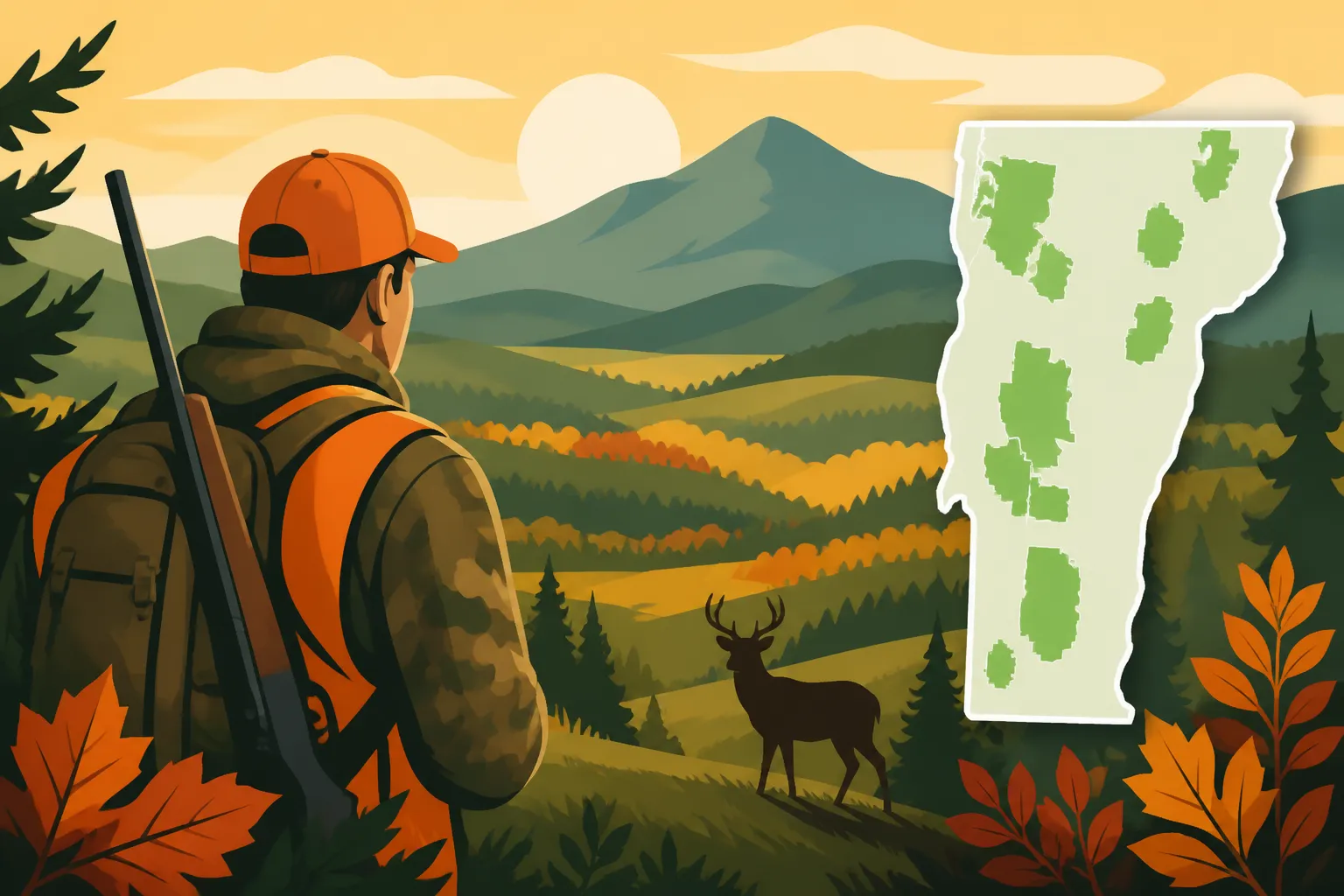
Given the intricate mosaic of public and private land around Barre, a reliable mapping tool isn't just a luxury, it's an absolute necessity. I can't stress this enough. Relying on outdated paper maps or just driving around hoping to spot "No Hunting" signs is a recipe for frustration and potential trespass. Tools like onX Hunt become your best friend in this kind of terrain. They allow you to overlay public and private land boundaries directly onto detailed topographic maps and aerial imagery. You can see precisely where state forest ends and private property begins, identify potential access points, and even scout remotely for terrain features like ridge lines, creek bottoms, and thick cover where deer might bed or travel. Using the Fish and Wildlife App Without Cell Service is another great skill to develop, especially if you venture into pockets where cell service might be spotty.
Scouting for Overlooked Pockets
The common wisdom for public land hunting often involves "walking further than anyone else." While that's still true, around Barre, it also means "looking harder than anyone else" at the map for those small, often overlooked pockets of public land that might be just a few acres but offer excellent hunting opportunities simply because they're harder to find or access. Sometimes, it's a piece of state land that's landlocked by private property, but there's a legal right-of-way that few hunters know about. Or it might be a narrow strip of public land along a river or an old railroad bed that connects larger blocks of habitat. Don't be afraid to zoom in and scrutinize every little green or blue parcel on your mapping app.
Identifying Key Public Hunting Areas in Washington County
While Barre itself might feel urban, Washington County, where Barre is located, does offer various types of public lands for hunting. These areas require a slightly different approach than the vast tracts of the Green Mountain National Forest further west or south, but they can be incredibly productive for whitetail deer, turkey, and small game if you put in the legwork. Knowing what types of public land exist and how to research them is your first step. Washington County Public Hunting Ground is a topic many hunters around here are keen to explore.
State Forests and Wildlife Management Areas (WMAs)
Throughout Washington County, you'll find a scattering of State Forests and Wildlife Management Areas (WMAs). These are typically managed for multiple uses, including timber harvesting, recreation, and wildlife habitat. State Forests, like those managed by the Vermont Department of Forests, Parks and Recreation, can offer substantial timbered acreage. These areas often have logging roads (sometimes gated) that can provide access, but also lead you further into unpressured territory if you're willing to walk beyond the easy parking spots. Deer will often utilize recent timber cuts for browse and cover, making these excellent areas to scout.
WMAs, on the other hand, are specifically managed by the Vermont Fish and Wildlife Department with wildlife in mind. They might include wetlands, riparian corridors, or specific upland habitats tailored for deer, bear, or waterfowl. While some WMAs can be very popular and see heavy pressure, others might be smaller or have more challenging access, leading to less competition. Always check the specific rules for each WMA you plan to hunt, as regulations can sometimes vary slightly from general statewide rules regarding things like ATV use or stand placement. Remember to consult the Treestand Rules on Vermont Public Land before you head out.
Town Forests and Other Local Opportunities
One of the most overlooked resources for public land hunting in central Vermont are town forests. Many municipalities across Vermont own tracts of forestland, often acquired over generations for timber revenue, watershed protection, or local recreation. These can range from a few dozen acres to several hundred. The rules for hunting on town forests vary widely by town, so thorough research is absolutely essential. Some towns explicitly allow hunting, while others may restrict it or require special permits.
To find these gems, you'll need to do some local sleuthing. Start by looking at town websites or contacting town clerks or forest committees in towns surrounding Barre. Sometimes, a quick search on onX Hunt for "Town Forest" will reveal parcels that might not be prominently advertised. The beauty of town forests is often their proximity and the potential for reduced pressure compared to larger, well-known state properties. You might find a productive woodlot just a short drive from home that holds deer overlooked by hunters heading to more distant, famous locations.
Understanding Vermont's Public Land Access
It's important to remember that Vermont law states that all land is considered open to hunting unless it is legally posted. However, the onus is on the hunter to know property boundaries and respect landowner rights. This is where your mapping tools and due diligence come into play. While you might not be actively trespassing if unposted, being too close to residences or farm buildings is never a good idea, both for safety and for maintaining positive hunter-landowner relations. Vermont Trespass and Permission Law outlines these important distinctions.
| Type of Public Land | Primary Manager | Typical Size | Key Features | Common Hunting Opportunities | Access Considerations |
|---|---|---|---|---|---|
| State Forest | VT Forests, Parks & Recreation | Large (hundreds to thousands of acres) | Timber production, mixed forests, logging roads | Deer, Bear, Turkey, Small Game | Maintained roads, gated access, hiking trails |
| Wildlife Management Area (WMA) | VT Fish & Wildlife Department | Varied (tens to hundreds of acres) | Habitat-focused, wetlands, upland forests | Deer, Waterfowl, Turkey, Small Game | Parking areas, foot access, specific WMA rules |
| Town Forest | Local Municipality | Small to Medium (dozens to hundreds of acres) | Managed local resources, recreation, mixed forests | Deer, Turkey, Small Game | Varies by town, check local ordinances, often informal |
| Federal Land | US Forest Service (e.g., GMNF) | Very Large (thousands of acres) | Wilderness areas, remote forests, high elevations | Deer, Moose (by permit), Bear, Turkey | Extensive trail systems, backcountry, long walks |
Note: While the Green Mountain National Forest is federal land, it's a significant resource in Vermont, though often a bit further from Barre than local State Forests or WMAs.
Strategies for Successful Hunting on Barre-Area Public Land
Hunting public land near a more populated area requires a thoughtful approach. You'll likely encounter more hunters and potentially more cautious game. Success comes from smart scouting, adapting to pressure, and understanding local animal behavior.
Scouting Smart and Efficiently
Pre-season scouting is absolutely non-negotiable, especially on public land. Don't wait until opening day to find out where you're going. Use your mapping apps like onX Hunt to pour over aerial photos and topographical maps during the off-season. Look for:
- Funnels and Pinch Points: These are natural corridors that concentrate animal movement. Think narrow strips of woods between fields, saddles in ridges, or where two ravines converge. Hunting a Funnel Between Two Woodlots is a classic example.
- Thick Cover: In pressured areas, deer will gravitate to the densest cover they can find – thick regenerating timber, impenetrable cedar swamps, or steep, nasty ravines that most hunters avoid. These can be prime bedding areas.
- Water Sources: Creek bottoms, beaver flowages, and spring seeps are always important, especially early in the season.
- Food Sources: Identify common deer foods in the area. Are there oak ridges dropping acorns? Old apple orchards? Clear-cuts with new browse? Hunting After a Poor Acorn Year will require shifting focus.
Once you have a few promising spots identified on your map, get boots on the ground. Walk the property lines, find the access points, and look for actual deer sign: rubs, scrapes, tracks, and droppings. Finding Sign in Green Mountain Timber is a skill you'll hone. Pay attention to how the land lays, how wind and thermals will affect scent, and where the easiest and hardest travel routes for deer (and other hunters) are.
Dealing with Hunting Pressure
Public land, by its nature, is open to everyone. This means you'll likely encounter other hunters. Instead of getting discouraged, adapt your strategy:
- Walk Further: This is a perennial piece of advice because it works. Most hunters stick to within a quarter-mile of their vehicle. If you're willing to go a mile or two back into a State Forest, you'll often find less pressured animals. How Far to Walk From a Forest Road can be a real game-changer.
- Hunt Mid-Week: If your schedule allows, hunting on a Tuesday or Wednesday can significantly reduce competition compared to busy weekends.
- Consider "Nasty" Areas: Deer often escape to places humans don't want to go – steep slopes, thick briar patches, or swampy areas. These can be incredibly productive spots, especially during rifle season when deer are pushed.
- Arrive Early, Stay Late: Getting to your spot well before first light and staying until the last legal minute increases your chances of encountering deer moving between bedding and feeding areas, especially if other hunters are moving them around.
Understanding Local Game Movement
Deer in the Barre area are often accustomed to human activity. They may hold tight in thick cover during the day and only move extensively under the cloak of darkness. Your job is to catch them during those fleeting daylight hours.
- Edge Habitat: Deer thrive in edge habitat – where a field meets the woods, where a clear-cut transitions to mature timber, or along a creek bottom bordered by fields. These edges provide food, cover, and travel corridors.
- Wind and Thermals: In Vermont's hilly terrain, wind and thermals are paramount. Always know what the wind is doing and how topography might be affecting it. Your scent control is vital. Wind and Thermals in Steep Green Mountain Terrain are constant considerations.
- Patience is Key: Sitting still for longer periods, especially in areas with good cover, can pay off. Let the woods "settle down" after you've walked in, and you might be surprised by what moves past.
Respecting Boundaries and Regulations
When hunting close to developed areas, being a responsible and ethical hunter is more important than ever.
- Know Your Regulations: Always be up-to-date on Vermont Hunting Licenses and What They Cost, season dates, bag limits, and specific rules for the game you're pursuing. Ignorance of the law is not an excuse.
- Maintain Distance from Residences: Always be aware of safety zones around dwellings. Even if legal, avoid shooting towards occupied homes or buildings. Safety is paramount.
- Leave No Trace: Pack out everything you pack in. Leave the land cleaner than you found it. This helps ensure continued access for all hunters.
- Be Considerate of Other Users: You'll likely share public land with hikers, dog walkers, and other outdoor enthusiasts. Be courteous, make your presence known (especially during rifle season with proper blaze orange requirements), and avoid confrontations. A positive image of hunters benefits us all.
Hunting public land near Barre, Vermont, is entirely possible and can be incredibly rewarding. It demands a bit more planning, a heavier reliance on modern tools like onX Hunt, and a commitment to understanding the nuances of pressured deer behavior, but the satisfaction of finding success in these challenging areas is immense.
Disclaimer
This article is for general informational purposes only and does not constitute professional advice. Laws, prices and regulations vary by location and change over time. Consult a qualified professional for guidance on your specific situation.