Hunting the Split Lake Champlain Zone Season
The unique challenge of waterfowl hunting in Vermont's Lake Champlain Zone isn't just about finding birds; it's about navigating the distinctive "split season." This structure can throw off even experienced hunters, requiring a complete shift in strategy, gear, and mindset between the early and late segments. This comprehensive guide will break down the intricacies of hunting the Lake Champlain Zone's split season, providing the insights you need to adapt and succeed, no matter when you're out on the water.
Understanding Vermont's Lake Champlain Zone Split Season
The Lake Champlain Zone is a distinct waterfowl hunting area in Vermont, renowned for its diverse habitat and position on the Atlantic Flyway. Unlike some other zones that might have a continuous season, Lake Champlain operates on a split schedule, meaning there's an early season, a closed period, and then a later season. This setup isn't arbitrary; it's a carefully considered management strategy.
The Rationale Behind a Split Waterfowl Season
At its core, the split season on Lake Champlain is designed to optimize hunting opportunities while also conserving waterfowl populations. Early in the fall, typically in September and early October, you'll find a strong contingent of local birds – resident mallards, wood ducks, and green-winged teal that nested in Vermont or nearby. These birds are often less pressured and respond well to certain tactics. However, as the weather cools and the major northern migrations begin, new waves of birds arrive, bringing with them different species, different behaviors, and often, a greater wariness due to migration and previous hunting pressure further north.
The closed period in between allows these new migratory birds to settle in without immediate hunting pressure, giving them a chance to rest and feed. It also prevents over-harvesting of the local populations before the larger migratory push arrives. This approach helps ensure sustainable hunting for both resident and transient waterfowl. Understanding this biological rationale helps you anticipate bird behavior and plan your hunts more effectively, rather than just seeing it as an inconvenient gap in the calendar.
Navigating the Official Dates and Species Trends
The specific dates for the Lake Champlain Zone waterfowl seasons are crucial, and they can vary slightly year to year based on federal frameworks and state regulations. Generally, the early split opens in late September and runs for about 7-10 days. After a roughly one-week closure, the late split kicks off, usually around mid-October, and continues into early December. It's imperative to always consult the current year's Vermont Fish & Wildlife Department regulations for the exact dates. You can often find these detailed on the Vermont Fish and Wildlife website, and it's always smart to have a physical copy or access via a mapping app like GoHunt in the field.
During the early split, the primary targets are typically local puddle ducks. Think the vibrant splashes of wood ducks flying through timber, the nervous chatter of green-winged teal working a shallow flat, and the familiar cupped wings of mallards dropping into a hidden backwater. These birds are often focused on natural food sources like wild rice, smartweed, and aquatic invertebrates found in shallow marshes and flooded timber.
As the late split opens, the landscape dramatically changes. Cold fronts from Canada push in new birds, often in large numbers. You'll see a significant increase in northern mallards, black ducks, and gadwalls. This is also when the diver ducks like bluebills, buffleheads, and canvasbacks start to make their presence known on the larger, deeper waters of Lake Champlain. Additionally, Canada geese become a much more prominent target, often found feeding in agricultural fields adjacent to the lake. Being prepared for this shift in target species and their preferred habitats is key to success. For a broader overview, you can always check out the full Vermont Waterfowl Zones and Seasons guide.
Mastering the Early Split: Local Puddle Ducks and Teal
Hunting the early split requires a refined approach focused on exploiting the patterns of resident birds and the first waves of migrants. The weather can still be mild, and the foliage is often thick, demanding a different kind of stealth and strategy than the later, colder hunts.
Scouting and Habitat Focus for September Success
The success of your early split hunt hinges on meticulous scouting and understanding where local birds are feeding and resting. Water levels play a huge role; shallow marshes, flooded timber, and mud flats exposed by slightly receding waters are prime locations. Look for areas rich in natural duck foods like wild rice, smartweed, and other emergent vegetation. Backwater eddies on smaller rivers and streams that flow into Lake Champlain can also be hotspots for wood ducks.
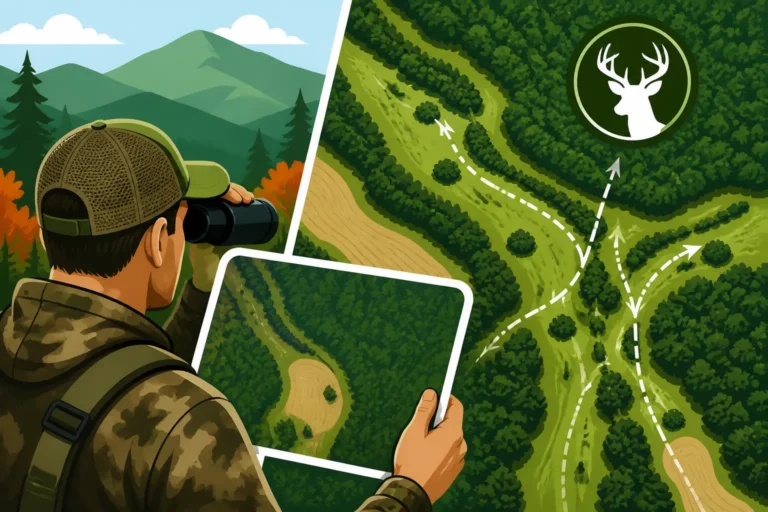
I've spent countless mornings glassing marshes from afar, looking for nervous flights of birds or the tell-tale splashes of feeding ducks. Using a good mapping application, such as the detailed overlays provided by GoHunt, can help you identify these specific habitat types from home, then confirm them with boots on the ground (or waders in the muck). Pay close attention to subtle details: fresh tracks in the mud, droppings on logs, and disturbed vegetation indicating recent feeding activity. Remember, these early season birds haven't seen a lot of pressure yet, so finding unpressured pockets is paramount. For more detailed tips on locating ducks, check out Reading a Marsh for a Morning Flight.
Decoys, Calling, and Concealment for Wary Birds
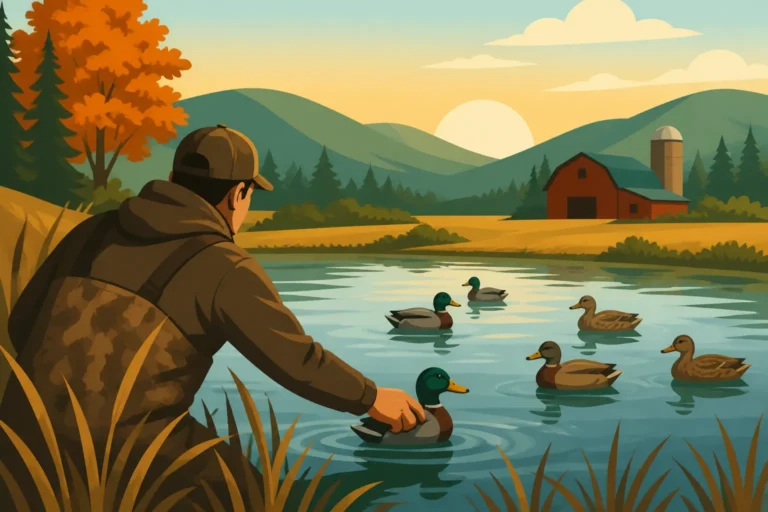
For early split puddle ducks, a "less is more" approach to decoys often yields the best results. A small, natural spread of 6-12 mallard and wood duck decoys, placed strategically in a feeding pattern, is usually more effective than a massive spread. Focus on making it look natural, with some decoys facing different directions and leaving a landing zone right in front of your blind. Motion decoys, like spinning wing models or jerk cords, can add that crucial touch of realism on calm mornings. Remember, the goal is to convince local birds that this is a safe, inviting spot.
Your calling should also be subtle. Instead of loud hail calls, concentrate on soft quacks, contented feeder chuckles, and the occasional lonesome hen call. Early season birds are often in smaller groups or pairs, and loud, aggressive calling can spook them. Observe how the birds are responding, and adjust your calling volume and cadence accordingly.
Concealment is non-negotiable. With ample foliage still on the trees and often bright, sunny skies, ducks have excellent visibility. Utilize natural cover like cattails, brush, or fallen logs to break up your outline. A well-brushed-in shore blind or a natural setup tucked into thick vegetation is far more effective than trying to hide behind a few thin reeds. Pay attention to your face and hands, which can shine brightly in the sun; a face mask and gloves are essential. If you're bowhunting during this period, be extra mindful of your concealment, as close shots are often the norm. For those thinking of Decoying Mallards on Lake Champlain, many of these principles apply directly.
Conquering the Late Split: Northern Divers and Geese
As the calendar turns towards mid-October and November, the Lake Champlain Zone transforms into a different hunting environment. The air gets crisper, water temperatures drop, and the sky often fills with the sights and sounds of major migratory pushes. This period demands a shift towards heavier gear, larger spreads, and a readiness to brave colder conditions.
Adapting to Cold Fronts and Shifting Migrations
The late split is all about the migration. Strong cold fronts from the north will push new ducks and geese down the flyway, often bringing in different species and larger numbers. You'll need to pay close attention to weather forecasts, especially those predicting northerly winds and dropping temperatures, as these are often indicators of fresh birds on the move. When scouting, look for large concentrations of ducks on big water, or geese in harvested agricultural fields. These new arrivals will be looking for reliable food sources and safe resting areas after their long journey.
On the big water, diver ducks become a significant target. Species like bluebills, canvasbacks, and goldeneyes will congregate in large rafts, feeding on aquatic vegetation and mussels in deeper sections of Lake Champlain. Their behavior is different from puddle ducks; they often fly low over the water, commit quickly to large spreads, and can be incredibly fast.
Geese also become a major player. Resident Canada geese will be joined by thousands of migrants, often shifting from resting on the lake to feeding in nearby corn, hay, or winter wheat fields. Field hunting for geese requires a completely different setup, often involving specialized blinds and hundreds of decoys. Remember, success in the late split often means being adaptable and willing to hunt where the birds are, which might mean shifting from a marsh to an open field or a rocky point on the lake. You can learn more about general field strategies in our guide to Layout Blind Hunting a Champlain Valley Field.
Gear Up for Big Water and Field Hunting
Late season waterfowl hunting in the Lake Champlain Zone demands robust gear to withstand the cold, wind, and potentially icy conditions. Layering is paramount; start with a good moisture-wicking base layer, add insulating layers like fleece or down, and top it off with a waterproof and windproof outer shell. You'll thank yourself when a sudden squall rolls off the lake. For tips on staying warm, our guide on Insulated Layers for a December Muzzleloader Hunt offers universal principles that apply to any cold-weather hunt.
Waders are essential, and often chest waders are preferred over hip waders for dealing with deeper water and unexpected plunges. Neoprene or insulated waders will provide much-needed warmth in freezing water. Don't forget insulated, waterproof boots or wader boots to keep your feet comfortable during long hours. For specific advice, look into Best Waders for Lake Champlain Duck Hunting.
For decoys, late season means scaling up. For divers, large spreads of 50-100 decoys or more, often strung on long lines or "gang rigs," are common on open water. A mix of diver species can add realism. For geese, a spread of 100+ full-body or shell decoys, combined with layout blinds, is often necessary to pull them into range in open fields. Calls should be louder and more aggressive for these northern birds, including sharp hail calls for ducks and deep honks and clucks for geese.
Finally, consider your blind. For open water diver hunting, a boat blind or a permanent blind on a point can be effective. For field hunting geese, specialized layout blinds are a must to keep you concealed in flat terrain. Safety is always key: wear your life jacket on the water, be aware of changing weather conditions, and always let someone know where you're hunting.
Essential Preparation for Year-Round Lake Champlain Success
Regardless of which segment of the split season you're targeting, being prepared and organized is critical. The dynamic nature of waterfowl hunting, especially in a unique zone like Lake Champlain, rewards those who do their homework.
Mapping, Regulations, and Staying Informed
Before you even think about putting out decoys, immerse yourself in the regulations. The Vermont Fish & Wildlife Department updates its rules annually, covering everything from season dates and bag limits to legal shooting hours and migratory bird certification requirements. It’s easy to get caught up in the excitement, but being knowledgeable about the specifics is non-negotiable. For instance, understanding the Vermont Duck Daily Bag Limit and Vermont Duck and Goose Bag Limits is foundational, as is ensuring you have your Vermont Migratory Bird Certification in order. A simple oversight can ruin a hunt and lead to penalties.
Utilize modern mapping tools to your advantage. Platforms like GoHunt offer detailed satellite imagery, public land boundaries, and even topographical maps that can reveal subtle features in a marsh or field that birds might favor. These tools are invaluable for identifying access points, potential blind locations, and scouting new areas without physically tromping through every acre. Combine digital scouting with on-the-ground recon well before the season opens. Observing bird patterns from a distance, noting flight paths, and identifying preferred feeding and resting areas will put you miles ahead when opening day arrives. Furthermore, stay abreast of local conditions, especially ice formation in the late season, which can significantly impact hunting accessibility and safety.
Building a Versatile Waterfowl Arsenal
Hunting both segments of the Lake Champlain split season effectively means having a versatile array of gear. You can't rely on a single setup for both September puddle ducks and November divers or geese; the demands are simply too different. Consider having two distinct decoy spreads: a smaller, more natural setup for early season puddle ducks and a larger, more robust spread for late season divers and geese. This might mean investing in different types of decoys (e.g., lightweight plastics for early season, heavy keel divers for rough water).
Similarly, your calling strategy needs versatility. A good call lanyard should include a range of duck calls, from soft-spoken single-reeds for early season to louder, more aggressive double-reeds for late season. If you're targeting geese, a quality goose call is an absolute must. Practice with all your calls long before the season to develop proficiency in different scenarios.
Finally, think about your clothing system. Building a modular layering system that can adapt from mild, rainy early fall days to bitter, windy late season freezes is crucial for comfort and safety. Invest in quality waterproof outerwear, insulated underlayers, and robust footwear appropriate for the variable conditions you'll encounter. Having the right tools for the job not only enhances your chances of success but also ensures a more enjoyable and safer experience on the water or in the fields of Vermont.
| Feature | Early Split (Late Sep / Early Oct) | Late Split (Mid Oct / Early Dec) |
|---|---|---|
| Typical Species | Wood Ducks, Teal, Local Mallards | Northern Mallards, Black Ducks, Divers, Geese |
| Weather | Mild, potentially warm, less wind | Cold, windy, potential for ice and snow |
| Habitat Focus | Shallow marshes, flooded timber, backwaters | Open lake, large bays, agricultural fields |
| Decoy Strategy | Small, natural puddle duck spreads | Large diver spreads, field spreads for geese |
| Calling Style | Subtle quacks, feeder chuckles | Louder hail calls, aggressive honks (geese) |
| Blind Type | Natural cover, shore blinds | Boat blinds, layout blinds, permanent blinds |
| Primary Food Source | Wild rice, smartweed, aquatic insects | Waste grain, deeper aquatic vegetation, mussels |
| Hunting Pressure | Generally lower, but birds spook quickly | Higher overall, birds often more wary |
Disclaimer
Hunting is an inherently dangerous activity. Always prioritize safety, understand and follow all Vermont Fish & Wildlife Department regulations, and respect private property. The information provided in this guide is for informational purposes only and should not replace official regulations or proper hunter education. Be prepared for rapidly changing weather conditions and always let someone know your hunting plans.