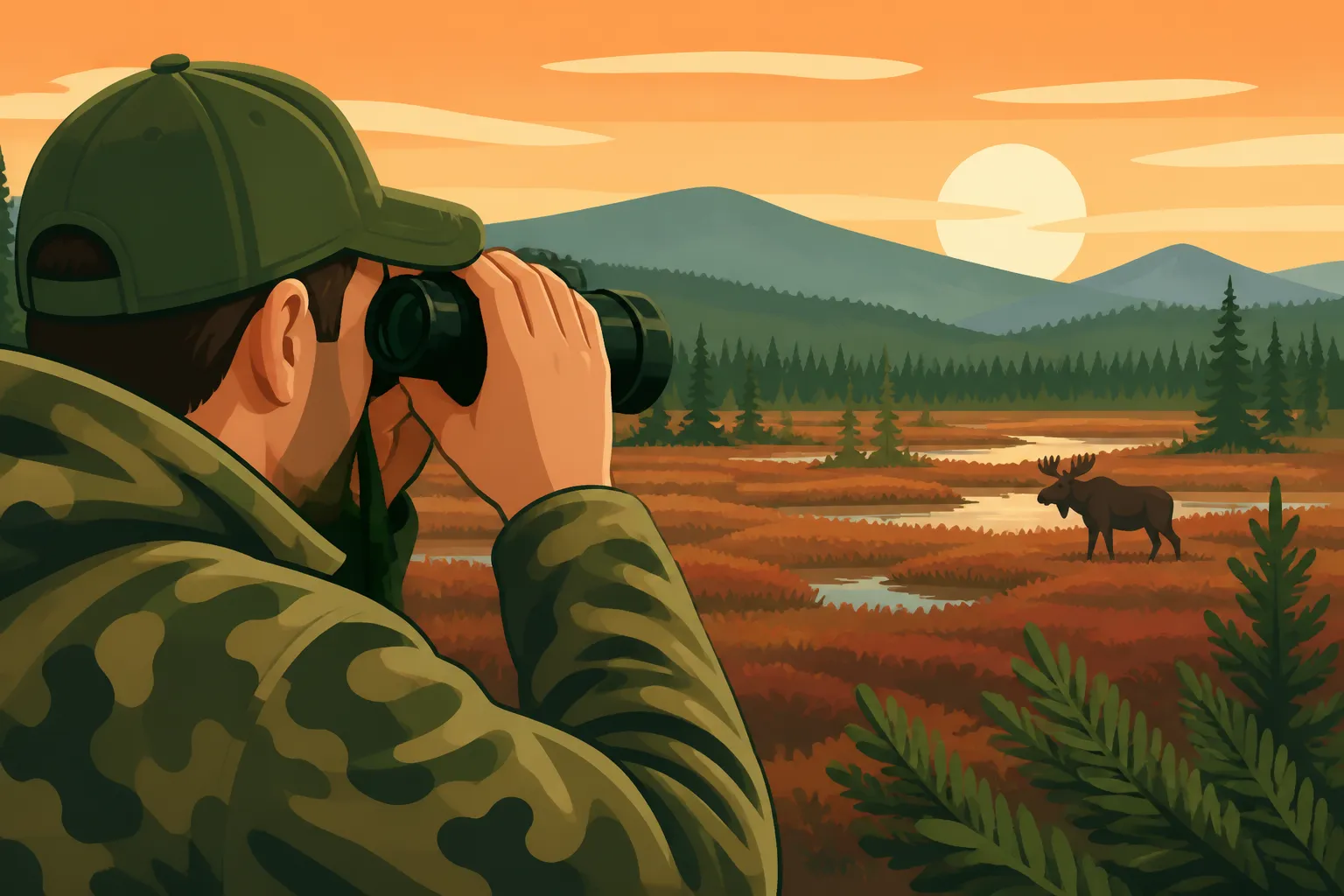
Binoculars for Glassing a Northeast Kingdom Bog
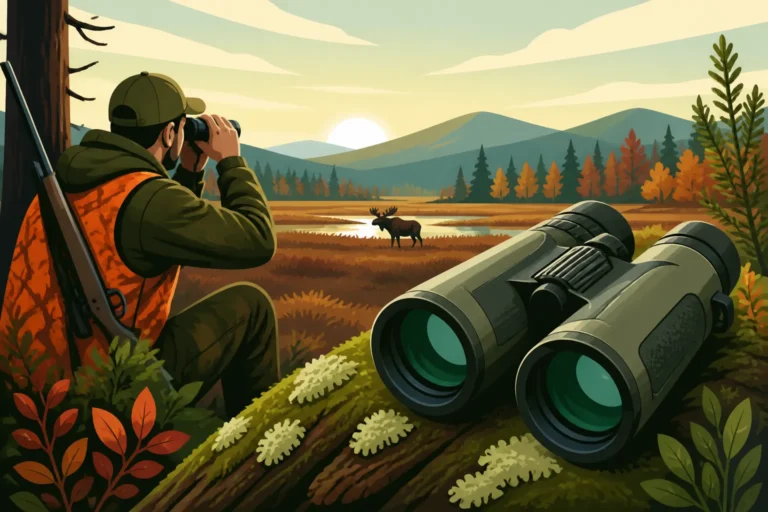
Trying to glass a vast, often misty, and densely vegetated bog in Vermont's Northeast Kingdom can feel like you're peering into another dimension entirely, one where the deer and moose seem to vanish into thin air just as you think you've caught a glimpse. It's a truly unique challenge that demands specialized optics, and this guide will walk you through exactly what to look for in binoculars to conquer the unique demands of bog hunting.
Understanding the Northeast Kingdom Bog Environment
Hunting the bogs of the Northeast Kingdom isn't like sitting a food plot or still-hunting hardwoods. These are truly wild, often remote places that present their own distinct set of challenges for hunters and their gear. The very nature of a bog — its dense, low-lying vegetation, persistent moisture, and often flat, expansive terrain — makes glassing a vastly different endeavor than what most hunters are used to. You're not looking for deer picking through open timber; you're trying to discern a patch of brown fur from a thousand shades of swamp maple and dead grasses.
Unique Visual Obstacles in a Bog
When you're perched on a slightly higher piece of ground overlooking a bog, you're immediately confronted with a sea of visual clutter. Think about the thick alders, the knee-high sedges, and the often-interspersed stands of dense, stunted spruce. These aren't obstacles you can easily see through, even with the naked eye, let alone resolve a deer or a moose with standard binoculars. The light also plays tricks on you. Bogs are often shrouded in mist during early mornings, and even on clear days, the humidity can create a haze that scatters light and reduces clarity. You're constantly battling against a chaotic backdrop where a deer’s leg might be visible, but its body is swallowed by shadows and overlapping branches. This isn't just about magnification; it's about clarity, contrast, and light transmission.
How Moisture Affects Optics Performance
The persistent dampness of a bog is a notorious foe for any piece of outdoor gear, and binoculars are no exception. You might start your day with dew on everything, move into a light drizzle, and then experience condensation as temperatures fluctuate. This isn't just an external issue; moisture can work its way into seals, fogging internal lenses and rendering your expensive optics useless. Even if your binoculars are "waterproof," sustained exposure to such a humid environment can challenge their integrity. Beyond the internal fogging, external lenses will quickly accumulate water droplets, mud, or even bog debris, making regular cleaning a constant necessity. A well-sealed, nitrogen-purged binocular isn't just a luxury here; it's an absolute requirement to maintain performance throughout a long, damp day of hunting in places like Victory Basin Wildlife Management Area.
Essential Binocular Specifications for Bog Hunting
When you're investing in a pair of binoculars for serious hunting in the Northeast Kingdom, especially within those challenging bog environments, you need to think beyond just "good enough." The specific conditions demand specific features, and understanding these specifications will make a huge difference in your ability to spot game. We're talking about performance that allows you to pick out a twitching ear or the horizontal line of a deer’s back in a sea of vertical saplings.
Magnification and Objective Lens Size
For bog hunting, the sweet spot for magnification generally falls between 8x and 10x. An 8x magnification provides a wider field of view, which is incredibly useful for quickly scanning vast, cluttered areas and tracking moving animals in dense cover. It's also more forgiving of shaky hands, which is a real consideration when you're standing on unstable bog ground or breathing heavily after a long hike. On the other hand, 10x offers that extra bit of power to resolve details at longer distances, helping you pick apart dense vegetation to identify a faint antler tine or a deer's shoulder. While more magnification might seem appealing, going higher than 10x can significantly narrow your field of view, making it harder to find your target, and amplify hand shake to an unusable degree.
As for objective lens size, this dictates how much light your binoculars can gather. For the often dim and overcast conditions of a bog, larger objective lenses are a distinct advantage. Sizes like 42mm or 50mm are ideal. A 10×42 binocular, for instance, provides a good balance of magnification and light-gathering capability without becoming overly bulky. Moving up to a 10×50 will gather even more light, which is excellent for early morning and late evening glassing when game is most active, but it will also increase the weight and size of the unit. You have to weigh the enhanced low-light performance against the added bulk you'll be carrying through sometimes difficult terrain. Remember, these are tools to help you identify game that is often trying its best to blend in, especially in an environment as visually complex as a Northeast Kingdom bog.
Field of View and Eye Relief
Field of view (FOV) is paramount in bog hunting. This refers to the width of the area you can see through your binoculars at a specific distance (usually 1,000 yards). A wider FOV is like having a broader canvas to paint on – it allows you to scan larger sections of bog quickly, without constantly having to shift your head or pan the binoculars. In an environment where deer and moose might appear and disappear in an instant amidst thick cover, a wide FOV helps you locate the animal faster and keep it in sight. An 8x binocular will typically offer a wider FOV than a 10x binocular with the same objective lens size, which is a strong argument for considering 8x for its sheer scanning efficiency. Many hunters, myself included, have missed opportunities because their field of view was too narrow to acquire a moving animal quickly in dense cover.
Eye relief is another often-overlooked but crucial specification, especially for hunters who wear eyeglasses. It's the distance your eye can be from the eyepiece and still see the full, unvignetted image. Adequate eye relief (typically 15mm or more) ensures that eyeglass wearers can comfortably use their binoculars without having to remove their glasses or press their eyes uncomfortably close to the lenses. For those long hours of glassing, comfort is key to avoiding eye strain and fatigue. You want to be able to lift your binoculars and immediately see a complete, clear picture, whether you're wearing prescription glasses or sunglasses, without fumbling or adjusting. This detail might seem small, but it dramatically impacts the user experience and your ability to effectively glass for extended periods.
| Feature | Ideal for Bog Hunting | Why It Matters |
|---|---|---|
| Magnification | 8x to 10x | Balances wide field of view with detailed observation; 8x for scanning, 10x for detail. |
| Objective Lens | 42mm to 50mm | Maximizes light gathering for low-light bog conditions (dawn, dusk, overcast). |
| Field of View (FOV) | Wider is better (e.g., 390+ ft at 1000 yds for 8x) | Essential for quickly scanning vast, cluttered, and dense bog environments. |
| Eye Relief | 15mm+ | Ensures comfortable viewing for all, especially eyeglass wearers, reducing eye strain. |
| Waterproofing | Fully O-ring sealed & Nitrogen/Argon purged | Prevents internal fogging and water damage from constant bog moisture. |
| Lens Coatings | Fully Multi-Coated (FMC) | Enhances light transmission, color fidelity, and contrast in varied light. |
| Armor/Housing | Rubber-armored, durable, lightweight | Protects against drops and impacts, offers grip in wet conditions. |
| Close Focus | Lower values (e.g., 6-8 ft) | Useful for identifying closer objects in dense foreground vegetation. |
Optical Clarity and Light Transmission in the Bog
The subtle dance of light and shadow in a dense Northeast Kingdom bog demands binoculars with exceptional optical performance. It's not just about seeing something, it's about seeing it clearly enough to determine if it's a branch, a shadow, or a piece of valuable game. The quality of the glass and the coatings applied to it are what truly differentiate a pair of binoculars in these challenging environments.
The Importance of Lens Coatings and Glass Quality
When you're trying to distinguish the subtle texture of an animal's hide from the surrounding moss and bark, good glass and superior lens coatings are non-negotiable. "Fully multi-coated" (FMC) lenses are what you should be looking for. This means that all air-to-glass surfaces have multiple layers of anti-reflective coatings applied. These coatings dramatically increase light transmission, allowing more light to reach your eyes. In the often-dim, filtered light of a bog, this extra light can make all the difference, enhancing brightness and contrast. Without these coatings, light scatters and reflects internally, resulting in a dull, hazy image.
Beyond coatings, the quality of the glass itself is crucial. ED (Extra-low Dispersion) glass is a common feature in higher-end binoculars, and for good reason. It helps correct chromatic aberration, which manifests as color fringing around high-contrast objects. In a bog, where you're often looking at dark objects against bright sky or light-colored vegetation, chromatic aberration can blur details and make it harder to identify game. ED glass delivers sharper images with truer color reproduction, allowing you to discern the subtle nuances of an animal's coat or the outline of an antler against a complicated background. While it might seem like a technical detail, better glass means better visual information when you're making critical decisions in the field.
Low Light Performance for Dawn and Dusk
Dawn and dusk are prime times for animal movement in the bogs, but they also present the toughest light conditions for glassing. This is where your binocular's low-light performance truly shines (or fails). The combination of large objective lenses (like 42mm or 50mm) and excellent lens coatings is paramount here. These features work in concert to gather and transmit as much available light as possible to your eyes. Imagine trying to pick out the dark silhouette of a moose against the deepening shadows of a bog at last light; only binoculars that excel in low-light transmission will give you a fighting chance.
It's not just about brightness, however. Good low-light binoculars also maintain excellent contrast and resolution in dim conditions. A bright but blurry image is still useless. You need to be able to resolve fine details like the curve of an antler or the distinct pattern of a turkey's head against the dark background. This means the internal optical design, including the prism type (roof prisms are generally more compact and common, but quality Porro prisms can offer excellent performance), must be optimized for light efficiency. Don't underestimate the value of spending a little extra on binoculars that truly perform at legal shooting light, as these are often your best windows of opportunity in the Northeast Kingdom. This is where researching reviews and specs, perhaps on a platform like GoHunt, can really pay off.
Durability and Ergonomics for Rugged Terrain
Vermont's Northeast Kingdom isn't exactly known for its manicured trails and gentle terrain. Bogs, in particular, are tough on gear. You'll be slogging through mud, brushing against abrasive branches, and potentially slipping on wet logs. Your binoculars need to be built to withstand this abuse while remaining comfortable and easy to use when it counts.
Waterproofing and Fogproofing
This isn't just a suggestion for bog hunting; it's an absolute necessity. "Water-resistant" won't cut it. You need binoculars that are genuinely waterproof. Look for models that are O-ring sealed and nitrogen or argon purged. The O-ring seals prevent water from entering the optical system, even if submerged for a short period. The nitrogen or argon purging replaces the air inside the binoculars with an inert gas, which prevents internal fogging as temperatures fluctuate or as you move from a cold, damp exterior to a warmer interior environment (like when you bring them inside a blind).
Imagine you're hunkered down in a light rain, patiently glassing a bog edge. Without proper waterproofing, those droplets might find their way in, leading to hazy optics. Or, if the temperature drops suddenly overnight and you head out at dawn, non-purged binoculars will likely fog internally, rendering them useless until they equalize with the ambient temperature. In a bog, where humidity is always high and conditions can change rapidly, investing in fully waterproof and fogproof binoculars is one of the smartest decisions you can make to ensure your optics are reliable every time you pull them up. This robustness also extends to accidental drops into shallow water or mud, giving you a chance to retrieve and clean them without catastrophic damage.
Grip, Weight, and Balance
Comfort and ease of handling are critical, especially during long hours of glassing in challenging conditions. The best binoculars for bog hunting will feature a rubberized armor coating. This provides a secure, non-slip grip, even when your hands are wet, muddy, or gloved. It also offers a crucial layer of shock absorption, protecting the delicate internal components from bumps and minor drops. A textured surface or thumb indents further enhance the grip, making the binoculars feel like an extension of your hands rather than a slick, heavy object.
Weight and balance also play a significant role. You're already carrying a rifle, a pack, and other gear; adding heavy, cumbersome binoculars will quickly lead to fatigue. While larger objective lenses contribute to weight, modern materials and designs keep many 10×42 or 10×50 models surprisingly light and well-balanced. The weight distribution should feel natural in your hands, allowing you to hold them steady for extended periods without undue strain on your wrists or arms. An unbalanced pair, even if relatively light, can feel unwieldy and tiring. Always try to handle binoculars before purchasing, if possible, to get a feel for their ergonomics. The difference between a well-balanced pair and one that feels off can be the difference between comfortably glassing for hours and feeling constantly fatigued.
Practical Glassing Techniques for Bog Success
Having the right binoculars is only half the battle; knowing how to use them effectively in the unique environment of a Northeast Kingdom bog is the other. It's about patience, technique, and understanding how game animals use this type of cover.
Grid Searching and Breaking Down the Bog
You can't just randomly scan a bog and expect to find game. These are vast, complex ecosystems where animals can disappear with incredible ease. The most effective technique is a systematic grid search. Start at one edge of the area you want to glass and slowly work your way across, using an imaginary grid pattern. Pick a starting point, scan a small section, then move your binoculars slightly over, overlapping your previous view by about 10-20%. Work from top to bottom, or side to side, covering every square foot. This methodical approach ensures you don't miss anything that might be obscured by just a few inches of cover.
When you're performing this grid search, don't just look for a whole animal. Instead, look for parts of an animal: a horizontal line in a vertical world, a patch of solid brown amongst dappled light, the flick of an ear, or an unusual shadow. Focus on edges – where different types of vegetation meet, where water bodies interact with land, or where a slight elevation change occurs. Deer and moose often use these transition zones. Patience is key. You might spend ten minutes meticulously dissecting a small section of bog only to find nothing, but the next section might reveal the buck you've been after. This is where a wide field of view, as discussed earlier, helps you cover ground more efficiently without feeling like you're peering through a straw. It’s also important to remember that animals move, so after one complete grid, you might need to repeat it or wait and try again. Sometimes, a subtle movement is what gives them away, and if your eyes are strained from haphazard glassing, you'll miss it. Don't forget to leverage mapping apps, perhaps through a platform like GoHunt, to help break down the bog into manageable sectors for your grid search.
Using Binoculars to Spot Movement and Details
In a static, dense environment like a bog, movement is often the primary giveaway. Instead of just looking for an animal standing still, train your eyes and your binoculars to detect subtle shifts. This could be the twitch of a deer's tail, the gentle sway of a moose's head as it browses, or the almost imperceptible displacement of vegetation as an animal walks. Use your binoculars to really scrutinize any anomaly – a patch of shadow that seems too deep, a clump of brush that looks a little "off."
When you do spot something that might be an animal, don't immediately drop your binoculars. Instead, focus on it intently. Use the clarity and magnification of your optics to break down its shape, color, and texture. Is that truly an antler tine, or just a gnarled branch? Is that brown patch fur, or a sun-baked stump? Look for characteristic features: the curve of a deer's back, the distinct profile of a moose's nose, the dark line of a leg. Pay attention to the background as well; an animal will often stand out more in contrast to its surroundings once you've honed in on it. Sometimes, just waiting patiently with your binoculars trained on a suspicious spot will reveal the slight movement that confirms your suspicions. Remember the goal of hunting is rarely about movement to the animal, but instead finding it and then making an ethical shot. This technique is especially useful in the Northeast Kingdom during Hunting a Drawn Moose Zone in the Northeast Kingdom or Moose Hunting Vermont's Northeast Kingdom.
Care and Maintenance for Bog-Hunted Binoculars
After a long season of braving the moisture and mud of Vermont's bogs, your binoculars will have taken a beating. Proper care and maintenance aren't just about preserving your investment; they're about ensuring your optics perform reliably when you need them most, season after season. Neglecting them after exposure to the elements will inevitably lead to compromised performance and a shortened lifespan.
Cleaning Mud, Water, and Debris
The first rule of cleaning is to be gentle. Never wipe dry lenses, especially if they have grit or mud on them, as this will scratch the coatings. Your initial step should always be to use a soft brush or a can of compressed air to remove any loose debris, dust, or sand from the lenses and body. Pay particular attention to the crevices around the focus wheel and diopter, where mud and grit can accumulate and hinder movement.
Once the loose debris is gone, use a microfiber cloth specifically designed for optics, along with a specialized lens cleaning solution (never use harsh household cleaners or even window cleaner). Apply a small amount of solution to the cloth, not directly to the lens, and gently wipe the lenses in a circular motion, working from the center outwards. For stubborn water spots or dried mud on the body, a damp cloth can be used, but always ensure the binoculars are fully waterproof and avoid getting water into any moving parts if possible. After cleaning, make sure the binoculars are thoroughly dry before storing them. This careful approach, every time you come in from the bog, will keep your lenses pristine and your views crystal clear.
Proper Storage and Inspection
How you store your binoculars directly impacts their longevity. Always keep them in a clean, dry environment, preferably in their protective case or a dedicated binocular harness. Avoid storing them in extreme temperatures, such as a hot car or a freezing garage, for extended periods, as this can stress seals and internal components. If they've been exposed to significant moisture, like a prolonged downpour in a bog, ensure they are completely air-dried before putting them away to prevent mildew or corrosion. Never store them in an airtight container immediately after being wet, as this traps moisture.
Regular inspection is also key. Before each hunting trip, and especially after heavy use, take a few moments to inspect your binoculars. Check the objective and ocular lenses for any signs of fogging (indicating a seal breach) or damage. Test the focus wheel and diopter adjustment to ensure they move smoothly without excessive play or grinding. Examine the rubber armor for tears or cracks, which could compromise waterproofing. Check the strap or harness attachment points for wear. Addressing small issues proactively can prevent them from becoming major problems in the field. Think of it as preventative maintenance for your most important scouting tool, especially when you're headed into areas as unforgiving as the Green Mountain National Forest or other rugged Vermont landscapes.
Disclaimer
This article is for general informational purposes only and does not constitute professional advice. Laws, prices and regulations vary by location and change over time. Consult a qualified professional for guidance on your specific situation.