Best Bear Spray for Northeast Kingdom Backcountry
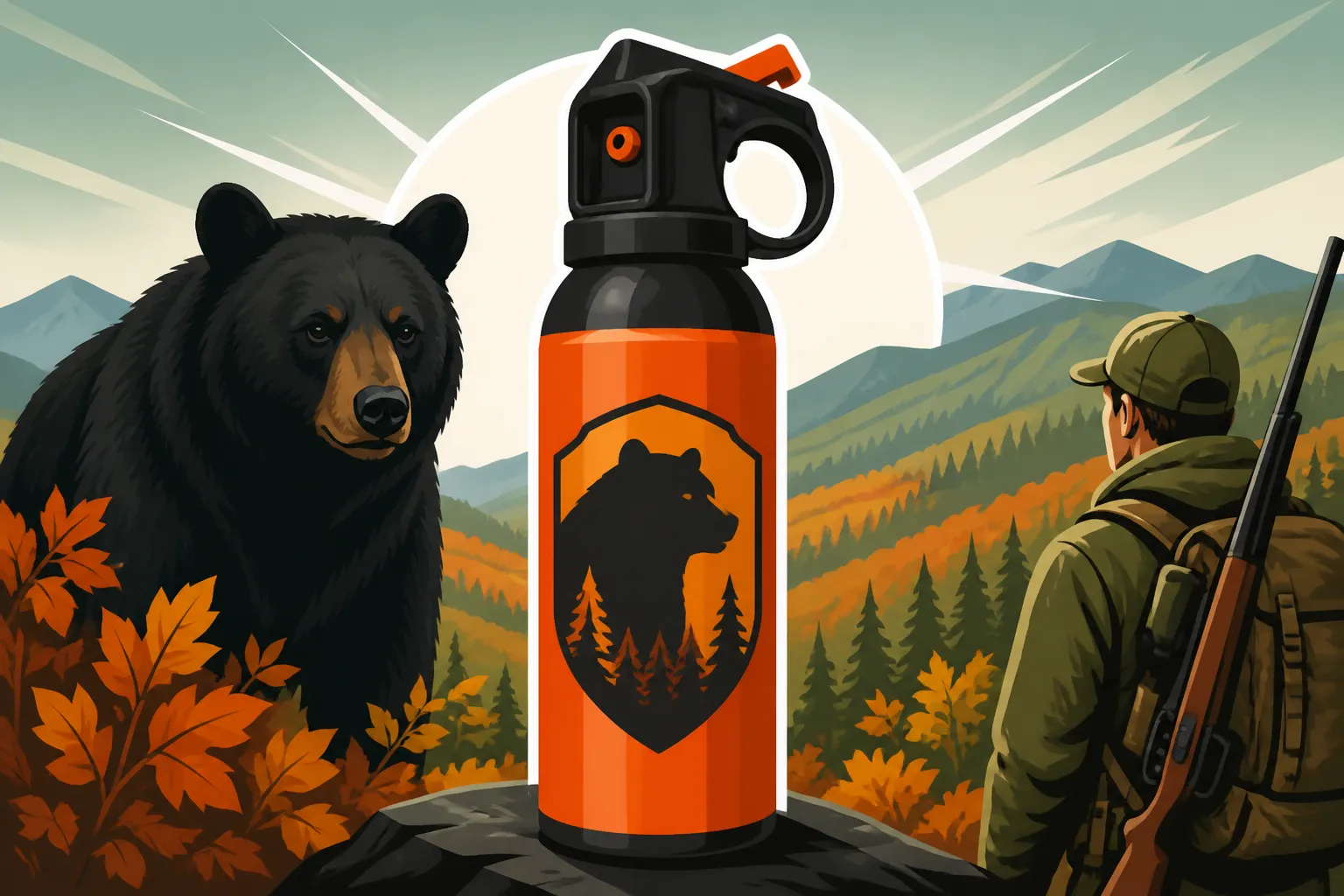
Heading into the wild expanses of Vermont's Northeast Kingdom, the thought of an unexpected encounter with a black bear is often in the back of a hunter's mind. While these magnificent creatures typically want nothing to do with us, those rare, surprise encounters can be incredibly dangerous. This guide is all about helping you understand why bear spray is an absolute must-have piece of safety gear for your NEK backcountry adventures, how to choose the right kind, and most importantly, how to use it effectively to protect yourself in a critical moment.
Why Bear Spray is Essential in the Northeast Kingdom Backcountry
The Northeast Kingdom (NEK) of Vermont is a truly special place, known for its rugged beauty, vast unbroken forests, and its remote, wild character. It’s also prime habitat for a healthy and growing population of Black Bears in Vermont. For anyone venturing into these deep woods, whether you’re scouting for deer, calling in turkeys, or on a Moose Hunting Vermont's Northeast Kingdom expedition, understanding the potential for bear encounters is paramount.
The Reality of Bear Encounters in Remote Areas
In the remote corners of the NEK, especially away from well-traveled trails and close to dense cover, you're truly in bear country. Unlike areas with more human presence, bears here might be less habituated to people and can react unpredictably if surprised. You might stumble upon a sow with cubs, a bear on a fresh kill, or simply surprise one that's bedded down. These aren't common occurrences, mind you, but when they do happen, they can escalate quickly. Carrying bear spray isn't about provoking an encounter; it's about having a non-lethal, highly effective tool to de-escalate a potentially life-threatening situation. It's a layer of preparedness, much like carrying a first aid kit or a reliable map, that acknowledges the wild nature of the environment you're immersing yourself in.
The Rising Bear Population and Your Responsibility
Vermont's black bear population has been on a consistent upward trend for years, a true testament to successful wildlife management and abundant habitat. More bears mean a greater likelihood of crossing paths, especially as we push further into their natural territories. While hunting is a fantastic way to experience the outdoors, it also means we're often moving silently, off-trail, and sometimes during low-light conditions – all factors that can increase the chance of a close-quarters surprise encounter.
It’s our responsibility as ethical hunters and outdoors enthusiasts to minimize risks for both ourselves and the wildlife. Bear spray provides a powerful deterrent that allows you to protect yourself without causing permanent harm to the animal. It's a tool that aligns with the conservation ethic, offering a way out of a dangerous situation that respects the bear's life while prioritizing your own safety. Many seasoned backcountry enthusiasts, from GoHunt users diligently scouting new areas to old-school woodsmen, swear by having it readily accessible.
Understanding Bear Spray: What It Is and How It Works
Bear spray isn't just a bigger version of personal pepper spray; it's a specialized deterrent formulated specifically for large, aggressive animals. Knowing what it is and how it functions is key to its effective deployment.
The Science Behind the Scoville Units
At its core, bear spray contains a potent concentration of capsaicin and related capsaicinoids, derived from chili peppers. This isn't just any pepper spray; it's designed to be much stronger, with a higher percentage of active ingredients and a delivery system that creates a wide, dense cloud. When deployed, these compounds irritate the mucous membranes of a bear's eyes, nose, and mouth, causing temporary blindness, difficulty breathing, and an intense burning sensation. The goal isn't to permanently injure the bear, but to create a powerful, unpleasant sensory overload that compels it to turn and retreat.
Think of it like this: if you accidentally got a little bit of hot sauce in your eye, you'd be miserable for a few minutes. Now amplify that by a hundredfold, with a wider dispersal, hitting sensitive areas of an animal that relies on its senses for survival. That's the effect bear spray aims for. It gives you precious seconds for the bear to disengage and for you to remove yourself from the threatening situation. The effectiveness is well-documented in studies comparing its success rate to firearms in bear encounters.
Dispelling Myths and Understanding Limitations
There are a few common misconceptions about bear spray that are important to address. First, it's not a magical shield that will deter every bear in every situation, especially if a bear is highly motivated (e.g., protecting cubs or a kill) or completely unaware of your presence until it's too late. It's a defensive tool for active encounters. Second, it's designed to be used at close range – typically within 20-30 feet – so you need to let the bear get close enough for the spray to be effective. Panicking and spraying too early, or in the wrong direction, can render it useless.
Lastly, environmental factors matter. High winds can significantly reduce the spray's effectiveness and even blow it back into your face. Rain can dilute it, though modern formulas are quite resilient. It's not an excuse not to carry it, but rather a reason to be aware of your surroundings and the conditions when you're out in the NEK, whether you're following a logging road or bushwhacking through dense timber. Knowing these limitations helps you approach its use with realistic expectations and integrate it into a broader strategy of bear safety, which includes making noise, being aware, and proper food storage.
Choosing the Right Bear Spray for Vermont's Backcountry
With a few different options on the market, selecting the best bear spray for your Vermont adventures comes down to understanding the critical features and how they apply to the specific conditions you might encounter.
Canister Size, Spray Duration, and Range
When you're out in the NEK, sometimes miles from the nearest road, every piece of gear counts. Bear spray canister sizes vary, typically ranging from around 7.9 ounces up to 10 ounces. The larger canisters generally offer a longer spray duration – crucial if you're facing down a charging bear and need multiple bursts, or if you miss your initial shot. A good rule of thumb is to look for a spray duration of at least 7-8 seconds. The range is another critical factor; most reputable brands will offer a range of 25-35 feet. This gives you a decent buffer zone, allowing the bear to get close enough for the spray to be effective without being too close for comfort.
Consider the terrain you'll be hunting or hiking in. If you're Still-Hunting Green Mountain National Forest Timber or trying to slip through dense blowdowns, a larger canister might feel a bit bulky, but the extra volume could be a lifesaver. On the flip side, a smaller canister might be more comfortable but offers less room for error in deployment. It’s a trade-off, but generally, lean towards the larger, longer-duration options for serious backcountry excursions. When comparing products online, services like GoHunt often feature detailed gear reviews that can help you weigh these options.
Active Ingredients and EPA Registration
For bear spray to be legally sold and truly effective in the U.S., it must be registered with the Environmental Protection Agency (EPA). This registration ensures that the product meets specific standards for safety and effectiveness against bears. Always look for this on the label. Beyond that, pay close attention to the percentage of active ingredients, specifically capsaicin and related capsaicinoids (CRC). The ideal range for bear spray is typically between 1.0% and 2.0% CRC. Anything less might not be potent enough to deter an aggressive bear, and anything more doesn't necessarily offer a significant advantage and could just lead to a higher price tag.
Vermont, like other states, defers to federal EPA standards for bear spray products. You won't find specific state regulations governing its composition beyond that. The key takeaway here is to always purchase bear spray specifically labeled as "bear spray," not personal pepper spray. Personal pepper spray is often weaker, has a shorter range, and isn't designed for a large, determined animal. Investing in a high-quality, EPA-approved bear spray with the right CRC percentage is non-negotiable for safety in the NEK.
Holster Options and Accessibility
Having the most potent bear spray in the world doesn't do you any good if you can't access it immediately when you need it. This is where holster options become incredibly important. Most bear sprays come with a belt holster, chest holster, or a combination. For hunters, a chest holster is often preferred because it keeps the spray readily available, high on your chest, without interfering with your backpack straps, bino harness, or the swinging motion of a rifle. It also ensures it's not buried under layers of clothing in cold weather.
Consider how you dress and carry your gear. If you wear multiple layers for warmth during Hunting Into the December Muzzleloader Close, a chest holster or a holster that attaches to your backpack strap might be better than a belt holster that could get covered up. Practice drawing your bear spray from your chosen holster. Can you do it quickly, smoothly, and without fumbling, even with gloves on? The speed of deployment can make all the difference in a charging bear scenario. Many outdoor gear retailers will offer different holster styles, so take the time to find one that integrates seamlessly with your existing hunting setup.
Here's a quick comparison of popular bear spray features:
| Feature | Ideal Range/Recommendation | Why it Matters in NEK Backcountry |
|---|---|---|
| Canister Size | 7.9 oz to 10 oz | Provides ample spray for multiple bursts or missed shots. |
| Spray Duration | 7-9 seconds or more | Crucial for sustained deterrence and creating distance. |
| Spray Range | 25-35 feet | Gives a safe buffer zone for deployment before the bear is too close. |
| Active Ingredient | 1.0-2.0% Capsaicinoids (CRC) | Ensures sufficient potency to deter an aggressive bear. |
| EPA Registration | Always present | Verifies the product is tested and approved for bear deterrence. |
| Holster Type | Chest or Backpack-mounted | Offers quick, unobstructed access, even with a pack or rifle. |
Carrying and Using Bear Spray Effectively
Possessing bear spray is only half the battle; knowing how to carry it and, more importantly, how to deploy it under pressure, is what truly prepares you for an emergency.
Proper Carrying for Instant Access
The cardinal rule of bear spray is: if you can't get to it instantly, it's useless. This means keeping it accessible at all times, not buried in your backpack, not stowed away in a cargo pocket. For backcountry hunters and hikers in the NEK, a chest holster is almost always the best option. It keeps the canister front and center, clear of your arms, backpack straps, and any layers of clothing. Imagine a charging bear; every millisecond counts. Fumbling for your spray is a recipe for disaster.
Beyond just the holster location, ensure the safety clip or tab is always in place to prevent accidental discharge, but that it can be removed swiftly with one hand. Practice drawing it. Seriously. Do it in your living room. Do it outside (without spraying, of course). Get familiar with the motion, the feel of the canister in your hand, and how to quickly remove the safety. This muscle memory will be invaluable if you ever face a real-world threat. Best First Aid Kit for a Remote Hunt and Best Satellite Communicator for Northeast Kingdom Land are also crucial, but they won't help you in a bear charge like immediately accessible bear spray will.
Deployment Strategy in a Critical Moment
Using bear spray correctly can save your life. Here’s a breakdown of the critical steps:
- Identify and Assess: First, determine if the bear is exhibiting aggressive behavior (charging, huffing, pawing the ground, bluff charges). Not all bear encounters require spray. If the bear is simply curious or retreating, don't spray.
- Remove Safety and Aim: As the bear approaches within the effective range (25-35 feet), quickly remove the safety tab. Aim for the bear's face and chest, ideally slightly below the head. This accounts for gravity and the bear's movement, ensuring the spray hits the sensitive areas.
- Deploy a Burst: Depress the trigger firmly and release a 1-2 second burst. The goal is to create a defensive cloud between you and the bear. If the bear continues to charge, follow up with additional bursts, aiming to saturate its face and eyes. Don't empty the can in one go unless absolutely necessary; you might need residual spray for follow-up.
- Create Distance and Retreat: As soon as the bear reacts to the spray (it might shake its head, paw at its face, or turn), back away slowly while facing the bear. Do not run, as this can trigger a chase response. Speak in a firm, calm voice to let the bear know you're a human. Once you've created significant distance and the bear is no longer a threat, quickly but calmly leave the area.
- Wind Awareness: Always be aware of the wind direction. If possible, position yourself so the wind carries the spray towards the bear, not back into your face. If the wind is blowing towards you, you might need to adjust your aim slightly or wait for the bear to enter a closer range.
Post-Deployment Considerations
After a bear spray incident, there are a few things to keep in mind. If any spray gets on you, immediately wash affected skin with soap and cold water. Do not use hot water, as it can open pores and increase the burning sensation. Flush eyes with plenty of cool water. Seek medical attention if symptoms persist or are severe.
Report any aggressive bear encounter, especially one requiring bear spray, to the Vermont Fish and Wildlife Department. This information is vital for wildlife management and understanding bear behavior in specific areas. If you're using an app like GoHunt for mapping and scouting, make a note of the incident location. Always replace an empty or expired can of bear spray immediately. Its shelf life is usually around 3-4 years, so check the expiration date annually as part of your preseason gear check. Being prepared means having fresh, reliable equipment ready for anything the Hunting the Northeast Kingdom might throw your way.
Disclaimer
This article is for general informational purposes only and does not constitute professional advice. Laws, prices and regulations vary by location and change over time. Consult a qualified professional for guidance on your specific situation.