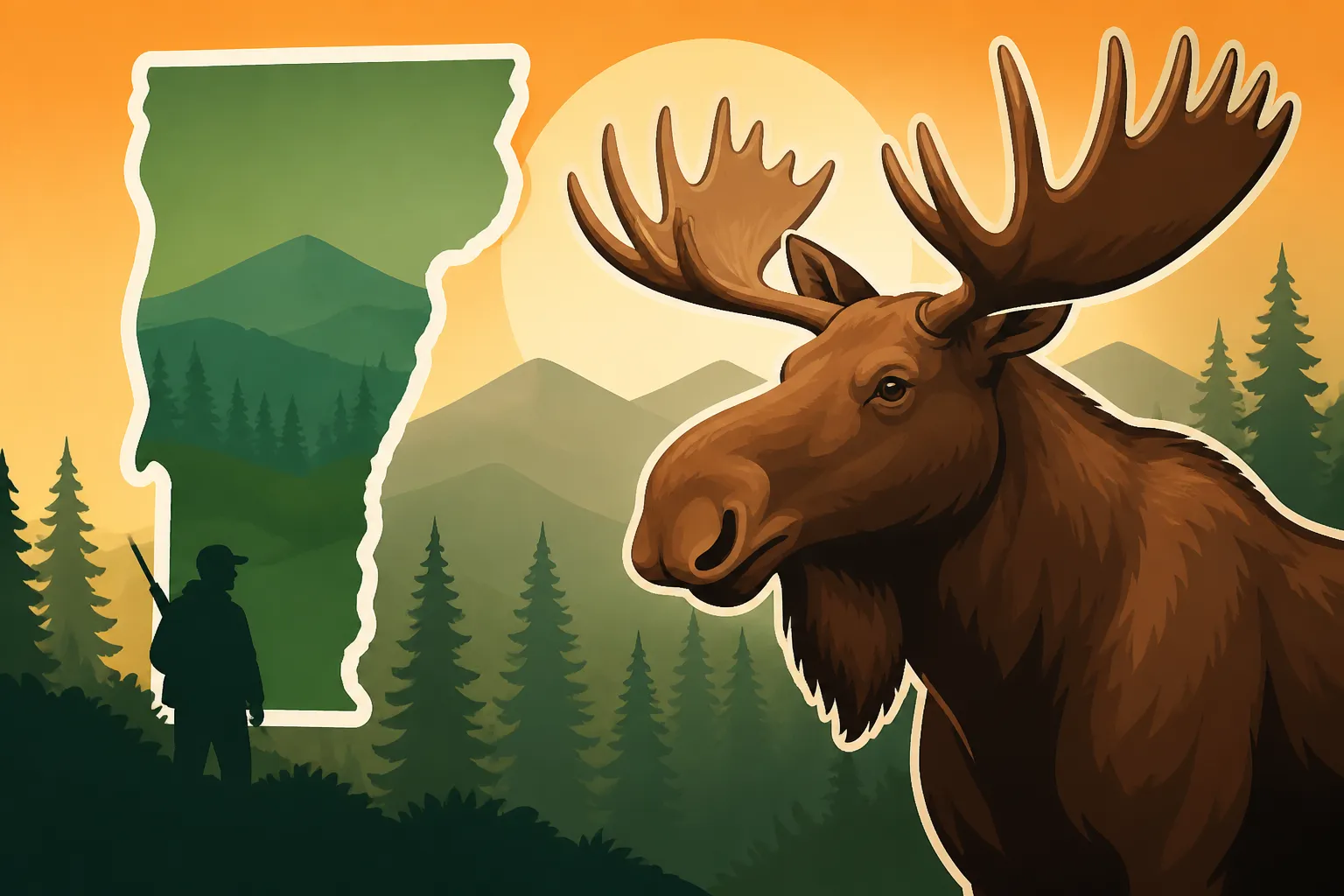
Vermont’s Eighty-Five 2026 Moose Permits
Drawing a Vermont moose permit feels like winning the lottery, and for many, it's a once-in-a-lifetime dream. The sheer difficulty of securing one can be disheartening, especially with the limited number of permits available each year. This guide will walk you through everything you need to know about Vermont's eighty-five 2026 moose permits, from understanding the allocation process to preparing for your potential hunt, helping you navigate this challenging yet rewarding endeavor.
Understanding Vermont's Moose Permit System
For years, the dream of calling a bull moose out of a remote clear-cut in Vermont has captured the imagination of countless hunters. However, moose hunting here isn't a walk in the park; it's a tightly controlled privilege managed through a lottery system designed to balance hunting opportunities with robust conservation efforts. Understanding this system is the first critical step for anyone hoping to pursue one of these magnificent animals in the Green Mountain State. It's a system born out of necessity, reflecting the careful stewardship of a recovering, though still vulnerable, moose population.
The Lottery's Role in Conservation
Vermont's moose population, while much healthier than it once was, faces significant challenges, particularly from winter ticks. The Vermont Fish and Wildlife Department uses the moose lottery as its primary tool to manage the herd, specifically targeting a reduction in population density in certain areas to combat the devastating impact of these parasites. Every year, the number of permits issued directly reflects the latest scientific data on moose health, population trends, and tick loads. It's a constantly evolving strategy, and what holds true for one year might shift for the next, making the lottery much more than just a random draw – it's a vital part of the state's conservation plan. This approach explains why the number of permits can fluctuate and why the focus is often on specific Wildlife Management Units (WMUs) where density reduction is most critical.
It’s crucial to recognize that the limited number of permits, like the eighty-five available for 2026, isn't just about making the hunt exclusive; it's about ensuring the long-term health and sustainability of Vermont's moose herd. If the population in a specific WMU is struggling, perhaps due to high calf mortality from tick infestations, fewer permits will be allocated there. Conversely, if an area can sustain a higher harvest, the numbers might increase slightly. This careful balancing act is at the heart of the entire program, ensuring that future generations can also experience the thrill of a Vermont moose encounter. For more on this, you might find insight in articles discussing Vermont's Winter-Tick-Driven Moose Permit Strategy.
Historical Context of Moose Management
Rewind a century, and moose were virtually non-existent in Vermont, having been extirpated due to unregulated hunting and habitat loss. Their incredible comeback, starting in the latter half of the 20th century, is a testament to dedicated conservation efforts. As moose populations rebounded and began to expand into new territories, the state initiated controlled hunting seasons to manage their growth, prevent overpopulation, and mitigate conflicts with human activities like agriculture and vehicle collisions. The early days saw far more liberal permit numbers, a reflection of a rapidly growing, healthy herd.
However, the landscape of moose management shifted dramatically with the increasing prevalence of the winter tick. These tiny parasites can infest a single moose with tens of thousands of individuals, leading to severe blood loss, emaciation, and often death, especially in calves. This devastating phenomenon has led to a significant change in strategy, moving from simply allowing for population growth to actively managing density to give moose a fighting chance against ticks. This historical perspective helps explain why, despite a seemingly large habitat, only a limited number of permits, such as Vermont's Eighty-Five 2026 Moose Permits, are now issued. It’s a reactive and proactive approach to a serious ecological threat.
Who Can Apply for a Vermont Moose Permit?
The good news is that both residents and non-residents are eligible to apply for a Vermont moose permit. However, there are some distinctions and prerequisites you need to be aware of. First and foremost, all applicants must possess a valid Vermont hunting license. For residents, this typically means a standard resident hunting license. Non-residents will need to purchase a non-resident hunting license. Beyond the base license, there's a specific application fee for the moose lottery itself, which is separate from your hunting license cost. This fee typically covers the administrative costs of running the lottery and contributing to moose research and management.
There are also age requirements. Generally, applicants must be at least 10 years old by the date of the hunt, but specifics can vary for junior hunters. If you're considering applying, it's always best to check the most current regulations on the Vermont Fish and Wildlife Department's website. They also offer special permits for landowners under certain conditions, a topic explored in Vermont Landowner Moose Tag Allocation. While everyone has a chance, the odds are historically stacked against non-residents, given the smaller allocation of permits for that category. Nevertheless, if you dream of hunting a Vermont moose, applying is your only shot.
The Specifics of the 2026 Moose Permits
When the Vermont Fish and Wildlife Department announces the annual moose permit numbers, it's always met with a mix of anticipation and, sometimes, disappointment. For 2026, the allocation of eighty-five permits is a carefully considered decision, reflecting ongoing conservation challenges, particularly the pervasive impact of the winter tick. This isn't just a random number; it's a strategic move to manage the health of the herd while still providing limited recreational opportunities.
Why Only Eighty-Five Permits?
The decision to issue only eighty-five moose permits for the 2026 season is directly tied to the health and management needs of Vermont's moose population. The primary driver behind this conservative number is the continuing struggle with the winter tick ( Dermacentor albipictus ). For years, wildlife biologists have observed that high moose densities correlate with increased tick infestations, leading to significant calf mortality and overall decline in herd health. Essentially, more moose per square mile means more opportunities for ticks to find hosts and reproduce, creating a vicious cycle.
To combat this, the Vermont Fish and Wildlife Department aims to reduce moose densities in specific areas, particularly in the Northeast Kingdom, which historically holds the highest concentrations of moose. By issuing a limited number of permits, the state hopes to achieve a targeted harvest that helps bring the population down to a more sustainable level, where moose are healthier and more resilient against tick infestations. This strategy is a direct response to observing Vermont Moose Population Decline Since the 1990s and the critical need for intervention. It’s a challenging balance to strike, as hunters naturally desire more opportunities, but the long-term health of the species takes precedence.
Designated Wildlife Management Units WMUs for 2026
The eighty-five permits for 2026 are not distributed uniformly across the entire state. Instead, they are strategically allocated to specific WMUs where biological data indicates a harvest is necessary and beneficial for the moose population. Historically, the Northeast Kingdom WMUs (E1, E2, F1, F2) have been the focus of moose management efforts due to their higher moose densities and more pronounced winter tick issues. While the exact WMU breakdown for 2026 will be finalized closer to the application period, it’s highly probable that the vast majority of permits will be concentrated in these northeastern areas of the state.
Hunters often lament that the southern and western parts of Vermont, which also hold moose, rarely see permit allocations. This is because moose densities in those regions are generally much lower, and the tick issue is less severe, meaning no density reduction is currently needed. Therefore, if you're applying for a 2026 permit, your best bet for a draw, and where the hunting opportunity will be, is almost certainly within the designated WMUs of the Northeast Kingdom. Understanding these specific areas is crucial for anyone considering a hunt, as it dictates where you can legally pursue a moose once you draw that coveted tag. You'll need to know which WMU Vermont's 2026 Moose Permits Cover once they are announced.
Permit Categories: Antlered Versus Any-Legal Moose
When applying for a Vermont moose permit, applicants typically have the option to choose between two permit types: "antlered" or "any-legal moose." An antlered permit restricts you to harvesting only a bull moose with at least one antler that is six inches or longer. This is a common permit type, often used to target specific segments of the population.
The "any-legal moose" permit, on the other hand, allows you to harvest either a bull moose (meeting the antlered criteria) or an antlerless moose (a cow or a calf). These "any-legal moose" permits are typically issued in WMUs where the goal is to reduce overall moose density, as they allow for the removal of either sex. Given the current management strategy focused on reducing population density to combat winter ticks, it is highly probable that a significant portion, if not all, of the eighty-five 2026 permits will be "any-legal moose" permits, concentrated in the high-density WMUs of the Northeast Kingdom. This offers hunters more flexibility in the field but also places a greater emphasis on contributing to the herd management objectives.
Navigating the Vermont Moose Lottery Application Process
Securing a Vermont moose permit is a significant achievement, and it all begins with navigating the application process. While it might seem daunting, especially for first-time applicants, the system is designed to be straightforward if you know the steps and deadlines. Many hunters, myself included, have felt that pit in their stomach wondering if this will be the year.
Step-by-Step Application Guide
The application process for the Vermont moose lottery is typically handled online through the Vermont Fish and Wildlife Department's licensing portal. Here’s a general rundown of what you can expect:
- Obtain Your Hunting License: Before you can even think about a moose permit, you must have a valid Vermont hunting license for the current year. This applies to both residents and non-residents. Make sure this is sorted out well in advance of the moose permit application deadline.
- Access the Online Portal: Head to the Vermont Fish and Wildlife Department's official licensing website. You'll usually find a clear link for "Moose Lottery Application."
- Complete the Application Form: Fill out all required personal information accurately. You'll be asked to specify your preferred WMU (if options are given) and permit type (antlered or any-legal moose). Carefully consider your choices based on the anticipated permit allocations for 2026. This is where researching WMUs and past draw odds can really pay off.
- Pay the Application Fee: There is a non-refundable application fee. Ensure you have a valid payment method ready. This fee is relatively modest and covers the administrative costs of the lottery. Remember, this fee does not guarantee you a permit; it merely enters you into the drawing.
- Confirm Your Application: Double-check all your entries before submitting. You'll usually receive an email confirmation once your application is successfully processed. Keep this confirmation for your records.
The entire process is streamlined and can be completed fairly quickly if you have all your information ready. For a more detailed walkthrough, refer to Vermont Moose Lottery Application Process.
Important Deadlines and Fees
Missing a deadline for the moose lottery is a heartbreaking mistake that many have made, myself included, when life gets busy. The application period is typically several weeks long, but the exact dates vary each year. Historically, the application window often opens in May or June, with a deadline usually in mid-to-late June. The lottery drawing itself usually takes place in late June or early July, and successful applicants are notified shortly thereafter.
| Event | Approximate Date/Window | Notes |
|---|---|---|
| Hunting License Req. | Before Application | Must have a current Vermont hunting license |
| Application Open | Early May – June | Check official VFWD website for exact dates |
| Application Deadline | Mid-June | Critical: Do not miss this! |
| Lottery Drawing | Late June – Early July | Results announced shortly after |
| Permit Purchase | July – August | If drawn, purchase your permit by this deadline |
| Hunt Season | October | Actual hunting dates for drawn permits |
Note: These dates are approximations based on historical data. Always verify specific dates and deadlines directly on the Vermont Fish and Wildlife Department website for the 2026 season.
As for fees, the application fee itself is typically around $25 for residents and slightly higher for non-residents. If you are lucky enough to draw a permit, there will be a separate, more substantial permit fee. This fee is significantly higher and reflects the value of the hunting opportunity. For example, the Vermont Moose Permit Cost for Residents is considerably less than the Vermont Moose Permit Cost for Nonresidents. Be prepared for these costs, as winning a permit means you'll need to pay for it within a specific timeframe to claim your spot.
Strategies for Maximizing Your Chances
While the moose lottery is, by definition, a game of chance, there are a couple of "strategies" that can subtly influence your odds. Vermont utilizes a preference point system, which is a game-changer for dedicated applicants. For every year you apply and are unsuccessful in drawing a permit, you earn a preference point. When you apply the following year, these points are tallied, and you are entered into the drawing once for each preference point you have accumulated. So, if you have 5 preference points, your name theoretically goes into the hat 5 times.
This system heavily favors those who apply consistently over many years, as their accumulated points significantly increase their chances over a first-time applicant. If you're serious about drawing a permit, consistently applying, even if you don't draw for a decade, is the most effective long-term strategy. Another 'strategy' is to thoroughly research the WMU allocations once announced. While the Northeast Kingdom WMUs (E1, E2, F1, F2) historically have the most permits, understanding the specific breakdown for 2026 might give you an edge, if there are multiple WMU choices. Utilizing tools like GoHunt can also be invaluable. GoHunt provides detailed drawing odds, harvest statistics by WMU, and application analytics that can help you make an informed decision, even if it's just about which WMU to apply for or to understand the historical difficulty of the draw. While luck plays a huge role, smart application can nudge the odds ever so slightly in your favor.
What Happens After You Draw a Permit?
The moment you get that notification email saying you've drawn a Vermont moose permit is nothing short of electrifying. The euphoria is immense, but it's quickly followed by a realization: the real work is just beginning. Now, the dream shifts from a possibility to a tangible reality, and you need to pivot from application mode to hunt planning mode.
Understanding Your Permit's Restrictions
Drawing a permit is just the first step; understanding exactly what that permit allows and restricts is crucial to a legal and ethical hunt. Every Vermont moose permit comes with specific conditions printed directly on it or communicated with your notification. The most important restriction will be the designated WMU. You are legally bound to hunt only within the boundaries of the WMU specified on your permit. Hunting outside of this area, even by accident, can lead to serious penalties.
Next, you need to understand the permit type: is it an "antlered only" permit, or an "any-legal moose" permit? As discussed, this dictates whether you can harvest a bull, a cow, or a calf. Finally, the season dates for moose hunting are strictly enforced. Vermont's moose season is typically short, often just a few days in October. You must complete your hunt and harvest within these dates. There are no extensions or exceptions. Familiarize yourself with these details immediately upon receiving your permit. This also extends to reporting requirements; successful hunters must report their harvest within 48 hours, often at a designated check station or online.
Planning Your Hunt in the Northeast Kingdom
Assuming, like most permit holders, your hunt will take place in the Northeast Kingdom (NEK), extensive planning is paramount. This region of Vermont is characterized by vast tracts of undeveloped forest, steep terrain, remote logging roads, and often challenging weather conditions. It's not a place for a last-minute, casual hunt. Start with scouting, even if it's just digital scouting using mapping applications. Look for potential moose habitat: regenerating clear-cuts, swamps, beaver flows, and areas with mixed hardwood and softwood stands. GoHunt's mapping features can be incredibly useful for identifying potential bottlenecks, clear-cuts, and access points on public land.
Access to these areas can be tricky, often involving driving on unpaved logging roads, some of which might be gated or require landowner permission. Don't underestimate the sheer size of the NEK and the amount of ground you'll need to cover. Consider a multi-day trip, perhaps even setting up a base camp if your chosen area is remote. Articles like Moose Hunting Vermont's Northeast Kingdom offer valuable insights into this challenging yet rewarding endeavor. Planning for contingencies, like bad weather or difficult access, will be key to a successful experience.
Required Equipment and Preparations
A Vermont moose hunt is not like a whitetail hunt from a treestand in a suburban woodlot. It requires a specific set of gear and a high level of physical preparation. First, consider your weapon. Most moose hunters opt for a high-powered rifle in a suitable caliber, capable of ethically taking down such a large animal. Next, you'll need robust clothing appropriate for varying fall weather, which can include anything from mild rain to freezing temperatures and snow. Layering for Vermont's Long Hunting Season is crucial here.
Beyond the basics, think about specialized gear:
- Optics: A good pair of binoculars is essential for glassing distant clear-cuts or swamps.
- Navigation: A reliable GPS unit or a mapping app like GoHunt on your phone (with downloaded offline maps!) is non-negotiable in the vast, often unmarked terrain of the NEK. Cell service is spotty at best.
- Game Processing: Field dressing a moose is a massive undertaking. You'll need sharp knives, a bone saw, and game bags.
- Recovery: Perhaps the most overlooked aspect is how you'll get the moose out. A game cart, sturdy rope, and a good backpack frame are essential. Packing for a Northeast Kingdom Moose Hunt should focus heavily on these recovery items.
Physically, train for the hunt. Moose often inhabit steep, dense cover, and you'll be covering many miles, possibly in adverse conditions, and then facing the monumental task of Packing Out a Vermont Moose. Being in excellent physical condition will significantly improve your chances of success and safety.
Challenges and Realities of a Vermont Moose Hunt
The romantic vision of a Vermont moose hunt often involves crisp autumn air, stunning foliage, and a majestic bull stepping out of the timber. While these elements are certainly part of the experience, the reality is also filled with significant challenges. From the sheer scale of the terrain to the logistics of processing a massive animal, a moose hunt tests hunters in ways a typical deer hunt might not.
The Physical Demands of the Terrain
Hunting moose in Vermont, especially in the rugged Northeast Kingdom or the Green Mountains, is an incredibly demanding physical undertaking. This isn't flat, open country. You'll be navigating steep hillsides, dense spruce-fir thickets, boggy lowlands, and old logging cuts that can be a tangle of downed trees and sharp branches. The terrain itself often dictates where moose will be, and getting to those areas requires stamina and perseverance. Still-Hunting Green Mountain National Forest Timber or even just scouting can be an exhausting endeavor.
Furthermore, weather conditions in October can be highly variable. You might start a morning hunt in frosty conditions, only to find yourself slogging through a warm, drizzly rain by afternoon. The physical exertion combined with unpredictable weather means your conditioning and gear need to be top-notch. Many hunters, even seasoned ones, are surprised by the sheer amount of energy expended just getting to a potential hunting spot, let alone tracking, harvesting, and then extracting a moose.
Locating Moose in Designated Zones
Even with a coveted permit in hand, finding a moose is far from guaranteed. Moose are elusive creatures, and the vastness of the designated WMUs means you'll need to cover a lot of ground, both physically and through careful scouting. They don't typically concentrate in easily accessible areas; instead, they prefer dense cover, regenerating clear-cuts where browse is plentiful, or remote swampy areas. Reading a Green Mountain Deer Yard can provide clues to deer movement, but moose operate on a larger scale.
Effective scouting, both pre-season and during the hunt, is critical. Look for fresh tracks, rub lines, and droppings. Identify good feeding areas – young saplings, willow, and aquatic vegetation are favorites. Often, calling can be an effective technique, particularly in the pre-rut or early rut phases. Mastering techniques for Calling a Bull Moose Into Range requires patience and practice. Without a doubt, locating a moose in the expansive, often featureless terrain of Vermont's primary moose habitat is arguably the biggest challenge of the hunt.
Packing Out a Vermont Moose
You’ve done it. After days of hard hunting, you’ve successfully harvested a moose. Now, the real physical and logistical challenge begins: getting several hundred pounds of meat, bone, and hide out of the backcountry. This is where many hunters, especially those unprepared, face their greatest test. A typical adult moose can weigh anywhere from 600 to 1200 pounds or more, and you won’t be dragging that whole animal out.
The common method is to quarter the moose in the field, which means breaking it down into manageable sections. This requires specialized tools like a bone saw and sharp knives, and the knowledge of how to properly field dress and quarter such a large animal quickly and efficiently, especially if temperatures are mild. Once quartered, each piece can still weigh 100-200 pounds. This is why having sturdy game bags, a robust Backpack Frame for a Quartered Moose, or a specialized game cart is absolutely essential. Many hunters rely on a team of friends and family to help with this monumental task, often taking multiple trips over difficult terrain. Articles like Packing Out a Vermont Moose detail the intense effort and planning required for this crucial step.
Beyond the Hunt: CWD and Ethical Considerations
A successful moose hunt in Vermont is an experience that stays with you for a lifetime. However, the responsibilities of a hunter extend far beyond the moment of harvest. From ensuring the health of the broader cervid population to respecting the land and fellow outdoor enthusiasts, ethical considerations and compliance with regulations are paramount.
Vermont's CWD Prevention Rules
Chronic Wasting Disease (CWD) is a devastating neurological disease that affects cervids (deer, moose, elk) and is always a major concern for wildlife managers. While Vermont's deer and moose populations have remained CWD-free, the state is hyper-vigilant, especially given that Vermont's Closest Confirmed CWD Case is in Quebec. To protect its valuable cervid herds, Vermont has implemented strict CWD Prevention Rules. These rules primarily focus on restricting the importation of certain carcass parts from any state or province where CWD has been detected.
Hunters who harvest a moose outside of Vermont and plan to bring it back into the state must be intimately familiar with these regulations. Typically, only deboned meat, clean skull plates (antlers attached), hides, and teeth are allowed. Whole carcasses or brain/spinal column material are generally prohibited. Additionally, Vermont has a rule against urine-based lures, a preventative measure against potential CWD transmission. Adhering to these rules is not just about avoiding a fine; it’s about being a responsible steward of Vermont's wildlife and doing your part to keep CWD out of the state.
Respecting Private Land and Other Hunters
Much of Vermont's hunting landscape, especially in and around the Northeast Kingdom, is a mix of public and private land. Even vast tracts of "public" land can be interspersed with private holdings, often unmarked. Respecting private property boundaries is not only an ethical imperative but a legal one. Always know where you are hunting, and if there's any doubt about land ownership, verify it using a reliable mapping app that shows property lines, or through direct inquiry. Do You Need Written Permission in Vermont? The answer is often yes, especially for private land.
Beyond land boundaries, respecting other hunters is key to a positive outdoor experience for everyone. This includes maintaining a safe distance, not interfering with another hunter's setup or stalk, and being mindful of noise. Many hunters, myself included, have had hunts impacted by inconsiderate behavior. Whether it's a deer hunter in the woods near your moose setup or another moose hunter, courtesy goes a long way. The limited number of moose permits can mean hunters are spread out, but it doesn't eliminate the need for respectful interactions.
The Future of Moose Hunting in Vermont
The future of moose hunting in Vermont is inextricably linked to the ongoing health of the moose population, particularly in the face of environmental challenges like the winter tick. The current conservative permit allocation, exemplified by the eighty-five 2026 moose permits, is a direct reflection of this. Wildlife biologists are constantly monitoring moose health, population trends, and tick loads, and the management strategy evolves with new data and research. This means permit numbers could fluctuate in future years; they might increase if the population stabilizes and thrives, or they could decrease further if tick impacts worsen.
Hunters have a vital role to play in this future, not just by adhering to regulations but by actively supporting research and conservation efforts. Participating in surveys, providing accurate harvest data, and advocating for healthy habitat are all ways to contribute. For anyone passionate about Vermont's moose, understanding that the hunting opportunity is a privilege tied to the well-being of the herd ensures that this iconic species continues to thrive in the Green Mountain State for generations to come. The state’s commitment to preserving this species is evident in initiatives like Vermont's Moose Permit Lottery, which keeps the population in check.
Disclaimer
Please remember that hunting regulations, season dates, and permit requirements can change. Always consult the official Vermont Fish and Wildlife Department website or contact them directly for the most current and accurate information before planning any hunting activities.