Hunting Vermont’s November Rifle Opener
The crisp, biting air of late fall, the rustle of dry leaves underfoot, and the eager anticipation that vibrates through the Vermont woods – there’s nothing quite like the opening of rifle season. This isn't just another hunting day; it's a deeply ingrained tradition, a time when the landscape transforms with the sudden influx of hunters. Navigating the unique challenges of this high-pressure window, from understanding deer movement to mastering specific hunting tactics, can feel overwhelming, but this guide will walk you through everything you need to know to hunt Vermont's November rifle opener successfully.
Understanding Vermont's November Rifle Season Framework
The Vermont rifle season opener is a pivotal moment for many deer hunters across the state. It marks a shift from the more solitary pursuits of archery and muzzleloader hunting to a period where the woods often feel alive with fellow sportsmen. This intensity brings its own set of rules, expectations, and unique challenges that every hunter needs to understand.
Key Dates, Regulations, and What to Expect
Vermont's regular deer rifle season is traditionally a two-week period, usually kicking off in mid-November, and it's a whirlwind. For exact start and end dates each year, it's always best to check the official "Vermont Rifle Season Dates" published by the Vermont Fish & Wildlife Department. This short timeframe means hunters often concentrate their efforts, especially during the opening days. The regulations during this period are quite specific regarding the "Legal Weapons During Vermont Rifle Season," ensuring safety and fair chase. Most commonly, centerfire rifles are permitted, but there are strict rules about caliber, bullet type, and magazine capacity that you absolutely must be familiar with before heading afield. You'll also need to wear blaze orange or blaze pink during rifle season, a critical safety measure to ensure you’re highly visible to other hunters. The sheer number of hunters on public and private land means safety is paramount, and these regulations are put in place for everyone's protection. Beyond weaponry, remember that Vermont has mandatory deer reporting requirements. Every deer harvested must be registered, typically within 48 hours, either online through the Fish & Wildlife portal or at a designated check station. This data is vital for wildlife management and helps the state track deer populations and harvest trends.
The Impact of High Hunting Pressure
Let’s be honest, the woods get busy during the rifle opener. After months of relatively low pressure during the archery and early muzzleloader seasons, the sudden influx of rifle hunters can drastically alter deer behavior. Deer that were once moving somewhat freely might become nocturnal almost overnight, or they might seek out the thickest, nastiest cover they can find – places most hunters are reluctant to penetrate. This isn’t a bad thing, necessarily; it just means your approach needs to be more refined. You can’t expect to walk into a familiar bedding area on opening morning and find deer acting as they did in October. The pressure pushes deer, sometimes making them move during the day as they seek refuge, but often it makes them hunker down. Understanding this shift is crucial. It means paying even closer attention to terrain features that offer security, like dense cedar swamps, logging cut-overs, or steep, brushy ravines. It also means recognizing that deer might be pressured from multiple directions, funneling them through unexpected areas. Your ability to adapt and anticipate these changes will be a major factor in your success, requiring patience and a willingness to explore areas others might overlook.
Pre-Season Intelligence: Scouting and Digital Tools
Success during Vermont's rifle opener isn't born in the heat of the moment; it's forged in the weeks and months leading up to it. Understanding where deer are, and more importantly, where they will be once the hunting pressure starts, is critical. This requires diligent scouting and smart use of modern technology.
Interpreting Pre-Season Sign for Rifle Success
Long before rifle season opens, you should be in the woods, boots on the ground, reading the landscape like a book. Look for classic deer sign: fresh rubs on saplings, indicating bucks are working out aggression and marking territory; active scrapes, especially those along travel corridors, which are key communication hubs for deer. Pay close attention to trails leading from feeding areas (like oak ridges or agricultural fields) to bedding areas. However, for rifle season, you need to think a step ahead. Where will deer go when the guns start booming? They'll gravitate towards secure cover. So, while you're looking for rut sign, also identify those thickets, swamps, and remote draws that offer refuge. During your scouting, make mental notes (or better yet, drop pins on your mapping app) of potential escape routes and funnel points that deer might use when pushed. Understanding "Reading a Green Mountain Deer Yard" can give you insights into their winter habits, but for November, focus on the transition zones and thick cover that offer immediate security. What's a key frustration for many hunters? Finding great sign weeks before the opener, only to have the deer vanish. This is often because those "easy" areas get hit hard, and deer move to places hunters are less willing to go. Pre-season scouting needs to anticipate this shift.
Leveraging Mapping and Data for Strategic Advantage
In today's hunting world, digital mapping tools are indispensable for breaking down a hunting area. Apps like GoHunt offer invaluable features, allowing you to study topographical maps, satellite imagery, and even property boundaries from the comfort of your home. Before you even set foot in the woods, you can identify potential pinch points, saddles, steep ridges, and thick cover that might act as bedding areas or escape routes. Overlaying different layers can reveal contours and vegetation types that aren't apparent on basic maps. Use these tools to identify remote pockets of public land or areas on private land that offer natural barriers, funnels, or secluded spots where deer might hold up. You can mark potential stand locations, exit and entry routes that minimize disturbance, and areas of high deer activity identified during your physical scouting. Beyond mapping, don't overlook historical data. While not perfectly predictive, reviewing "Vermont Deer Harvest Records" from previous years can sometimes highlight regions or specific WMUs (Wildlife Management Units) that consistently produce good numbers, or where buck-to-doe ratios might be more favorable. This helps you narrow down your focus and make informed decisions about where to concentrate your efforts. Using GoHunt to mark your actual scouting finds and cross-referencing with terrain features will create a powerful game plan, helping you understand not just where the deer are, but why they are there and where they might go under pressure.
Proven Tactics for Opening Day Success
The Vermont rifle opener can feel like a chaotic sprint, but with the right tactics, you can turn the challenges of high pressure into opportunities. Whether you prefer a solitary hunt or the camaraderie of a small group, there are effective strategies to employ.
Still-Hunting and Stand Hunting in High-Pressure Scenarios
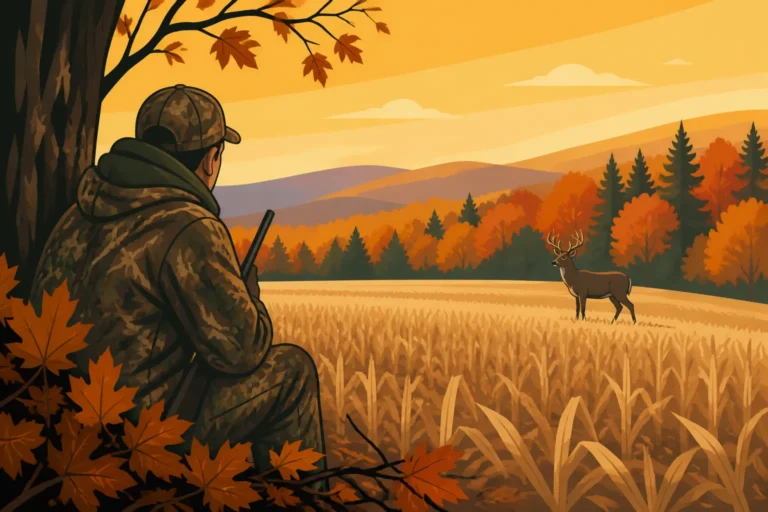
When the woods are buzzing with other hunters, a thoughtful approach to still-hunting can be incredibly effective. Instead of crashing through the timber, become a ghost. Move slowly, taking perhaps only a few steps every minute, stopping frequently to scan ahead and behind you. Use your binoculars constantly to pick apart cover. Deer will be on high alert, relying heavily on their senses of smell and hearing. Pay extreme attention to the wind, keeping it in your favor, and move into the wind or crosswind. Focus on areas of dense cover where deer might be bedded or slowly sneaking away from pressure. For detailed techniques, consider revisiting "Still-Hunting Green Mountain National Forest Timber." The key is to capitalize on the natural movement created by other hunters without becoming part of the problem. You're not driving deer, you're intercepting them as they react to pressure.
For stand hunting, your placement becomes even more critical. Forget those open field edges that were hot during archery season; pressured deer will avoid them. Instead, focus on transition lines, thick cover edges, or subtle funnels deep within the woods. Look for spots that offer a deer an escape route that takes them away from obvious human activity. These might be a small saddle between two ridges, a narrow strip of timber connecting two larger blocks of woods, or a dense pocket of conifers adjacent to a primary travel corridor. Consider a stand that allows you to quietly slip in and out without disturbing the area. Remember, with other hunters on the move, deer are often pushed by default. Setting up on their likely escape routes, especially those that provide security and cover, can put you in a prime position. Patience is paramount; a deer might not appear for hours, but when it does, it will likely be moving with a purpose.
The Art of the Organized Deer Drive
While often misunderstood or misused, a small, organized deer drive can be an incredibly effective tactic in Vermont's diverse terrain, especially when done safely and ethically. This isn't about running deer wildly; it's about gently coaxing them from thick cover into predefined ambush points. For this to work, communication, planning, and safety are non-negotiable. Typically, a small group of 3-4 hunters is ideal. Designate one or two "drivers" and two "standers." The drivers move slowly and strategically through a known bedding area or thicket, while the standers position themselves quietly on likely escape routes, usually natural funnels or pinch points that deer will use when pushed.
Before beginning, everyone must know the boundaries of the drive, where other hunters are located, and safe shooting lanes. Visual communication (hand signals) and audible communication (soft whistles, quiet calls) are crucial. The goal isn't to blast through, but to move just enough to get bedded deer up and moving. If you're coordinating a drive, discussing strategies like "Deer Drives With Three or Four Hunters" can provide excellent foundational knowledge. A common frustration is hunters who blast through, making so much noise they push deer out of range of the standers or, worse, straight into another hunter's path unsafely. The beauty of a well-executed drive is its ability to put deer on the move during daylight hours when they might otherwise be holed up. Always know your target and what lies beyond, and absolutely respect posted private land boundaries or safety zones around dwellings.
Essential Gear for Vermont's November Cold and Terrain
Vermont in November is beautiful, but it can also be unforgiving. From chilly mornings to potential snow, sleet, or freezing rain, having the right gear isn't just about comfort; it's about safety and effectiveness.
Caliber Choices and Optics for Green Mountain Whitetails
Choosing the right rifle and optic combination is paramount for successful and ethical hunting in Vermont. For white-tailed deer, a range of calibers are suitable, but reliability and accuracy are key. Many Vermont hunters opt for popular cartridges like the .270 Winchester, .30-06 Springfield, .308 Winchester, or even the 6.5 Creedmoor. These offer a good balance of power, trajectory, and recoil for shots ranging from close-quarters timber to longer shots across clearings or fields. The "Best Rifle Caliber for Vermont Whitetails" is ultimately one you can shoot accurately and confidently. Regardless of caliber, bullet construction matters; choose quality expanding bullets designed for deer-sized game to ensure quick, humane kills.
When it comes to optics, a good quality rifle scope is essential. Magnification ranges like 3-9x40mm or 2-7x33mm are very versatile for Vermont's typical hunting distances. Clarity in low light, a durable construction to withstand bumps and weather, and precise adjustments are crucial. Complementing your rifle scope with a pair of reliable binoculars is also a game-changer. Carrying a 10x42mm or 8x42mm binocular allows you to scan distant cover, identify deer, and verify antlers without constantly raising your rifle, minimizing movement and increasing safety. A rangefinder is also a smart addition, particularly in hilly, timbered terrain where judging distance can be tricky. Knowing precise yardage helps ensure an ethical shot placement, especially crucial when hunting new territory.
Layering and Safety: Beating the November Chill
Vermont's November weather is famously unpredictable. You could start the day with frost on the ground, experience a mild afternoon, and then get hit with a cold rain or even snow. Proper "Layering for Vermont's Long Hunting Season" is critical to staying warm, dry, and focused. Start with a moisture-wicking base layer (merino wool or synthetic) against your skin to pull sweat away. Add an insulating mid-layer like a fleece or lightweight puffy jacket. Your outer layer should be waterproof, windproof, and durable. Think about how active you’ll be; if you’re still-hunting, you’ll generate heat, but if you’re sitting on a stand, you’ll need more insulation.
Safety, especially visibility, cannot be overstated during rifle season. Vermont mandates blaze orange or blaze pink requirements during deer rifle season. This isn't just a suggestion; it's law and a critical safety measure. You need to wear specific amounts of these colors visible from all angles. A vest and hat are common, but ensure you meet the minimum square inch requirements. Beyond visibility, carry navigation tools. A GPS unit or a robust mapping app like GoHunt on your phone (with downloaded offline maps) is essential, particularly on public lands like the Green Mountain National Forest or large WMAs. You can quickly become disoriented in dense timber or unfamiliar terrain, especially in poor weather. Pack a small first-aid kit, a headlamp, and emergency fire starters. Hypothermia is a real danger, and being prepared for an unexpected night out is simply good practice.
| Public Land Type | Typical Size & Management | Hunting Characteristics | Considerations |
|---|---|---|---|
| Green Mountain National Forest | Vast, federal land | Diverse terrain, remote backcountry, varying pressure. Excellent for still-hunting and deep pushes. | Can be very rugged. Access roads may be seasonal. Cell service is often spotty. Need good navigation skills. |
| Wildlife Management Areas | Smaller, state-managed | Often have specific habitat improvements. Can draw significant pressure, but also hold deer. | Some may have specific parking or entry rules. Check for any special WMA regulations before you go. |
| Vermont State Forests | Mid-sized, state-managed | Mixture of timber operations and recreational use. Often good access via logging roads. | Pressure can vary. Always check for active logging operations. Respect forest road access rules. |
Post-Shot Procedures and Ethical Responsibilities
Making the shot is only part of the hunt. The ethical hunter understands that the responsibility continues long after the trigger is pulled, ensuring a clean recovery and proper handling of the animal.
Effective Blood Trailing and Recovery Techniques
It’s every hunter’s hope for a clean, immediate kill, but sometimes a deer doesn't drop in its tracks. In these situations, your blood trailing skills become paramount. The cardinal rule is patience. If you make a shot and the deer doesn't go down immediately, give it time – at least 30 minutes for a gut shot, or an hour or more for a leg or non-vital hit, before beginning your search. This allows the animal to bed down and expire peacefully. When you do start trailing, go slowly. Mark the spot where the deer was standing when you shot, and where you last saw it. Look for any sign: blood, hair, bone fragments, tracks. If you find blood, note its color and consistency, as this can tell you a lot about the hit. Bright red, foamy blood suggests a lung hit; darker, chunky blood points to a liver shot; greenish-brown matter indicates a gut shot.
Follow the trail meticulously, marking each bit of sign with flagging tape or toilet paper. Don't rush. If the trail becomes sparse or disappears, get on your hands and knees. If you truly lose the trail, back out and come back with more people, or at first light if it’s getting dark. A fresh snowfall can be a blessing or a curse; it can hide old tracks but highlight fresh ones. For challenging situations, a deep dive into "Tracking a Deer in Fresh Green Mountain Snow" can provide invaluable tips. Always prioritize finding the animal. Leaving a wounded deer in the woods is antithetical to ethical hunting.
Handling and Reporting Your Harvest
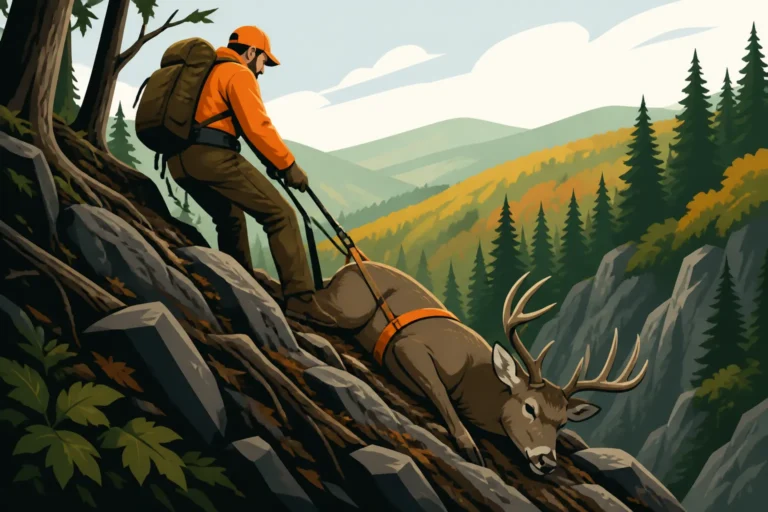
Once you’ve successfully recovered your deer, proper field dressing is the immediate next step. Removing the entrails quickly helps cool the carcass and prevents spoilage. In Vermont’s November chill, cooling isn't usually an issue, but cleanliness is key. If you're deep in the woods, consider quartering the deer to make it easier to pack out, especially if you're alone or facing rugged terrain. Pack for this possibility with game bags and a sharp knife. If you’re able to drag it out whole, protect the meat from dirt and debris.
After getting your deer out of the woods, you must adhere to Vermont’s mandatory reporting requirements. Every harvested deer, regardless of sex or age, must be reported to the Vermont Fish & Wildlife Department. This can often be done online through their official portal or a dedicated mobile app, or at a physical big game reporting station. The "The Vermont Deer Reporting Deadline" is usually within 48 hours of harvest. Reporting provides vital data to wildlife biologists, helping them monitor populations, assess herd health, and make informed management decisions for future hunting seasons. It's a critical part of being a responsible steward of Vermont's wildlife resources. Make sure you have your license and tag information ready when you report.
Navigating Access: Public Land and Private Permission
Vermont offers a mosaic of hunting opportunities, from sprawling public lands to prime private tracts. Knowing how to access these areas legally and respectfully is fundamental to a successful and frustration-free hunting season.
Maximizing Public Land Opportunities
Vermont is blessed with a significant amount of public land, which is a huge advantage for hunters. The largest and most well-known is the Green Mountain National Forest (GMNF), covering hundreds of thousands of acres across two districts. This vast wilderness offers incredible opportunities for solitude and challenging hunts, but also requires excellent navigation skills and self-sufficiency. Beyond the GMNF, Vermont has numerous Wildlife Management Areas (WMAs), specifically managed by the state for wildlife habitat and public recreation, including hunting. These can range from a few dozen to several thousand acres and often have good access. "Public Hunting Land in Vermont" is not always a guarantee of easy access, though; some WMAs might be more remote, while others are popular and experience higher pressure.
To truly maximize your public land success, don't just hunt the easy-to-reach spots. Use mapping applications like GoHunt to scout remote corners, identify areas with difficult access that might deter other hunters, and find transition zones between different habitat types. Look for small, isolated blocks of public land surrounded by private property, which can act as natural deer magnets. Focus on topography that offers deer security cover, such as steep slopes, thick conifers, or wetland edges. Scouting these areas during the off-season, perhaps shed hunting or just hiking, will give you an intimate understanding of where deer move and bed when the pressure is on.
Respectful Engagement for Private Land Access
While public land offers abundant opportunities, securing "Getting Private Land Permission in Vermont" can unlock access to some of the state's most productive hunting grounds, particularly in agricultural areas or woodlots adjacent to farms. However, this isn't a right; it's a privilege that must be earned and respected. The biggest frustration for many hunters is the difficulty in securing permission. It often comes down to building relationships and demonstrating respect.
The best approach is to knock on doors well in advance of the season, ideally in the summer or early fall. Introduce yourself, explain why you're interested in hunting their land (e.g., helping with deer management, enjoying the outdoors), and offer to share some of your harvest. Dress presentably and be polite. Clearly state your intentions: what species you want to hunt, what weapons you'll use, and when you plan to be there. Be prepared for a "no," and accept it graciously. If granted permission, get it in writing (even a text message can suffice to clarify terms) and always carry it with you. Respect fences, crops, equipment, and livestock. Drive slowly on their property, and absolutely clean up any trash. Consider offering to help with small chores around the property, like moving firewood or clearing brush. A landowner who trusts you is far more likely to grant permission year after year, and often, word of mouth travels. Remember, a bad experience with one hunter can lead to a landowner posting their property permanently, impacting everyone.
Disclaimer
Always consult the Vermont Fish & Wildlife Department's official regulations for the most current and accurate hunting season dates, rules, and licensing requirements. Hunting regulations can change annually, and it is the hunter's responsibility to be fully informed before going afield.