Still-Hunting Green Mountain National Forest Timber
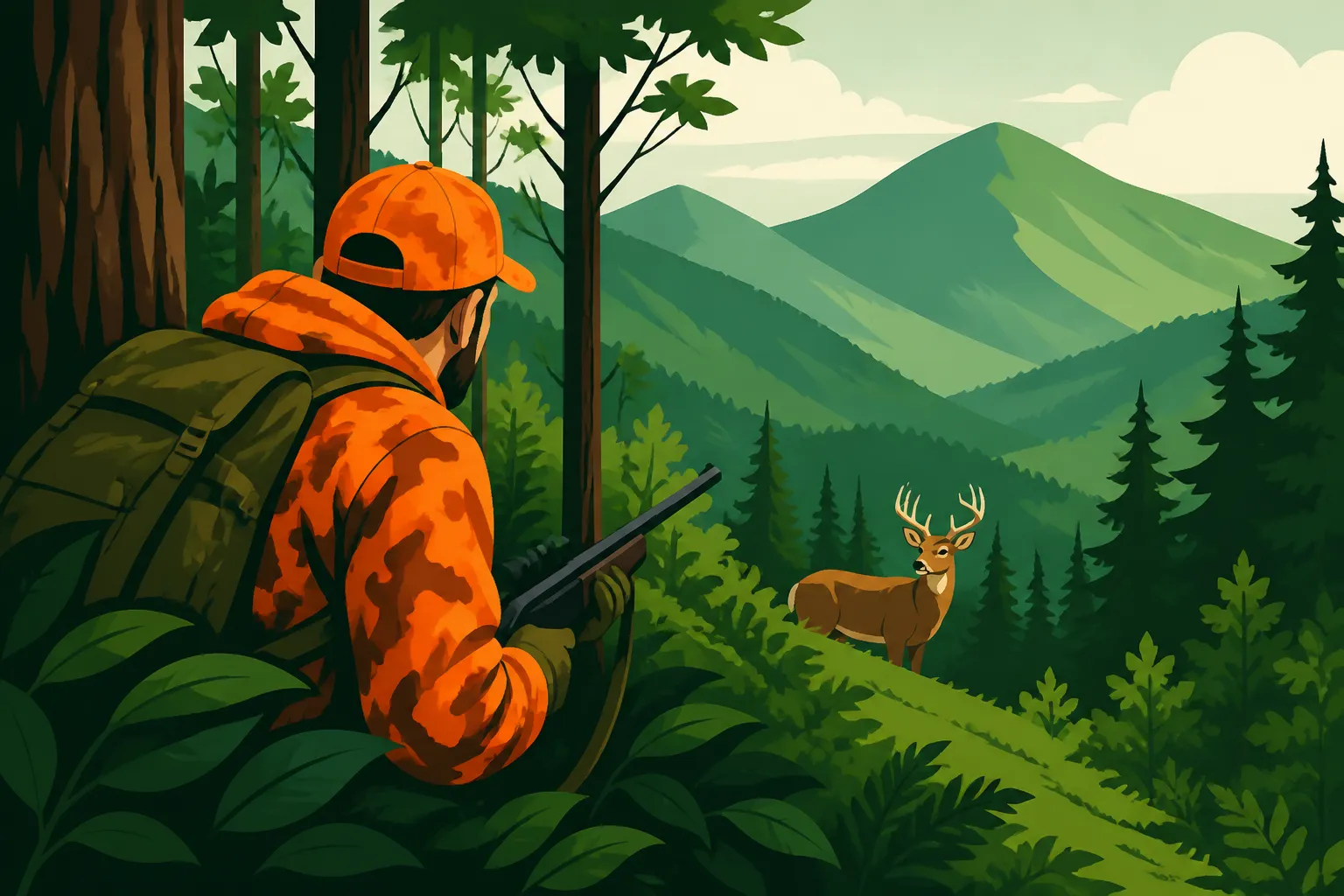
The vast, unbroken timber of Vermont's Green Mountain National Forest can feel utterly overwhelming for a hunter, leading to frustrating days of simply walking past deer without ever seeing them. It’s a common complaint: "I spent all day out there, covered miles, and didn't see a thing!" But what if you could transform those aimless treks into deliberate, productive movements? This guide is all about mastering still-hunting, a patient, observant method designed to help you actively find and harvest deer within the dense, challenging cover of the Green Mountains.
Understanding Green Mountain National Forest Terrain for Still-Hunting
Still-hunting in Vermont's Green Mountain National Forest is a different beast entirely from hunting agricultural fields or smaller woodlots. This isn't a place where you sit in a treestand overlooking a food plot; it's a deep, wild, and often rugged environment that demands a specific approach. When you consider the sheer scale and density, it’s easy to feel lost, both literally and figuratively, if you don't understand the nuances of the terrain.
The Unique Challenges of Vermont's Public Timber
Vermont's public timber, particularly within the Green Mountain National Forest, presents a formidable set of challenges. We're talking about hundreds of thousands of acres of contiguous forest, much of it steep, rocky, and covered in thick softwood and mixed hardwood stands. Unlike smaller private parcels, deer here often have immense home ranges and are rarely concentrated in easily predictable spots. Hunters frequently get frustrated by the seemingly endless woods, feeling like they're just wandering without purpose, pushing deer ahead of them without ever getting a shot. The deer living in these areas are also often less habituated to human presence and can be incredibly wary, melting into the shadows at the slightest hint of danger.
One of the biggest hurdles is simply covering ground effectively. The terrain can be brutal, with steep ascents and descents, rocky outcrops, and dense spruce or hemlock thickets that can be almost impenetrable. Without roads or easily defined edges, finding natural funnels or pinch points requires a keen eye and a deep understanding of how deer use the landscape. The weather can also turn on a dime, especially higher up in the mountains, adding another layer of complexity to an already demanding hunt.
Identifying Key Habitat Features and Micro-Terrain
Despite the vastness, the Green Mountain National Forest is far from featureless. The trick is learning to read the subtle cues of the landscape, identifying key habitat features and micro-terrain elements that deer are drawn to. These are the magnets that concentrate deer activity, even in the biggest woods. Look for changes in elevation, such as benches or subtle saddles along a ridge, which can act as natural travel corridors or bedding areas. Water sources, even small seeps or intermittent streams, are crucial, especially during dry spells, and often have worn trails leading to them.
Focus on timber type transitions. Where mature hardwoods meet a thick softwood regeneration patch, you often find a perfect blend of food (acorns, beech nuts) and cover. Old logging roads, forgotten woods trails, or even old stone walls can create linear features that deer frequently follow. Pay close attention to areas with good mast crops like oak flats or beech ridges, especially after a poor acorn year when these become even more critical. Even something as small as a cluster of browse-heavy saplings or a patch of wild apple trees can be a temporary food source that draws deer in. Using a mapping app like GoHunt can help you identify these features from above before you even step foot in the woods, allowing you to plan your still-hunting routes with precision.
Navigating Steep Slopes and Dense Undergrowth
Navigating the steep slopes and dense undergrowth of the Green Mountain National Forest is perhaps the most physically demanding aspect of still-hunting here. It's not about speed; it's about endurance, stealth, and knowing how to use the terrain to your advantage. Climbing a steep ridge can quickly sap your energy, making it difficult to maintain the slow, deliberate pace required for effective still-hunting. Take your time, move slowly, and conserve your energy for the critical moments.
When confronted with dense undergrowth, don't try to crash through it. Instead, look for deer trails or game paths that offer an easier, quieter route. Deer are creatures of habit and will often use the path of least resistance. These trails also give you insight into their travel patterns. If you find yourself in an impenetrable thicket, sometimes it's better to bypass it and work the edges, or try to find a slightly more open route parallel to it, rather than spooking every animal in the vicinity. Remember, the goal is to move through the deer's world without announcing your presence, blending into the forest as much as possible.
Mastering the Art of Still-Hunting Movement
Still-hunting isn't just walking slowly; it's a disciplined, methodical approach to moving through the woods that maximizes your chances of seeing deer before they see you. It's a mental game as much as a physical one, demanding patience, observation, and an intimate understanding of the environment.
The "Stop, Look, Listen" Philosophy
The core principle of still-hunting is often summarized as "stop, look, listen." This isn't just a catchy phrase; it's a critical tactical framework. Instead of a continuous forward movement, you should be moving in short bursts, often taking only a few steps, then pausing for several minutes. During these pauses, you're not just resting; you're actively scanning, processing, and listening. Use your binoculars to pick apart every shadow, every broken branch, every patch of cover. Many deer are spotted because a hunter noticed a horizontal line in a vertical world, a flicker of an ear, or an unnatural curve.
While stopped, listen intently. The rustle of leaves, a distant twig snap, or even the subtle sound of hooves displacing snow can betray a deer's presence. Birds suddenly going silent, squirrels barking agitatedly, or the distant thud of a deer stomping its foot can all be clues. When you move again, do so deliberately, placing each foot with care. Think of yourself as a predator, flowing through the landscape, always ready to freeze and observe. The cadence might be three steps, then stop for two minutes. Or one step, then stop for thirty seconds. It varies based on terrain and cover, but the principle remains: move less, observe more.
Reading the Wind and Thermals in Steep Green Mountain Terrain
Understanding and using the wind and thermals is paramount for successful still-hunting in the Green Mountains. Deer rely heavily on their sense of smell, and a gust of wind carrying your scent can send them fleeing long before you ever see them. Always try to hunt into the wind or with a crosswind. This means constantly checking wind direction and adjusting your route accordingly. A small wind checker bottle is an indispensable tool here, as the wind can swirl unpredictably in hilly terrain.
Thermals add another layer of complexity, especially in steep country. As the sun rises, thermals tend to rise up slopes, carrying scent with them. In the evening, as the air cools, thermals reverse and flow down into valleys. This means if you're hunting uphill in the morning, your scent will likely rise above you. If you're still-hunting a ridge-top saddle for rutting bucks in the afternoon, your scent will be carried downhill. Plan your routes to use these natural air currents to your advantage, often starting low and working your way up in the morning, or starting high and working down in the evening. Ignorance of thermals is a common mistake that blows many an otherwise well-executed hunt.
Foot Placement and Noise Discipline
Noise discipline is non-negotiable for still-hunting. Every twig snap, every rustle of leaves, every scrape of a boot on a rock can broadcast your presence to every deer within earshot. The goal is to move as silently as possible, which requires extreme attention to foot placement. Before you take a step, assess where your foot will land. Is it on a solid patch of moss, a bare rock, or a thick carpet of quiet leaves? Avoid dry twigs, crunchy leaves, or loose stones whenever possible.
Lift your foot high, clear any obstructions, and gently place your heel down first, slowly rolling your foot forward. This allows you to feel the ground and distribute your weight, minimizing noise. If you step on something that makes noise, don't recoil or make a sudden movement. Instead, freeze, and scan the area. Often, a deer will pause to listen, trying to identify the source of the sound, giving you precious seconds to spot it. Good boots for Green Mountain ridge terrain that offer both quiet traction and support are crucial. The goal is to move so deliberately and quietly that a deer can't pinpoint your exact location, allowing you to slip through their world unnoticed.
Scouting and Pre-Season Preparation for Still-Hunters
You can't effectively still-hunt terrain you don't know. Pre-season scouting and preparation are critical components, transforming a random walk into a calculated hunt. The more you understand the specific area you're hunting, the more successful you'll be.
Utilizing Mapping Tools and Aerial Imagery
Before you ever set foot in the woods, modern mapping tools and aerial imagery are your best friends. Services like GoHunt offer detailed topographical maps, satellite imagery, and even layers showing public land boundaries, timber cuts, and water sources. Spend hours poring over these maps, identifying potential still-hunting routes. Look for changes in elevation, natural funnels created by terrain features, and areas where different timber types converge. Identify potential bedding areas (often on south-facing slopes or thick cover) and feeding areas (hardwood ridges, old apple orchards, or even abandoned farm fields).
Use these tools to mark potential points of interest: saddles, benches, creek crossings, clear-cuts, and heavy cover. Knowing the lay of the land from an overhead perspective will help you understand how deer might move through it. You can also use the Vermont Fish and Wildlife App without cell service to save maps and identify property lines in the field, which is invaluable in a place like the Green Mountain National Forest where cell reception is often spotty at best. This initial digital scouting allows you to create a mental map and prioritize areas for in-person investigation.
Finding Fresh Sign and Establishing Travel Corridors
Once you've done your digital homework, it's time to hit the woods and verify your theories on the ground. This is where you connect the dots between the map and reality. Look for fresh deer sign: tracks in soft earth, fresh rubs and scrapes (especially as the season approaches), and most importantly, scat. Fresh droppings tell you not only that deer are in the area but also how recently they were there. Focus on finding sign in Green Mountain timber where you expect deer to be moving between bedding and feeding areas.
Pay particular attention to established travel corridors. These are often subtle but consistent paths deer use day in and day out. They might follow the edge of a thicket, a faint path along a contour line, or a worn trail leading to a water source. These corridors are prime spots to still-hunt along, as they indicate predictable deer movement. Look for areas where multiple trails converge, creating natural funnels. The more fresh sign you find, the more confident you can be that you're in an area worth investing your still-hunting efforts.
Understanding Deer Behavior in Big Woods Environment
Deer behavior in a big woods environment like the Green Mountain National Forest can differ significantly from those in agricultural landscapes. These deer are often wilder, more attuned to subtle changes, and more prone to seeking deep cover. They typically bed in the thickest, nastiest cover they can find – dense softwood thickets, steep ravines, or even just a subtle rise within heavy timber that offers a commanding view downwind. They often feed on natural browse, acorns, beech nuts, and whatever other forest edibles are available.
Their movement patterns are often dictated by these food and cover sources, as well as pressure from other hunters. In heavily hunted areas, deer become nocturnal very quickly. Still-hunting allows you to intrude on their daytime bedding and feeding cycles in a way that static hunting from a stand often doesn't. Understanding when the rut peaks, how deep snow affects Vermont deer survival, or how hunting pressure changes their daily routine will inform your still-hunting strategy, helping you anticipate where deer will be and how they will react to your presence.
Essential Gear and Setup for Green Mountain Still-Hunters
Still-hunting in the Green Mountain National Forest demands a specific gear setup tailored to the rugged terrain and variable weather. Your gear should be light, durable, and functional, allowing you to move stealthily and comfortably for long hours.
Layering for Vermont's Variable Weather
Vermont's weather can be notoriously unpredictable, especially during hunting season. A warm October morning can turn into a cold, driving rain by afternoon, or a crisp November day can see temperatures plummet to single digits. Effective layering for Vermont's long hunting season is absolutely crucial for staying comfortable and focused. Start with a moisture-wicking base layer to draw sweat away from your skin. Synthetic materials or merino wool are excellent choices.
Next, add an insulating mid-layer, like a fleece or lightweight puffy jacket, to retain warmth. Finally, your outer layer should be quiet, durable, and most importantly, waterproof and windproof. A good quality softshell jacket and pants offer excellent protection without being overly noisy or bulky. Remember to pack an extra insulating layer in your pack – a lightweight down or synthetic puffy can be a lifesaver if you stop for an extended period or the weather takes a turn for the worse. When still-hunting, you'll be generating body heat while moving, but you'll cool down rapidly during those long "stop and look" phases. Being able to adjust your layers quickly is key.
Choosing the Right Rifle and Optics for Timber Hunting
For still-hunting in Green Mountain National Forest timber, you need a rifle that is maneuverable, accurate, and powerful enough for deer, but not overkill for typical timber ranges. While a long-range magnum might be impressive on the bench, it's often cumbersome in dense cover. A lighter, shorter-barreled rifle in a versatile caliber like .30-06, .308, or even a 6.5 Creedmoor is often ideal. You want something that's easy to swing through brush and quick to shoulder for a snap shot if a deer busts out of cover close by. Consider a good sling to keep the rifle secure and balanced as you navigate uneven terrain.
Optics for Vermont's Green Mountain terrain should be chosen with timber hunting in mind. A low-magnification scope (e.g., 1.5-6x or 2-7x) is generally preferred over high-power options. In dense woods, most shots will be relatively close, and a wider field of view at lower magnification makes it much easier to acquire a target quickly. A good quality objective lens (around 32-40mm) will gather enough light in the dim woods without adding unnecessary bulk. A clear, crisp image is more important than extreme magnification in this environment. Additionally, a reliable rangefinder, even if just a basic one, can confirm distances if you find yourself in a more open patch.
Carrying the Right Pack and Essentials
Your pack is more than just a place to stash snacks; it's your mobile command center for a full day of still-hunting. It needs to be comfortable, quiet, and capable of carrying your essentials without hindering your movement. A daypack in the 20-30 liter range is usually sufficient. Look for one with external straps or pockets for easy access to water, a knife, and perhaps a small first-aid kit. Silence is paramount, so avoid packs with noisy zippers or buckles that clank.
Inside, you'll want to carry enough water for the day, high-energy snacks, a headlamp (in case you're tracking a deer after dark in Vermont), a compass, a map (even if you're using a GPS app, a physical map is a reliable backup), a knife for field dressing, game bags, and perhaps a small saw. Always have your hunting license and permits readily accessible. For colder weather, an extra pair of gloves and a warm hat are wise additions. Every item in your pack should serve a purpose and be easily accessible. Remember, you're trying to minimize unnecessary bulk and noise.
Strategies for Success: Applying Still-Hunting Techniques
Still-hunting is a dynamic process, requiring constant adaptation and strategic thinking. It's not just about moving slowly, but moving smartly, targeting areas where deer are most likely to be encountered, and reacting effectively to the situations you face.
Hunting Ridge-Top Saddles and Benches
Ridge-top saddles and benches are absolute magnets for deer in the Green Mountains, making them prime targets for still-hunting. Saddles, which are dips or low points along a ridge, act as natural funnels that deer use to cross from one side of a mountain to another. They often provide the easiest path of travel, concentrating deer movement. Benches, on the other hand, are flatter, shelf-like areas on a steep hillside. Deer love to bed on these benches because they offer relatively flat ground, often provide good cover, and give them a commanding view downhill, allowing them to detect danger approaching from below.
When hunting a ridge-top saddle for rutting bucks, approach slowly and carefully, always mindful of the wind. A rutting buck will often cruise these saddles, scent-checking for does. When still-hunting benches, move along the contour of the bench, peeking over the edge and into the thicker cover above or below. Remember, deer will often be bedded facing downhill, using their eyes for distant threats and their nose for anything coming up from behind. Take your time, scrutinize every patch of cover, and be prepared for a close-quarters encounter.
Working Creek Bottoms and Funnels
Creek bottoms, drainages, and other natural funnels can also be incredibly productive for still-hunting, especially in late season. Water sources, even small ones, are vital for deer, and creek bottoms often offer softer ground, denser cover along their edges, and sometimes a more moderate slope for travel compared to steeper ridges. Deer will often use these riparian corridors to move between feeding and bedding areas, especially during periods of heavy hunting pressure when they seek refuge in less accessible terrain.
When working a creek bottom for late-season deer, pay attention to the wind, as thermals can be complex here, often following the flow of the water. Look for well-worn trails along the banks or where deer cross the creek. These areas can be excellent for ambushing a deer moving through. Similarly, any natural pinch point – a narrow strip of timber between two open fields, a small neck of woods between two major roads, or a steep, unhuntable cliff face that forces deer into a specific travel lane – constitutes a funnel. These funnels concentrate deer movement, making still-hunting through them incredibly effective. Move slowly, scan constantly, and always be ready to react quickly.
Adapting to Changing Conditions Snow, Rain, Wind
Successful still-hunting in Vermont's Green Mountain National Forest often hinges on your ability to adapt to changing conditions. A fresh snowfall can be a game-changer, allowing for much quieter movement and the ability to track a deer in fresh Green Mountain snow. In light snow, deer tracks become obvious, allowing you to follow a specific animal. However, deep snow can make still-hunting extremely difficult, forcing deer into deer wintering yards explained earlier in the season. Adjust your pace and focus on areas where snow depth is more manageable or where deer might be concentrated due to difficult travel.
Rain presents its own challenges. While it can make tracking more difficult, it also dampens the forest floor, making for incredibly quiet movement. The rain itself can also mask human sound, making it easier to approach wary deer. Use a steady, light rain to your advantage, moving slowly and deliberately. High winds, on the other hand, can be a mixed blessing. While they can help mask your movement and scent, they also make it harder to hear deer, and deer themselves often become restless and move more erratically. During windy conditions, focus on sheltered leeward slopes or dense thickets where deer might seek refuge. No matter the weather, a still-hunter must constantly reassess and adjust their strategy to stay effective.
| Condition | Still-Hunting Strategy | Movement Speed | Focus Level |
|---|---|---|---|
| No Wind/Calm | Extra quiet movement, extreme scent control, use thermals | Very Slow | Max visual, max auditory |
| Light Rain | Use sound-dampening effect, move deliberately, scan cover | Slow | Max visual, moderate auditory (masked) |
| Fresh Snow | Follow fresh tracks, quiet movement, focus on edges | Moderate | Max visual (tracks), max auditory (quiet) |
| High Wind | Focus on sheltered areas, move with wind, scan for movement | Moderate | Moderate visual (swaying trees), low auditory (wind) |
| Dense Fog | Extremely slow, short visibility, rely on sound/close range | Very Slow | Max auditory, close-range visual |
| Sunny & Dry | Hardest for quiet movement, focus on shaded/soft ground | Very Slow | Max visual, max auditory |
Disclaimer
Hunting is an inherently dangerous activity. Always prioritize safety, follow all local and state regulations, and ensure you have the proper licenses and permits. This guide provides general information and should not replace professional instruction or personal experience. Be aware of your surroundings and hunt responsibly.