Working a Fencerow for Late-Season Deer
Trying to punch your tag as Vermont's late deer seasons wind down can feel like chasing ghosts through the frozen landscape. Deer get incredibly wary once they've been pressured all fall, and finding them in their winter patterns often means rethinking your entire strategy. This guide is all about honing in on a prime, often overlooked, late-season hotspot: the humble fencerow. We'll dive deep into why these linear features are so critical for deer when the snow flies and how you can effectively hunt them to fill your freezer.
Why Fencerows Are Late-Season Deer Magnets in Vermont
When the temperatures plummet and snow blankets the Green Mountains, deer aren't just looking for food; they're desperately seeking thermal cover and efficient, secure travel routes. Fencerows, especially those neglected ones grown thick with brambles, small trees, and even old stone walls, offer a unique combination of all these elements, making them indispensable to whitetails in the late season. It's a natural corridor where deer can move with a sense of safety, often avoiding the wide-open spaces that leave them vulnerable.
The Power of Thermal Cover and Food Edges
Think about a typical Vermont winter day. The wind whips across open fields, and the woods, while offering some protection, might not hold the dense, low-level cover needed to truly break the wind and trap warmth. This is where fencerows shine. Often bordering crop fields, old pastures, or the edges of woodlots, these linear features collect snow, yes, but also grow thick with low-lying vegetation. Think honeysuckle, multiflora rose, young pines, and tangled grapevines. This dense growth acts as a natural windbreak, providing critical thermal cover that allows deer to conserve energy when every calorie counts. The difference in temperature inside a thick fencerow compared to an open field can be astounding, offering a pocket of relative warmth.
Furthermore, these edges frequently hold overlooked late-season food sources. Acorns might be buried, but persistent browse like red osier dogwood, sumac, or even remnants of agricultural crops can be found along these lines. Deer will pick through the snow and thickets for every last bit of nutrition. A fencerow next to a standing corn field, or even one that bordered a brassica plot earlier in the fall, becomes an absolute magnet. They can nibble on these vital resources while staying concealed, making quick retreats into thicker cover if danger approaches. This combination of thermal protection and available forage makes them highly attractive, particularly during the coldest, snowiest stretches of December. Understanding these dynamics is key to success when you're considering your options for hunting into the December muzzleloader close.
Natural Travel Corridors and Security
Deer are creatures of habit and efficiency, especially when winter stress sets in. Why expend more energy than necessary? Fencerows provide perfect, often hidden, highways through the landscape. They allow deer to travel between bedding areas, feeding locations, and water sources with a continuous canopy or thicket of cover over their heads, minimizing their exposure to predators, human or otherwise. Imagine a deer needing to move from a thick conifer bedding area to a residual food source in a field; using a fencerow means they're not silhouetted against the open sky.
These corridors are especially critical on properties with mixed habitat, like many Vermont farms and woodlots. A fencerow might connect two small woodlots separated by a field, or it could be the natural path deer take to skirt the edge of a busy road. The sense of security they offer is paramount. Deer feel safer moving along these lines, even during daylight hours, knowing that an instant dash into dense cover is always an option. They learn these routes intimately, relying on them year after year, especially when hunting pressure pushes them into more nocturnal patterns in wider areas. For a hunter using tools like GoHunt to analyze terrain, these linear features often stand out as clear movement pathways between larger blocks of cover or food sources.
Scouting and Interpreting Fencerow Sign for Success
Just because a fencerow looks promising doesn't mean it's being used by deer. Effective late-season hunting demands thorough scouting, even when the weather is brutal. Understanding how to read the subtle (and sometimes not-so-subtle) signs deer leave behind will tell you exactly which fencerows are hot and how deer are using them. This isn't just a casual walk-through; it's detective work in the cold.
Reading Rubs, Scrapes, and Tracks in Cold Weather
Even in late season, deer sign persists, and with fresh snow, it becomes remarkably easy to read. While the rut might be long over, you can still find rubs along fencerows, especially if an older, dominant buck is still patrolling or if younger bucks are just working out some aggression. These rubs, often found on small saplings or brush within the fencerow, indicate active travel. Look for fresh bark shavings or sap, signifying recent activity. Scrapes are less common in deep winter but can sometimes be reactivated, particularly during brief warm spells or if a hot doe passes through. More importantly, they show historic use and can give you an idea of where bucks might travel again next season.
However, the most valuable sign in the late season is undoubtedly tracks. Fresh snow is your best friend for this. Walk the length of promising fencerows, looking for tracks cutting through the snow. Pay close attention to the size of the tracks (larger hooves often mean bigger deer) and the direction of travel. Are deer using the fencerow to go from a bedding area to a feeding area, or vice-versa? Are there multiple sets of tracks, indicating a group of does and fawns, or a solitary, heavy buck track? Are they walking, or has something spooked them, leaving larger gaps between tracks? When you're trying to figure out Where Vermont bucks bed in thick cover, following tracks into or out of a fencerow can often lead you directly to their sanctuaries. The quality of snow for Reading Vermont mud for fresh deer movement might change, but the principles of track interpretation remain.
Locating Key Crossing Points and Funnels
Not all parts of a fencerow are created equal. Deer, being creatures of efficiency, will often use the path of least resistance. This means certain points along a fencerow will see more activity than others. Look for natural breaks in the fenceline, areas where the cover thins slightly, or where the terrain creates an easier crossing. These become natural crossing points. A downed tree across an old fence, a low point in a stone wall, or a spot where the vegetation is less dense will often have a worn path or concentrated tracks.
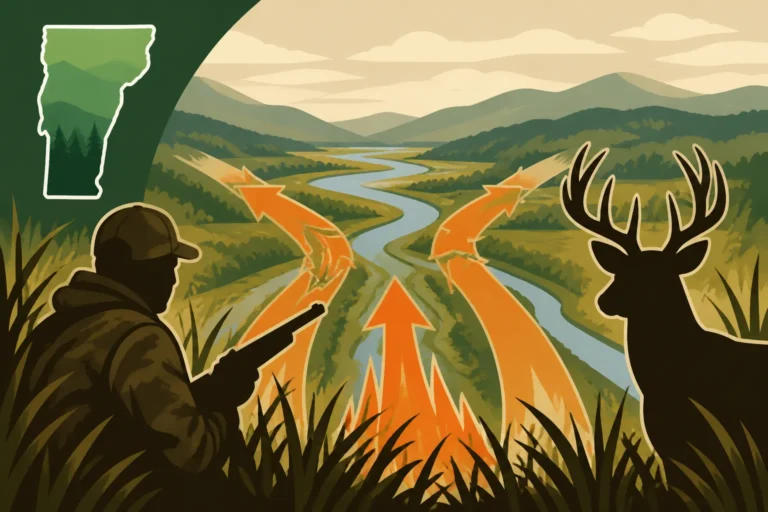
Even more potent are funnels created by the fencerow itself. A fencerow might narrow between a field and a small patch of woods, forcing deer into a tighter travel lane. It could also connect two larger blocks of cover, acting as the sole safe passage. Think about a small creek or ditch that runs along one side, further compressing deer movement. These natural funnels concentrate deer movement, making them prime locations for stand placement. When you're scouting, note these specific high-traffic areas on your map, perhaps even using a mapping application like GoHunt to mark waypoints. Identifying a clear Hunting a funnel between two woodlots is precisely the kind of strategic thinking that leads to success. Observing these choke points, and understanding how deer navigate them, is crucial for setting up an ambush.
Strategic Hunting Approaches for Vermont Fencerows
Once you've identified an active fencerow and understand how deer are using it, it's time to plan your attack. Late-season deer are incredibly sensitive to pressure, so your approach needs to be calculated and stealthy. Whether you're planning a quiet sit or a strategic push, fencerows offer unique advantages and challenges.
Stand Placement for Optimal Visibility and Wind
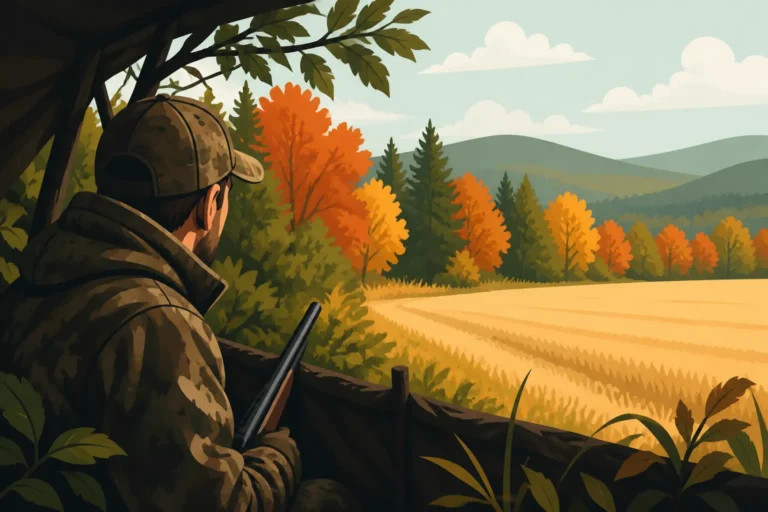
Setting up a stand on a fencerow requires careful consideration of wind, thermals, and visibility. The beauty of a fencerow is that it often provides cover for your approach and ascent. Look for a tree within the fencerow itself, or just inside the adjacent woodlot, that offers a good vantage point overlooking the most active crossing points or funnels you identified during scouting. You want to be able to see the length of the fencerow and any adjacent feeding areas without being silhouetted. When Hunting a stand on a Champlain Valley field edge, a fencerow tree can offer that perfect blend of concealment and visibility into the open.
Wind direction is paramount, especially in cold weather when thermals are less pronounced but still a factor. Always set up downwind of where you expect deer to approach or travel. Given the linear nature of fencerows, a slight crosswind can be ideal, allowing you to cover both sides. Consider the sun's position too, avoiding glare in your face during prime hunting hours. If the fencerow is near a steep ridge, pay extra attention to Wind and thermals in steep Green Mountain terrain, as shifting air currents can quickly betray your presence. With late-season deer already on high alert, a single whiff of human scent can send them packing for good. A comfortable, quiet treestand or a well-brushed-in ground blind offering good concealment can make all the difference for a Cold-Weather Sitting Strategy in the Northeast Kingdom.
Still-Hunting the Length of the Fencerow
Sometimes, sitting still isn't the most effective strategy, especially if deer patterns are unpredictable or if you're trying to locate a specific animal. Still-hunting, moving slowly and deliberately along the fencerow, can be incredibly productive in the late season. The dense cover of the fencerow offers fantastic concealment for the hunter, allowing you to ease along, taking a few steps, then pausing for long periods to scan and listen.
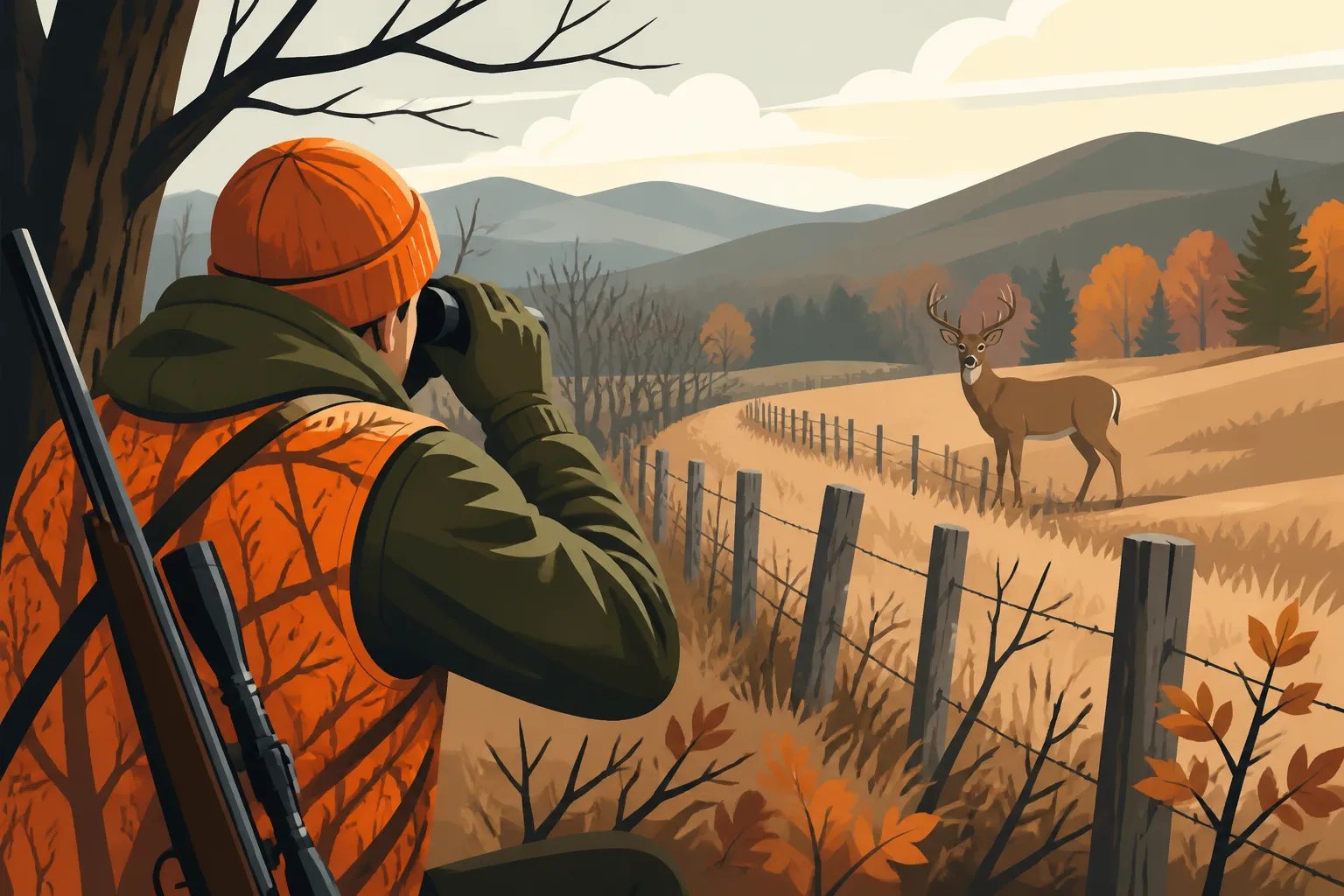
Focus on moving into the wind or with a slight crosswind, paying close attention to every rustle and shadow. Deer will often bed right in the thickest parts of fencerows, so you might jump them at close range. Be ready for a quick shot. Still-hunting is a game of patience and observation. Use your binoculars constantly to pick apart the cover ahead. Look for horizontal lines (the back or belly of a deer) in a vertical world, or the flick of an ear. The key is to blend in, move at a snail's pace, and be prepared to freeze at a moment's notice. This method demands focus, but it can be incredibly rewarding, allowing you to cover ground and adapt to where the deer are.
Effective Deer Drives Along Fencerows
For groups of hunters, a well-executed deer drive along a fencerow can be highly effective in pushing deer out of dense cover towards waiting standers. Fencerows naturally funnel deer, making them ideal for drives. The strategy usually involves a few "drivers" walking through the fencerow or along its edge, pushing deer towards "posters" positioned strategically at key crossing points, breaks, or where the fencerow empties into another patch of cover. Deer Drives With Three or Four Hunters can effectively cover a significant stretch of a fencerow, making sure no deer are left behind.
Communication is vital for a safe and successful drive. Drivers should move slowly and deliberately, making some noise, but not so much that deer bolt wildly. Posters need to be alert, camouflaged, and aware of their surroundings, particularly where other hunters are located. Always prioritize safety, ensuring everyone knows the boundaries and shooting lanes. This tactic can be particularly effective on larger farms where fencerows connect expansive fields and distant woodlots. It's an active way to engage with the landscape and utilize the natural tendencies of deer to follow these linear features under pressure.
Gear and Tactics for Cold Weather Fencerow Hunting
Late-season hunting in Vermont means dealing with serious cold, snow, and sometimes biting wind. Your gear choices and specialized tactics become even more critical for comfort, safety, and success. Being unprepared for the elements will cut your hunt short and send you home empty-handed.
Essential Cold Weather Gear and Layering
Comfort is king when you're facing down freezing temperatures, and proper layering is the foundation of late-season success. Start with a good wicking base layer to manage moisture – sweat can quickly turn into a chilling enemy. Over that, build with insulating layers like fleece or down. A mid-layer that provides warmth without bulk is crucial, and a quality insulated jacket or vest is a must. For a comprehensive guide on staying warm, look into Layering for Vermont's long hunting season. You'll want to ensure you're warm enough for those long, motionless sits while still being able to move quietly if still-hunting.
Outer layers should be waterproof and windproof to protect against the biting Vermont wind and any unexpected snow or freezing rain. Don't forget your extremities: a warm hat, insulated gloves or mittens (with finger access for shooting), and insulated, waterproof boots are non-negotiable. Look for boots designed for extreme cold, like those with 1000g or more of Thinsulate. Consider hand warmers and a hot thermos of coffee or soup to maintain core temperature. Checking out options for Insulated layers for a December muzzleloader hunt can give you a clearer picture of what's necessary. This preparation means you can focus on the hunt, not on shivering.
| Layer Type | Purpose | Recommended Materials | Key Considerations |
|---|---|---|---|
| Base Layer | Wicks moisture, provides initial warmth | Merino wool, synthetic blends | Snug fit, odor control, quick-drying |
| Mid Layer | Insulation | Fleece, lightweight down/synthetic | Traps warmth, allows movement, breathable |
| Outer Layer | Weather protection | Waterproof/windproof shell, insulated parka | Durable, quiet, breathable, allows for layering underneath |
| Extremities | Head, Hands, Feet | Insulated hat, gloves/mittens, insulated boots | Waterproof, warmth rating, dexterity for shooting |
Calling Strategies for Late-Season Fencerow Bucks
Even though the peak of the rut is over, late-season calling can still be surprisingly effective, especially when paired with hunting high-traffic fencerows. Bucks, particularly older ones, are still cruising, sometimes checking for unbred does or looking to assert dominance. A soft grunt call can pique their curiosity and draw them into range. If you've located a fencerow that shows signs of recent buck activity, a series of subtle grunts could be just the ticket.
Rattling is another tactic to consider. While not as effective as during the pre-rut or peak rut, short, aggressive rattling sequences can sometimes draw in a dominant buck that's still feeling territorial. Imagine a buck moving along a fencerow, hearing what sounds like a challenge or a fight; his instinct might be to investigate. Always be ready for a quick shot, as deer can come in fast and silently. For an in-depth look at this, Grunt calls in mature Vermont hardwoods will give you more context. Patience is key with calling; give the sounds time to work, and keep your movements to an absolute minimum. Sometimes, less is more when it comes to late-season calling, a subtle sound carrying a long way in the crisp, cold air.
Disclaimer
Hunting is an inherently dangerous activity. Always prioritize safety, follow all Vermont Fish & Wildlife Department regulations, wear blaze orange as required, and be sure of your target and what lies beyond it. This guide is for informational purposes only and does not supersede official hunting regulations or safety guidelines. Remember to obtain all necessary licenses and permits before heading afield.