Vermont Wolf History and Extirpation
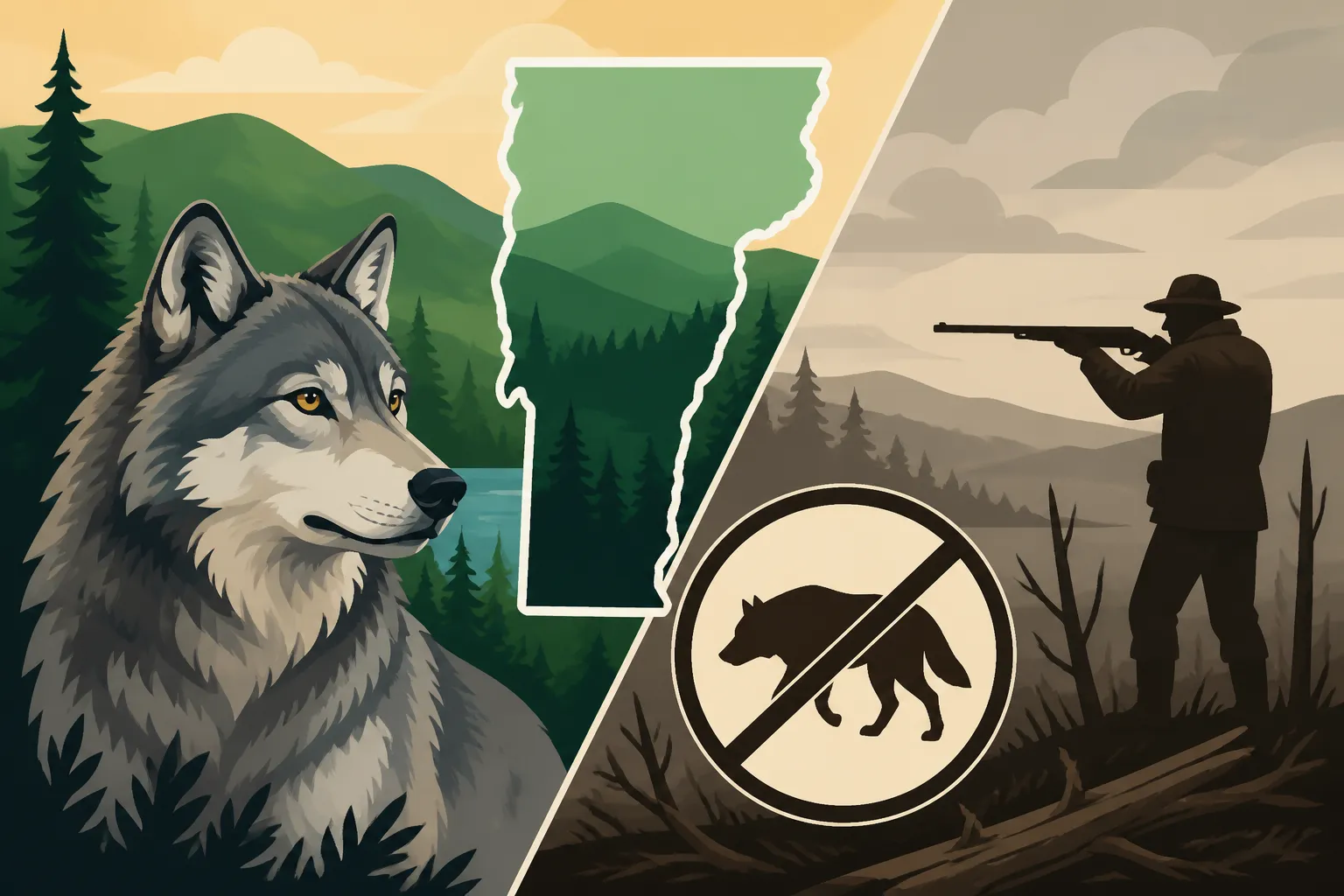
The whisper of "wolf" in Vermont's Green Mountains often conjures images of distant, wild places, but for centuries, these apex predators were a very real part of our landscape. Many folks today don't realize that wolves once roamed freely across our state, shaping its ecology and challenging early settlers. This guide will take a deep dive into the compelling, often tragic, history of wolves in Vermont, exploring their original presence, the factors that led to their disappearance, and the enduring legacy they leave on our understanding of wildlife and conservation.
The Ghost of the Green Mountains: Understanding Vermont's Historical Wolf Presence
It's easy to imagine Vermont's deep forests and rugged terrain without wolves today, but for thousands of years, they were here, an integral part of the natural order. They were the original architects of healthy deer herds and balanced ecosystems, long before human intervention. Their presence influenced everything from the behavior of moose to the health of smaller predator populations.
Early Encounters and Ecological Role
Before European colonization, the landscape of what would become Vermont was a mosaic of dense forests, beaver-dammed wetlands, and open meadows, all teeming with wildlife. Wolves, likely the Eastern wolf subspecies, were at the top of the food chain, primarily preying on white-tailed deer and moose. They played a crucial role in maintaining the health and vitality of these prey populations by culling the weak and sick, preventing overgrazing, and ensuring a natural balance. Imagine the sound of a wolf howling across a winter landscape, a sound that defined the wilderness for millennia.
Their intelligence and social structure allowed them to thrive in these challenging environments. Indigenous peoples lived alongside them, respecting their power and understanding their role in the ecosystem. There's a rich oral tradition among many tribes that speaks to the wolf's spirit and its connection to the land. This mutual existence, though sometimes competitive, represented a balance that would soon be shattered.
The Arrival of European Settlers and Changing Landscapes
With the arrival of European settlers in the 17th and 18th centuries, the dynamics of Vermont's wilderness began to shift dramatically. Settlers brought with them a different perspective on wild animals, particularly large predators like wolves. The primary goal was often to tame the land, clear forests for agriculture, and protect livestock. This immediately put wolves in conflict with human expansion. The forests that were once vast and unbroken began to shrink, fragmented by farms, roads, and burgeoning towns.
The introduction of domestic livestock, like sheep and cattle, provided an easy, concentrated food source for wolves, leading to increased depredation and intensifying the conflict. As deer populations were also hunted more heavily by humans, wolves were further pushed towards livestock. This wasn't an inherent malice on the part of the wolves; it was a natural response to a rapidly changing environment where their traditional prey became scarcer and new, vulnerable food sources appeared.
The Era of Persecution: How Wolves Were Driven From Vermont
The conflict between settlers and wolves escalated rapidly, turning into a systematic effort to remove wolves from the landscape. The perception of wolves shifted from a natural, if formidable, part of the wilderness to a dangerous pest, a threat to livelihoods and expansion. This wasn't unique to Vermont; it was a pattern seen across much of North America.
Bounties, Trapping, and Organized Eradication
The primary tool used to eliminate wolves was the bounty system. Starting as early as the late 1700s, colonial and later state governments offered monetary rewards for wolf pelts, sometimes specifically for wolf heads or ears. These bounties incentivized trappers and hunters to actively pursue and kill wolves. It became a profitable, if arduous, endeavor. Wolf hunting wasn't just about protecting livestock; it was an economic activity.
Methods were brutal and efficient: traps, snares, poisons, and organized hunts. Local communities would band together for "wolf drives," pushing wolves into areas where they could be more easily ambushed and killed. This relentless pressure, combined with habitat loss and the decline of their natural prey, quickly took its toll. There was little understanding or concern for the ecological consequences; the immediate goal was simply removal.
The Last Stand: Documenting Extirpation
While precise dates are difficult to pinpoint due to varied record-keeping, historical accounts suggest that the last confirmed wild wolf in Vermont was killed in the mid-1800s. There are reports of a final individual taken in the town of Bennington around 1839, though other scattered reports persist into the 1840s or even 1850s, often speculative or misidentified. These were not grand, well-documented scientific events, but rather the grim culmination of decades of relentless pressure.
The extinction of the wolf from Vermont wasn't a sudden event, but a slow, grinding process, a testament to the effectiveness of the eradication campaigns. Once a vital part of the landscape, the wolf became a ghost, its presence only lingering in old records and local folklore. The sound of its howl was replaced by the silence of absence.
Lingering Echoes and Modern Perspectives on Vermont's Wolves
Even though the Eastern wolf was extirpated from Vermont long ago, the legacy and spirit of these animals continue to spark debate and fascination. Modern wildlife science helps us understand what was lost and what, perhaps, might someday return.
The Debate: Eastern Coyotes and Wolf Hybrids
The story of Vermont's absent wolves becomes even more complex when we talk about the animals that do roam our woods today: the Eastern coyote. These aren't your typical Western coyotes. They are larger, often exhibiting traits that suggest they carry some wolf DNA. Scientists believe that as wolves were extirpated from the eastern U.S., migrating Western coyotes moved into their former territories, interbreeding with the last remaining wolves or wolf-coyote hybrids. This genetic mixing created the larger, more robust Eastern coyote we see today. You can learn more about Vermont's Eastern Coyote Origins.
This has led to ongoing discussions: Are these Eastern coyotes, or "coy-wolves" as some call them, filling the ecological niche of the vanished wolf? They certainly are effective predators, hunting deer and other small game. Understanding the genetics and behavior of these animals is crucial for modern wildlife management. If you're out scouting or hunting and encounter what you think might be an Eastern coyote, remember they're a fascinating example of evolutionary adaptation in the face of human impact. Many resources, like those found on GoHunt, can provide insights into current research on predator populations and how to differentiate species, which is incredibly useful for folks trying to identify tracks or calls in the woods.
Conservation Efforts and the Future of Apex Predators
The extirpation of the wolf from Vermont was a stark lesson in the unintended consequences of human actions on ecosystems. Without an apex predator, deer populations can sometimes boom, leading to overbrowsing and habitat degradation, impacting other species. This understanding has fueled a broader conservation movement focused on protecting and, where possible, reintroducing apex predators.
While there are currently no official plans for wolf reintroduction in Vermont, the conversation often arises in broader regional discussions about biodiversity and ecosystem health. Organizations dedicated to wildlife preservation continue to monitor potential wolf movements in the Northeast, particularly from Canadian populations. Any potential return, whether natural recolonization or reintroduction, would require careful planning, public education, and robust wildlife management strategies, especially considering the continued presence of Eastern coyotes. The lesson from history is clear: coexistence requires foresight and commitment. The debate touches on fundamental questions about what kind of wilderness we want to maintain, and what we are willing to do to ensure a balanced, healthy ecosystem.
Lessons from Extirpation: What Vermont's Wolf History Teaches Us About Wildlife Management
The story of the wolf in Vermont isn't just a historical footnote; it's a profound case study in ecological change, human impact, and the long-term consequences of our decisions. It offers vital insights for today's wildlife managers and for anyone who cares about the future of our wild spaces.
The Impact of Losing an Apex Predator
The removal of wolves from Vermont had ripple effects throughout the ecosystem. As the top predator, wolves kept deer populations in check. Without them, deer numbers could fluctuate more wildly, leading to increased pressure on forest understory vegetation. This impacts everything from the regeneration of timber to the food sources available for other wildlife like ruffed grouse, snowshoe hare, and even wild turkeys. An unbalanced ecosystem becomes more vulnerable to disease and less resilient overall. You can see similar patterns when looking at Vermont Moose Population Decline Since the 1990s due to winter ticks, where predator-prey dynamics play a critical role in herd health.
The historical absence of wolves in Vermont has profoundly shaped the management strategies for game species that are their natural prey. Today, antlerless deer permits and managed hunting seasons often serve as a proxy for the ecological role wolves once filled. This shows how crucial it is to understand predator-prey dynamics, a topic extensively covered by resources you might find on GoHunt when researching various game species. Losing an apex predator isn't just about one species; it's about altering the fundamental structure and function of an entire ecosystem.
The Value of Historical Ecological Data
The challenge of understanding Vermont's historical wolf population highlights the importance of ecological records. While early accounts were often anecdotal or focused solely on eradication, modern science strives for comprehensive data collection. This includes everything from genetic studies of current predator populations, like those focusing on Vermont's Eastern Coyote Origins, to detailed assessments of habitat health and prey densities. These efforts help us piece together the past and make informed decisions for the future.
This table summarizes key aspects of Vermont's wolf history:
| Aspect | Pre-European Settlement | European Settlement to Extirpation | Modern Day Perspective |
|---|---|---|---|
| Status | Apex Predator, Integral to Ecosystem | Target of Eradication | Extirpated (regionally extinct) |
| Ecological Role | Regulated ungulate populations, maintained ecosystem health | Seen as pest, threat to livestock | Role filled imperfectly by Eastern coyotes, human hunters |
| Key Threats | Natural competition | Habitat loss, bounties, trapping, poisoning | Continued habitat fragmentation, public perception |
| Last Confirmed Sighting | Continuous presence | Mid-1800s (approx. 1839) | No confirmed wild wolves since 1800s |
| Current Related Species | Pure Eastern Wolf | Declining Eastern Wolf/Hybrid | Eastern Coyote (likely wolf-coyote hybrid) |
Looking back at the wolf's story provides invaluable lessons for current and future wildlife issues, from managing deer herds to dealing with Vermont Coyote Range and Density. It reinforces the understanding that every species has a role, and when one is removed, the entire system feels the impact. As hunters and outdoors enthusiasts, recognizing this history deepens our appreciation for the delicate balance of nature and the responsibility we bear in its stewardship. For more on similar conservation stories, exploring topics like Vermont's Recovering Fisher Population can provide a hopeful perspective on how species can rebound with dedicated efforts. The journey of understanding Vermont's natural heritage, from past losses to future possibilities, is an ongoing one.
Disclaimer
This article is for general informational purposes only and does not constitute professional advice. Laws, prices and regulations vary by location and change over time. Consult a qualified professional for guidance on your specific situation.