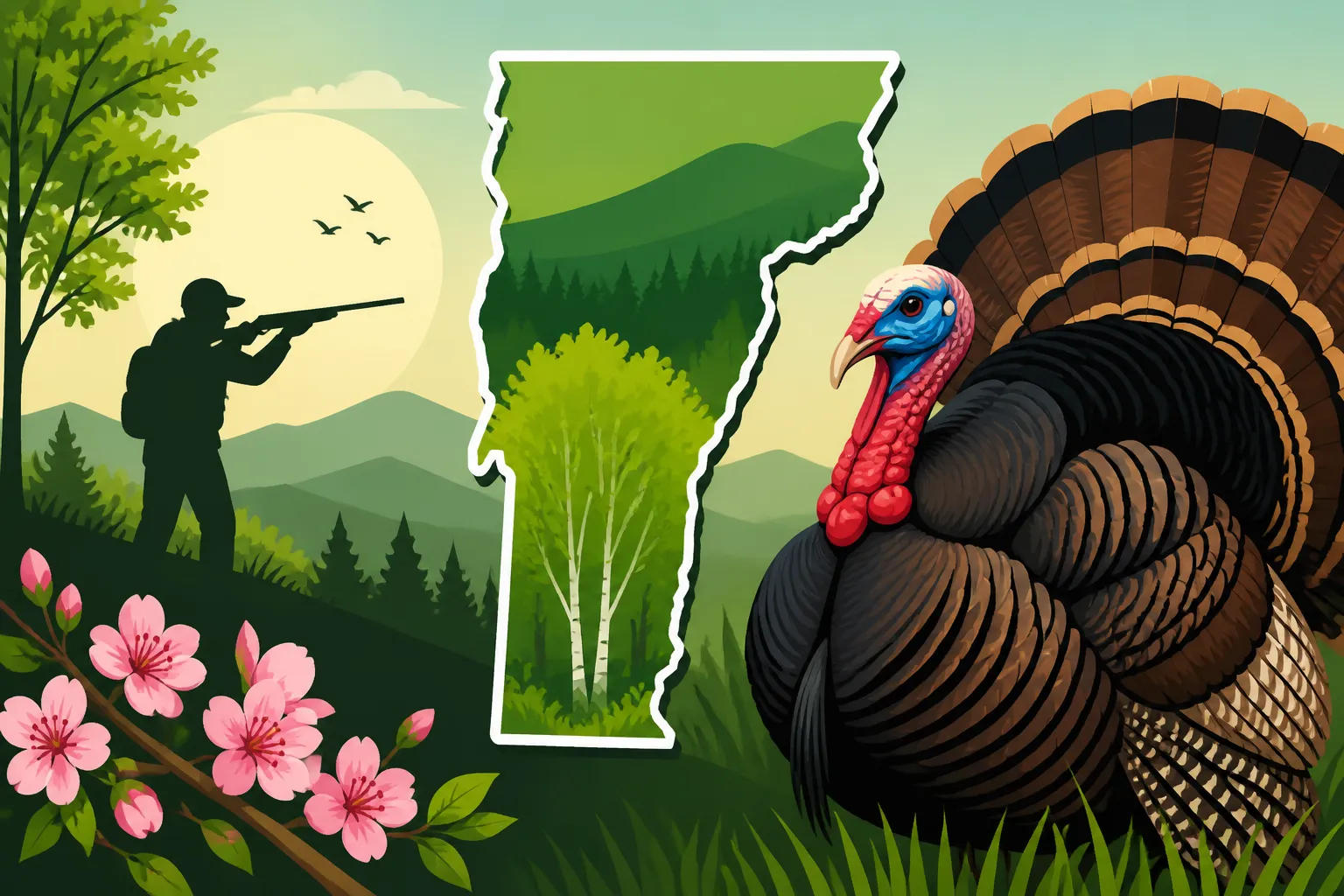
Vermont Spring Turkey Season Dates
There's nothing quite like the anticipation of spring in Vermont, especially for us turkey hunters. After a long, quiet winter, the woods come alive, and the sound of a gobbler ringing through the timber is enough to make any hunter's heart pound. But before you can pull on your camo and head out, you need to know when exactly that magic window opens, and more importantly, how Vermont's specific regulations might impact your hunt. This guide will walk you through the essential dates, permit requirements, and crucial planning tips to ensure your spring turkey season is a success.
Understanding Vermont's Spring Turkey Framework
Vermont's spring turkey season is a relatively brief but action-packed period, designed to coincide with the birds' breeding season. While the general timeframe remains consistent, the exact dates can shift slightly year to year, making it vital to check the latest regulations.
Pinpointing Key Season Dates and Annual Fluctuations
Typically, Vermont's regular spring turkey season kicks off in early May, running for about three weeks. For example, recent seasons have seen an opening day around May 1st, extending through to the end of May. These dates are meticulously chosen by the Vermont Fish and Wildlife Department to maximize hunting opportunities while ensuring the long-term health and reproductive success of the wild turkey population. The department considers various factors like historical weather patterns, turkey nesting cycles, and brood recruitment data when setting these dates. A slightly warmer or colder spring, for instance, could subtly influence when the season officially opens or closes.
It’s crucial to understand that these aren't set in stone for years on end. Laws and wildlife management objectives can evolve, leading to minor adjustments. That's why your first step, every single year, should be to consult the official Vermont Fish and Wildlife Department website or their annual hunting guide. Reputable hunting resources and apps, such as GoHunt, can also provide easily accessible, up-to-date summaries of these critical dates, helping you plan your vacation days or weekend trips well in advance. Without confirming the exact dates for the current year, you risk missing the opener or worse, hunting outside the legal window.
The Special Opportunity of the Youth and Novice Weekend
Before the regular season officially begins, Vermont offers a fantastic opportunity for young and new hunters: the Youth and Novice Turkey Hunting Weekend. This special two-day window typically occurs in late April, just prior to the main season. It's an invaluable initiative aimed at introducing the next generation and those new to hunting to the thrill of spring turkey hunting in a less crowded, more focused environment.
During this weekend, eligible youth (age 15 and under) and novice hunters (who meet specific criteria, often relating to their first few years of hunting) can pursue turkeys while accompanied by a licensed, unarmed adult mentor. The rules for this weekend are carefully designed to prioritize safety and education. Mentors are usually required to stay within arm's reach and provide direct supervision, ensuring a positive and safe experience for the new hunter. This structured, supportive environment allows novices to learn about turkey behavior, calling techniques, and ethical hunting practices without the added pressure of a full-blown season opener. It's a cornerstone of Vermont's commitment to fostering new hunters and ensuring the tradition continues. For more details on who qualifies, you can refer to information on Vermont Youth and Novice Weekend Rules, which outlines age requirements and mentor responsibilities.
Securing Your Spring Turkey Permits and Knowing Your Limits
Once you've got those season dates locked in, the next step is ensuring you have the proper legal documentation to hunt. Vermont has a clear system for licenses and permits, with distinctions between residents and nonresidents.
Navigating Resident and Nonresident Permit Acquisition
Before you can even think about chasing a longbeard, you'll need a valid Vermont hunting license. This is your foundational permit, a prerequisite for any specialized tags. For spring turkey hunting, both residents and nonresidents will need to purchase a specific turkey permit in addition to their base hunting license. The cost for these permits does vary, with nonresidents typically paying a higher fee.
For residents, the process is fairly straightforward: acquire your Vermont Resident Base License Cost, and then add on a spring turkey permit. Nonresidents will first need their Vermont Nonresident Base License Cost before they can purchase their Vermont Nonresident Turkey Permit Cost. These can be conveniently purchased online through the Vermont Fish and Wildlife Department's licensing portal, or in person at one of the many authorized license agents across the state. Using digital tools or platforms like GoHunt can help you quickly ascertain the current costs and requirements, and often links directly to the official purchasing sites. Remember, it's not enough to just have a license; you need the specific turkey permit in hand (or on your phone, if permitted by state law) before you step into the woods.
Maximizing the Vermont Two-Bird Limit for Residents
One of the most appealing aspects of spring turkey hunting for Vermont residents is the generous two-bird limit. That’s right, residents are allowed to harvest up to two bearded turkeys during the spring season! This is a unique opportunity that many other states don't offer, reflecting the healthy and robust turkey population across the Green Mountain State. However, there are crucial rules surrounding this limit that you must understand to stay legal. You can only harvest one bird per day, meaning you can't tag two gobblers on the same morning hunt. Each bird must be tagged immediately after harvest with a separate, validated tag from your permit.
Nonresidents, on the other hand, are typically limited to one bearded turkey for the entire spring season. This distinction is important and often a point of confusion for those accustomed to different regulations in other states. For residents, this two-bird limit offers a fantastic chance to experience multiple hunts, refine calling techniques, and potentially fill the freezer with more delicious wild game. It also means you need to be extra diligent with your tagging and reporting process for each successful harvest. Understanding Vermont's Resident-Only Two-Bird Turkey Limit is key to making the most of your spring afield.
| Permit Type | Base License Required | Spring Turkey Permit Cost (Approx.) | Spring Turkey Bag Limit |
|---|---|---|---|
| Vermont Resident | Yes | $20-25 | 2 Bearded Turkeys |
| Vermont Nonresident | Yes | $40-50 | 1 Bearded Turkey |
| Youth/Novice (Resident) | Yes (Youth) | $5-10 (Youth) | 1 Bearded Turkey |
| Youth/Novice (Nonres.) | Yes (Youth) | $15-20 (Youth) | 1 Bearded Turkey |
| Note: Costs are approximate and subject to annual change. Always check current VT Fish and Wildlife regulations. |
Strategic Planning and Gear for a Successful Spring Hunt
Having your dates and permits sorted is a great start, but successful turkey hunting in Vermont requires careful planning, thorough scouting, and the right gear. Our varied terrain, from the Champlain Valley's farmlands to the steep Green Mountain forests, demands a thoughtful approach.
Essential Pre-Season Scouting and Regulation Checks
Long before the first gobble echoes through the pre-dawn woods, your preparation should begin. Pre-season scouting is paramount to locating birds, understanding their patterns, and identifying potential roosting sites, strut zones, and travel corridors. This involves getting boots on the ground, listening for distant gobblers, and looking for fresh sign like tracks, droppings, and shed feathers. Platforms like GoHunt, with its robust mapping capabilities, can be incredibly useful here. You can layer public land boundaries, topo maps, and aerial imagery to pinpoint promising areas and plan your access routes efficiently. This early work drastically increases your odds of encountering birds once the season opens.
Beyond scouting, a diligent review of the most current regulations is non-negotiable. While the main season dates are consistent, other subtle rules can change. This includes legal hunting hours (typically half-hour before sunrise to noon), specific weapons allowed (shotguns, bows, crossbows), and any local restrictions within certain Wildlife Management Units (WMUs). Don't assume last year's rules are identical. Vermont is proactive in wildlife management, and slight tweaks to regulations can occur. Knowing all the ins and outs ensures you're hunting legally and ethically. For instance, understanding specific details about Scouting Vermont Public Land Before Season can give you a significant advantage.
Essential Gear and Proven Tactics for Spring Gobblers
Spring turkey hunting is a game of strategy, patience, and effective communication. Your gear plays a crucial role in enabling these tactics. A good shotgun, typically a 12-gauge or 20-gauge, with a full or extra-full choke and appropriate turkey loads (like heavy tungsten super shot) is standard. For bowhunters, fixed-blade broadheads are usually preferred for their penetration on turkeys. Camouflage that blends with Vermont's varied spring foliage – whether it's the budding hardwoods or the still-brown undergrowth – is critical for remaining undetected by sharp-eyed gobblers.
Calling is, of course, the heart of spring turkey hunting. Mastering a few key calls, such as yelps, clucks, and purrs, can make all the difference. Carrying a variety of calls – a box call for loud, far-reaching yelps, a slate call for realistic clucks, and a diaphragm call for hands-free operations – gives you versatility. Decoys, especially a jake and hen setup, can be incredibly effective in luring wary gobblers into range. Tactics often revolve around setting up before dawn near known roosting areas, calling softly to an awakening gobbler, and then enticing him to come to you. Patience is a virtue; often, the birds won't commit immediately. Sometimes, a more aggressive approach, especially if the bird is "hung up," can pay off, while other times, it's about staying put and letting him decide. Learning to call a May Gobbler Off the Roost, for example, is a crucial skill for early-morning success. Similarly, setting up against a large sugar maple, as many seasoned Vermont hunters do, can offer the perfect concealment and backdrop for a successful ambush.
Post-Harvest Responsibilities and Looking Beyond Spring
Congratulations, you've successfully tagged a Vermont longbeard! But the hunt isn't truly over until you've fulfilled your post-harvest responsibilities and perhaps even started thinking about future opportunities.
The Critical Step of Mandatory Harvest Reporting
Harvest reporting isn't just a suggestion in Vermont; it's a mandatory legal requirement that plays a vital role in wildlife management. Every single turkey harvested, whether it's your first bird or your second as a resident, must be reported to the Vermont Fish and Wildlife Department within 48 hours of harvest. This can typically be done online through their official website or via their convenient mobile app. The reporting process will ask for specific details about your harvest, including the date, the Wildlife Management Unit (WMU) where the bird was taken, the sex of the bird, and measurements such as spur length, beard length, and approximate weight.
This data is crucial for the department to monitor the health and population dynamics of Vermont's wild turkey herd. It helps biologists assess annual harvest rates, understand population distribution, and make informed decisions about future season structures and bag limits. By accurately and promptly reporting your harvest, you are directly contributing to the conservation efforts that ensure healthy turkey populations for generations of hunters to come. Failure to report a harvest within the specified timeframe can result in penalties, so always make this a top priority immediately after field dressing your bird.
Transitioning from Spring to Fall Turkey Opportunities
Even if you’ve filled your tags, or if you had an unsuccessful spring hunt, the good news is that Vermont offers another chance to pursue turkeys in the fall. While the spring hunt focuses on gobblers and their breeding behaviors, the fall season presents a completely different challenge, primarily centered around flock dynamics and food sources.
Vermont Fall Turkey Season Dates typically run from October into early November, with specific dates varying by WMU and weapon type (archery versus shotgun). The tactics shift from calling a lone gobbler to breaking up a flock and calling individual birds back to you. It's a fantastic way to extend your turkey hunting year and experience a different facet of these intelligent birds. For those who enjoy the challenge of archery, there's even a statewide archery window for fall turkeys. Whether you're looking to fill the freezer, introduce a new hunter to different techniques, or simply enjoy more time in the autumn woods, Vermont's fall turkey season provides a compelling option. Make sure to check the specific regulations for the fall season, as permit requirements and bag limits can differ from spring.
Disclaimer
Please note that hunting regulations, season dates, and permit costs are subject to change by the Vermont Fish and Wildlife Department. This guide is intended for informational purposes only and should not replace consulting the official, current Vermont hunting regulations before planning any hunting activity. Always verify all information with the Vermont Fish and Wildlife Department's official resources.