Which Vermont County Has the Most Public Land
One of the biggest headaches for any hunter, especially when you're exploring a new state or just looking for new ground closer to home, is figuring out where you can actually hunt. You pore over maps, spend hours online, and still end up scratching your head wondering which areas are genuinely open to the public. If you've ever felt that frustration trying to pin down the best public hunting opportunities in Vermont, this guide is for you. We're going to dive deep into which Vermont county truly boasts the most public land, and how you can tap into those vast resources for your next adventure.
Understanding Vermont's Public Land Landscape
Before we pinpoint the king of public land, it's crucial to grasp the different forms public land takes in Vermont. It's not just one big chunk; it's a patchwork of federal, state, and even local holdings, each with its own character and rules. Navigating this can feel like piecing together a complex puzzle, but once you understand the major components, it gets a whole lot easier to identify those prime hunting spots. Knowing what kind of public land you're on helps you understand what to expect in terms of terrain, access, and even typical game behavior.
The Big Players: Green Mountain National Forest
When most folks think about significant public land in Vermont, their minds immediately go to the Green Mountain National Forest (GMNF). And they're not wrong! The GMNF is a federal treasure, stretching down the spine of the Green Mountains, and it truly is a massive expanse of huntable terrain. This forest is characterized by its rugged mountains, dense timber, and remote feel, offering everything from challenging backcountry hunts for deer and bear to more accessible areas near forest roads. It's a huge asset for anyone looking to escape the crowds and immerse themselves in a wild Vermont experience.
The GMNF covers parts of several counties, and its presence significantly skews the public land availability in those regions. Think of it as a giant anchor for public hunting. If a county has a substantial portion of the GMNF within its borders, you can bet it's going to feature prominently in our discussion of public land access. While vast, not all of it is uniform. Some areas are designated wilderness, others are managed timberlands, and understanding these nuances can help you fine-tune your scouting efforts. For a deeper dive, check out Hunting Vermont's Green Mountain National Forest.
State Forests and Wildlife Management Areas
Beyond the federal lands, Vermont boasts a robust system of State Forests and Wildlife Management Areas (WMAs). These are managed by the Vermont Department of Fish and Wildlife and are specifically designed to provide habitat for wildlife and recreational opportunities, including hunting. State Forests often allow a broader range of activities and can be quite large, while WMAs are typically smaller, more focused on specific habitat types, and may have more precise regulations regarding use.
These state-managed lands are scattered across the state, but some regions have a higher concentration due to historical land acquisition or specific conservation goals. WMAs, in particular, are often jewels for hunters, providing diverse ecosystems from wetlands for waterfowl to mature hardwoods for deer and turkey. They are managed with wildlife in mind, meaning you'll often find habitat improvements that benefit game species. It's always a good idea to research the specific WMA you plan to visit, as each can have unique characteristics and rules. If you're wondering how these areas are managed, you might find How Vermont WMAs Are Managed insightful.
Town Forests and Other Local Parcels
Don't overlook the smaller, often-unsung heroes of public access: town forests and other locally owned parcels. While individually these might not rival the vastness of the GMNF or even a large State Forest, collectively they can offer significant opportunities, especially for those living in more populated areas. Many towns in Vermont own forested land that is open for public recreation, including hunting. These parcels can be a fantastic option for a quick morning hunt or an evening sit after work, offering surprising seclusion often much closer to home than you might expect.
Access to town forests can vary, so it's always best to check with the local town clerk or website for specific regulations and maps. Some might be heavily used by hikers or mountain bikers, requiring extra awareness from hunters, while others remain relatively untouched. These smaller, community-managed lands embody a true Vermont spirit of local access and stewardship, and savvy hunters know how to leverage them.
Essex County: The King of Public Land
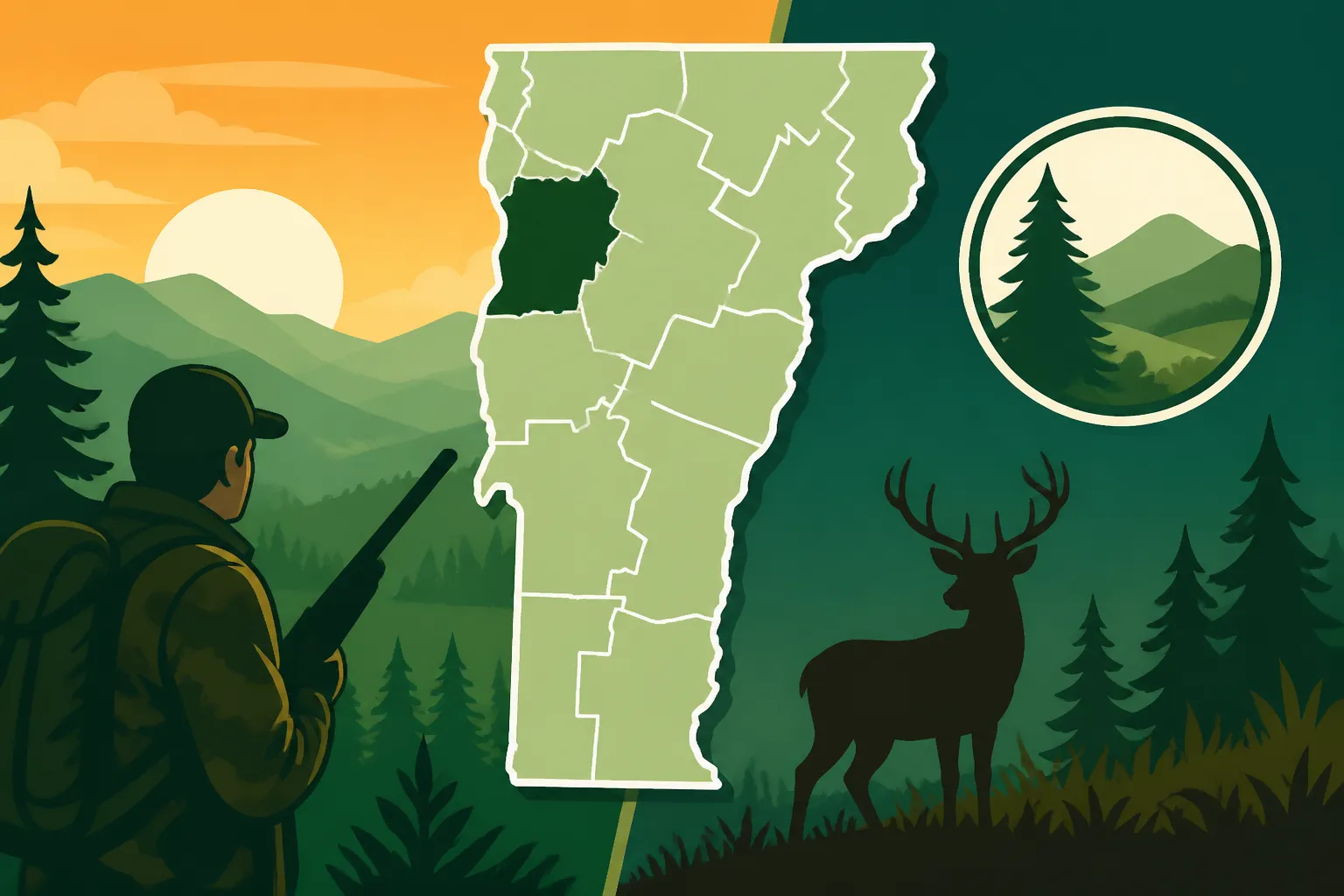
Alright, let's cut to the chase. If you're looking for the single Vermont county that offers the most public land for hunting, the crown unequivocally goes to Essex County. Located in the remote and wild Northeast Kingdom, Essex County stands head and shoulders above the rest when it comes to sheer acreage open to the public. It's a vast, rugged, and often unforgiving landscape, which is precisely why it holds so much appeal for hunters seeking solitude and genuine wilderness experiences.
The Sheer Scale of Opportunity
What makes Essex County the undisputed champion? It's primarily due to its incredible concentration of large, undeveloped public tracts, notably including a significant portion of the Silvio O. Conte National Fish and Wildlife Refuge's Nulhegan Basin Division, along with extensive State Forests and Wildlife Management Areas. These lands aren't just patches; they are sprawling, contiguous blocks of timber, wetlands, and mountains that allow wildlife to thrive and hunters to truly get away from it all.
The nature of the terrain itself in Essex County contributes to its wild character. With fewer roads, more dense forest, and less agricultural land than other parts of the state, large parcels were preserved as public domain rather than being subdivided or developed. This means that when you step into the woods here, you're often walking into an ecosystem largely shaped by natural processes, offering a different kind of challenge and reward compared to hunting smaller, more fragmented landscapes. For many, it's the closest thing to a true wilderness hunt Vermont has to offer. For tips on navigating these remote areas, check out Hunting the Northeast Kingdom.
Specific Public Land Highlights in Essex
Within Essex County, several key areas contribute to its massive public land total. The Nulhegan Basin is perhaps the most famous, a vast wetland and forest complex that is part of the Silvio O. Conte National Fish and Wildlife Refuge. This area alone provides tens of thousands of acres of huntable ground, known for its moose, bear, and grouse populations. The Nulhegan is a unique ecosystem, dominated by spruce-fir forests and expansive bogs, offering a distinct hunting challenge.
Beyond the Nulhegan, you'll find other significant state-managed lands. Victory Basin Wildlife Management Area is another prime example, featuring a mosaic of wetlands, bogs, and northern hardwood forests. It's renowned for its incredible diversity, from excellent waterfowl opportunities to robust deer and bear habitat. These areas are not just vast; they are actively managed to enhance wildlife populations, making them incredibly productive hunting grounds. When you're talking about sheer size and quality of public land, Essex County's offerings are truly unparalleled in Vermont.
Other Notable Counties for Public Hunting Access
While Essex County wears the crown, several other Vermont counties offer substantial public hunting opportunities, particularly thanks to the presence of the Green Mountain National Forest. These counties provide excellent alternatives, often with different terrain and hunting experiences. Understanding where these other concentrations lie can broaden your horizons and offer fantastic options closer to other parts of the state.
Rutland and Bennington Counties: The Southern GMNF Influence
Moving south, Rutland and Bennington counties benefit immensely from encompassing the southern portions of the Green Mountain National Forest. These counties offer vast stretches of forested mountains and valleys, providing ample space for deer, bear, and turkey hunting. The terrain here can be steep and rugged, typical of the Green Mountains, requiring good physical conditioning and thoughtful scouting.
The GMNF here is characterized by mixed hardwood and conifer forests, with numerous ridgelines, drainages, and high-elevation benches that deer love to frequent. While you might not find the same expansive wetland complexes as in the Northeast Kingdom, what you get is classic Green Mountain timber hunting. Access points can be found off various state routes and forest roads, but often the best hunting is found a mile or more from the nearest vehicle access. Many hunters find success by Still-Hunting Green Mountain National Forest Timber in these areas.
Addison and Washington Counties: Central Green Mountain Access
Right in the heart of the state, Addison and Washington counties also hold significant public land, again largely due to the central sections of the Green Mountain National Forest. These areas provide excellent hunting grounds, particularly for those looking for more remote experiences without driving all the way to the Northeast Kingdom. The central Green Mountains offer a blend of challenging terrain and stunning natural beauty.
Beyond the GMNF, these counties also contain several State Forests and WMAs that contribute to their public land totals. For instance, sections of the Camel's Hump State Forest or the Roxbury State Forest offer hundreds, if not thousands, of acres of huntable land. Hunters in these central counties often focus on scouting natural funnels, identifying bedding areas in thick cover, and understanding how wind and thermals affect game movement in steep terrain.
Caledonia and Orleans Counties: Northeast Kingdom Gems
Adjacent to Essex County, Caledonia and Orleans counties also form part of the Northeast Kingdom and share some of its wild character. While they don't have the sheer volume of Essex, they still boast significant public land, including portions of the Nulhegan Basin and various State Forests and WMAs. These counties offer a blend of forested uplands, agricultural valleys, and unique wetland habitats.
Hunting in Caledonia and Orleans often provides a slightly different flavor than Essex, with more agricultural interfaces and potentially more diverse habitat types within smaller, manageable blocks of public land. For example, some WMAs here might offer excellent duck hunting on larger ponds or river systems, while nearby forested tracts hold good numbers of deer and turkey. Hunters looking for public land in the NEK, but perhaps not the deep wilderness of central Essex, will find plenty to explore here.
How to Navigate and Locate Public Land
Identifying which counties have the most public land is just the first step. The real work begins when you need to pinpoint specific boundaries, access points, and optimal hunting locations within those vast areas. Thankfully, modern tools and good old-fashioned preparation can make this process much smoother.
Leveraging Digital Mapping Tools
In today's hunting world, digital mapping applications are an absolute game-changer. Tools like onX Hunt and GoHunt have revolutionized how hunters scout and navigate public land. These apps provide detailed maps showing property lines, public land boundaries, parcel ownership, and even various habitat layers that can reveal vital clues about game movement. With a tool like onX Hunt, you can literally see where public land begins and ends, preventing accidental trespass and helping you identify huntable pockets. It's like having a real-time, interactive map right in your pocket.
Before you even step foot in the woods, you can use these applications to scout from your couch. Look for large blocks of public land, identify potential access roads or trails, and mark promising features like saddles, thickets, or water sources. Many of these apps also allow you to download maps for offline use, which is critical in Vermont's often spotty cell service areas, especially in places like the Northeast Kingdom. Understanding onX Layers for Vermont Land Status can unlock even more potential for planning your hunt.
Traditional Resources and Local Knowledge
While digital tools are powerful, don't underestimate the value of traditional resources. Physical maps, like USGS topographical maps or state forest maps, can still be incredibly useful, especially for getting a broader overview of the terrain. They don't rely on batteries or cell service, making them a reliable backup. Many towns and the state Fish and Wildlife Department offer printable maps or brochures detailing local public land access.
Furthermore, local knowledge is invaluable. Striking up conversations with fellow hunters, bait shop owners, or even local conservation officers can provide insights you won't find on any map. They might know about an overlooked access point, a particularly productive stand of beech trees, or where the deer tend to yard up when the snow gets deep. Always be respectful and willing to share a little, and you might gain a wealth of information in return. Sometimes the best spots are found by combining high-tech scouting with old-school communication. You can also utilize the Scouting Vermont Public Land Before Season to prepare.
Understanding Regulations and Access Points
Even when you've identified public land, you need to be aware of specific regulations. Not all public land is created equal in terms of hunting rules. For example, some WMAs might have restrictions on certain types of weapons, baiting, or even specific hunting seasons. Always check the Vermont Fish and Wildlife Department regulations for the specific area you plan to hunt. Ignorance of the law is never an excuse, and a little research beforehand can save you a lot of grief.
Access points are also crucial. While a large block of public land might look inviting on a map, if there's no legal way to access it, it's effectively off-limits. Look for designated parking areas, forest roads that are open to vehicles, or marked trails. Be mindful of private property that may border public land, and always ensure you are not trespassing. Sometimes a small, unmaintained dirt road can lead to miles of huntable public ground, but always verify it's open for public use. Vermont State Forest Hunting Rules and Vermont Trespass and Permission Law are good places to start your research.
Here’s a quick overview of some of Vermont’s counties and their public land potential:
| County Name | Relative Public Land Availability | Key Public Land Features | Typical Terrain | Primary Game Species |
|---|---|---|---|---|
| Essex County | Extensive | Nulhegan Basin (Silvio O. Conte NWR), Victory Basin WMA, extensive State Forests | Spruce-fir forests, large wetlands, bogs, rugged uplands, very remote | Moose, Bear, Deer, Grouse, Waterfowl |
| Rutland County | Significant | Green Mountain National Forest (southern section), various State Forests & WMAs | Steep Green Mountains, mixed hardwoods, hemlock stands, river valleys | Deer, Bear, Turkey, Grouse |
| Bennington County | Significant | Green Mountain National Forest (southern section), various State Forests & WMAs | Southern Green Mountains, Taconic Mountains, mixed forests, rolling foothills | Deer, Bear, Turkey, Grouse |
| Addison County | Moderate to Significant | Green Mountain National Forest (central section), Snake Mountain WMA, State Forests | Central Green Mountains, Champlain Valley agricultural edges, diverse habitats | Deer, Turkey, Bear, Waterfowl |
| Washington County | Moderate to Significant | Green Mountain National Forest (central section), Camel's Hump State Forest, Roxbury State Forest | Rugged Green Mountain terrain, dense forests, steep drainages | Deer, Bear, Turkey |
| Caledonia County | Moderate | Portions of Nulhegan Basin, Groton State Forest, various WMAs | Rolling hills, mixed forests, some agricultural land, lakes and ponds | Deer, Turkey, Bear, Waterfowl |
| Orleans County | Moderate | Brighton State Park, various WMAs, portions of Northeast Kingdom uplands | Mixed forests, agricultural pockets, numerous lakes and ponds, similar to Caledonia | Deer, Turkey, Bear, Waterfowl |
| Windsor County | Moderate | Portions of Green Mountain National Forest, Okemo State Forest, several WMAs | Rolling hills, mixed hardwoods, river valleys (White River), less rugged than central GMNF | Deer, Turkey, Bear |
As you can see, while Essex County leads the pack, other areas of Vermont offer incredible public land opportunities. The key is to do your homework, leverage the right tools, and be prepared for the kind of adventure that Vermont's wild spaces provide. Happy hunting!
Disclaimer
This article is for general informational purposes only and does not constitute professional advice. Laws, prices and regulations vary by location and change over time. Consult a qualified professional for guidance on your specific situation.