Trapping Vermont Furbearers
The rustle of leaves underfoot, the crisp autumn air carrying the scent of pine and damp earth – there's something primal and deeply satisfying about understanding the land and its creatures. But for those drawn to the tradition of trapping furbearers in Vermont, the journey isn't always a simple one. Between deciphering intricate regulations, mastering specialized equipment, and understanding the subtle habits of elusive animals, it can feel like a steep learning curve. This comprehensive guide aims to demystify the process, offering practical advice and deep insights into responsibly and effectively running a trapline in the Green Mountain State.
Understanding Vermont's Trapping Regulations and Ethics
Venturing into the world of trapping means stepping into a carefully regulated landscape. Vermont, like many states, has specific rules designed to manage furbearer populations, ensure humane practices, and maintain public safety. Ignoring these regulations isn't just a legal risk; it's a breach of the unspoken code that governs responsible outdoor pursuits. Understanding the nuances here is paramount, not an afterthought.
Licensing, Permits, and Legal Requirements
Before you even think about setting your first trap, you need to ensure you're legally authorized to do so. In Vermont, anyone engaging in trapping must possess a valid hunting license and a separate trapping license. It's not a one-and-done deal; these are annual requirements. If you're new to trapping, you'll also need to complete a mandatory trapper education course, much like hunter education. This course covers everything from species identification and trap types to ethical considerations and pelt preparation. It's an invaluable foundation, and honestly, even seasoned trappers can benefit from a refresher. Make sure you check the current fees and application procedures each year, as they can sometimes change, especially if you're looking into specific permits for nuisance animals outside of regular seasons.
The state places a strong emphasis on proper identification and registration of traps. Every trap you set must be clearly marked with your name and address, or your permanent Fish & Wildlife identification number. This isn't just bureaucratic red tape; it's a critical component of accountability and helps prevent abandonment or confusion if a trap is found. Furthermore, all harvested furbearers must be reported to the Vermont Fish & Wildlife Department. This data is crucial for wildlife biologists to monitor populations, assess health, and make informed management decisions for species like the healthy populations of otter and fisher we're seeing. Without accurate reporting, the department is flying blind, and that impacts everyone who enjoys Vermont's wildlife. For the most up-to-date information on what you'll need, always consult the Vermont Fish and Wildlife website or their annual lawbook, which details all Vermont Trapping License Requirements.
Season Dates and Trap Setback Rules
Timing is everything in trapping, and strict season dates dictate when you can legally pursue various furbearers. These dates are established based on biological cycles, aiming to minimize impact during breeding or denning seasons and maximize pelt value when fur is prime. For instance, the Vermont Fox and Bobcat Trapping Season typically opens later in the fall when their coats are thickest and most luxurious, whereas some aquatic furbearer seasons might open earlier. You also need to be acutely aware of specific trap placement restrictions, often referred to as setback rules. These rules dictate how far traps must be from public roads, buildings, or even maintained trails. For example, conibear traps, which are designed for quick dispatch, often have more stringent setback requirements due to their power and potential for accidental capture of non-target animals or pets.
Understanding these setbacks is critical, particularly when you're working on the edge of public and private lands, or near areas of higher human activity. Ignoring these rules can lead to fines, trap confiscation, or even loss of trapping privileges. It's not enough to simply know what species you can target; you need to know when and where you can target them. Always carry a copy of the regulations with you, and if you're ever unsure about a specific location, it's far better to err on the side of caution. Even on remote public lands, trails might exist that aren't immediately obvious, so using mapping tools like those available through GoHunt can be invaluable for identifying potential conflict zones and ensuring you're setting traps legally and responsibly.
Ethical Considerations and Best Practices
Trapping, perhaps more than any other form of hunting, often faces scrutiny regarding ethics and animal welfare. As responsible trappers, it’s our duty to uphold the highest standards. This means prioritizing humane treatment of animals, minimizing non-target catches, and ensuring swift, clean dispatch when a furbearer is caught. Modern trapping education emphasizes best management practices (BMPs) developed through extensive research, focusing on trap designs and setting techniques that are effective yet humane. Choosing the right trap for the target species and setting it correctly are fundamental aspects of ethical trapping. A trap that's too small or improperly set can lead to injury and prolonged suffering, which is antithetical to responsible trapping.
Additionally, checking your traps frequently is not just a regulatory requirement (Vermont mandates checks every 24 hours for most traps) but an ethical imperative. The sooner an animal is discovered, the less stress and exposure it experiences. This also allows for faster release of non-target species. We also have a responsibility to respect the land and other outdoor users. That means minimizing visual impact of our traps, being discreet, and leaving no trash or signs of our presence. Being a good steward of the land and a considerate participant in the outdoor community helps preserve the tradition of trapping for future generations.
Key Furbearer Species and Their Habits
Vermont's diverse landscape, from its winding rivers and expansive wetlands to its dense hardwood forests and rocky uplands, supports a rich array of furbearers. Each species has unique habitat preferences, dietary needs, and behavioral patterns that a successful trapper must understand. Knowledge of these habits isn't just helpful; it's the very foundation of an effective trapline.
Beaver and Muskrat: Aquatic Architects
Beavers and muskrats are the quintessential aquatic furbearers of Vermont, profoundly shaping their watery environments. Beavers, famous for their dams and lodges, create wetlands that benefit countless other species. They prefer slow-moving water, rich in deciduous trees like aspen, birch, and willow, which provide both food and building materials. Their diet is strictly vegetarian, consisting of bark, leaves, and aquatic plants. Trapping beaver often involves targeting their travel routes to and from feeding areas, or approaches to their lodges and dams. Understanding how they manipulate water flow and their territorial nature is key to successful sets.
Muskrats, smaller and less impactful than beavers, also thrive in wetlands, marshes, and slow-moving streams, often sharing beaver ponds. They build dome-shaped push-ups in shallow water or burrow into banks. Their diet is primarily aquatic vegetation, and they are incredibly prolific breeders. Trapping muskrats often focuses on their runs and feeding platforms in shallow water or at the edges of their push-ups. They are generally less wary than beavers, but still require precise trap placement. Both species are a major component of the Vermont beaver and muskrat trapping trends and offer excellent opportunities for trappers looking to work in aquatic environments.
Fox and Bobcat: Terrestrial Opportunists
Red and gray foxes, along with bobcats, represent the primary terrestrial furbearers in Vermont's uplands. Red foxes are highly adaptable, found in a variety of habitats ranging from farmland edges to mature forests, but they often prefer areas with a mosaic of open fields and woodlands where they can hunt small rodents and rabbits. They are known for their cunning and often use established travel corridors, fence lines, and field edges. Trapping red foxes often involves dirt hole sets or flat sets that mimic natural scent posts or food caches. Their keen sense of smell makes bait and lure selection critical.
Gray foxes, in contrast, are more arboreal, capable of climbing trees, and tend to prefer denser, brushier woodlands and rocky outcrops. Their diet is similar to red foxes but includes more insects, fruits, and small game found in thicker cover. They are often less wary than their red counterparts, making them good targets for sets near denning sites or known travel routes. Bobcats, elusive and powerful predators, are typically found in rugged, forested terrain with dense undergrowth, rocky ledges, and swamps. They primarily prey on snowshoe hare, deer fawns, and porcupines. Trapping bobcats requires extensive scouting and often involves cubby sets or baited sets along known travel corridors or near rocky dens. The challenge of outsmarting a bobcat makes them a prized catch for many trappers, contributing significantly to the excitement of the Vermont Fox and Bobcat Trapping Season.
Raccoon, Mink, and Fisher: Diverse Habitats
Raccoons, mink, and fisher add further diversity to Vermont's furbearer lineup, each occupying distinct ecological niches. Raccoons are incredibly versatile and abundant, thriving in both rural and semi-urban environments, especially near water sources. They are opportunistic omnivores, eating everything from crayfish and frogs to berries and corn. Their distinctive masked faces are a common sight, and they are relatively easy to trap, making them a popular target for beginners. Sets often involve culvert pipes, creek crossings, or den trees, using sweet baits or fishy lures.
Mink, slender and agile predators, are highly aquatic, preferring stream banks, marsh edges, and lake shores. They feed on small mammals, birds, fish, and amphibians. Mink trapping often involves careful placement of small foothold or conibear traps along water edges, under roots, or in hollow logs that they use as travelways. Their inquisitive nature can make them susceptible to well-placed blind sets. Fishers, members of the weasel family, are forest dwellers, preferring large blocks of mature northern hardwood and coniferous forests. They are fierce predators, known for their ability to hunt porcupines, and they also consume squirrels, hares, and carrion. Vermont's Recovering Fisher Population is a testament to careful management, and trapping them requires a deep understanding of their territorial movements and scent marking habits. Sets for fisher often involve cubbies or elevated boxes with strong-smelling baits like beaver meat or skunk essence, placed high enough to deter raccoons. These animals, with their varied habitats and behaviors, truly test a trapper's ability to adapt and observe.
Essential Trapping Equipment and Setup Strategies
Getting started in trapping can feel overwhelming with the sheer array of equipment available. However, focusing on reliable, effective, and ethically sound tools is the best approach. The right gear, combined with strategic setup, is what turns an ambition into a successful endeavor.
Trap Types and Selection
Choosing the correct trap type is fundamental to ethical and effective trapping. Vermont regulations specify which traps are legal for different species and situations. The most common types include foothold traps, conibear traps (body-gripping traps), and snares. Foothold traps, such as coilsprings and longsprings, are designed to hold an animal by the foot, allowing for release of non-target animals. They come in various sizes, with smaller sizes (e.g., #1.5, #2) suitable for fox and raccoon, and larger sizes (#3, #4) for beaver and bobcat. Modern foothold traps often feature padded jaws or offset jaws to minimize injury.
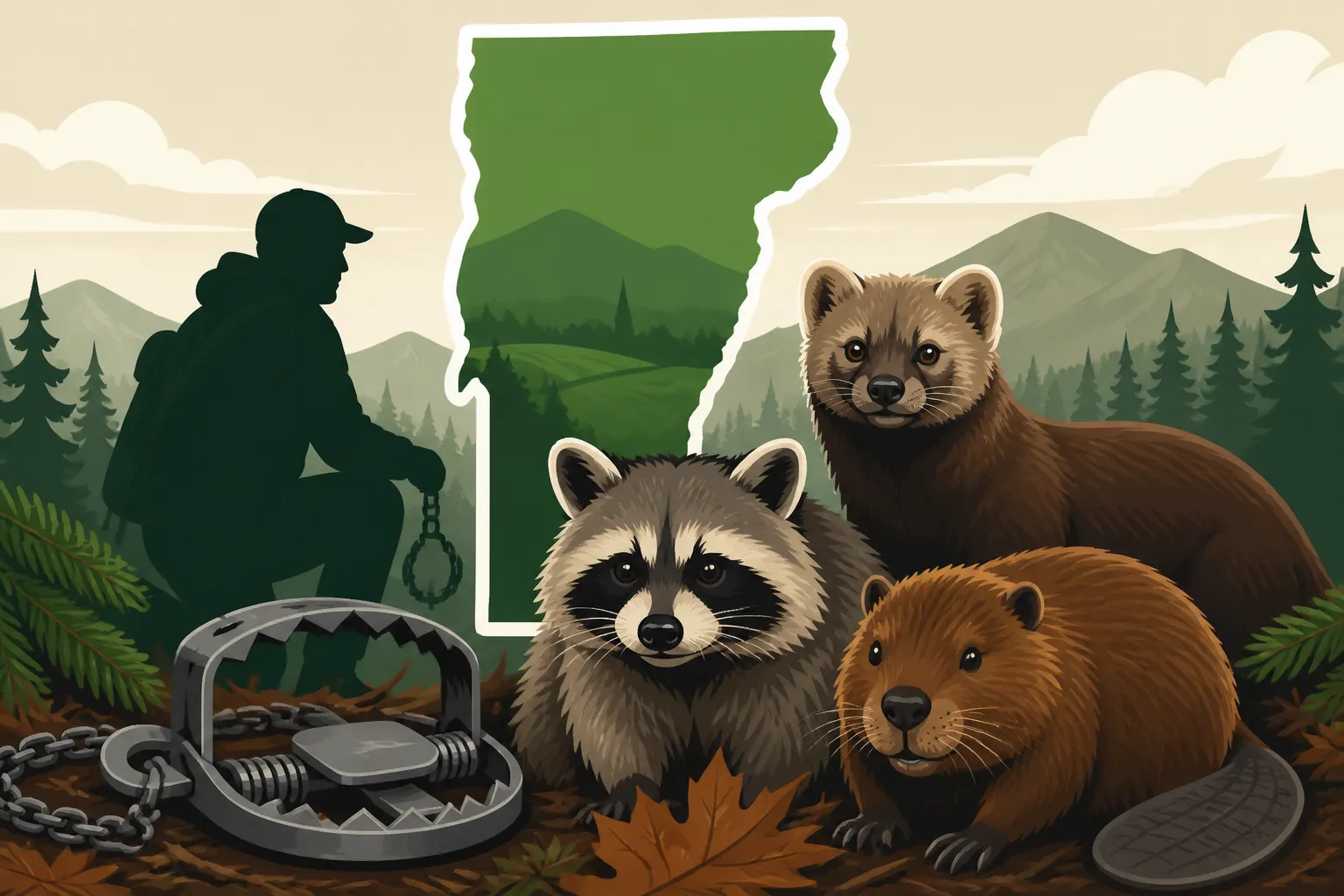
Conibear traps, or body-gripping traps, are designed to dispatch an animal quickly by striking its neck or torso. These are commonly used for aquatic furbearers like beaver and muskrat, and also for fisher and mink, often set in cubbies or underwater. Sizes range from the smaller #110 for mink and muskrat, to the powerful #330 for beaver. Snares, simple loops of cable, are highly effective for various furbearers, especially coyotes and beaver, but require specific knowledge of how to set them to ensure a quick, humane dispatch and avoid non-target catches. They are often restricted in their use due to safety concerns and are only permitted in certain circumstances or for specific species. Always verify current regulations regarding specific trap types, jaw spreads, and locking mechanisms. A quick glance at the table below shows common trap types and their primary uses.
| Trap Type | Primary Target Species | Common Sizes | Best Use Cases | Notes |
|---|---|---|---|---|
| Coilspring Foothold | Fox, Raccoon, Coyote, Bobcat | #1.5, #2, #3 | Dirt hole, flat sets, blind sets | Versatile, popular, often used with padded or offset jaws. |
| Longspring Foothold | Fox, Raccoon, Beaver, Otter | #1.5, #2, #3, #4 | Water sets, trail sets, dirt hole sets | Traditional design, good holding power. |
| Conibear (Body-grip) | Beaver, Muskrat, Mink, Fisher | #110, #160, #220, #330 | Underwater sets, cubby sets, run sets | Designed for quick, humane dispatch; strict setback rules apply. |
| Snare | Beaver, Coyote, Fox | Various | Drowning sets, trail sets, entanglement sets | Highly effective when used correctly; specific regulations apply. |
| Live Trap (Cage) | Raccoon, Skunk, Opossum | Various | Nuisance animal removal, residential areas | Allows for live release of non-target animals. Requires daily checks. |
When making your selection, consider not only the target species but also the terrain, water conditions, and the potential for non-target catches. Sometimes, a smaller, less powerful trap set in a strategic location is far more effective than an oversized trap placed haphazardly. Tools like those found on GoHunt can help trappers research different gear options and even read reviews from fellow outdoorsmen.
Baits, Lures, and Attractants
Once you have your traps, the next step is to draw your target furbearer into range, and that's where baits, lures, and attractants come in. These are designed to appeal to an animal's natural curiosity, hunger, or territorial instincts. Bait is typically a food item, such as beaver meat, fish, aged meat scraps, or sweet treats like marshmallows for raccoons. The fresher and more appealing the bait, the better. Lures, on the other hand, are concentrated scents designed to mimic animal glands, urine, or other strong odors that attract specific species. For instance, skunk essence is a common component in many bobcat and fisher lures due to its potent, long-lasting aroma. Gland lures are effective for appealing to the territorial instincts of canids like foxes and coyotes.
Attractants are broader categories, including visual attractants like feathers or strips of Mylar that catch the eye, or curiosity lures that simply make an animal investigate. The key to success is understanding what each furbearer is most interested in. For a beaver, fresh green cuttings of poplar or aspen might be more effective than a musky lure. For a fox, a good quality urine-based lure combined with a touch of a curiosity attractant can be irresistible. The best trappers often combine these elements: a food bait at the back of the set, a gland lure near the trap, and a curiosity lure slightly further out to draw attention. Experimentation and paying attention to what works in different conditions and for different species is crucial.
Setting and Concealing Traps Effectively
The art of trapping truly lies in the effective setting and concealment of your equipment. A perfectly chosen trap, bait, and lure are useless if the setup spooks the animal. For terrestrial sets, this means minimizing human scent, blending the trap into the natural environment, and ensuring the trap is stable and fires reliably. When creating a dirt hole set for fox or coyote, for example, the trap must be bedded rock-solid, covered with sifted dirt, and the area around it made to look as natural as possible. Any shiny metal, fresh disturbance, or unnatural pattern will alert a wary furbearer. Wearing clean gloves and minimizing the amount of ground you disturb are key elements of this process.
For aquatic sets, concealment takes on a different form. Underwater sets for beaver or muskrat rely on the animal's natural travel patterns and don't require visual concealment in the same way. However, the trap must be placed precisely in their runs or at pinch points where they are funneled directly into the trap's path. Ensuring drowning sets are effective is a critical ethical consideration for aquatic furbearers; this means ensuring sufficient water depth and an anchor system that prevents the animal from surfacing. For cubby sets targeting fisher or bobcat, the structure itself acts as concealment, but the trap must be placed far enough inside to ensure the animal commits to entering before firing. Mastering these techniques comes with practice, careful observation, and a willingness to learn from every set you make, successful or not.
Developing Your Trapline and Seasonal Considerations
A trapline isn't just a collection of traps; it's a strategically planned route designed to maximize efficiency and success. It involves careful scouting, adapting to seasonal changes, and committing to a daily routine that ensures both productivity and animal welfare.
Scouting and Location Selection
Before a single trap is set, extensive scouting is essential. This is where you learn the lay of the land, identify furbearer hotspots, and discover prime locations for sets. When Scouting Vermont Public Land Before Season, look for fresh sign: tracks, scat, chewed trees (for beaver), rub posts (for fox and bobcat), or den sites. Areas where different habitats meet—like a field edge bordering a dense woodlot, or a beaver flowage at the confluence of two streams—are often highly productive. Using mapping tools like GoHunt or the Vermont Fish and Wildlife App can help you identify potential travel corridors, water sources, and pinch points. Looking at aerial photos can reveal hidden swamps, old logging roads, or narrow strips of cover that animals are likely to use. You might even use the insights gained from Reading Aerial Photos for Green Mountain Deer and apply them to furbearer movements, as many of these animals share similar needs for cover and travel routes.
Pay attention to topography. Valleys and draws often funnel animals, while high ground might reveal less pressure from other trappers or hunters. Consider access points for yourself, ensuring you can reach your traps safely and efficiently, especially when laden with equipment or a harvested animal. It's not about finding any place to set a trap; it's about finding the best place, the spot that maximizes your chances of a humane, successful catch. This initial investment in time is often the biggest determinant of a successful season.
Seasonal Tactics for Different Furbearers
Vermont's seasons dictate much more than just opening and closing dates; they profoundly influence furbearer behavior and, consequently, your trapping tactics. Early fall, when water temperatures are still relatively warm, might be excellent for Vermont River Otter Trapping Season as they are highly active, but perhaps less ideal for fox or bobcat whose pelts are not yet prime. As winter approaches and temperatures drop, furbearers start to focus heavily on food sources. Beaver will be busily cutting and storing branches for their winter cache, making certain types of sets incredibly effective. Foxes and coyotes will be more active in their pursuit of small game like Vermont Snowshoe Hare Harvest Numbers might indicate.
Deep winter brings new challenges. Snow can conceal traps, but it also reveals clear travel patterns. Snowshoeing a remote Running a Trapline in Rural Vermont in January to check sets can be arduous but incredibly rewarding. Open water becomes scarce, funneling aquatic furbearers into remaining unfrozen areas, and terrestrial animals will concentrate around reliable food sources or thick cover for shelter. Spring, for those species with later seasons, means animals are more active after the winter, but also brings the challenge of less valuable pelts as animals begin to shed their thick winter coats. Adapting your bait choices, set locations, and trap types to these seasonal shifts is crucial for consistent success. A lure that works wonders in October might be ignored in December.
Daily Routine and Maintenance
Running a trapline is a commitment, a daily routine that becomes as ingrained as any other chore. Vermont regulations require most traps to be checked every 24 hours, but many trappers check even more frequently, especially during peak activity times or in freezing conditions. This daily check is critical for animal welfare, allowing for humane dispatch or release of non-target animals, and also ensures your traps remain functional. Ice, snow, leaves, or debris can foul a trap, rendering it useless. Freezing rain can coat everything, requiring careful cleaning and sometimes even re-setting.
Beyond checking, daily maintenance involves addressing any issues: resetting sprung traps, replenishing bait and lure, and adjusting sets that aren't producing. It's also an opportunity to re-scout and observe new sign. Did a new set of tracks appear overnight? Is a specific bait being ignored? These observations inform your next moves. Keeping accurate records of your sets, successes, and failures can be incredibly helpful for future seasons. Tools like those provided by GoHunt can offer mapping capabilities that help manage your trap locations, mark signs, and plan your daily route more efficiently, especially if you have a sprawling trapline. Remember, consistency and attention to detail are the hallmarks of a successful and ethical trapper.
Responsible Harvest and Pelt Preparation
The culmination of a trapping effort is the responsible harvest and preparation of the furbearer. This final stage is as critical as any other, demanding respect for the animal, adherence to ethical practices, and the skill to properly prepare the pelt for market.
Humane Dispatch and Handling
When a furbearer is caught, the first priority is humane dispatch. Trappers are trained in methods that ensure a quick and clean end to the animal's life, minimizing stress and suffering. This is a non-negotiable aspect of ethical trapping. For animals caught in foothold traps, a sharp blow to the head or a carefully aimed shot with a .22 caliber firearm are common, humane methods. For conibear traps, if properly set, the animal should be dispatched quickly and humanely by the trap itself. It's important to have a clear understanding and proficiency in these techniques before you ever set a trap. Never leave an animal to suffer.
Once dispatched, handle the animal respectfully. Carry it by the hind legs to avoid damaging the pelt. If you're out on the trapline for an extended period, especially in warmer weather, consider how you will keep the animal cool to preserve the fur and meat. Some trappers carry insulated bags or head directly back to their processing area. The goal is to move from capture to dispatch to initial processing as efficiently and ethically as possible.
Skinning, Fleshing, and Stretching
Proper pelt preparation is an art form in itself, directly impacting the value of the fur. This process generally involves three main steps: skinning, fleshing, and stretching (or drying). Skinning must be done carefully to avoid cuts or holes in the hide, which reduce its value. Different furbearers are often skinned either "cased" (like pulling off a sock, leaving a tube of fur) or "open" (cut down the belly). Most furbearers like fox, raccoon, and muskrat are cased-skinned, while beaver are typically open-skinned.
Fleshing is the process of removing all meat, fat, and membrane from the underside of the hide. This is crucial for preventing spoilage and ensuring the pelt dries properly. It's often done with a fleshing knife on a beam, requiring considerable skill and practice. Any remaining fat or flesh can "burn" the fur or attract insects, ruining the pelt. Finally, stretching involves placing the fleshed pelt on a stretcher board, shaped specifically for the species, to dry. The pelt is pulled taut to ensure an even shape and maximize its size. Proper stretching also aids in the drying process, ensuring the fur remains prime. The length of time required for drying depends on humidity and temperature, but typically ranges from several days to a couple of weeks in a cool, dry, well-ventilated area.
Marketing and Selling Your Furs
After all the hard work on the trapline and in the fur shed, the final step is selling your furs. The fur market is dynamic, influenced by fashion trends, international demand, and global economic conditions. You'll need to stay informed about current market prices for different species. Historically, fur buyers operate regionally, either through direct purchases, auction houses, or cooperative sales. Many states have established fur buyer directories.
In Vermont, you might find local buyers who visit periodically or attend regional fur sales. Online platforms and associations also exist, connecting trappers with buyers. The quality of your pelt—its primeness, lack of damage, and meticulous preparation—will be the primary factor in determining its value. A well-skinned, fleshed, and stretched pelt will always command a better price than one that shows signs of haste or inexperience. Engaging with fellow trappers, perhaps through local associations, can provide invaluable insights into current market conditions and reputable buyers. This entire process, from setting the first trap to selling the final pelt, truly honors the animal and the tradition of trapping.
Disclaimer
Trapping regulations and best practices can change. Always consult the latest Vermont Fish & Wildlife Department regulations before engaging in any trapping activities. This article is for informational purposes only and does not constitute legal advice. Adhere to all local, state, and federal laws.