Using a Ground Blind on Public Land
Hunting public land in Vermont presents a unique set of challenges, from navigating varied terrain to contending with other hunters. For many, the idea of setting up a ground blind on these pressured lands can feel daunting, leading to frustration when trying to find an effective, discreet, and legal setup. This guide aims to break down the complexities of using ground blinds effectively on Vermont's public lands, offering practical advice to help you maximize your success and comfort.
The Appeal and Challenges of Ground Blinds on Public Land
Ground blinds offer a distinct advantage for hunters looking for concealment and comfort, but deploying them effectively on public land requires a nuanced approach. It’s not simply a matter of popping one up; there are specific considerations that can make or break your hunt, and indeed, keep you compliant with state regulations.
Why Ground Blinds Make Sense (and Where They Don't)
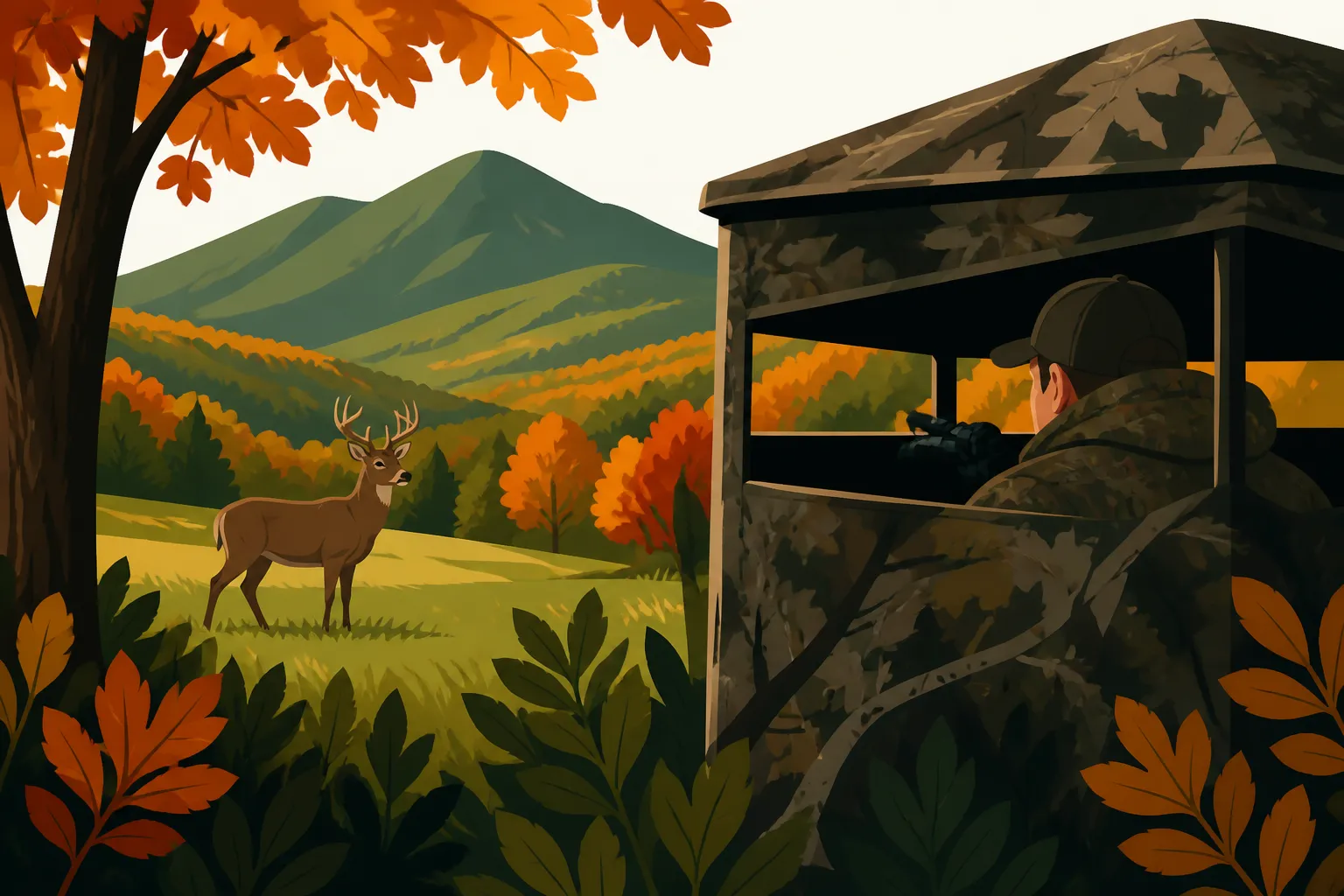
Imagine trying to set up a treestand in an area of Green Mountain National Forest that's devoid of suitable trees, or maybe the canopy is too thick for a clear shot. This is where ground blinds truly shine. They offer unmatched flexibility, allowing you to hunt spots that would otherwise be inaccessible with a treestand. Think about a dense spruce thicket bordering a cut cornfield, or a small, overlooked beaver flowage where the only cover is low to the ground. A good ground blind can turn these marginal spots into prime hunting locations. They're also fantastic for late-season hunts when foliage is gone, providing critical warmth and protection from biting winds and snow. You can easily brush in a blind on a field edge, becoming virtually invisible to weary deer.
However, ground blinds aren't a one-size-fits-all solution. They might not be the best choice for actively scouting new territory where mobility is key, or in extremely open terrain where they stick out like a sore thumb without significant brushing in. They can also limit your field of view compared to a treestand, especially if you're hunting steep, broken terrain where deer might appear from any direction. For hunts that require seeing long distances, like glassing a clear-cut for a bull moose, a blind might hinder more than help, unless strategically placed on a high vantage point that offers a clear shooting lane. Consider the specific cover and shot distances of your chosen hunting area before committing to a blind.
The Unique Hurdles of Public Land Blind Use
Public land comes with its own rulebook, and ignoring it can lead to legal troubles or, at the very least, a ruined hunt. One of the biggest challenges is compliance with regulations. While Vermont generally allows the use of portable ground blinds on public lands, leaving them unattended for extended periods, especially overnight or outside of specific hunting periods, can be problematic. You often need to remove your blind at the end of each hunting day, which means you can’t simply set it and forget it. This constant setup and takedown can be a hassle, particularly if you’re trying to pack in deep into the backcountry. Always check the specific rules for the Wildlife Management Area (WMA) or state forest you plan to hunt; some have stricter guidelines on structures.
Another significant hurdle is hunting pressure. Public land often sees more hunters, and a poorly placed or unbrushed blind can quickly draw unwanted attention or, worse, become a target for theft or vandalism. Finding ground others walk past becomes paramount. You're not just concealing yourself from game, but often from other people. This means choosing obscure locations and taking extra steps to ensure your blind blends seamlessly with the natural environment. Also, unlike private land where you might have exclusive access, you run the risk of another hunter already occupying your chosen spot or even hunting near your blind, which can disrupt your hunt and create safety concerns. Ethical considerations and being a good steward of shared resources are key when using ground blinds on public land.
Scouting and Placement for Success
Successful ground blind hunting on public land starts long before you ever deploy your blind. It hinges on thorough scouting and strategic placement, turning a piece of ground into a calculated advantage.
Reading the Landscape for Ground Blind Opportunities
Effective scouting is the bedrock of any successful public land hunt, and it's especially critical for ground blind placement. You need to identify areas with high deer traffic and natural funnel points that force game movement, like a narrow strip of timber between two open fields or a saddle in a ridgeline. Look for fresh sign: tracks, rubs, scrapes along a logging road, and droppings will tell you where deer are active. Identifying late-season food sources for Vermont whitetails, such as abandoned apple orchards or oak flats, can also point you to prime blind locations. Don't just look for deer sign; consider the terrain. Steep ravines, dense swamps, or thick stands of softwood can offer natural barriers that funnel deer movement into predictable corridors.
Mapping tools are invaluable here. Services like GoHunt or even the Vermont Fish and Wildlife App can provide detailed aerial photos and topographic maps, allowing you to virtually scout potential hotspots from home. You can identify property lines, locate hidden clearings, or even pinpoint specific features like beaver flowages or old logging roads that might act as game trails. Pay close attention to changes in elevation and vegetation type – deer often use these transitions as travel routes. When you eventually get boots on the ground, confirm your findings and look for secondary trails or bedding areas nearby. The goal is to find a spot where deer want to be, and where they have to pass through in a predictable manner. For more detailed insights, consider scouting with the Vermont Fish and Wildlife App to understand specific land features and public access points.
Strategic Placement for Concealment and Shot Opportunity
Once you've identified a promising area, the real art of ground blind placement begins. Your blind needs to be virtually invisible to approaching game, and it needs to offer clear, ethical shooting lanes. Don't just plop it in the middle of a field; instead, position it along an existing edge, like a fencerow for late-season deer, or nestled against a thick cluster of evergreens. Use the natural cover to your advantage. A blind placed at the base of a large maple or tucked into a dense brush line will break up its outline far more effectively than one in open air. For example, when hunting a funnel between two woodlots, position your blind slightly off the main trail, allowing deer to pass naturally without immediately sensing your presence.
Wind direction is paramount. Always set up with the prevailing wind in mind, ensuring your scent is carried away from the likely approach routes of deer. This often means facing into the wind, but understanding wind and thermals in steep Green Mountain terrain is critical for success. Consider the sun's position throughout the day to avoid being silhouetted or having direct sunlight glare into your blind. Finally, clear your shooting lanes meticulously. Don't leave branches or saplings that could deflect an arrow or bullet. A good rule of thumb is to create a few clear shooting windows that cover the most likely travel paths, while keeping the rest of the blind camouflaged and tight. A well-placed blind makes you an invisible observer, giving you the upper hand.
Setting Up and Hunting from Your Blind
Getting your ground blind set up and actively hunting from it requires attention to detail, from brushing it in to managing your scent and movement. It's about blending in and becoming part of the landscape.
Brushing In and Minimizing Your Footprint
The moment you pull your ground blind out of its bag, it's an unnatural object in the woods. Your priority must be to make it disappear. This means thorough brushing in. Don't just toss a few branches on top; actively integrate the blind into its surroundings. Cut small branches, saplings, and weeds from the immediate area (being mindful of public land regulations on cutting vegetation) and weave them into the blind's exterior loops. Use natural materials like ferns, pine boughs, or deciduous branches that match the surrounding vegetation. If you're hunting near a standing apple orchard, use apple branches. If you're in a softwood thicket, use evergreen boughs. This makes your blind blend in seamlessly.
Beyond camouflage, minimize your footprint. When you arrive, be quiet and efficient. Avoid breaking branches or leaving obvious trails to your blind. Clear a small, level area inside the blind for your chair and gear to ensure comfort and stability, but don't create a large, disturbed area around the exterior. When you leave, take everything with you, including any trash or leftover brushing materials that don't look natural. The goal is for deer to walk past your blind, unaware of its presence, both when you're in it and when you're not. Remember, respecting the environment is part of the hunting ethos.
Essential Considerations While Hunting from a Blind
Hunting from a ground blind offers comfort and concealment, but it requires discipline. Even though you're hidden, movement inside the blind can still spook wary deer. Keep your movements slow and deliberate, especially when reaching for calls, binoculars, or your weapon. Minimize noise; ensure your gear isn't clanking against itself or the blind frame. When opening shooting windows, do so slowly and quietly.
Scent control remains paramount. Even in a blind, your scent can swirl and betray your position. Use scent-eliminating sprays, wash your hunting clothes in scent-free detergent, and store them in sealed bags. Consider the wind direction and how it interacts with the local thermals, particularly in the hilly terrain typical of much of Vermont. A slight shift in wind can carry your scent further than you'd expect.
Stay vigilant. While the blind offers a comfortable sit, don't let your guard down. Constantly scan your surroundings through the mesh windows, using your binoculars to pick apart distant cover. Having an app like GoHunt can help you keep track of property lines, making sure any shot you take is on legal hunting ground. Be prepared for opportunities to arise quickly; deer can materialize silently out of the woods.
Here's a quick checklist for ground blind use on public land:
| Consideration | Public Land Best Practice |
|---|---|
| Legal Compliance | Check WMA/State Forest rules for blind duration, cutting. |
| Concealment | Brush in extensively; match local vegetation. Avoid open spots. |
| Scent Management | Always play the wind; full scent regimen is crucial. |
| Noise & Movement | Slow, deliberate actions; silent gear. |
| Footprint | Leave no trace; pack out all materials. |
| Scouting | Use maps (GoHunt, VT F&W App), ground scouting for funnels. |
| Visibility | Clear shooting lanes; avoid sun glare; scan frequently. |
| Safety | Wear blaze orange when walking to/from blind during rifle season. |
Remember that being aware of Vermont's new archery-rifle overlap rule means you'll need to wear appropriate blaze orange if hunting with a bow during the rifle season in your ground blind. For bowhunters, ensuring your bow setup for hunting during rifle season is ready, and that you have the right broadheads and arrows for Vermont archery, is also key. Whether you're targeting deer during Vermont's regular archery season into December or even trying for small game like squirrel hunting Vermont hardwoods from a static position, the principles of proper blind use remain the same. And if you're venturing out for something bigger, don't forget the proper packing for a Northeast Kingdom moose hunt, even if a blind isn't your primary method. Knowing where Vermont bucks bed in thick cover can also guide your blind placement, especially in pressured public areas.
Using a ground blind on public land can be incredibly effective when done correctly. It allows you to become one with the environment, observing game undetected. With careful scouting, strategic placement, and diligent in-blind behavior, you can transform overlooked pockets of public land into your next successful hunting spot.
Disclaimer
Please be aware that hunting regulations in Vermont, including those pertaining to ground blinds and public land use, can change. Always consult the most current Vermont Fish & Wildlife Department regulations before heading afield to ensure compliance with all laws and ethical hunting practices. This guide is for informational purposes only and does not substitute for official regulations or professional advice.