Deer Drives With Three or Four Hunters
It's easy to feel intimidated when you think about organizing a deer drive, especially if you're picturing those large, traditional groups you see in old hunting films. The reality for many of us in Vermont, though, is that we often hunt with a smaller crew – maybe just three or four reliable friends. Trying to cover enough ground or push deer effectively with such a limited number can feel like a real puzzle, leading to frustration and often, empty handed walks back to the truck. This guide is here to break down how to make those small-group deer drives not just feasible, but genuinely successful and safe, by focusing on smart strategies that maximize every hunter's contribution.
The Nuances of Small-Group Deer Drives
Hunting deer effectively with a small contingent of three or four hunters requires a completely different mindset and strategy than a large, organized drive. You can't just spread out and expect to cover every acre of a big woodlot. Instead, you need to be surgical, smart, and prioritize quality over sheer volume of ground covered. It’s about leveraging the intimate knowledge of the land and the communication strengths of a tight-knit group.
Understanding Your Limitations and Strengths
When you only have a few people, the most obvious limitation is the amount of real estate you can effectively push. Forget about driving a square mile of dense forest; it's simply not going to happen efficiently or safely. This is where many small groups get it wrong, trying to emulate bigger drives and ending up with deer slipping out the sides, or worse, hunters out of position. However, this limitation is also a strength. With fewer people, communication can be much tighter and more precise. You can be incredibly nimble, adapting your plans on the fly based on fresh sign or unexpected deer movement.
Instead of trying to clear a huge section, focus your efforts on smaller, more defined parcels of land. Think about narrow strips of cover, brushy ravines, small woodlots, or even just thick fingers of timber that jut out into open fields. These smaller areas are where a compact group can truly shine, creating just enough pressure to move deer out of their beds or preferred hiding spots, but in a controlled direction. You’re not trying to push deer for miles; you’re trying to nudge them a few hundred yards past a waiting stander.
Defining Roles for Maximum Efficiency
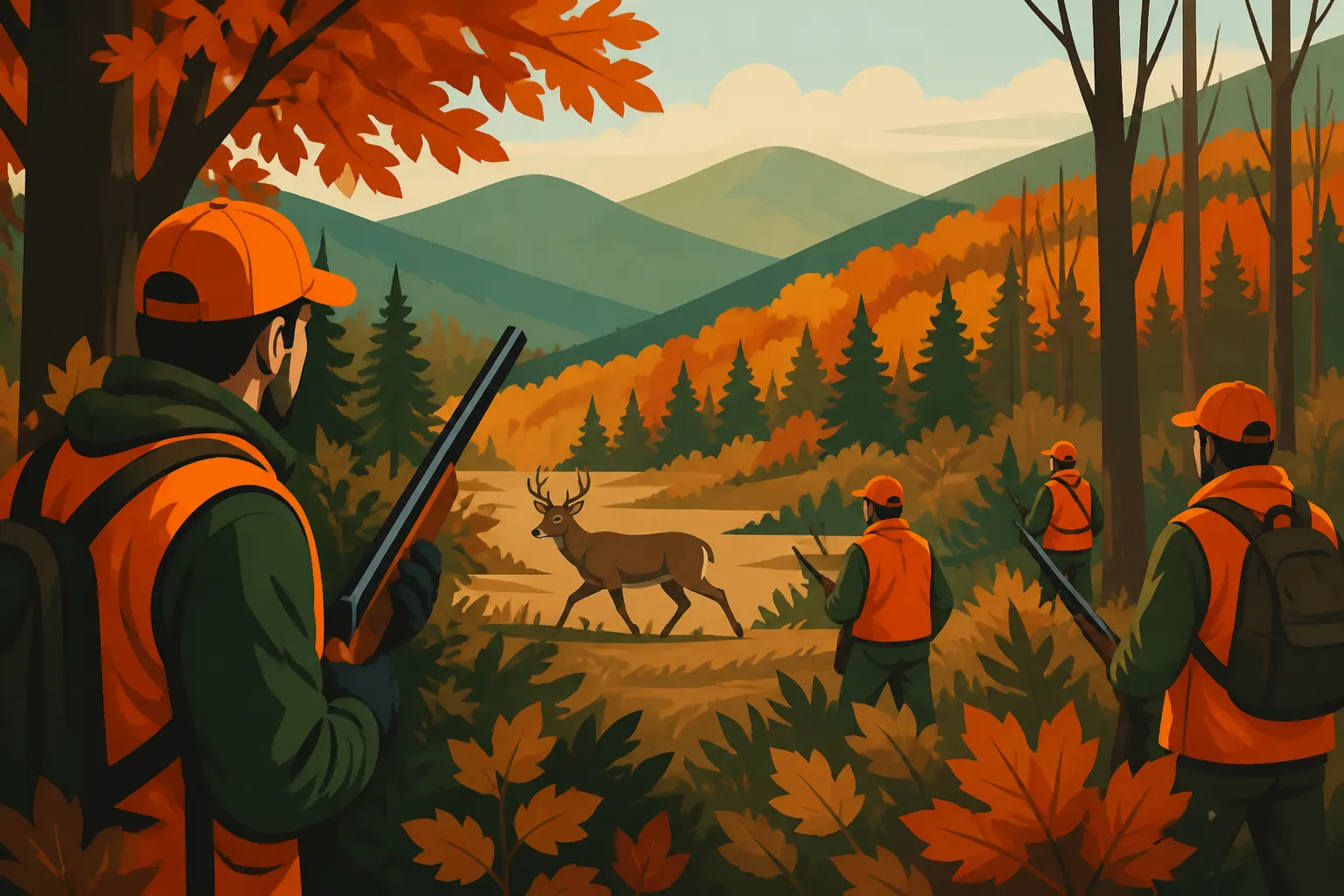
Every single person in a small-group drive needs a clear, defined role, and everyone needs to understand the plan inside and out. There's no room for freelancing or miscommunication. Typically, with three or four hunters, you'll have one or two "drivers" and two or three "standers" (also sometimes called blockers or posters).
The driver(s) are the ones making the noise, moving through the cover, and applying the pressure. Their job is not just to walk, but to be mindful of the terrain, watch for escape routes, and keep a steady, controlled pace. They might make noise by calling, shouting, or simply crashing through brush, depending on the desired effect. In Vermont’s Green Mountain terrain, a driver might have to navigate some seriously thick stuff, from dense softwood stands to tangled blowdowns, requiring stamina and patience. They need to understand the wind, the thermals, and where the deer are most likely to try and escape.
The stander(s) are positioned along the anticipated escape routes, waiting for the deer to come to them. Their role is often considered the "glamorous" one, as they get the shot opportunity, but it requires immense patience, stealth, and an unwavering commitment to safety. A stander must be absolutely silent, scent-conscious, and strategically placed where they have a clear, safe shooting lane and a solid backdrop. Their primary focus isn't just on shooting a deer, but on ensuring the safety of the drivers and other standers. Remember, clear assignments for each person aren't just about success; they're fundamentally about preventing accidents.
Strategic Planning for a Successful Vermont Drive
A small deer drive isn't something you just show up and wing. It requires diligent pre-season scouting and meticulous planning on the day of the hunt. This preparation is what turns a hopeful walk in the woods into a productive hunting strategy.
Scouting and Identifying Key Terrain Features
Before you even consider running a drive, you need to know the ground intimately. This means scouting, and lots of it. Focus on identifying natural funnels, pinch points, and, most importantly, where Vermont bucks bed in thick cover. Deer are creatures of habit, and they'll often use the same escape routes when pressured. Your job is to find those routes.
Start by looking at topographic maps and satellite imagery. Tools like GoHunt can be invaluable here, allowing you to identify elevation changes, dense cover, and potential travel corridors from the comfort of your home. Look for saddles between ridges, narrow strips of timber between open fields, and creek bottoms that serve as natural highways. These are your prime locations for standers. Then, get boots on the ground. Walk the property, look for fresh tracks, rub lines, and scrapes. Pinpoint the thickest bedding areas where deer feel safe. These will be your starting points for the drive. For example, if you find a dense stand of young hemlock on a south-facing slope that’s littered with deer sign, that’s a perfect candidate for a drive. You can almost guarantee deer will be holed up there during daylight hours.
You want to think about how deer move naturally when undisturbed, and then how they might react when pressure is applied. Knowing where the deer feel safe, like a secluded corner of a Green Mountain deer yard, allows you to predict their likely flight paths.
Crafting the Drive Route and Stander Placement
Once you've got a good handle on the terrain, it's time to craft the drive route and place your standers. This is where the artistry comes in. The goal isn't to chase deer blindly, but to gently funnel them towards your waiting hunters.
Consider a situation where you have a small, dense woodlot bordered by an open field on one side and a steep ravine on another. Your best bet might be to have one or two drivers enter the thickest part of the woodlot from the downwind side, pushing deer towards the open field edge, where you've strategically placed your standers. The ravine might serve as a natural boundary, preventing deer from easily escaping in that direction. Remember to account for the wind and thermals in steep Green Mountain terrain. Deer will almost always try to circle downwind of the drivers to scent-check what’s pushing them. Your standers should be positioned downwind of the anticipated escape path, but also considering wind direction relative to them to avoid being scented.
A critical aspect of planning is knowing how to effectively cover the escape routes. This often means posting a drive around a woodlot, positioning standers at key pinch points or along natural funnels that deer are likely to use when pushed. Avoid placing standers in open, vulnerable positions where they'd be easily spotted or would have unsafe shots. Always have a clear understanding of where each hunter will be positioned and their maximum safe shooting lanes. Communication before the drive, outlining these details, is paramount.
Here's a quick breakdown of typical roles in a small-group drive:
| Role | Number (3-4 Hunters) | Primary Responsibilities | Key Considerations |
|---|---|---|---|
| Driver(s) | 1-2 | Apply pressure, move deer, stay aware of stander positions | Maintain controlled pace, make consistent noise, know escape routes, be aware of "Hunting Pressure on Vermont Public Land" |
| Stander(s) | 2-3 | Wait silently, observe, take ethical shots, ensure safety | Positioned for clear shots/backdrops, scent control, understand expected deer movement, absolute silence is key |
When positioning standers, think about locations like where a logging road intersects a deep ravine, or a narrow strip of hardwoods that separates two large agricultural fields. These areas naturally concentrate deer movement, making them ideal ambush points. Don't forget that using a ground blind on public land can give a stander an advantage in terms of concealment, especially in areas with sparse natural cover.
Executing Your Drive Safely and Effectively
Even the best-laid plans can fall apart without proper execution. When it comes to small-group deer drives, this means unwavering commitment to safety protocols and a keen understanding of how to apply just the right amount of pressure.
Communication is King: Hand Signals and Radios
With only a few people, clear and consistent communication is absolutely non-negotiable. Before anyone even sets foot in the woods, the entire group must review the plan, including the exact route for drivers, the precise locations for standers, and all known boundaries and potential hazards.
Once the drive starts, verbal communication might be limited to maintain stealth, especially for standers. This is where pre-determined hand signals, whistle blasts, or two-way radios become invaluable. If using radios, ensure they are reliable, fully charged, and everyone understands the protocol (e.g., call signs, brief messages only, silence when deer are spotted). In Vermont's dense, undulating woods, cell service can be spotty at best, so don't rely on cell phones for in-drive communication. Drivers might use occasional, controlled vocalizations or horn blasts to signal their progress and presence, ensuring standers are aware of their location and can maintain safe shooting lanes. The standers, on the other hand, should remain absolutely silent. Any sudden movement or noise from a stander can spook deer prematurely or alert the drivers to an unsafe condition.
It’s crucial to establish a "stop" signal, too. If a driver realizes they're pushing deer in an unexpected direction, or if a stander sees something unsafe, they need a way to immediately halt the drive. This might be a specific whistle pattern or a pre-arranged radio code word.
The Art of Driving: Pace and Pressure
The drivers in a small group aren't trying to run deer at full speed through the woods. That typically leads to deer blowing out far ahead of the standers, or worse, doubling back through the drive. Instead, think of it as a methodical push, aiming to ease the deer out of cover and direct them towards the standers.
The pace should be slow and deliberate. Drivers should pause frequently, listening for deer moving ahead, or for signals from standers. Making consistent, moderate noise is more effective than sporadic, loud bursts. This might involve calling out occasionally, tapping trees with a stick, or simply making a steady amount of noise as you walk through thick brush. Imagine you're trying to gently herd sheep, not scare them into a stampede. This allows deer to move naturally, sometimes even walking right past a stander without realizing they are there, rather than bolting in a full-out run.
Drivers should also be constantly scouting as they move, looking for fresh tracks or changes in the terrain that might alter a deer’s escape route. If the deer aren't moving in the anticipated direction, or if they seem to be holding tight, the driver might need to adjust their line or increase the pressure slightly. This is where the communication with standers becomes vital – a stander might radio a driver to say "Deer are breaking right, push harder on the left."
The success of these drives often hinges on the drivers’ ability to read the woods and the deer's behavior in real-time. For example, if you're hunting a funnel between two woodlots, and the deer are consistently trying to sneak around the end, the driver might need to angle their push slightly to cut off that escape. Remember that during Vermont’s November rifle season, deer drives with three or four hunters can be incredibly effective when planned and executed properly, especially during the rut when bucks are less cautious.
After the Drive: Tracking and Recovery
The hunt doesn't end when the shot rings out. The responsible hunter knows that the true measure of success lies in a clean, ethical harvest and a diligent recovery. This is especially true when working with a small group, where every pair of eyes and every bit of experience counts.
Post-Shot Protocol and Waiting Periods
If a shot is taken, the first thing is always to confirm a hit. Was it a good hit? Did the deer react? Which direction did it run? Drivers should stop their push immediately and listen. Standers should mark the exact spot where the deer was standing when shot, and where it was last seen. These details are critical for a successful recovery.
Once a hit is confirmed, the immediate urge is often to rush after the animal. Resist this urge. A waiting period is almost always beneficial, especially with uncertain hits. For a deer that appears solidly hit (e.g., lung shot, heart shot), a wait of 30 minutes to an hour is usually sufficient. For questionable hits (e.g., gut shot, leg shot), you might need to wait 4-6 hours, or even until the next morning if the weather allows. This allows the animal to bed down and expire, rather than being pushed further, complicating the recovery process significantly. While waiting, use the time to gather gear: a good flashlight (or headlamp if it's getting dark), extra flagging tape, and a first-aid kit are essential. This is also a good time to call on your GoHunt mapping app to mark the last known location and plot potential recovery routes.
When you do start tracking, move slowly and deliberately. The person who took the shot should ideally lead the initial blood trailing, as they have the freshest memory of the event.
Effective Blood Trailing and Recovery Techniques
Blood trailing can be one of the most challenging, yet rewarding, aspects of hunting. With a small group, you can leverage multiple sets of eyes to make this process much more efficient. Instead of everyone looking at the same spot, spread out slightly, forming a line, and call out every speck of blood, broken twig, or disturbed leaves. This grid-like search can be incredibly effective, especially when blood trails are sparse.
If you’re lucky enough to be hunting after a fresh Green Mountain snow, tracking a deer in fresh green mountain snow can make things easier, as even minimal blood sign can be stark against the white. However, if the ground is dry, or the blood trail is thin, you’ll need to rely on other signs: disturbed leaves, broken branches, matted grass, and even the smell of gut contents if it was a gut shot. Mark your last known blood or sign frequently with flagging tape so you can always go back to the last good spot.
Sometimes, despite your best efforts, darkness falls before you can recover the animal. Knowing the rules for blood trailing after dark in Vermont is important; generally, you can continue tracking with a light, but check local regulations or call the Vermont Fish & Wildlife Department if you have any doubts. Recovering a deer from a steep ravine or thick cover often requires teamwork, so having a small, reliable crew is a huge advantage for physically extracting the animal. Remember to field dress a deer in cold weather quickly to preserve the meat, and then get it to registration as required.
Disclaimer
Please be aware that hunting regulations and laws can change. Always consult the most current Vermont Fish & Wildlife Department regulations before planning or participating in any hunting activity. Safety should always be your number one priority when hunting.