Late-Season Food Sources for Vermont Whitetails
As the vibrant hues of autumn fade and the Green Mountains settle into their quiet, frigid embrace, many deer hunters find themselves facing a daunting challenge: where did all the deer go? It's a common frustration when the landscape turns stark, and those lush early-season food plots are buried under snow or simply picked clean. This guide is dedicated to helping you unravel the mystery of finding those elusive late-season food sources for Vermont whitetails, helping you stay connected to deer movement when the mercury drops.
Understanding the Shift in Late-Season Deer Diets
When November rifle season ends and the chill of December truly sets in, a whitetail deer's priority shifts dramatically. Their metabolism slows, but their need for high-energy food sources becomes absolutely critical for survival. They're not just looking for a snack; they're trying to pack on or maintain every ounce of fat to make it through the harsh Vermont winter. This means their dietary preferences narrow significantly, focusing on the most calorie-dense and digestible options available. It's a game of survival, and understanding this drives your late-season hunting success.
The Decline of Early-Season Staples
Think back to early archery season in September or October. Deer were likely feasting on succulent alfalfa fields, tender new growth in clear-cuts, or perhaps those coveted early-dropping apples. These high-moisture, easily digestible foods are abundant and attractive when the weather is mild. However, by late November and into December, most of these ephemeral sources are either gone, frozen solid, or covered by snow. An apple orchard that was a deer magnet in October might be utterly devoid of deer sign by late season, save for a few frozen, shriveled remnants. The deer have moved on, and so must your scouting efforts.
Prioritizing Energy-Rich Foods
In the late season, whitetails are essentially looking for fuel. They need carbohydrates and fats to generate body heat and sustain themselves when temperatures plummet and natural forage becomes scarce. This leads them to concentrate on specific food types that offer the best return on investment for their foraging efforts. We're talking about foods that pack a punch, not just filler. Scouting these critical areas means you're looking for survival grounds, not just feeding areas. The deer that stay robust through December and into January are the ones who have efficiently located and utilized these energy-rich havens.
Key Late-Season Food Sources in Vermont
Vermont's diverse landscape offers a variety of late-season food sources, but knowing what to look for and where to find it is key. From the dense hardwoods to the agricultural valleys, each region will have its own primary attractants that deer will absolutely key in on. It's not just about finding any food, but the right food that provides the most bang for their buck, nutritionally speaking.
Hard Mast: The Sustenance King
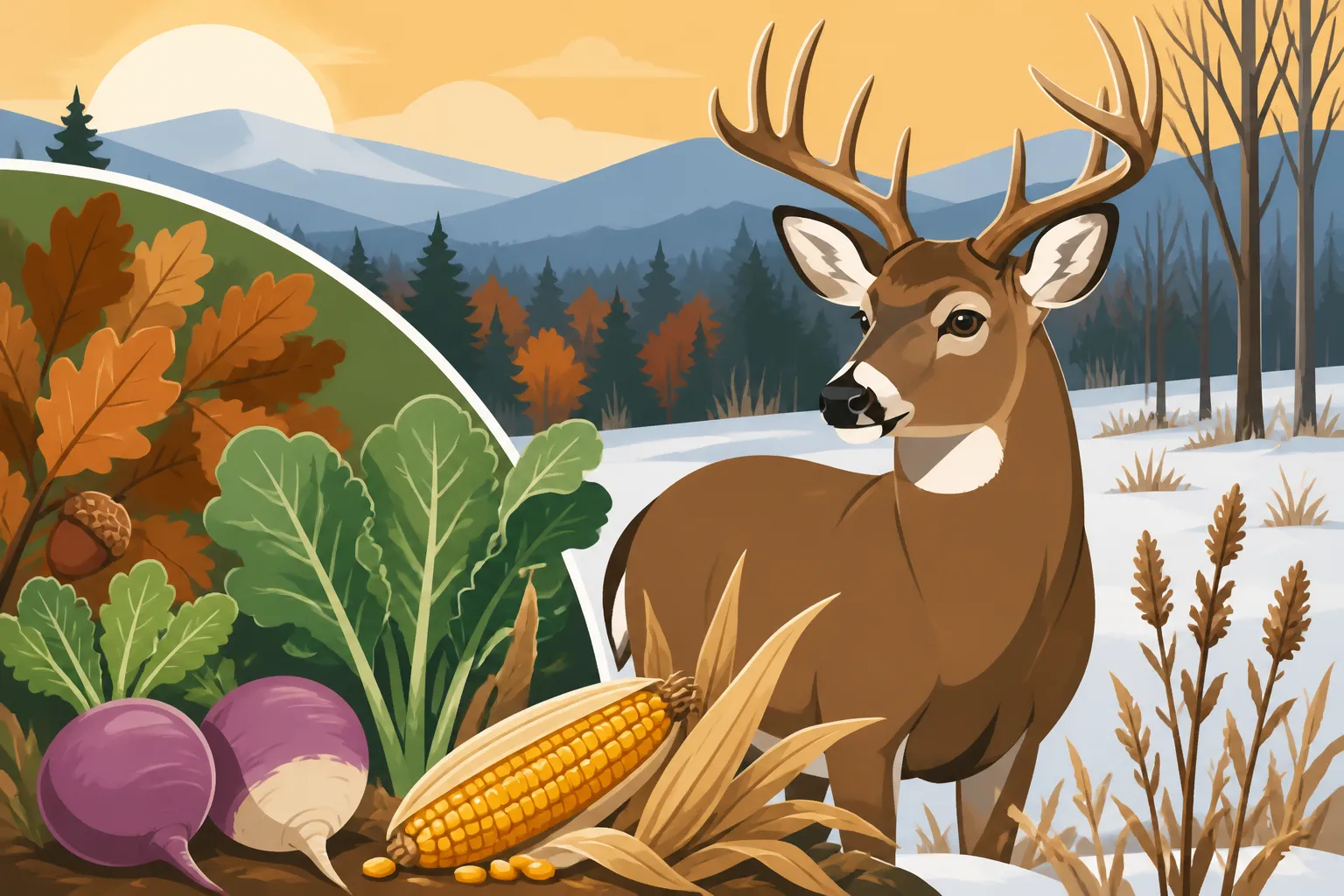
When it comes to late-season sustenance, hard mast, primarily acorns and beechnuts, reigns supreme. If you had a good mast crop in the fall, those nuts, even if covered by a few inches of snow, are gold for whitetails. Acorns, especially from red oaks, tend to persist longer on the ground and can even be dug up by deer. Beechnuts, though smaller, are incredibly high in fat and protein, making them a premium food source. After a poor acorn year, deer will be even more reliant on whatever remaining mast they can find.
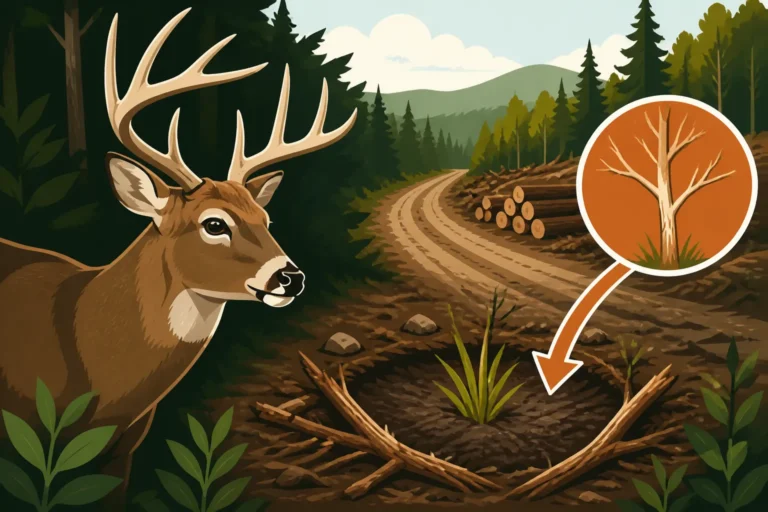
Deer will spend significant time pawing through snow and leaves to get to these calorie-dense treasures. I’ve seen deer in the Northeast Kingdom meticulously work over a beech ridge long after the first snows, often leaving behind tell-tale craters where they’ve rooted around. Identifying these ridges and stands of mature oak during your summer and fall scouting is critical, as they become undeniable magnets when other options disappear. This type of scouting early in the year, sometimes even using tools like GoHunt to mark specific tree clusters, will pay dividends when winter arrives.
Persistent Soft Mast
While most soft mast like apples and berries disappear quickly, some varieties can persist into the late season, especially during milder winters or in areas with specific microclimates. Wild apples, if they haven't been completely consumed by bears and other wildlife, can still offer a sweet, high-sugar treat that deer crave. Look for trees whose fruit is still clinging or has recently dropped and isn't entirely frozen or rotted. These are often in older clearings, overgrown pastures, or along forgotten stone walls.
Hawthorn berries and some varieties of crabapples can also last well into winter, providing an emergency food source. These aren't typically primary attractants like a standing cornfield, but they can draw deer, especially during particularly lean times. I remember one December hunt in southern Vermont where a small, isolated hawthorn thicket was absolutely hammered by deer, a last resort for them before really buckling down in a deer yard.
Agricultural Fields: Leftovers and Regrowth
For hunters in Vermont's agricultural zones, particularly the Champlain Valley, agricultural fields remain a critical late-season food source. Standing corn is arguably the best late-season draw, offering both food and cover. If farmers haven't harvested all their corn, or if they've left rows standing for wildlife, deer will flock to these fields. The high carbohydrate content of corn is exactly what they need to build and maintain fat reserves. Entry routes through a cut cornfield will show heavy deer traffic as they move to and from these remaining food sources.
Even after corn is harvested, deer will scavenge fallen kernels, sometimes for weeks. Hayfields, while not as calorie-dense, can offer winter wheat or clover regrowth if the snow isn't too deep, providing a green bite that deer will seek out. Soybean fields, if present, also provide valuable protein. It's always worth checking with local landowners to see which fields are still active or have standing crop, as this intel is golden. Many a mature buck has been taken along the edge of a standing corn field for deer, especially with a patient hunter employing a cold-weather sitting strategy in the Northeast Kingdom or other farming areas.
Browse: The Winter Staple
Once hard mast is buried and agricultural pickings are slim, browse becomes the default, ever-present food source for whitetails. Browse refers to the twigs, buds, and shoots of woody plants. While not as calorie-rich as nuts or corn, it’s always available and crucial for survival. Deer will primarily browse on preferred species like maples, dogwood, aspen, cedar, and certain evergreens. Identifying areas with high-quality browse, particularly young regeneration in clear-cuts or recent timber harvests, is essential.
You'll often find deer "browsing lines" in areas of heavy deer density, where the lower branches of palatable trees and shrubs are trimmed clean up to about five feet high. These areas are not just food sources but often serve as important bedding areas, especially if there's good thermal cover nearby. Reading a Green Mountain deer yard will often reveal dense browse, proving its importance. Look for fresh-clipped twigs, not just older, dried-out ones, as this indicates recent deer activity.
Scouting for Late-Season Hotspots
Finding these crucial late-season food sources requires a dedicated scouting effort, often different from your early-season routine. It's less about finding fresh rubs and scrapes and more about identifying survival corridors and sustenance areas. This often means putting boots on the ground, even in challenging conditions, and leveraging modern tools.
E-Scouting and Topographical Maps
Before you even step foot in the woods, spend time with your mapping apps like GoHunt or OnX. Look for features that indicate potential late-season food. Dense stands of mature oaks or beech are visible on aerial imagery, as are agricultural fields. Focus on south-facing slopes, which tend to melt snow faster and can offer easier access to buried mast. Also, identify dense conifer stands nearby, which will provide thermal cover where deer can bed close to their food. These tools help you eliminate unproductive ground and focus your efforts.
Identifying potential travel corridors between thermal cover and food sources is paramount. Deer will take the path of least resistance and greatest security. Funnels, saddles, and dense creek bottoms that connect these key areas can be incredibly productive. You're looking for patterns, not just random spots.
Boots-on-the-Ground Reconnaissance
There's no substitute for walking the woods, even when it's cold and snowy. Look for fresh tracks leading to and from suspected food sources. Pay close attention to pawed-up areas under oak and beech trees, which indicate deer digging for nuts. In agricultural fields, look for impressions where deer have bedded down after feeding or tracks indicating consistent travel. Snow cover can actually make this easier, as tracks become far more visible.
Don't just look for food; look for signs of heavy use around it. Droppings, fresh browse lines on young saplings, and well-worn trails are all indicators that deer are actively using the area. This is where you might find those overlooked pockets of persistent soft mast or heavily utilized browse areas that other hunters miss.
Utilizing Trail Cameras
Trail cameras are invaluable for late-season scouting. Place them on trails leading into suspected food sources or directly over patches of persistent mast or browse. They will show you exactly when and how often deer are using these areas, and more importantly, which deer. A cellular trail camera can give you real-time intel without disturbing the area, which is a huge advantage when hunting pressured, late-season deer. This can be especially useful for those managing a bonus antlerless tag purchase rules and trying to fill it in December.
Remember, deer movement patterns can change with snow depth and temperature fluctuations. What was a hot spot one week might be less active the next if a new, better food source becomes available or conditions change. Regularly checking your cameras, whether manually or remotely, will keep you informed and allow you to adapt your strategy.
Hunting Strategies for Late-Season Food Sources
Successfully hunting late-season deer around food sources requires a slightly different approach than earlier in the year. Deer are warier, less active during daylight, and their survival instincts are at an all-time high. Your strategy needs to minimize pressure and maximize your time in high-probability areas.
Stand Placement and Approach
When setting up near a late-season food source, think about security and wind. Deer will often approach these areas cautiously, using thermal cover and terrain to their advantage. Position your stand downwind of expected travel routes and food sources, ideally with a clear view of the feeding area and any primary entry/exit trails. Consider the angle of the sun and how it might reveal your silhouette.
Late-season deer are incredibly sensitive to pressure. Minimize your entry and exit routes, making them as quiet and scent-free as possible. If you bump deer from a critical late-season food source, they might abandon it for days or even weeks. This is where detailed knowledge of the local terrain and deer habits, perhaps gained through using the Vermont Fish and Wildlife App for mapping, becomes truly invaluable.
Still-Hunting and Drives
In areas of dense cover where still-hunting is possible, like thick regenerating clear-cuts or cedar swamps adjacent to food sources, a slow, methodical approach can be effective. Move slowly, pausing frequently to glass ahead and listen. Snow can make this even more effective, dampening your footsteps and making deer movement easier to hear. Focusing on key transition areas, like the edge of a standing corn field for deer that leads into thick timber, can be highly productive.
Deer drives, especially with a small group of three or four hunters, can also be a viable tactic in the late season, particularly if you have identified where deer are bedding near a food source. This can be effective for pushing deer out of thickets and into more open feeding areas, especially if you know where the deer will likely try to escape to. Planning your route to capitalize on natural funnels or obstacles will increase your success rate. For those looking to fill a tag after rifle season closes, hunting a muzzleloader tag after rifle season closes can be a great way to extend your time in the woods and capitalize on these later strategies.
Understanding Thermals and Deer Movement
In steep Green Mountain terrain, understanding wind and thermals is paramount, especially in late season. As the sun rises, thermals will typically pull scent uphill; as the sun sets, they'll push scent downhill. Deer use these predictable air currents to their advantage, often bedding high on a ridge in the morning to scent check below them, then moving down to feed in the evening as thermals drop.
Plan your hunts around these movements. A morning hunt might focus on trails leading down from bedding areas to food sources, while an evening hunt could be more effective directly over the food source itself. This intricate understanding of wind and thermals in steep Green Mountain terrain can make or break a late-season hunt, allowing you to intercept deer when they're most vulnerable, moving predictably between secure bedding and vital sustenance.
Table: Common Late-Season Vermont Deer Food Sources
| Food Source Category | Specific Examples | Availability Late Season | Nutritional Value | Typical Location |
|---|---|---|---|---|
| Hard Mast | Red Oak Acorns, Beechnuts | High (if good crop) | High (Fat, Carbs) | Mature Hardwood Ridges, Mixed Forests |
| Soft Mast | Wild Apples, Hawthorn Berries | Low to Medium (variable) | Medium (Sugar) | Old Fields, Forest Edges, Overgrown Pastures |
| Agricultural | Standing Corn, Leftover Grains | Medium (if unharvested) | High (Carbs) | Farm Fields, Crop Edges |
| Browse | Maple, Aspen, Cedar, Dogwood | High (always available) | Low to Medium (Fiber) | Clear-cuts, Young Forests, Deer Yards |
| Green Browse | Winter Wheat, Clover | Low (snow dependent) | Medium (Protein) | Hayfields, Food Plots (if uncovered) |
Note: Availability is heavily influenced by snow depth and previous harvest/consumption by other wildlife.
The Importance of Deer Wintering Yards
As winter progresses and snow depths increase, deer often congregate in traditional deer wintering yards. These areas, typically dense stands of conifers like cedar, hemlock, or spruce, provide critical thermal cover and protection from harsh winds and deep snow. Within or adjacent to these yards, deer rely heavily on available browse, though they may still venture out to nearby hard mast or agricultural fields if conditions allow. Reading a Green Mountain deer yard is about more than just finding bedding; it's about understanding a critical survival strategy.
These yards are crucial for the deer's survival, and understanding their location and dynamics is a key component of late-season hunting. While directly hunting in the densest part of a yard is often discouraged or even illegal in some areas to prevent stressing the deer, identifying the travel corridors leading to and from these yards, or the fringe feeding areas around them, can be highly productive. Deer will often move out of the densest cover during warmer parts of the day to feed more actively before retreating as evening approaches. This can provide opportunities for a hunter who knows how to work a fencerow for late-season deer or set up on a travel corridor.
Looking Ahead to Next Season
Successful late-season hunting isn't just about the here and now; it's about preparation for the future. The observations you make, the areas you scout, and the food sources you identify this year will inform your strategies for next season. If you find a patch of unharvested corn or a beech ridge that held deer deep into December, mark it on your map. These spots often remain consistent year after year, provided the mast crop or agricultural practices remain similar.
It's also a great time to evaluate your overall hunting area. Did the deer have enough late-season food? Are there ways you could improve the habitat, perhaps by encouraging preferred browse species or working with landowners to leave standing crops? Every piece of information gathered during these challenging late-season hunts contributes to a deeper understanding of Vermont's whitetails and better prepares you for future success.
Disclaimer
This information is for educational and entertainment purposes only. Always consult the official Vermont Fish & Wildlife Department regulations for the most current and accurate hunting laws, season dates, and permit requirements before heading afield. Hunting involves inherent risks; always prioritize safety.