Vermont Regular Archery Opening Day
The anticipation leading up to Vermont's regular archery opening day is a unique kind of excitement, often mixed with a bit of trepidation. After months of practice and scouting, the moment you can finally hit the woods with your bow is thrilling, but it also means diving headfirst into the specific rules, deer behavior, and early season conditions that can make or break your hunt. Many archers find themselves scrambling to confirm exact dates, license requirements, or wondering if they're truly prepared for what the Green Mountain State's early fall has to offer. This guide aims to smooth out those jitters, giving you a clear roadmap to a successful and legal regular archery opener.
Understanding Vermont's Regular Archery Opening Day
That crisp October air, the changing leaves, the quiet rustle of the woods – it all signals the arrival of Vermont's regular archery season, a time many hunters eagerly await. Unlike the earlier, more restrictive expanded archery season, the regular archery opener ushers in a broader opportunity to pursue deer across much of the state, often with different rules and expectations. It's a key date on the calendar for many, offering a chance to get into the deer woods before the rifle hunters stir things up too much.
Key Dates and Season Structure
Vermont's regular archery season typically kicks off in early October and extends well into December, offering a substantial window for bowhunters. It's a long stretch that covers several distinct phases of deer behavior, from early fall patterns right through to the tail end of the rut and even into the early stages of winter. While the specific dates can shift slightly year to year, the general framework remains consistent: you're looking at a full two-month-plus period of bowhunting opportunity. This extended season allows hunters flexibility, letting them adapt their strategies as deer transition from summer feeding habits to pre-rut and then full-blown rutting activities. It’s a completely different ballgame than the more limited zones and earlier start of the expanded archery season, which primarily targets urban deer populations.
The statewide nature of the regular archery season means that whether you're hunting the agricultural fields of the Champlain Valley or the rugged timber of the Northeast Kingdom, the rules and opening dates are generally consistent. This is a crucial distinction for hunters, as it simplifies planning and reduces the need to consult specific Wildlife Management Unit (WMU) maps for zone restrictions that might apply earlier in September. Knowing these dates inside and out, perhaps by looking up the official Vermont Archery Season Dates each year, is your first step to being ready.
What You Need: Licenses, Permits, and Bowhunting Basics
Before you can even think about drawing back on a Vermont whitetail, you've got to ensure your paperwork is in order. This isn't just about having a hunting license; there are specific requirements for bowhunting in Vermont. First and foremost, you'll need a valid Vermont hunting license. This is your base ticket to the woods. On top of that, every archer must possess an archery endorsement, which acts as proof that you're legally permitted to hunt with a bow. This isn't just a formality; it demonstrates that you've met the state's requirements for bowhunting proficiency.
For new hunters, or those who haven't held a hunting license in a long time, the path to obtaining these credentials includes fulfilling Vermont Hunter Education Requirements. This often means completing a Bowhunter Education Course, which covers safety, ethics, equipment, and tracking. It's a valuable course, not just a hurdle, providing essential knowledge to ensure you're a responsible and effective archer. Remember, having your physical license and endorsement with you in the field is paramount, so always double-check your wallet or hunting vest before heading out.
When it comes to equipment, Vermont has clear rules. While crossbows are legal in Vermont, there might be specific requirements or endorsements needed, so it's always wise to check the latest regulations. Your bow, whether it's a compound, recurve, or longbow, must meet minimum draw weight specifications to ensure a humane kill. Similarly, arrows must be of a certain length and tipped with broadheads that meet specific cutting diameter and blade requirements. Understanding these specifics, which we'll delve into next, ensures you’re not only legal but also equipped to make a clean, ethical shot.
Navigating the Regulations for Archery Season
Vermont's Fish and Wildlife Department does an excellent job of outlining the rules, but sometimes navigating the legalese can feel like threading a needle in the dark. It’s critical to not only know what the rules are but also why they’re in place. This understanding helps you adhere to the spirit of ethical hunting and contributes to sound wildlife management.
Legal Equipment and Arrow Restrictions
When it comes to what you can legally shoot an arrow from during Vermont's regular archery season, the regulations are quite specific, designed to ensure humane harvesting of game animals. Compound bows, recurve bows, and longbows are all permitted, but they must meet minimum draw weight requirements. Generally, for deer, a compound bow needs a minimum peak draw weight of 40 pounds, while recurves and longbows typically require a minimum draw weight of 30 pounds at 28 inches of draw. This ensures enough kinetic energy to deliver a lethal blow. For those considering a crossbow, Vermont law allows their use during all archery seasons, but again, check for any specific permit or endorsement requirements as regulations can sometimes change.
Arrows are also subject to specific rules. They must be at least 20 inches in length and fitted with a broadhead. Forget about field points or target arrows when hunting; it’s strictly broadheads only for game animals. When it comes to broadhead choice, both fixed-blade and mechanical (expandable) broadheads are legal, provided they meet minimum cutting diameter standards. For example, most regulations stipulate a minimum cutting diameter of at least 7/8 inch for both types. This ensures sufficient cutting surface for a quick and humane kill. There are also prohibitions against certain types of broadheads, such as those with barbed or drug-laced tips, designed to uphold ethical hunting practices. Choosing the right broadhead for Vermont Whitetails is a personal decision, but adhering to these legal parameters is non-negotiable.
Tagging, Reporting, and Carcass Rules
You’ve made the shot, and your heart is pounding – now what? The moments immediately after a harvest are just as important as the hunt itself, as they involve critical legal steps. First, and without delay, you must tag your deer or bear. Vermont requires that hunters securely attach their corresponding tag to the animal immediately after retrieval and before moving it from the kill site. This tag, which comes with your hunting license, must be filled out completely with the date, time, and WMU where the animal was taken. Failing to tag your animal promptly can lead to serious legal issues.
Once tagged, the next step is reporting your harvest. Vermont has streamlined this process significantly over the years. Hunters can typically report their deer or bear online through the Vermont Fish and Wildlife Department's website, via a dedicated phone line, or at an authorized deer reporting station. The Vermont Deer Reporting Deadline is usually by midnight on the day of the kill, so don't put it off! This data is crucial for the state's wildlife biologists in managing the White-Tailed Deer Across Vermont and other game populations. Many hunters find tools like the mapping features in GoHunt invaluable for pinpointing their exact location (WMU) for accurate reporting.
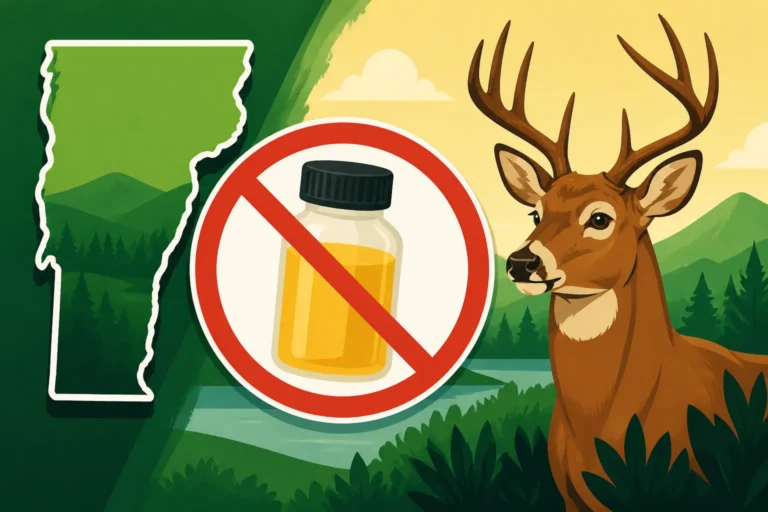
Beyond tagging and reporting, it’s vital to be aware of Vermont's CWD Prevention Rules. Chronic Wasting Disease (CWD) is a serious concern for deer herds nationwide, and Vermont takes proactive steps to keep its herd healthy. This includes restrictions on importing certain deer carcass parts from other states and a ban on the use of natural urine-based deer lures. If you're traveling from out of state or even across WMUs, be sure you understand these rules to prevent the potential spread of disease. Knowing which parts of a deer can be transported (e.g., deboned meat, clean skull plate) and which cannot is essential for compliance and protecting the state’s wild cervids.
Strategies for a Successful Regular Archery Opener
Opening day of the regular archery season in Vermont presents unique challenges and opportunities. Deer behavior is still heavily influenced by early fall patterns, and understanding these can give you a significant advantage. It's a time of transition, where summer habits begin to give way to pre-rut restlessness.
Early Season Deer Behavior and Habitat
When the regular archery season opens in early October, Vermont's deer are typically in a transitional phase. The abundant summer food sources are starting to dwindle, and deer are heavily focused on remaining mast crops, particularly acorns, if it's been a good acorn year. They'll also be hitting standing crops like corn or alfalfa fields, and any accessible apple orchards can be absolute magnets. Deer will often pattern themselves around these food sources, moving from bedding areas to feeding grounds at dawn and dusk. Understanding these patterns, and finding where to hang a stand on a Champlain Valley field edge or near a standing apple orchard, can be crucial.
Bedding areas during this time are often in thick, secure cover near these food sources. This could be a dense softwood thicket, a steep hillside bench with good thermal protection, or even a swampy area providing security from human disturbance. Bucks, though not yet fully engaged in the rut, are starting to become more independent from their summer bachelor groups and might be found nearer to doe family groups. They’re still largely nocturnal, especially in areas with hunting pressure, but the early mornings and late evenings around prime feeding areas offer your best chances. Pay close attention to fresh tracks, droppings, and rubbed saplings as indicators of recent activity.
Scouting and Stand Placement
Effective scouting is the bedrock of a successful archery opener. You can't just show up on opening day and expect to find deer in predictable spots. Pre-season work, ideally starting in late summer and continuing right up to the season, is critical. Focus on identifying primary food sources, understanding travel corridors between bedding and feeding areas, and locating fresh sign. Tools like topographical maps and aerial photos, which can be found in mapping apps like GoHunt, are invaluable for this. They allow you to virtually scout vast areas, identify funnels, pinch points, and potential bedding cover from the comfort of your home.
Once you’ve identified promising areas, boots on the ground scouting is essential. Look for well-used trails, fresh rubs, and scrapes (which may be just starting to appear). When considering stand placement, think about prevailing wind direction and thermals, especially in Vermont's often hilly or mountainous terrain. A good rule of thumb is to place your stand downwind or crosswind of the anticipated deer travel route or feeding area. For example, if deer are entering a cornfield from a specific wood line, position yourself slightly downwind of that entry point. For an in-depth look at optimal setup, consider reviewing strategies for Hanging a Stand on a Champlain Valley Field Edge.
Ground blinds can also be effective, particularly in areas with limited trees for treestands or in dense cover where you want to blend in more naturally. Whether you're in a treestand or ground blind, always ensure your setup offers clear shooting lanes for bowhunting distances and provides adequate cover to break up your silhouette. The goal is to be invisible and scent-free when that deer steps into range.
Playing the Wind and Thermals
In Vermont's diverse landscapes, from rolling farmlands to steep mountain ridges, understanding and utilizing wind and thermals is paramount for any bowhunter. Deer have an incredible sense of smell, and a single gust of wind carrying your scent can send them scattering before you even know they're there. Always, and I mean always, hunt with the wind in your favor. This typically means positioning yourself downwind of where you expect deer to approach. Checking the wind constantly with a powder bottle or a handheld anemometer isn't overkill; it's a necessity.
Thermals, which are rising and falling air currents, add another layer of complexity, especially in the Green Mountains. In the mornings, as the ground heats up, air tends to rise, carrying scent uphill. In the evenings, as the air cools, it sinks, carrying scent downhill. This means that a stand placement that's perfect in the morning might be terrible in the afternoon, or vice versa. For example, when Hunting a Ridge-Top Saddle for Rutting Bucks, you might want to be on the downwind side of the saddle in the morning, anticipating deer moving up, but rethink your position for an evening hunt when scent might fall into a feeding area below. Adapting your approach based on these subtle air movements can be the difference between seeing deer and spooking them. Knowing how Wind and Thermals in Steep Green Mountain Terrain affect scent dispersal is a skill that takes time to master, but it’s invaluable for success.
Common Challenges and Tips for Archery Opener Success
Every hunting season brings its own set of challenges, and the regular archery opener in Vermont is no exception. From crowded public lands to unpredictable weather, being prepared for anything will significantly increase your odds of success.
Dealing with Hunting Pressure
As the regular archery season opens, especially on public lands like the Green Mountain National Forest or popular Wildlife Management Areas, you might encounter other hunters. This increased human presence can quickly alter deer behavior, making them more nocturnal and wary. One strategy to combat this is to scout and hunt deeper into public land. Many hunters stick close to roads and parking areas; by putting in the extra mileage, you often find areas that see far less pressure. Finding Ground Others Walk Past is a key skill for consistent success on public property.
Another tactic is to hunt during less conventional times. While dawn and dusk are prime, consider hunting mid-day. Many hunters head back to camp or their trucks after the morning rush, leaving the woods quieter during the late morning and early afternoon. Deer often feel more secure moving during these hours, especially if they’ve been bumped earlier in the day. Also, don't be afraid to target smaller, overlooked private tracts with permission. Often, these smaller woodlots or fencerows on a Champlain Valley dairy farm edge can hold good numbers of deer that are largely ignored by other hunters focused on larger public areas. Remember, asking for permission in Vermont often involves a polite knock on the door and a clear conversation with landowners.
Weather Adaptations and Gear Considerations
Vermont weather in October can be incredibly unpredictable. One day you might be basking in mild, sunny conditions, and the next you could be facing cold rain, blustery winds, or even an early dusting of snow in higher elevations. Adapting your gear and strategy to the forecast is essential for comfort, safety, and success. Layering is your best friend. Start with a moisture-wicking base layer, add insulating mid-layers like fleece or wool, and top it off with a waterproof and windproof outer shell. This allows you to shed or add layers as conditions change throughout the day. Getting an understanding of Layering for Vermont's Long Hunting Season will ensure you stay warm and dry, allowing you to remain on stand longer.
Beyond clothing, think about your other gear. Keeping your broadheads razor-sharp and your bow tuned is paramount. A good set of optics, like binoculars, can help you spot deer at a distance without unnecessary movement. Don’t forget essentials like a headlamp for walking in and out in the dark, a small first-aid kit, and a way to communicate in areas with spotty cell service. For long sits, a comfortable, insulated seat cushion and a thermos of hot coffee or tea can make a huge difference in staying alert and focused. Tools like the GoHunt app often include weather forecasting features integrated into their maps, which can be super helpful for planning your hunts day by day based on real-time conditions.
| Aspect of Hunting | Regular Archery Season Details | Key Considerations for Success |
|---|---|---|
| Season Dates | Early Oct. – Mid Dec. (Statewide) | Long window, covers early fall, rut, late season |
| Required Licenses | Base Hunting License + Archery Endorsement | Hunter Education may be required; carry physical copies |
| Legal Equipment | Compound, Recurve, Longbows (minimum draw weights) | Crossbows legal, check specific endorsements |
| Broadhead Rules | Fixed or mechanical, minimum 7/8" cutting diameter | No barbed or drug-laced tips |
| Deer Behavior | Transition from summer patterns, focus on mast/crops | Early AM/late PM around food; nocturnal in pressure |
| Scouting | Pre-season essential, identify food/bedding/travel | Utilize mapping apps (GoHunt), look for fresh sign |
| Stand Placement | Downwind/crosswind of travel routes; adapt to thermals | Treestands or brushed-in ground blinds |
| Weather | Unpredictable Oct. weather (mild to cold/rain/snow) | Layering critical, waterproof outer shell |
| Hunting Pressure | Can be high on public land, especially near access points | Hunt deeper, mid-day, seek out private land access |
| Reporting | Mandatory online/phone/station by midnight of kill day | Accurate WMU info is crucial |
| CWD Rules | Carcass import restrictions, ban on urine lures | Protect Vermont's CWD-free herd |
Disclaimer
Please note that hunting regulations, dates, and requirements can change. Always consult the official Vermont Fish and Wildlife Department website or their current hunting guide for the most up-to-date and accurate information before heading into the field. This article provides general guidance and should not replace official sources.