Vermont Wildlife Violation Penalties
It’s an unfortunate reality that hunting regulations can feel like a labyrinth, and sometimes, even the most well-meaning hunter can find themselves on the wrong side of the law. Whether it’s an honest mistake about a boundary line, a miscalculation of season dates, or worse, an intentional disregard for the rules, the consequences of a wildlife violation in Vermont can be severe and far-reaching, impacting not just your current hunt but your ability to pursue your passion for years to come. This guide is designed to shed light on Vermont’s wildlife violation penalties, help you understand what might happen if you face such a situation, and most importantly, equip you with the knowledge to avoid these pitfalls by staying informed and committed to ethical hunting practices.
Understanding Vermont's Wildlife Laws and Why They Matter
Navigating the complexities of Vermont's hunting and fishing regulations can sometimes feel overwhelming. There are specific rules for every season, every species, and often, particular zones or methods. It’s easy to feel like you need a law degree just to head into the woods. However, these laws aren't just arbitrary hoops to jump through; they are the bedrock of wildlife conservation, ensuring healthy populations for future generations and promoting fair chase principles. When you violate these laws, you're not just breaking a minor rule; you're directly impacting the resource and the integrity of hunting itself.
The Core Purpose of Game Laws
At their heart, Vermont’s game laws are designed with a few critical objectives in mind. First and foremost is conservation. Think about it: without bag limits, restricted seasons, or specific legal methods, populations of species like our prized white-tailed deer, the elusive black bear, or the majestic moose could be decimated. The Vermont Fish & Wildlife Department meticulously studies these populations to set limits and seasons that allow for sustainable harvests. Rules like the legal shooting hours or restrictions on certain firearms during specific seasons are all geared towards managing animal populations responsibly and providing every hunter a fair opportunity. They help ensure that when you head out, there’s actually game to pursue, and that the rich tradition of hunting continues to thrive in our Green Mountains.
Consequences Beyond the Initial Fine
When you commit a wildlife violation in Vermont, the ramifications extend far beyond just paying a fine. While fines can certainly be substantial, a major concern for any passionate hunter is the potential loss of hunting, fishing, and trapping privileges. This isn't just a temporary setback; depending on the severity of the offense, your license could be suspended or revoked for years. To make matters even more serious, Vermont is part of the Interstate Wildlife Violator Compact. This means if you lose your privileges here, you'll likely lose them in almost every other state across the country that participates in the compact. Imagine not being able to hunt anywhere for three, five, or even ten years—it’s a sobering thought.
Beyond license revocation, you could face the forfeiture of expensive hunting equipment, including your firearm, bow, vehicle, or ATV, if it was used in the commission of a crime. There’s also the very real impact on your reputation within the close-knit Vermont hunting community. Ethical behavior is highly valued, and a conviction can severely damage how others perceive you. In some cases, severe violations can even lead to civil penalties, where you might have to pay restitution to the state for the value of the illegally taken game, on top of any criminal fines. It’s a stark reminder that these aren't minor infractions.
Common Vermont Wildlife Violations and Their Consequences
Vermont game wardens are out there every day, diligently enforcing laws designed to protect our wildlife and ensure fair, safe hunting. While their presence is about upholding the law, it’s also about educating hunters and preventing violations before they happen. However, when rules are broken, they are swift to act. The types of violations range from administrative oversights to egregious acts of poaching, and the penalties reflect that spectrum.
License and Permit Infractions
One of the most fundamental requirements for hunting in Vermont is possessing the correct, valid licenses and permits. It seems straightforward, but issues here are surprisingly common. Hunting without any license at all, or using an expired or suspended license, are serious offenses. So too is misrepresenting your residency to purchase a cheaper resident license when you don't qualify. Even simple acts like failing to carry proof of your license while in the field can be a violation, although typically less severe than hunting without one.
For example, if you are found Hunting Vermont's Regular Archery Season Into December without a valid archery license, you could be facing significant fines and a license suspension. The Vermont Fish & Wildlife Department's online portal and resources like GoHunt can help you ensure all your licenses and tags are in order before you ever step into the woods. Always double-check your permits, especially when dealing with specific season dates like Vermont's New Archery-During-Rifle Overlap Rule, where requirements might shift.
Season, Bag Limit, and Illegal Method Violations
These categories often carry some of the steepest penalties because they directly undermine conservation efforts and fair chase. Hunting outside of legal season dates, such as taking a deer during the closed season, is considered poaching and is treated with extreme seriousness. Exceeding bag limits—taking more than the legally allowed number of animals (like more than your Vermont's Resident-Only Two-Bird Turkey Limit for spring gobblers, for example)—is also a significant offense.
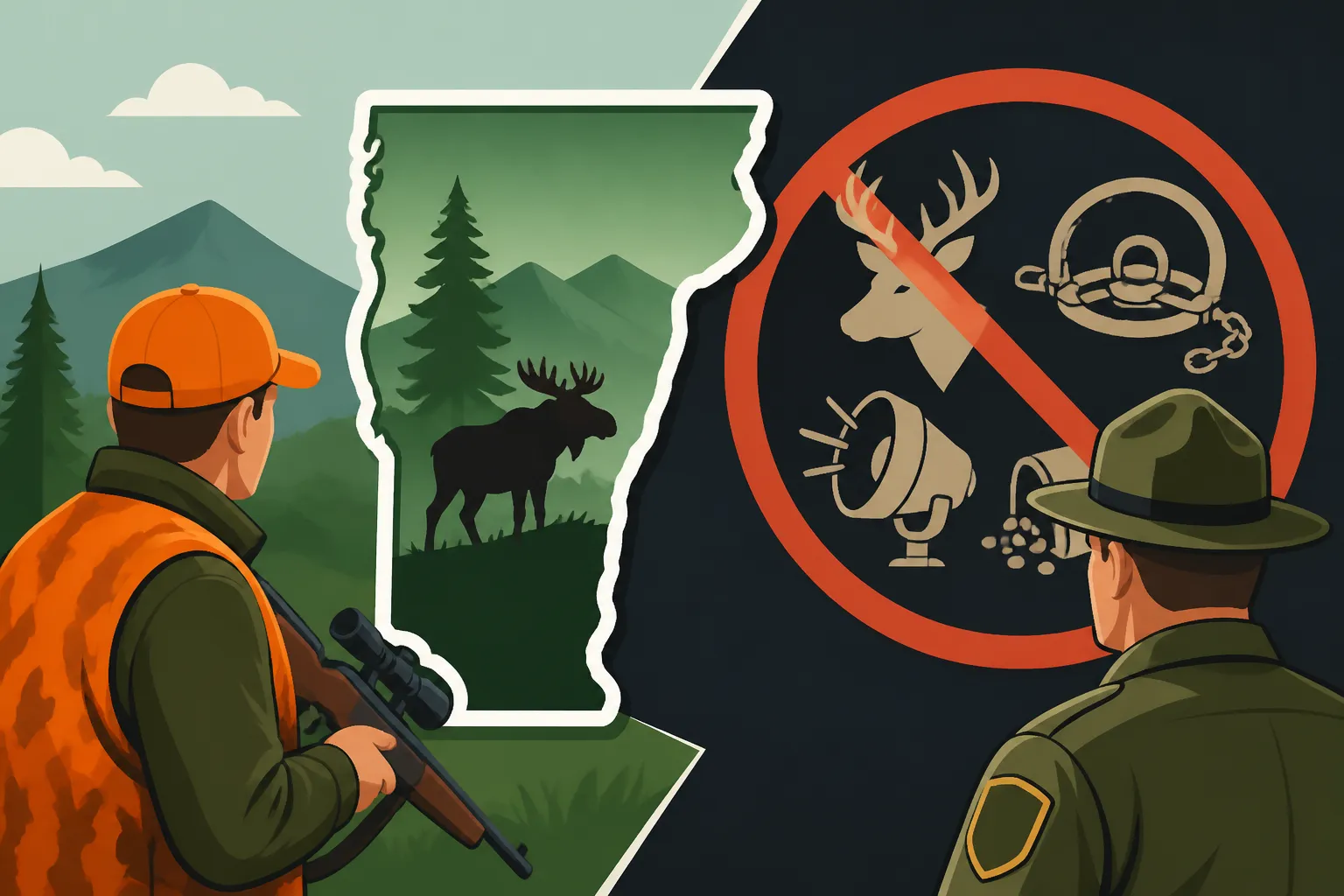
Using illegal methods is another critical area. This includes things like spotlighting (using artificial light to locate and harvest game at night), baiting (for species where it’s not permitted, like deer), or shooting from a vehicle or public road. Hunting on Sunday is generally allowed in Vermont, but there can be specific local restrictions, and it’s always crucial to verify before heading out. Even using specific equipment like crossbows without adhering to Vermont Crossbow Equipment Rules can put you in violation. Penalties for these types of violations can be particularly harsh, often involving higher fines, longer license revocations, and forfeiture of the weapon used, or even the vehicle if it facilitated the crime.
Trespass, Waste, and Ethical Breaches
Respect for landowners and the game itself forms the cornerstone of ethical hunting, and violations in these areas chip away at that foundation. Hunting on posted private land without explicit permission is a clear act of trespass, which can damage hunter-landowner relations across the state. Similarly, failing to tag your game immediately after harvest or neglecting to report it properly by The Vermont Deer Reporting Deadline are legal requirements that help the state manage its wildlife.
Perhaps one of the most disheartening violations is the waste of game, where edible portions of an animal are left to spoil in the field. This shows a profound disrespect for the animal and the resource. Furthermore, with the growing threat of Chronic Wasting Disease (CWD), Vermont has implemented strict Vermont's CWD Prevention Rules, including a ban on importing certain deer carcasses from CWD-positive states and Vermont's Rule Against Urine-Based Deer Lures. Violating these rules, even if you don't directly take an animal, can carry heavy fines and license suspensions due to the immense risk posed to the state's healthy deer herd.
To give you a clearer picture, here’s a simplified table outlining common violations and their typical penalties. Keep in mind that these are general guidelines, and actual penalties can vary based on specific circumstances, the discretion of the court, and prior offenses.
| Violation Category | Specific Example | Typical Penalty Range | License Revocation | Additional Consequences |
|---|---|---|---|---|
| License/Permit Issues | Hunting without a valid license | $250 – $1,000+ | 1-3 years | Possible additional fines if game taken |
| Seasons/Bag Limits | Taking a deer out of season | $500 – $2,000+ | 3-5 years | Forfeiture of weapon, game, vehicle |
| Illegal Methods | Shooting from a vehicle/road | $300 – $1,500+ | 2-4 years | Forfeiture of weapon, vehicle |
| Trespass | Hunting on posted private land | $100 – $500+ | 1 year (often) | Civil damages, strained landowner relations |
| CWD Rule Violations | Illegally importing deer carcass | $500 – $2,500+ | 2-5 years | Confiscation of carcass, major health risk to herd |
| Waste of Game | Leaving edible meat in the field | $200 – $750+ | 1-2 years | Community service, negative public perception |
| Failure to Report/Tag | Not tagging deer immediately/not reporting | $100 – $300+ | Up to 1 year | Impairs wildlife management data |
| Firearms Safety | Vermont Firearms Discharge Setback Rules | $100 – $500+ | Varies | Public safety risk, potential for injury |
The Process After a Violation: What to Expect
Finding yourself under investigation for a wildlife violation can be a confusing and frightening experience. It's crucial to understand the steps involved and what your rights are, as well as your responsibilities. While every situation is unique, there’s a general process that typically unfolds.
Initial Contact and Investigation
The first step usually involves contact with a Vermont Game Warden. These officers are highly trained and dedicated to upholding wildlife laws. They might approach you in the field, respond to a report from another hunter or landowner, or conduct an investigation based on gathered intelligence. During this initial contact, the warden will typically gather information, ask questions, and collect any relevant evidence. This could involve examining your license, inspecting your weapon, or even seizing illegally taken game or equipment.
It's important to cooperate with the warden, but you also have rights. You are not obligated to incriminate yourself. If you are issued a citation or placed under arrest, you'll be informed of the specific charges. The evidence collected will be crucial, so proper identification of game, tagging, and adherence to all regulations beforehand is vital. For instance, if you are suspected of taking an animal improperly, the warden will be looking for specific tags, entry routes through a cut cornfield, or signs of improper field dressing.
Court Proceedings and Potential Outcomes
Once a citation is issued, your case will move through the Vermont court system. This typically starts with an arraignment, where you'll enter a plea (guilty, not guilty, or no contest). If you plead not guilty, the case may proceed to a hearing or trial. This is where legal representation can be incredibly valuable to help navigate the complexities of wildlife law.
If you are found guilty, or if you plead guilty or no contest, the court will impose penalties. These can include significant monetary fines, court costs, and potentially an order for restitution for the value of any illegally taken game. For more serious offenses, probationary periods or even jail time are possible. Beyond the court's judgment, the Vermont Fish & Wildlife Department will independently review the conviction and determine the appropriate duration of your hunting, fishing, and trapping license suspension or revocation. This administrative action is separate from the court's criminal penalties but is directly triggered by the conviction. As mentioned earlier, because Vermont participates in the Interstate Wildlife Violator Compact, a license revocation here means your privileges will likely be suspended in most other states, too. This broad impact makes understanding and adhering to the rules even more critical.
Preventing Violations: Staying Informed and Ethical
The best way to deal with wildlife violation penalties is to avoid them entirely. This requires a proactive approach, constant vigilance, and a deep commitment to ethical hunting. It's not always easy, especially with busy lives, but the responsibility rests squarely on each hunter's shoulders.
Be Diligent with Rules and Regulations
The Vermont Fish & Wildlife Department publishes a new hunting and trapping guide every year. This is not optional reading; it's your primary resource. Don’t rely on what you remember from last year or what you heard from a friend. Rules change, sometimes subtly, sometimes significantly. For example, Vermont's New Archery-During-Rifle Overlap Rule was a significant change that hunters needed to understand thoroughly. Make it a ritual to read the guide cover-to-cover before each season, paying special attention to the specific species you plan to pursue.
Beyond the printed guide, the Vermont Fish & Wildlife Department website is an invaluable, up-to-date resource. Bookmark it and check it often for emergency closures or rule clarifications. Tools like the Vermont Fish and Wildlife App can also provide real-time updates and helpful information right on your phone. If you're ever in doubt about a specific rule, don't guess. Reach out to the Fish & Wildlife Department or a local game warden for clarification before you head afield. They are there to help you stay legal and safe, not just to enforce. Remember, passing your Vermont Hunter Education Requirements is just the first step; continuous learning is key.
Embrace Ethical Hunting Practices
Beyond the letter of the law, there's the spirit of ethical hunting. This involves a commitment to fair chase, respect for wildlife, and courtesy towards landowners and other outdoor enthusiasts. Always ask for permission before Knocking on Doors in Champlain Valley Farm Country to hunt private land, even if it appears unposted. Understand and respect Vermont Posted Land Rules. Ensure you’re using proper methods for Field Dressing a Deer in Cold Weather or taking care of your game to prevent waste.
Consider practices like Reporting a Poacher in Vermont if you witness illegal activity—it's not "snitching," it's protecting our shared resource. Adhere to Vermont's CWD Prevention Rules by understanding carcass import restrictions and the ban on urine-based lures. For those participating in mentored hunts, ensure you understand Vermont Mentored Youth Hunting Rules and stay within the required proximity of your mentee. By making ethical choices, you not only stay within the law but uphold the integrity of hunting for everyone.
Leveraging Tools for Compliance
In today's digital age, hunters have access to powerful tools that can help them stay compliant and avoid accidental violations. Modern mapping applications, such as the widely recognized GoHunt platform, are incredibly useful. They provide detailed land ownership data, which is invaluable for identifying property lines and ensuring you don't inadvertently trespass, especially when Hunting Small Private Tracts in Vermont or near public land boundaries. GoHunt's mapping features can also help you understand different hunting zones and regulations specific to your location, acting as a crucial digital assistant to keep you legal.
Similarly, the Vermont Fish & Wildlife app allows you to quickly register your deer harvest online, ensuring you meet reporting deadlines. For hunters pursuing waterfowl, understanding Vermont Waterfowl Zones and Seasons is critical, and these apps can sometimes help delineate those boundaries. By combining these modern tools with careful reading of the official regulations and a strong ethical compass, you significantly reduce your risk of encountering penalties and ensure a more responsible and enjoyable hunting experience in the beautiful state of Vermont.
Disclaimer
The information provided in this guide is for general informational purposes only and does not constitute legal advice. Hunting laws and regulations in Vermont are subject to change, and specific circumstances can greatly influence the interpretation and application of these laws. Always consult the most current Vermont Fish & Wildlife Department regulations and, if facing a legal issue, seek advice from a qualified legal professional.