Northeast Kingdom Versus Champlain Valley Deer
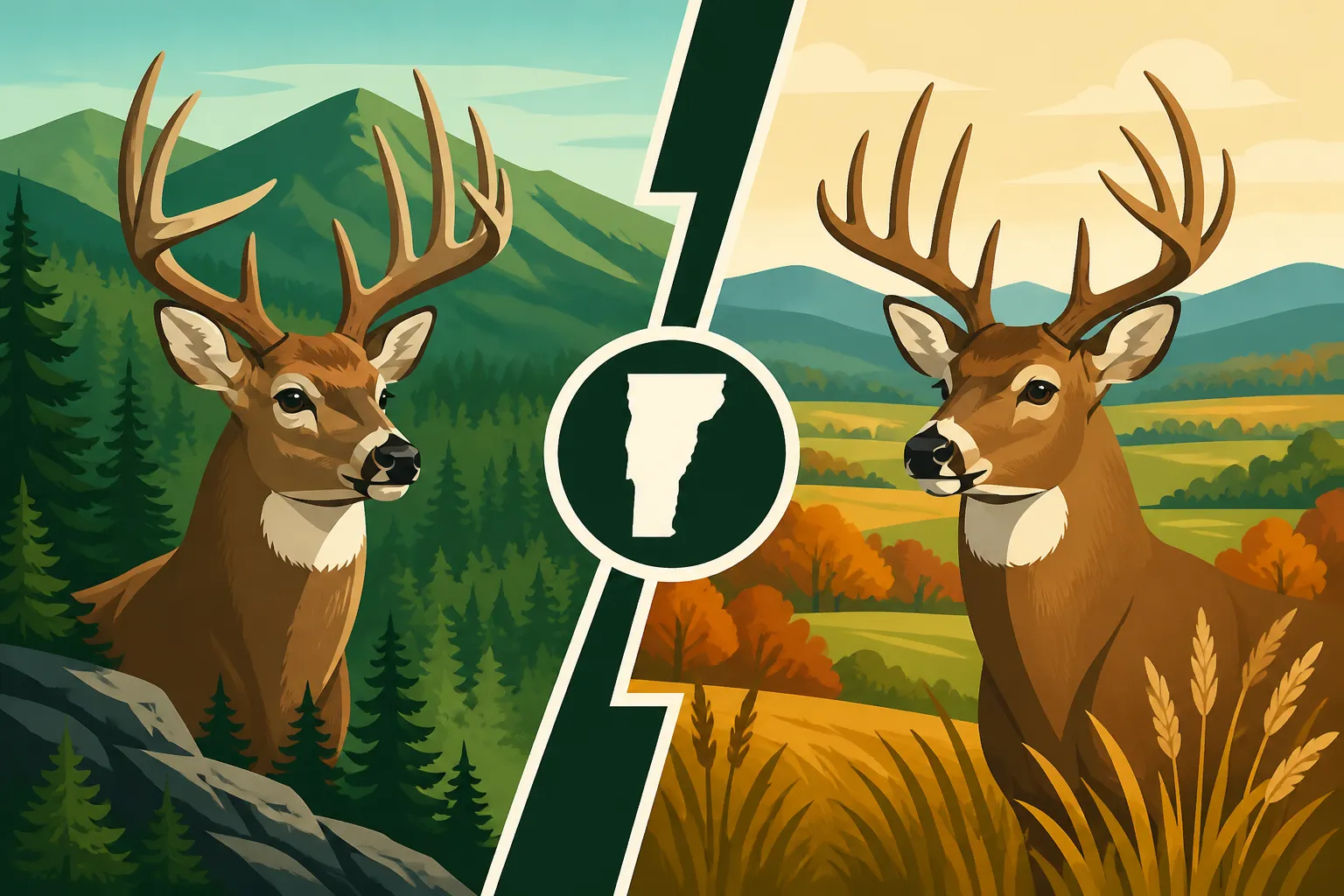
There's a question that echoes through many Vermont deer camps and coffee shop conversations among hunters: "Where do you really find the big ones?" It’s a debate that often boils down to two vastly different, yet equally cherished, regions: the rugged, wild expanses of the Northeast Kingdom, and the rich, agricultural pockets of the Champlain Valley. Many of us have felt the frustration of trying to decide where to focus our limited hunting time, weighing the allure of a wilderness adventure against the promise of a well-fed whitetail. This guide aims to pull back the curtain on the unique characteristics of hunting deer in both the Northeast Kingdom and the Champlain Valley, helping you understand their distinct challenges, opportunities, and ultimately, where your next trophy might be waiting.
The Lay of the Land: Understanding Vermont's Diverse Deer Habitats
Vermont might be a small state, but its deer habitats are surprisingly diverse, particularly when comparing the Northeast Kingdom (NEK) and the Champlain Valley. These two regions offer completely different environments, shaping not only the deer themselves but also the hunting experience. Understanding these foundational differences is crucial for any hunter hoping to be successful in either area.
Geographic and Climatic Differences
Let's start with the basics: geography and climate. The Northeast Kingdom, true to its name, feels like a different world. It’s characterized by its more rugged, untamed landscapes, higher elevations, and a climate that leans decidedly harsher, especially come winter. We're talking about dense, mixed boreal forests, significant softwood stands that provide critical winter cover, and a topography that can be genuinely steep and unforgiving in places. Winters here are typically longer and colder, with heavier snowfall that can profoundly impact deer survival and movement. This wildness means deer are often more dispersed, and finding them can feel like searching for a needle in a vast, forested haystack.
Contrast that with the Champlain Valley. This region, hugging the shores of Lake Champlain, sits at a much lower elevation and benefits from a slightly milder climate, often seeing less severe snowfall than the NEK. Geographically, it’s defined by expansive agricultural lands – think vast cornfields, alfalfa, and hay pastures – interspersed with woodlots, river bottoms, and rolling hills. The terrain is generally less extreme, making travel a bit easier, but don't mistake "easier" for "easy." The patchwork of fields and timber creates distinct patterns of deer movement that a savvy hunter can exploit.
Primary Vegetation and Food Sources
The vegetation and available food sources are perhaps the most significant factors driving the differences in deer populations between these two regions. In the Northeast Kingdom, deer primarily rely on natural browse and mast crops. You’ll find extensive hardwood forests, particularly sugar maples, beech, and yellow birch, which provide critical sustenance. A good beech nut crop in the fall can be a magnet for deer, but these mast crops are cyclical. Softwood stands – hemlock, spruce, fir – become invaluable in winter, offering shelter and browse. However, agricultural output is limited, meaning deer generally forage more widely and expend more energy simply finding enough to eat, particularly when the snow piles up. This reliance on wild forage contributes to deer that are often leaner and smaller-bodied.
Move to the Champlain Valley, and the menu changes dramatically for whitetails. Here, the landscape is dominated by agriculture. Deer have access to an almost endless buffet of high-energy foods: standing corn, waste grain after harvest, alfalfa fields, clover plots, and apple orchards. This abundance of nutrient-rich food allows deer to put on significant weight, grow larger bodies, and develop more impressive antlers. While natural browse is still important, the agricultural supplement gives deer in the Champlain Valley a distinct nutritional advantage. This concentrated food source often leads to deer congregating in tighter areas, moving between bedding cover in woodlots and feeding areas in fields, creating more predictable patterns for hunters. It's a game of understanding their movements between these crucial resources.
Deer Population Dynamics: Numbers and Trends
When we talk about hunting, it's not just about the biggest buck, but also the overall health and abundance of the deer herd. The Northeast Kingdom and the Champlain Valley present stark contrasts in deer population dynamics, impacting everything from success rates to management strategies.
Density and Population Estimates
It’s no secret that deer density varies wildly across Vermont. In the Northeast Kingdom, you're generally looking at a lower deer density. The vast, unbroken tracts of forest, combined with harsher winters and limited high-calorie food sources, mean deer are more spread out. You might walk for miles and see very little sign, or you might hit a hot pocket that seems to hold all the deer in the county. Success here often hinges on finding those crucial wintering yards or areas with concentrated mast crops. The populations tend to be more vulnerable to environmental factors, and while healthy, they are simply not as numerous as in other parts of the state.
Conversely, the Champlain Valley boasts significantly higher deer densities. The rich agricultural lands provide an unparalleled food source, allowing more deer to thrive in a smaller area. This means you're likely to encounter more deer and see more sign on a typical hunt. However, higher density doesn't always equate to easier hunting. These deer can also be more pressured, and their patterns are often tied to specific food-to-cover transitions that can be tricky to decipher. Understanding Deer Density by Vermont Region can be a game-changer for planning your hunt.
Here’s a quick comparative look at what you might expect in each region:
| Feature | Northeast Kingdom (NEK) | Champlain Valley |
|---|---|---|
| Deer Density | Low to Moderate (dispersed) | Moderate to High (concentrated) |
| Average Buck Weight | 130-160 lbs (field dressed) | 150-200+ lbs (field dressed) |
| Antler Size Potential | Good for age, but often smaller mass/spread due to nutrition | Excellent, potential for wide spreads and heavy mass |
| Hunting Pressure | Generally lower, but can be concentrated in accessible spots | Moderate to high, especially near public access or prime spots |
| Primary Food Source | Natural browse, mast crops, limited agriculture | Abundant agriculture (corn, alfalfa), orchards, natural browse |
| Winter Severity Impact | High, significant mortality in harsh winters | Lower, better survival due to food and milder climate |
Regional Deer Health and Winter Impacts
The health of Vermont's deer herd is a constant concern for hunters and wildlife managers alike. In the Northeast Kingdom, deer are generally robust, but they face significant challenges from the natural environment. The severe winters can be brutal. Heavy snowfall limits mobility, making it harder for deer to find food and escape predators. This often forces them into traditional wintering yards, making them more vulnerable to starvation and predation. While not directly related to deer, understanding issues like Why Winter Ticks Threaten Vermont Moose can give you insight into how environmental factors and parasites can impact large cervids in harsh northern climates. Deer in the NEK, too, can suffer from the cumulative stress of long, cold winters, sometimes leading to lower fawn recruitment and overall population fluctuations.
The Champlain Valley, with its milder climate and abundant food, typically supports a healthier, more resilient deer population. Deer here often enter winter in better condition, having packed on significant fat reserves from the agricultural bounty. This allows them to better withstand cold snaps and periods of deeper snow, leading to higher survival rates and stronger fawn crops. The less extreme terrain also means they aren't as funneled into dense wintering yards, spreading out their impact on browse and reducing localized stress. This isn't to say winter isn't a challenge, but the advantages in food and climate certainly give Champlain Valley deer a leg up.
Antler Potential and Body Size: What to Expect
Let's be honest, many of us dream of taking a truly impressive buck. When it comes to antler potential and body size, the differences between the Northeast Kingdom and the Champlain Valley are often the most talked-about. While big bucks can come from anywhere, the odds certainly favor one region over the other.
The Allure of Champlain Valley Giants
If you're chasing sheer size – big bodies and heavy antlers – the Champlain Valley is generally where you want to be. It’s no secret that Why Champlain Valley Deer Run Bigger boils down primarily to nutrition. The extensive agricultural fields provide an incredibly rich, consistent, and high-energy diet. Deer are literally eating corn, soybeans, alfalfa, and a variety of other nutrient-dense crops for months on end. This allows bucks to not only grow massive bodies, easily tipping the scales over 200 pounds field dressed, but also to dedicate more energy to antler development. We're talking about wider spreads, more points, and thicker beams – the kind of antlers that make your jaw drop.
Beyond nutrition, the Champlain Valley often has a better age structure for bucks. While hunting pressure is still a factor, the sheer amount of cover, coupled with often difficult access to private agricultural lands, means some bucks can reach maturity. A 3.5 or 4.5-year-old buck with a consistent diet of agricultural crops is going to be a different animal than his woods-dwelling counterpart in the NEK. These deer are often creatures of habit, moving between specific feeding and bedding areas, making them predictable if you can put in the scouting time to learn their patterns.
NEK Bucks: Hard-Earned Trophies
Now, don't get me wrong, the Northeast Kingdom produces some truly fantastic bucks. While the average body size and antler mass might not rival the Champlain Valley giants, an NEK buck is a hard-earned trophy with its own unique appeal. These deer are often leaner, tougher, and incredibly intelligent, forged by a life in the wilderness. They survive on natural forage, navigating rugged terrain and harsh winters, which makes them incredibly wary and resourceful. A mature NEK buck often has a deeper understanding of the forest than any human hunter.
Hunting these deer is less about finding a specific food plot and more about understanding large-scale deer movements, identifying subtle signs, and being willing to cover a lot of ground. While an NEK buck might "only" field dress at 150-160 pounds, their antlers, though perhaps not as massive, often display incredible character and density. The satisfaction of harvesting a mature buck from the vast, challenging landscape of the Northeast Kingdom is immense. It's a testament to your hunting skill and persistence in a truly wild environment.
Hunting Strategies: Adapting to the Terrain and Deer Behavior
Regardless of whether you choose the Northeast Kingdom or the Champlain Valley, successful deer hunting in Vermont demands adaptability. The distinct landscapes and deer behaviors in each region necessitate entirely different strategic approaches. You can't hunt the NEK like you hunt the Valley, and vice-versa.
Tactics for the Northeast Kingdom's Big Woods
Hunting the Northeast Kingdom often feels like a true wilderness expedition. The vast, unbroken forests mean that still-hunting and scouting are paramount. You’re not looking for a deer in a small woodlot; you’re trying to locate the specific pockets of habitat where deer are concentrating. This involves extensive pre-season scouting, often in the off-season, to identify key areas. Look for old logging roads, natural funnels, benches on hillsides, and areas with good mast crops. Learning to effectively read a Reading a Green Mountain Deer Yard is absolutely critical, as these are sanctuaries where deer congregate during the toughest winter months, and finding their transition areas can be golden in the early and late season.
Because deer are more dispersed, you'll need to cover ground. Still-hunting, moving slowly and deliberately through the woods, stopping frequently to look and listen, is a highly effective tactic here. Utilize your optics; a good pair of binoculars is essential for picking apart distant cover or confirming a patch of browse. Consider using calls sparingly; subtle grunts or doe bleats can sometimes draw a curious buck in, but overt calling might just alert a wary animal. For vast areas, mapping applications like GoHunt can be incredibly helpful for identifying potential pinch points, terrain features, and even recent timber cuts that might concentrate deer. Also, be prepared for tough retrieves; a deer taken deep in the NEK woods can be a monumental task to get out.
Hunting the Champlain Valley's Farm-Fringe and Woodlots
The Champlain Valley demands a more strategic, stand-hunting approach, often centered around food sources and the corridors deer use to access them. The deer here are masters of navigating the patchwork of agriculture and woodlots. Your primary goal will be to identify those travel routes and set up an ambush. This means scouting for trails connecting bedding cover (often in small woodlots or swamps) to feeding areas (cornfields, alfalfa, apple orchards). Understanding Hanging a Stand on a Champlain Valley Field Edge is a fundamental skill here. Deer will often stage in the woods before entering a field at dusk or leave a field just before dawn.
Pay close attention to Entry Routes Through a Cut Cornfield as these can reveal exactly where deer are slipping in and out of those high-value food sources. Treestands or well-brushed ground blinds are common choices. Unlike the NEK, scent control and playing the wind are even more critical here due to the concentrated deer activity and often more open landscapes. Mapping tools from GoHunt are invaluable for identifying property lines, identifying potential pinch points where deer might cross, and understanding land features. While public land exists, much of the prime Champlain Valley hunting occurs on private ground, making Knocking on Doors in Champlain Valley Farm Country a necessary skill for expanding your opportunities.
Public vs. Private Land Access
Access is a major differentiator. The Northeast Kingdom is home to vast tracts of public land, including state forests and wildlife management areas. While this offers immense opportunity for solitude and adventure, it also means deer can be harder to locate due to the sheer size and often rugged nature of the terrain. Hunters willing to hike deep into the backcountry, far from roads and other hunters, often find success. These are typically self-reliant hunts where you're truly Hunting the Northeast Kingdom.
In the Champlain Valley, public land is more fragmented and often sees higher pressure. However, there are significant opportunities on private land, particularly working farms. Gaining permission from landowners is key here, and building those relationships can unlock some incredible hunting. Remember, respecting the land and the landowner is paramount. Always ask for permission, follow their rules, and offer to help out if you can. The dynamic is different: in the NEK, you're competing with the wilderness; in the Champlain Valley, you're often navigating a mix of public and private access and local hunting pressure.
Challenges and Rewards of Each Region
Every hunting region has its unique set of challenges and, more importantly, its distinct rewards. Deciding where to hunt often comes down to what kind of experience you're seeking, and both the Northeast Kingdom and the Champlain Valley offer profoundly different adventures.
Northeast Kingdom: The Wilderness Experience
Hunting in the Northeast Kingdom is, for many, the epitome of a true wilderness hunt. The challenges are numerous: rugged terrain that will test your physical limits, vast expanses of forest where getting turned around is a real possibility, and often fewer deer per square mile compared to other regions. The weather can be unforgiving, with bitter cold and deep snow arriving early and staying late. Tracking a deer in Cold-Weather Sitting Strategy in the Northeast Kingdom can quickly turn into a grueling task, and recovering an animal from a steep ravine is a monumental effort. Solitude is almost guaranteed once you get off the beaten path, but that also means you're largely on your own if something goes wrong.
However, the rewards are equally profound. There's an unmatched sense of accomplishment when you successfully harvest a deer from the NEK's challenging environment. These deer are often incredibly cunning, having survived in a truly wild setting, making them a worthy adversary. The beauty of the landscape, the quiet solitude, and the feeling of truly being immersed in nature are unparalleled. It's an opportunity to test your woodcraft, your persistence, and your connection to the wild. For many, the experience itself, not just the harvest, is the ultimate trophy.
Champlain Valley: The High-Density Advantage
The Champlain Valley offers a different set of challenges and rewards. While the terrain might not be as overtly rugged as the NEK, hunting here comes with its own complexities. Higher deer densities can mean more hunting pressure, especially on readily accessible public lands or highly productive private parcels. You might find yourself sharing the woods with more hunters, which means deer are often more educated and wary of human presence. Access to prime private land is a golden ticket, but it requires effort, relationship building, and strict adherence to landowner rules.
The rewards, however, are substantial. The primary draw is the higher probability of encountering deer, and more specifically, the chance at a truly large-bodied, heavy-antlered buck. The rich agricultural diet fuels impressive growth, and with proper scouting and stand placement, your odds of success can be significantly higher. The mixed habitat of fields and woodlots offers diverse hunting opportunities, from early season archery on agricultural edges to rifle hunting in travel corridors. While perhaps not as "wild" as the NEK, the Champlain Valley provides an exciting and often highly productive hunting experience for those who enjoy the strategy of pattern-oriented deer hunting. If you're looking at Best Vermont WMUs for Big Bucks, many will point to this region.
Making Your Choice: Where to Focus Your Vermont Deer Hunt
Ultimately, the decision of where to focus your deer hunting efforts in Vermont comes down to a blend of personal preference, experience, and what you hope to gain from your time in the woods. Both the Northeast Kingdom and the Champlain Valley offer incredible, albeit different, deer hunting experiences.
Factors to Consider: Personal Preference and Experience
Before you pack your bags, ask yourself what kind of hunter you truly are, and what experience you're seeking. Are you a minimalist, seeking solitude and the ultimate test of your woodcraft against a truly wild animal? Then the Northeast Kingdom might be your calling. You'll need to be physically fit, self-reliant, and prepared for long hours of still-hunting and potentially grueling retrieves. It's a hunt that builds character and offers unparalleled immersion in nature.
Alternatively, are you focused on maximizing your chances of seeing deer, potentially harvesting a truly large buck, and enjoy the strategic challenge of patterning deer movement around food sources? Then the Champlain Valley could be your ideal destination. This often involves more stand hunting, intensive scouting of specific areas, and potentially navigating more localized hunting pressure. It's a hunt that rewards precision, patience, and good observational skills. Consider your physical capabilities, your preferred hunting style, and how much time you have for pre-season scouting.
Leveraging Resources for Success
No matter where you choose to hunt, information is power. Modern tools have revolutionized how we approach hunting, and leveraging them can significantly increase your odds of success in either region. Mapping applications like GoHunt are invaluable for understanding terrain, identifying potential pinch points, locating different habitat types, and knowing property boundaries. In the vastness of the NEK, these tools can help you identify remote pockets of prime habitat or potential wintering areas before you ever step foot in the woods. In the Champlain Valley, they are crucial for dissecting the complex mosaic of agricultural fields and woodlots, helping you pinpoint those vital travel corridors.
Beyond mapping, studying data is critical. Pay attention to Vermont Deer Harvest Records and Deer Density by Vermont Region to understand trends and success rates. These resources, often available from the Vermont Fish & Wildlife Department, can give you a clearer picture of what to expect. Combine this with diligent pre-season scouting, whether it's physically walking the woods or using satellite imagery to identify promising areas. Being informed, adaptable, and respectful of the land and its wildlife will ultimately lead to a more rewarding and successful Vermont deer hunting experience, no matter which valley or kingdom you choose. For a truly deep dive into preparation, consider Scouting Vermont Public Land Before Season for more actionable steps.
Disclaimer
Please remember that hunting regulations and conditions can change. Always consult the most current Vermont Fish & Wildlife Department regulations before planning any hunting trip. This guide is for informational purposes only and does not supersede official state hunting laws.