Spot-and-Stalk Bear Hunting a Beech Ridge
The crunch of dry leaves underfoot, the sudden snap of a twig, the wind swirling through the hardwoods — these are the constant companions and challenges for any hunter in Vermont's wild country. And when you're specifically targeting black bears with a spot-and-stalk approach, especially on those prime beech ridges, every single one of those elements feels magnified. This guide is dedicated to helping you unravel the mysteries of bear behavior on those critical food sources, equipping you with the knowledge and tactics to successfully pursue a Vermont bruin in its natural element.
Understanding Vermont's Bear Behavior on Beech Ridges
Hunting black bear in Vermont is a unique challenge, often demanding patience, stealth, and an intimate knowledge of the landscape. While baiting and hounds are options in other states, Vermont hunters often rely on opportunity and habitat knowledge. Among the most productive tactics for fall bears is focusing on beech ridges, particularly when the mast crop is abundant.
Why Beech Ridges Are Bear Magnets
There's something truly special about a good beech ridge in the fall. When those small, triangular nuts drop, they become an irresistible feast for black bears, almost like a magnet drawing them from miles around. Bears are creatures of opportunity and efficiency, and a heavy beech mast crop offers a concentrated, high-calorie food source crucial for them to pack on the necessary fat reserves before denning for the winter. These ridges often provide a mosaic of habitat – thick cover for bedding and security, interspersed with mature beech stands where they can feed undisturbed. You'll find bears spending an incredible amount of time in these areas, often from pre-dawn until well after dark, gorging themselves on the fallen nuts. It's not just the food itself; the topography of a ridge often provides natural travel corridors and escape routes, making it an efficient place for a bear to live out its daily routine of eating and resting.
Timing Your Hunt with the Beech Mast Crop
The success of a beech ridge spot-and-stalk hunt hinges almost entirely on timing. You need to be there when the nuts are falling and when the bears are actively feeding on them. The challenge is, mast crops are highly variable. One year a ridge might be loaded, the next it could be barren. Early September might see bears still focusing on berries and other soft mast, but as the temperatures drop and beechnuts ripen, their focus shifts dramatically. This transition usually occurs from late September through October, often peaking in early to mid-October, though it can extend into November in years with a late, heavy drop. Understanding the seasonal patterns of bear behavior is key for Vermont's Long Bear Season Explained. You really need to put in some boots-on-the-ground scouting to determine which ridges are producing. It means checking multiple locations, looking for fresh nuts on the forest floor, and more importantly, fresh bear sign. A great tool for monitoring these conditions, including historical mast crop data or current reports, can be found on platforms like GoHunt, which helps you narrow down potential areas.
Reading Bear Sign on a Ridge
Once you're on a promising beech ridge, your job is to become a detective. Bears leave plenty of clues if you know what to look for. The most obvious sign of feeding is chewed-up beechnut casings scattered across the forest floor. They'll often create "feeding circles" where they sit and systematically munch on nuts, leaving a tell-tale pattern of broken shells. Look for fresh scat; bear droppings during the beech mast period will be dark, often thick with nut fragments, and plentiful. The fresher the scat, the more recently a bear has been in the area. Another significant sign is claw marks on the trunks of beech trees, sometimes high up where bears have climbed to shake down nuts or access those still clinging to branches. Keep an eye out for disturbed leaves, matted-down vegetation, and even small "beds" in the thicker cover adjacent to feeding areas. These are spots where a bear might have rested for a short period before returning to its meal. The presence of multiple fresh signs, especially in different stages of freshness, tells you you're in a high-traffic area, giving you an indication of the Vermont Bear Population Estimate in the region.
Essential Gear for Spot-and-Stalk Success
Spot-and-stalk hunting, especially for an animal as wary and intelligent as a black bear, demands specialized gear that prioritizes stealth, durability, and optical clarity. Vermont's diverse terrain, from steep Green Mountain slopes to the more rolling hills of the Northeast Kingdom, requires careful consideration of what you carry.
Optics for Distant Glassing
In a spot-and-stalk scenario, your eyes are your most valuable tool, and quality optics are an extension of that. You're not just looking for a bear; you're looking for movement, a dark silhouette, or even just an ear twitch in dense cover hundreds of yards away. A good pair of binoculars, usually 10×42 or 12×50, is non-negotiable. They need to be bright, clear, and durable enough to withstand the rigors of the Vermont backcountry. Consider brands like Vortex, Leica, or Swarovski for their exceptional light gathering capabilities, which are crucial during those low-light feeding periods at dawn and dusk. For even longer distances or to confirm what you're seeing in heavy timber, a spotting scope can be invaluable. While it might seem like extra weight, being able to positively identify a bear and determine its legal status (especially Judging a Legal Bear From a Sow With Cubs) from a distance can save you hours of wasted stalking. I find that a good set of binos like the Maven B.6 series offers a fantastic balance of performance and value for these conditions. Remember, you'll be spending a lot of time behind these, so comfort and clarity are paramount.
Footwear and Clothing for Stealth and Comfort
Vermont weather is famously unpredictable, and your clothing and footwear need to be ready for anything. For spot-and-stalk, quiet movement is critical. Your outer layers should be soft, silent fabrics that won't rustle or snag on brush. Wool or fleece blends are excellent choices, providing warmth without bulk and maintaining some insulating properties even when damp. Layering is key – start with a good moisture-wicking base layer, add insulating mid-layers, and top it off with a quiet, waterproof/windproof outer shell. For specific needs, think about the options covered in Best Boots for Green Mountain Ridge Trails to ensure you have the right fit for navigating steep, leaf-covered slopes. Good boots are perhaps the most important item after your weapon and optics. They need to be comfortable for miles of walking, offer excellent ankle support on uneven ground, and be absolutely waterproof. Look for models with aggressive soles for traction on wet leaves, rocks, and potentially muddy slopes. The Danner Elk Ridge or Kenetrek Mountain Extreme are popular choices among serious mountain hunters for their durability and performance. Don't forget quiet gloves and a face mask or paint to break up your outline.
Navigation Tools for Backcountry Terrain
When you're focused on stalking a bear, it's easy to lose track of your surroundings, especially in the thick forests of Vermont. Reliable navigation is not just about finding your way back to the truck; it's about understanding the terrain, planning your approach, and marking key features. A GPS unit or a reliable mapping app on your phone (like onX Hunt or GoHunt) loaded with offline maps is essential. These tools allow you to pinpoint your exact location, mark bear sightings, feeding areas, potential bedding spots, and plan your stalk route to account for wind and topography. You can often pre-scout digitally, using satellite imagery to identify likely beech ridges and travel corridors. For instance, using the detailed map layers on GoHunt can help you pick out the ideal entry routes and escape cover for bears, allowing you to anticipate their movements. Always carry a physical compass and map as a backup, and know how to use them. Batteries die, screens crack – redundancy is your friend in the backcountry. Understanding the Green Mountain Ridgeline Public Access and other public land boundaries is also vital to avoid accidental trespass.
Mastering the Spot-and-Stalk Technique
Spot-and-stalk bear hunting isn't about rushing in; it's a chess match played across a vast, unforgiving board. It demands patience, keen observation, and the ability to adapt to a constantly changing environment. Success often comes down to meticulous preparation and flawless execution.
Strategic Scouting and Entry Routes
Before you even step foot in the woods with your weapon, strategic scouting is paramount. This isn't just about finding beech trees; it's about understanding the entire ecosystem of that ridge. Where are the thickest bedding areas? Are there water sources nearby? What are the prevailing winds and thermals in the area? Tools like the GoHunt app can be invaluable here, allowing you to pour over topo maps and satellite imagery to identify saddles, benches, and thickets that bears might use. You're looking for natural funnels or pinch points where bear movement might be concentrated.
When it comes to entry, stealth is your watchword. Plan your approach to minimize scent dispersal and sound. Often, this means moving in well before daylight, or using wind to your advantage by approaching from downwind or crosswind. Consider a long, quiet walk-in rather than driving right up to a suspected feeding area. If you're on public land, remember that other hunters might be out there too, so consider the routes with the least human disturbance. For effective scouting, you might look for clues when you're deer hunting, as explored in Hunting Vermont's New Archery-Rifle Overlap, as bear sign can often overlap with deer activity. Always be mindful of the Wind and Thermals in Steep Green Mountain Terrain, as they can shift unpredictably, carrying your scent or sound directly to a feeding bear.
The Art of Patient Glassing
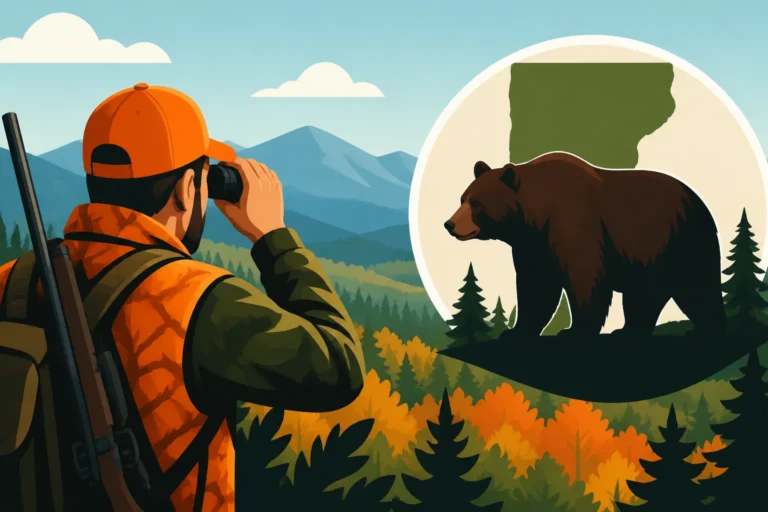
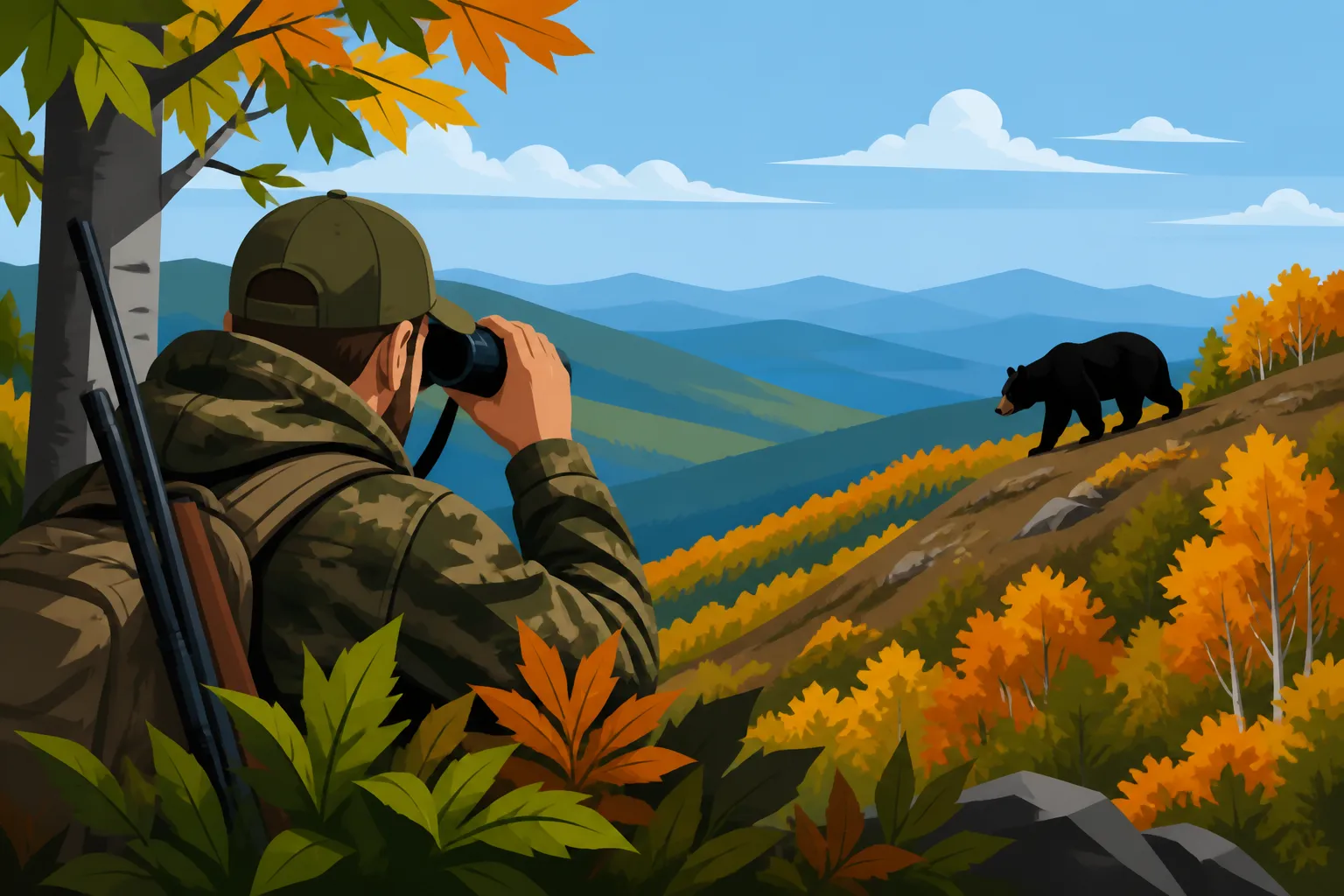
Once you've entered your chosen area, the hunt transitions to an intense waiting game – the art of patient glassing. You're not walking and looking; you're sitting, scanning, and absorbing. Find a vantage point that offers a broad view of the beech ridge, ideally with the sun at your back, and settle in. Use your binoculars to systematically pick apart the terrain. Don't just scan for a whole bear; look for pieces: a black lump that seems out of place, an ear flick, a subtle movement of leaves, or the distinctive shine of a wet nose. Bears, despite their size, can melt into the shadows, especially in the mixed hardwoods and softwoods that characterize many Vermont ridges.
Spend 15-20 minutes in one spot, then move slowly and quietly to another. Repeat. This methodical approach is far more effective than constantly walking. Bears are often most active during the low-light periods of dawn and dusk, but on a heavy mast crop, they can feed throughout the day. Listen as much as you look; the rustle of leaves, the cracking of nuts, or even the distinct pop of a bear breaking a branch can give them away. This patient observation is key to Spot-and-Stalk Bear Hunting Vermont Ridges successfully.
Closing the Distance and Shot Placement
This is where all your preparation culminates. Once you've spotted a bear, the real stalk begins. First, evaluate the situation: Is it a legal bear (not a sow with cubs)? What's the wind doing? Are there any natural obstacles or cover you can use for your approach? Plan your route meticulously, always staying downwind and using every bit of terrain and vegetation to conceal your movement. Move slowly, deliberately, and silently. Take one step at a time, checking your footing and making sure no twigs snap underfoot. When you can, keep low, crawling if necessary.
The goal is to get within your effective shooting range, whether that's 30 yards for archery or 150 yards for a rifle. Once you're in position, take a deep breath and ensure you have a clear, ethical shot. Bear vitals are slightly different from deer; aim for the front shoulder to penetrate the lungs and heart. Wait for the bear to present a broadside or slightly quartering-away shot. Do not rush. If the bear senses you, it will often bolt silently into the thickest cover, disappearing as if by magic. If the shot is good, give the bear time to expire before trailing. This is crucial for successful recovery, as outlined in Best Pack for a Northeast Kingdom Moose Hunt, though applies to bears too, given their resilience and the challenging terrain.
Common Bear Movement and Feeding Habits on Beech Ridges
| Time of Day | Typical Activity on Beech Ridge | Hunter Strategy |
|---|---|---|
| Pre-Dawn | Moving from bedding to feeding areas, early feeding | Silent entry, set up for glassing. |
| Dawn-Mid Morning | Active feeding, some bedding in thickets | Patient glassing from vantage points. |
| Mid-Day | Bedding in dense cover, some opportunistic feeding | Slow still-hunting through thickets, or glassing from afar if clear. |
| Mid Afternoon-Dusk | Increased feeding activity as evening approaches | Focus on feeding areas, anticipate movement. |
| Post-Dusk | Moving to bedding, continued feeding | Prepare for low-light shots, careful exit. |
This table illustrates general patterns; bear behavior can vary based on pressure, weather, and mast availability.
Safety and Ethical Considerations
Hunting black bear in Vermont, especially using a spot-and-stalk method on beech ridges, is an incredibly rewarding experience. But with the thrill comes a significant responsibility for safety and ethical conduct. We share the woods with other hunters, hikers, and wildlife, and ensuring a safe, respectful hunt is paramount.
Bear Encounter Preparedness
While black bears in Vermont are generally shy and avoid humans, unexpected close encounters can happen, especially when you're actively seeking them out in their feeding zones. It's vital to be prepared for such an event. Always carry bear spray, readily accessible on your hip or chest rig, and know how to use it. Even if you're carrying a firearm, bear spray is often the more effective deterrent in a surprise, close-quarters encounter, as it doesn't require precise aim. When moving through dense cover, make some noise, talk to yourself, or wear a bear bell (though silently stalking often means forgoing the bell) to avoid startling a bear at close range. If you do encounter a bear that doesn't immediately flee, remain calm. Do not run. Make yourself look as large as possible, make noise, and slowly back away. If a bear approaches you, stand your ground, continue to make noise, and be prepared to deploy bear spray or defend yourself if necessary. Knowing Vermont Black Bear Denning Habits can also help you avoid accidental disturbance of dens, particularly in late fall.
Respecting the Animal and the Land
Ethical hunting goes far beyond legal compliance; it's about respecting the animal you pursue and the land it inhabits. This means ensuring you have a clear, ethical shot opportunity and the skills to execute it. Never take a risky shot that could wound a bear and lead to a difficult or impossible recovery. Spend time at the range, practicing from various field positions to ensure you're proficient with your weapon. After a shot, always wait an appropriate amount of time before beginning to trail, allowing the animal to expire peacefully.
Beyond the harvest, proper field care is crucial. Bears can be heavy, and getting them out of the woods, particularly a large boar from a steep ridge, is a significant undertaking. Be prepared with game bags, a good knife, and a plan for packing out the meat quickly and efficiently, especially when Hunting Bear Before the November Close, when temperatures can still be mild. You're not just collecting a trophy; you're harvesting a valuable resource. Adhere strictly to all Vermont Fish & Wildlife Department regulations, including licensing, bag limits, and reporting requirements. This commitment to ethical hunting ensures the health of Vermont's bear population and preserves the privilege of hunting for future generations.
Disclaimer
The information provided in this guide is for educational and informational purposes only and should not be considered a substitute for official hunting regulations, safety courses, or professional advice. Always consult the latest Vermont Fish & Wildlife Department regulations before engaging in any hunting activities. Hunting involves inherent risks, and personal safety is the responsibility of each individual hunter.