Calling a Bull Moose Into Range
There’s nothing quite like the sound of a bull moose grunting back at your call, especially when you’re tucked deep into the dense timber of Vermont's Northeast Kingdom. It’s a moment that sends shivers down your spine, but getting that majestic animal to actually commit and close the distance can be incredibly frustrating. This guide is all about helping you understand the nuances of moose communication and the strategic approaches to successfully call a bull moose into range for your next Vermont hunting adventure.
Understanding Vermont Moose Behavior and Communication
Before you even think about lifting a call to your lips, you need to immerse yourself in the world of the Vermont moose. These aren't whitetails, and their communication style is distinctly different, especially when you consider the unique challenges posed by the dense cover and often rugged terrain we have here in the Green Mountain State. Knowing their seasonal behaviors and how they express themselves is the bedrock of effective calling.
Seasonal Calling Windows
The prime time for calling moose in Vermont revolves heavily around the breeding season, commonly known as the rut. This is when bulls are most active, most vocal, and most receptive to calls. However, there are nuances to this window that can make or break your hunt. Early season, often leading into September, might find bulls establishing dominance but not yet intensely seeking cows. As we push into late September and October, the rut truly kicks into high gear, making it your best bet for eliciting a strong response.
During the peak rut, roughly from late September through mid-October, bulls are driven by the urge to breed. They are less wary, more aggressive towards other bulls, and highly responsive to cow calls. However, don't overlook the post-rut period. Sometimes, a bull who hasn't secured a cow might still be roaming and receptive, though usually more cautiously, as the pressure from hunters increases. Understanding these subtle shifts is crucial, and mapping tools like those found on GoHunt can help you track potential moose activity zones throughout these critical periods.
The Language of the Moose
Moose communicate through a surprisingly diverse range of vocalizations, and learning to mimic them accurately is paramount. The primary calls you'll want to master are the cow call, the bull grunt, and the raking of brush or rubbing of antlers. The cow call is typically a long, drawn-out bawl, meant to signal a receptive female. There's a certain urgency and longing in it, especially during the rut. Practice listening to real moose calls online or from experienced callers to get the cadence and tone just right.
Bull grunts, on the other hand, are shorter, deeper, and often guttural. These can be challenge calls from a dominant bull, or softer, inquiring grunts from a bull searching for a cow. Sometimes, a series of short, choppy grunts can signify a bull actively working a scrape or displaying. Beyond vocalizations, the sound of antlers raking against trees or thrashing through brush mimics a bull marking his territory or challenging a rival. These "imitation" sounds can be incredibly effective when paired with vocalizations to paint a realistic picture for an approaching bull.
Mastering the Art of Moose Calling
Effective moose calling isn't just about making noise; it's about telling a story that resonates with a bull's natural instincts. It requires patience, precision, and an understanding of how to use various calls to draw an animal closer.
Mimicking the Cow Call
The cow call is arguably the most important call in your arsenal. It's the siren song that draws bulls in. A typical cow call involves a long, nasal moan, starting low, rising in pitch, and then tapering off. Think of it as a drawn-out "Moooo-AAAWWWW-uh." The key is to make it sound authentic and not too human. You can use your voice, a specialized moose call tube, or even a birch bark cone for a more natural sound. Vary the length and intensity. Sometimes, a series of shorter, softer calls can indicate a cow searching, while a long, pleading call might suggest a cow in estrus, ready to breed.
When you're making these calls, remember that wind and thermals in steep Green Mountain terrain play a huge role in how far and where your sound travels. Always consider how your call will be carried and try to position yourself so that your sound travels effectively without giving away your exact location too easily. A good strategy is to start soft and increase volume only if there’s no immediate response.
Employing Bull Grunts and Challenge Sounds
Once you've made a cow call, if you get a response, you might want to introduce bull grunts. If the bull sounds like he’s coming in hot, an aggressive series of grunts can act as a challenge, drawing him closer to confront a perceived rival. However, if he's hesitant, softer, more inquisitive grunts might convince him that there's another bull merely in the area, not necessarily posing a direct threat, but still interested in the cow you're mimicking.
Beyond vocalizations, adding in "challenge" sounds can be incredibly effective. Take a large piece of wood or an old antler and rake it against trees, mimicking the sound of a bull thrashing branches. Break small branches, stomp the ground, or even rub an antler against a small sapling. These visual and auditory cues create a realistic scene, making the approaching bull believe he's encountering a real competitor or a cow and her suitor. It helps to paint a complete picture and can often be the final convincing element to bring a wary bull into range.
Situational Strategies for Calling a Bull Moose
No two moose calling scenarios are exactly alike in Vermont. The type of terrain, the time of day, and the bull's initial response all dictate your strategy. Being adaptable is key to success.
Setting Up and Blind Calling
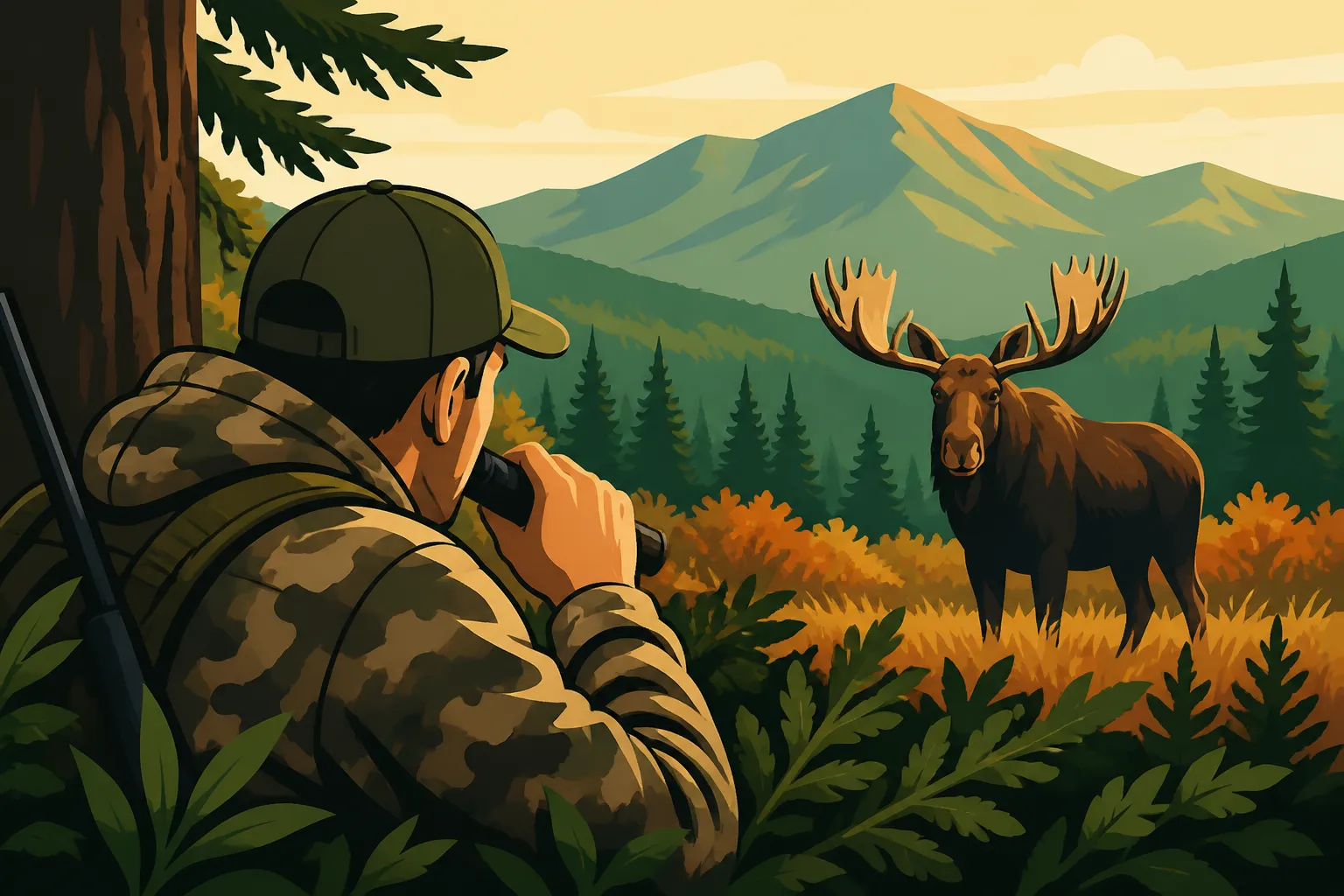
Choosing your setup location is critical. You want a spot that offers good visibility into where you expect the moose to approach, but also provides ample cover for you to remain concealed. Think about clearings, logging roads, or the edges of dense conifer stands where moose often bed. When you make your initial calls, known as blind calling, you’re essentially broadcasting to the area, hoping to grab the attention of a distant bull.
Once you get a response, resist the urge to immediately move towards him. Instead, set up strategically, always keeping the wind in your favor. Moose have incredible noses, and if they catch your scent, the game is over. If you're on public land, consider using a ground blind on public land that's been brushed in, providing additional concealment. Stay patient. Call every 15-30 minutes with a series of cow calls and soft grunts. Listen intently for return calls, breaking branches, or the sound of antlers. Remember, moose often circle downwind, so be prepared for them to approach from unexpected directions.
The Stop-and-Go Approach
When a bull responds to your calls but seems reluctant to commit, or if you hear him moving towards you but then hang up, a stop-and-go strategy can be highly effective. This involves making your calls and then remaining silent for an extended period, sometimes 15-30 minutes, mimicking a cow moving through the woods. The silence can sometimes make a bull impatient, thinking the cow is leaving, and prompt him to close the distance.
Another variation is to call, listen for his response, and then move a short distance (50-100 yards) in the direction you want him to come from, then call again. This makes it sound like the "cow" is slowly moving, enticing him to follow. This can be particularly effective in areas where moose might be slightly more pressured or if the terrain is very thick. Just make sure your movements are silent and concealed. This type of dynamic calling often requires you to be very mobile and adaptable, which is where having good maps on a service like GoHunt can be invaluable for navigating thick timber and finding new setup spots quickly.
Decoying for the Final Approach
While not as common as for deer or turkeys, using a moose decoy, particularly a cow decoy, can be the ultimate convincer when a bull hangs up just out of range. A realistic cow decoy positioned to be visible from the bull's likely approach path can give him the visual confirmation he needs. The sight of a "cow" can override his wariness, especially if you continue to offer soft cow calls.
Place the decoy so that the bull will approach it from the side or slightly head-on, giving you a broadside shot opportunity. Be sure to have a clear shooting lane between your position and the decoy, and beyond it. Sometimes, pairing a cow decoy with a small, rudimentary "bull" decoy (even just a silhouette of antlers) can trigger an aggressive response from a dominant bull, making him charge right in to confront the perceived intruder. This strategy is best used in open areas or clear-cuts where visibility is decent.
Common Mistakes and Troubleshooting
Even seasoned moose callers make mistakes. Understanding what often goes wrong and how to adjust can save your hunt from disappointment.
Calling Too Much or Too Little
One of the most frequent errors hunters make is either overcalling or undercalling. Overcalling can make you sound unnatural and alert a bull to your presence, especially if you're hitting him with aggressive calls from the start. It can also make a bull suspicious if the "cow" isn't moving or acting as a real moose would. On the flip side, undercalling might mean a distant bull never hears you, or he loses interest if the "cow" goes silent for too long.
The sweet spot often involves calling in a sequence: a series of 2-3 cow calls, maybe a grunt or two, then silence for 10-20 minutes, listening intently. If you get a response, tailor your next sequence based on how the bull reacted. If he's hot, keep up the calls; if he's hesitant, tone it down and introduce more silence. Remember, you're trying to mimic a conversation, not just yell into the woods. A platform like GoHunt can provide insights into historical moose movement patterns, helping you decide when to be more aggressive or subtle with your calling.
Ignoring Wind and Thermals
We've touched on it, but it bears repeating: moose have an incredibly keen sense of smell. Ignoring wind direction and thermals in Vermont's varied terrain is a recipe for disaster. Thermals typically rise in the morning as the ground warms and fall in the evening as it cools. This means your scent can travel uphill in the morning and downhill in the evening. Always try to position yourself downwind of where you expect the moose to be or approach from.
Before you even start calling, take a moment to assess the wind. Use a wind checker, watch the movement of leaves, or even just feel the breeze on your neck. If the wind is swirling or unpredictable, especially in steep ravines or thick conifer stands, it might be best to move to a more stable location. A moose might approach your calls, circle downwind, catch your scent, and disappear without you ever knowing he was there. This is especially true for the biggest, wariest bulls.
Impatience and Giving Up Too Soon
Moose hunting, especially with calling, demands immense patience. These animals move slowly, methodically, and often take their sweet time responding to calls. It's not uncommon for a bull to take an hour or more to cover a few hundred yards, especially if he's wary or navigating dense cover. Many hunters give up after 15-20 minutes of no response, missing out on bulls that were slowly making their way in.
Once you commit to a calling setup, plan to stay there for at least an hour, sometimes two, especially if you've heard a distant response. Keep listening, keep calling intermittently, and trust the process. A bull might stop and listen for extended periods, trying to pinpoint the source of the sound. The moment you decide to pack up might be the exact moment he decides to step into view. Remember, success in the Vermont woods often comes down to who has the most grit and patience.
| Call Type | Description | When to Use It | Expected Bull Response | Common Pitfalls |
|---|---|---|---|---|
| Cow Call | Long, drawn-out, nasal moan ("Moooo-AAAWWWW-uh"). | Primary call during pre-rut and rut to attract bulls. | Approaches cautiously, grunts back, circles downwind. | Too loud, too frequent, not natural-sounding. |
| Bull Grunt | Short, guttural "Uhh-uhh-uhh" or deeper challenging grunts. | Respond to an approaching bull, challenge a rival. | Aggressive approach, grunting, thrashing. | Too aggressive too soon, sounding like a small bull. |
| Raking/Thrashing | Scraping antlers/wood on trees, breaking branches. | Pair with vocal calls to mimic a bull marking territory. | Increased aggression, closer approach, thrashing back. | Unrealistic sounds, not sustained enough. |
| Contact Call | Softer, inquisitive "Mew" or shorter cow call. | When moving, or to reassure a wary bull. | Curiosity, cautious movement towards call. | Sounding too loud for a casual contact call. |
Final Thoughts on Bringing in a Vermont Bull
Calling a bull moose into range in Vermont is an exhilarating experience that combines woodsmanship, patience, and a deep respect for these magnificent animals. It’s not about tricking them, but rather communicating with them on their terms. By understanding their language, mastering your calls, and adapting your strategy to the dynamic environment of the Northeast Kingdom, you dramatically increase your chances of success.
It takes practice, persistence, and a willingness to learn from every encounter, whether it's a success or a quiet day in the woods. Keep honing your craft, utilize resources like Scouting Vermont Public Land Before Season and Reading Aerial Photos for Green Mountain Deer to find promising areas, and remember that sometimes the most effective call is simply listening. And if you're lucky enough to draw one of Vermont's eighty-five 2026 moose permits, these tactics will be invaluable. Whether you're hunting in the early bow season and trying to get a bull to respond, or working a drawn moose zone in the Northeast Kingdom, the thrill of a bull moose answering your call is unmatched. Don't forget that scouting beforehand using advanced mapping from services like GoHunt can give you a significant advantage in locating potential calling grounds. Remember to also look into Packing for a Northeast Kingdom Moose Hunt to ensure you have all the necessary gear for a successful trip, and even how to handle the animal once down, like Field Dressing a Moose in the Northeast Kingdom.
Disclaimer
Hunting is an inherently dangerous activity. Always prioritize safety, adhere to all Vermont Fish & Wildlife Department regulations, and respect private property. The information provided in this guide is for informational purposes only and should not replace professional hunter education or local regulations. Ensure you possess all required licenses and permits before heading into the field.