Pass-Shooting Geese Off a Roost Pond
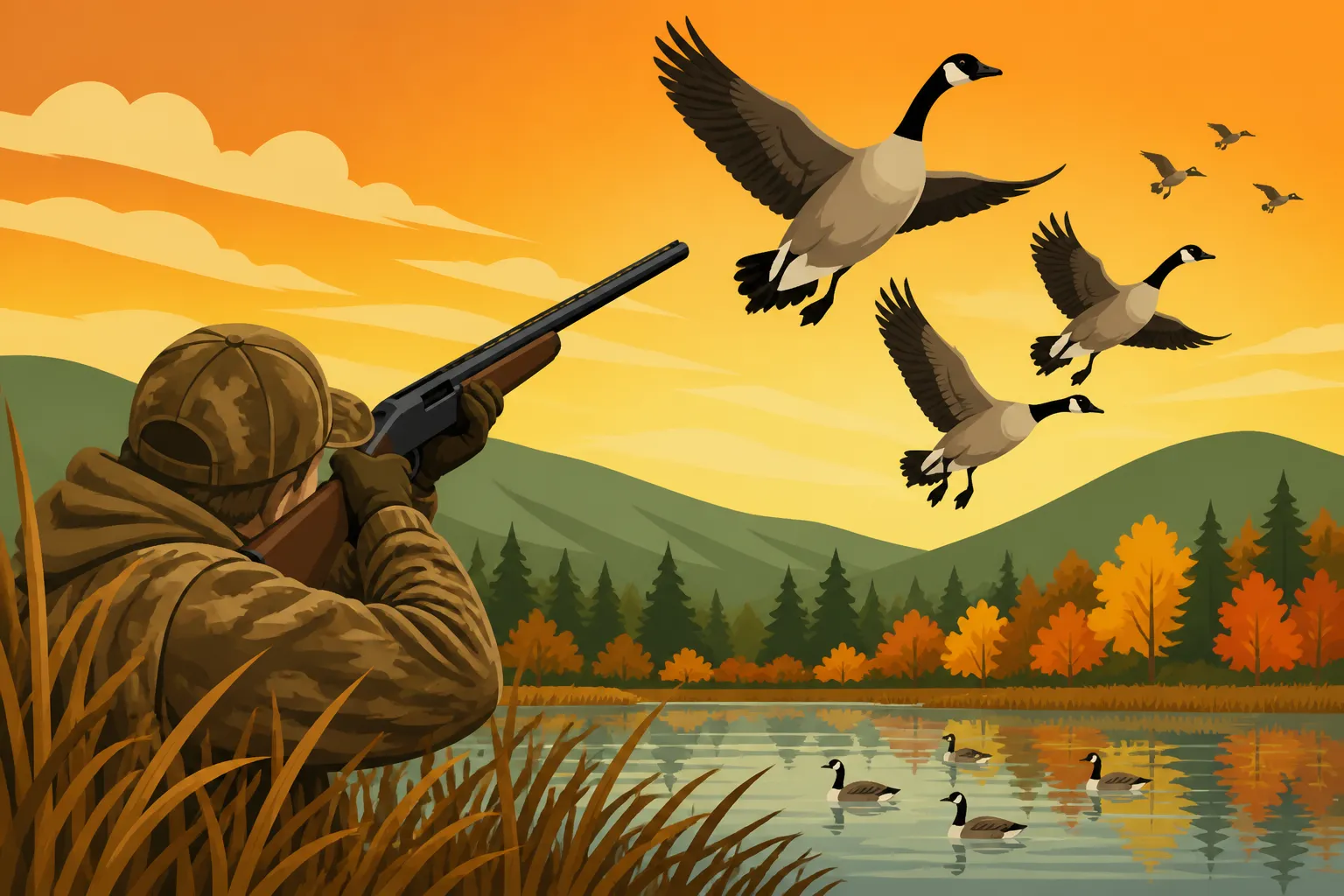
The distinct honking of geese overhead is a sound that gets any waterfowl hunter's heart pumping, but connecting with these birds, especially when they're wary, can be incredibly frustrating. They seem to know just how far out of range to stay, flying high and wide on their way to and from their nighttime sanctuaries. This guide is all about mastering the art of pass-shooting geese off a roost pond here in Vermont, helping you understand their patterns, set up effectively, and make those challenging shots count.
Understanding Goose Behavior Around Roost Ponds
Geese, particularly Canada geese, are creatures of habit, and their daily routines often revolve around safe, open water where they can spend the night undisturbed. These roost ponds or larger bodies of water become critical hubs for them, especially as hunting pressure builds throughout the season. Deciphering why they choose certain spots and how they use them is your first step to success.
Why Geese Choose Specific Roosting Locations
Imagine being a goose. You're looking for a place where you can feel secure from predators like coyotes and foxes, somewhere you can rest without constant vigilance. Open water offers exactly that. It provides an unobstructed view in all directions, making it nearly impossible for a predator to sneak up unseen. These roost ponds often have minimal vegetation around the edges, or if they do, it's low enough to maintain visibility. They also tend to be removed from heavy human activity, like busy roads or residential areas, though surprisingly, some geese will adapt to semi-urban environments if they feel safe enough. Proximity to reliable food sources, like agricultural fields or green pastures, is also a huge draw, as it minimizes the distance they have to travel each day to feed.
Typical Flight Patterns to and From Roosts
Geese generally establish predictable flight patterns between their feeding grounds and their roosting sites. In the mornings, you'll see them leave the roost, often in smaller family groups or larger V-formations, heading directly to nearby cornfields, harvested silage fields, or even grassy areas like golf courses or public parks. As the day winds down, usually an hour or two before sunset, they'll start making their way back. This is where pass-shooting opportunities often arise. Their flight paths can be influenced by wind direction, severe weather, and hunting pressure. On a calm day, they might fly a more direct route, but with a strong headwind, they’ll often fly lower, hugging terrain features or following river valleys to conserve energy. When hunting pressure is high, they'll climb to impressive altitudes to avoid detection, making accurate range estimation crucial.
Scouting and Strategic Setup for Pass-Shooting
You can't just wander out to any pond and expect to find success. Pass-shooting geese, especially on public land or along their flight corridors, requires meticulous scouting and a well-thought-out setup. This isn't about decoying birds into a spread; it's about intercepting them along their natural travel routes.
Identifying Key Flight Corridors and Approach Paths
Before you even think about setting up, you need to know where the geese are flying. This means spending time observing. Get out well before the season opens, or at least a few days before your planned hunt, during both dawn and dusk. Watch where the geese leave the roost in the morning and, more importantly, where they return in the evening. Pay attention to specific landmarks—a gap in the trees, a certain bend in a river, a low saddle in a ridge. These often act as natural funnels that geese will consistently use.
Look for signs like droppings on the ground beneath common flight paths, or even worn-down vegetation where birds might occasionally stop before heading to water. Using an aerial mapping app like GoHunt can be invaluable here. You can identify potential roost ponds, mark observed flight lines, and scout out possible ambush points from your couch, then confirm them in the field. These apps also help you identify property boundaries, which is critical for staying legal and respectful of private land. Knowing the boundaries of public access is key when you're considering hunting a state-owned wetland or similar areas that might serve as natural funnels.
Choosing the Ideal Ambush Spot and Concealment
Once you've identified a likely flight corridor, the next step is finding the perfect spot along that corridor. You're looking for a location that offers several advantages: natural concealment, a clear shot at incoming birds, and ideally, a backdrop that breaks up your silhouette. Think about treelines, thick brush, or even a slight rise in elevation that you can tuck into.
- Wind Direction: Geese, like most waterfowl, prefer to land and take off into the wind. This means their approach to the roost will often be against the prevailing wind, sometimes flying lower to battle the gusts. Position yourself so the birds are approaching you into the wind, or at least quartering to you. This slows them down slightly and presents a more stable target.
- Background: Your silhouette is your enemy. Set up with a thick hedgerow, a stand of evergreens, or even a dark patch of woods directly behind you. Avoid open fields or sky-lining yourself on a ridge.
- Safety: Always consider your shooting lane and what's beyond it. Ensure you have a safe backdrop and that you're not shooting towards roads, homes, or other hunters.
For concealment, natural blinds are often best. Piling up cattails, dead branches, or even snow can create an effective hide. If natural cover is scarce, a portable ground blind or even a simple camouflaged burlap sheet draped over some stakes can work wonders. Remember, you're not trying to be invisible to a bird directly overhead, but rather to break up your human form from their general approach. If you're trying to set up in more open areas, like along a field edge, consider the principles of a layout blind hunting a Champlain Valley field to apply for extreme low-profile concealment.
Executing the Shot and Ethical Considerations
Pass-shooting is a challenging endeavor, and it demands excellent wing-shooting skills and a strong commitment to ethical hunting practices. When those geese finally come into range, you need to be ready to make a clean, humane shot.
Leading Your Target and Judging Range
This is where the rubber meets the road. Geese are fast, and they're often higher than you think. Estimating range accurately is paramount. A good rangefinder can be a valuable tool, especially if you can range prominent landmarks around your setup before the action starts. Without one, practice judging distances by eye; it's a skill that only improves with time.
When it comes to leading, there's no magic formula that works every time, as every shot is different based on speed, angle, and distance. However, a general rule of thumb for geese is to give them generous lead. If they're crossing left-to-right at 30 yards, you might need to be swinging through and pulling the trigger when your barrel is 4-6 feet in front of the bird. For a head-on or tail-away shot, the lead is minimal or none, but these are often low-percentage shots that should be avoided. Focus on shooting at birds that are presenting a broadside or quartering shot, where their body offers a larger target.
The most common mistake is stopping the swing of your shotgun. You need to keep swinging through the bird as you pull the trigger, almost like you're painting a line in the sky. Practice this motion repeatedly, even without a gun, to build muscle memory. Don't waste shots on birds that are too far out. It's frustrating to watch them fly by, but an ethical hunter prioritizes a clean kill over a hopeful prayer.
Ethical Retrieval and Respect for Landowners
In Vermont, ethical hunting extends beyond the shot itself. A wounded bird can travel a significant distance, and it's your responsibility to pursue and recover it. This often means tracking a deer in fresh Green Mountain snow or following a blood trail, which can be challenging terrain-wise.
Be mindful of where your birds fall. If a goose drops on posted private land where you don't have permission to hunt, you still have a responsibility to retrieve it. However, you absolutely must obtain permission from the landowner before entering their property. Most landowners are reasonable if you explain the situation calmly and respectfully. Carrying a copy of Vermont's trespass and permission law in your pack can be helpful, as it outlines your rights and responsibilities. Never enter private land without explicit permission to retrieve game, and always prioritize landowner relations. Losing a bird is heartbreaking, but losing access to hunting land is a much greater, long-term consequence for all hunters.
| Action Point | Before the Hunt | During the Hunt | After the Shot |
|---|---|---|---|
| Scouting | Use GoHunt to identify corridors. | Observe real-time flight changes. | Note new roosting/feeding locations. |
| Concealment | Pre-build or find natural blinds. | Stay still, break up silhouette. | Disassemble temporary blinds, leave no trace. |
| Range & Lead | Range landmarks around your setup. | Focus on birds within 40 yards, swing through. | Reflect on misses, adjust lead for next time. |
| Ethics | Review Vermont hunting regulations. | Prioritize safe, humane shots. | Secure landowner permission for retrieval. |
Essential Gear for Vermont Goose Pass-Shooting
Being prepared for Vermont's variable weather and the specific demands of pass-shooting means having the right gear. From your shotgun to your layers, every piece plays a role in your comfort, safety, and success.
Shotgun and Ammunition Selection
For pass-shooting geese, you want a shotgun that can reach out and deliver a payload of large shot effectively. A 12-gauge shotgun is the undisputed king here, offering the best balance of shot capacity and pattern density. Many hunters prefer a 3-inch or even a 3.5-inch chamber for those extra pellets, but a standard 2.75-inch load can still be highly effective within ethical ranges.
When it comes to chokes, a modified or improved modified choke is usually a good starting point for general pass-shooting, providing a balance of spread and density. If you find birds are consistently flying very high, you might consider a full or even an extra-full choke, but be aware that this significantly tightens your pattern, making it harder to hit closer birds. Pattern your shotgun with your chosen ammunition and choke before the season to understand its performance.
Ammunition-wise, Vermont, like all states, requires non-toxic shot for waterfowl. Steel shot is the most common and affordable option. For geese, you'll typically want to go with larger shot sizes like BB, BBB, or T shot, especially if you anticipate longer shots. These larger pellets retain more energy and penetrate better than smaller shot, increasing the likelihood of a clean kill. Brands like Federal, Winchester, and Kent Faststeel are popular choices among waterfowl hunters for their reliability and performance. When pass-shooting, sometimes having a mix, like BBB for the first shot and T for follow-up if birds are retreating, can be advantageous. Remember to check the Vermont Duck and Goose Bag Limits and other specifics for the current season.
Appropriate Clothing and Footwear for Vermont Weather
Vermont weather is notoriously unpredictable, especially during the waterfowl seasons. One day it can be crisp and clear, the next it can be raining sideways or dumping snow. Layering is your best friend. Start with a moisture-wicking base layer to pull sweat away from your body, even if you're just sitting still. On top of that, add insulating layers, such as fleece or down, to trap warmth. Finally, a waterproof and windproof outer shell is non-negotiable. Look for muted, natural camouflage patterns for Vermont hardwood cover or marsh environments that blend in with the local foliage.
When you're out there hunting a specific Vermont Waterfowl Zone, you might find yourself trekking through wet fields or along marshy edges to get to your spot. This makes reliable footwear crucial. Insulated, waterproof boots are essential, especially for late-season hunts when temperatures drop. Consider models like those from Lacrosse or Muck Boots known for their durability and warmth. If you anticipate wading through shallow water or setting up on the edge of a beaver flowage, then a good pair of chest waders for Vermont waterfowl hunting might be necessary. Keeping your feet dry and warm can make or break an all-day sit. Don't forget a warm hat and gloves—your extremities are often the first to feel the cold.
Remember to ensure you have all the necessary permits and certifications, including your Vermont Migratory Bird Certification and a Federal Duck Stamp Requirement, before heading out. The more prepared you are, the more enjoyable and successful your time chasing geese in Vermont will be.
Disclaimer
Please note: Hunting regulations and seasons can change. Always consult the most current Vermont Fish & Wildlife Department regulations before planning any hunting trip. This guide is for informational purposes only and does not supersede official state regulations.