Working a Champlain Valley Cornfield Edge
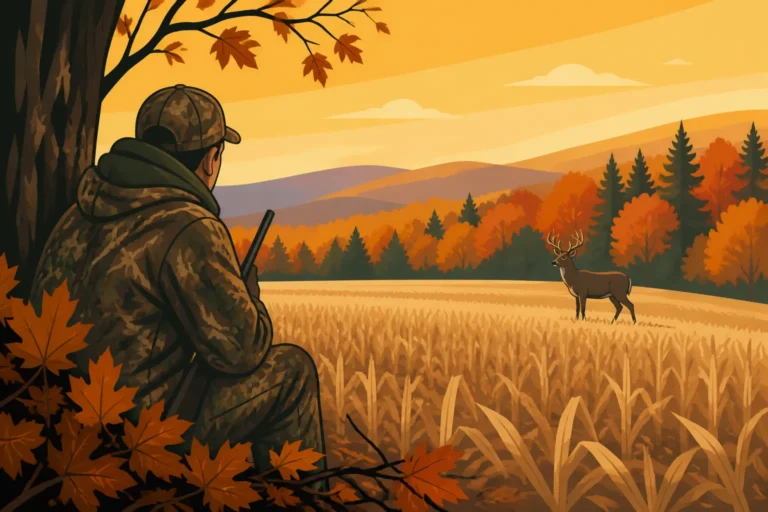
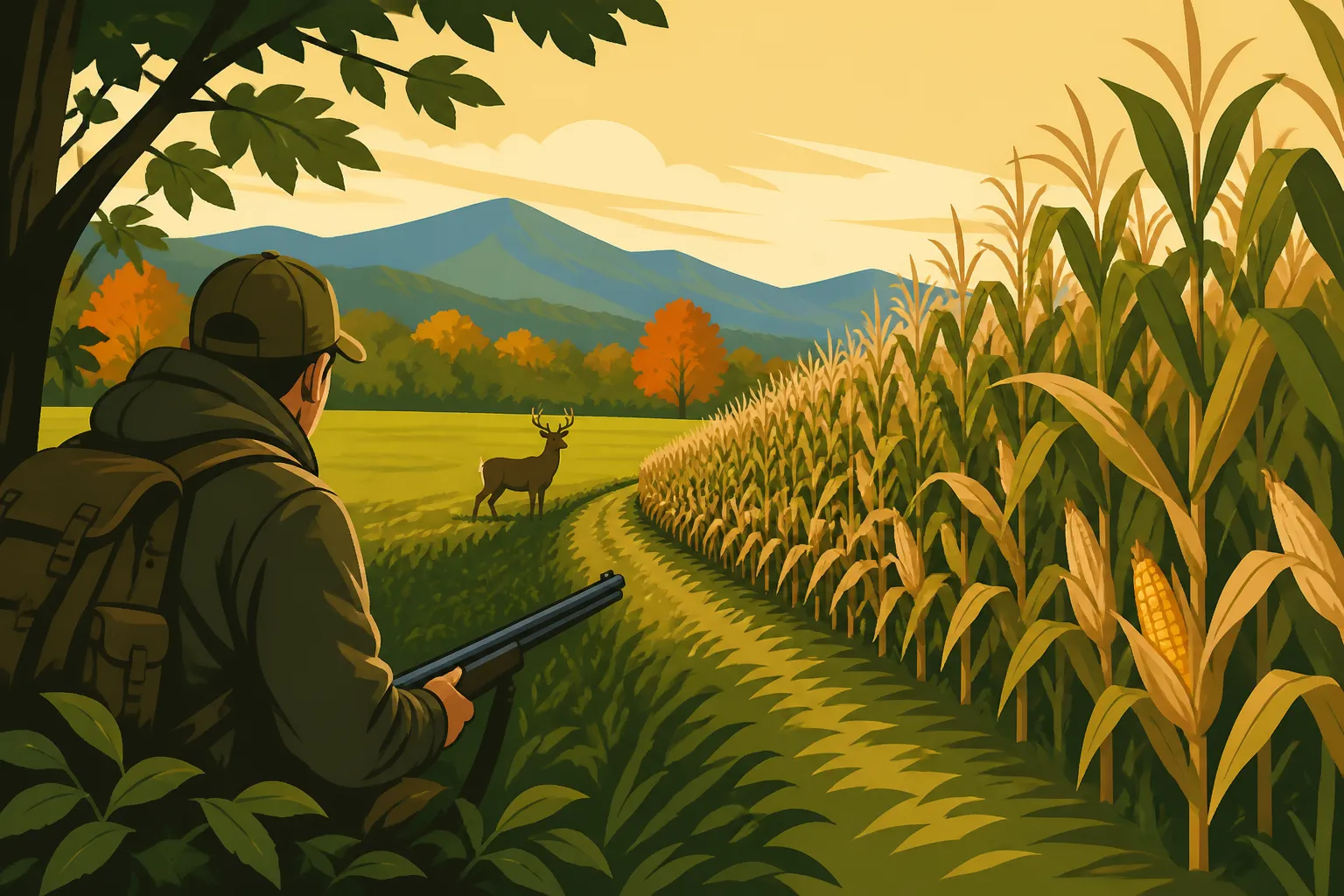
There's nothing quite as frustrating as seeing deer pour out of a standing cornfield at dusk, knowing full well you were set up just a hundred yards away and didn't even get a glimpse. Hunting the edges of these fertile fields, especially in Vermont's Champlain Valley, presents unique challenges and incredible opportunities. This guide will walk you through the nuanced art of identifying key deer movement, understanding their patterns, and setting up strategically to intercept those elusive whitetails right where they want to be.
Understanding Why Deer Gravitate Towards Cornfield Edges
The allure of a cornfield for a whitetail deer is undeniable, and it’s about far more than just the food. While the promise of a carbohydrate-rich meal is a huge draw, cornfields offer a trifecta of benefits: food, cover, and a sense of security that deer simply can’t resist. Ignoring these factors means missing out on prime opportunities, especially in the agricultural heartland of the Champlain Valley.
The Ultimate Food and Cover Combo
Imagine being a deer. You need to eat, and you need to feel safe while doing it. A cornfield, particularly when it's standing tall and green, provides exactly that. During the early and mid-archery seasons, the stalks offer incredible visual cover, allowing deer to move freely, browse on corn kernels and leaves, and feel completely hidden from prying eyes. They can bed down deep within the rows, disappearing as if by magic, and then emerge onto the edges to feed without exposing themselves to wide-open spaces for too long. This dense cover also provides thermal regulation, keeping them cooler in the hot early season sun and offering a windbreak as autumn chills settle in. It’s a literal fortress of sustenance.
Transition Zones and Travel Corridors
Deer, like most wildlife, are creatures of habit, and their movements are often dictated by efficiency and security. A cornfield edge isn't just a boundary; it's a vital transition zone. Think of it as the highway system for deer moving between bedding areas, other food sources, and water. Deer will often travel along these edges, using the standing corn as a shield, even if they aren't actively feeding. They know that once they step out into an open hayfield or a more sparse woodlot, they become vulnerable. This makes the edge itself a high-traffic area, a natural funnel where multiple deer trails converge as animals move from deep within the field to adjacent woods, fencerows, or other browse areas. Understanding these subtle travel patterns along the edge is critical to predicting their behavior.
Thermal Regulation and Security
Beyond food and cover, cornfields offer important environmental advantages. On a hot September day, the dense canopy of a standing cornfield provides significant shade, creating a cooler microclimate within its rows. This allows deer to escape the heat of the sun, conserving energy. Conversely, as colder weather sets in during late fall, those same dense stalks can break the biting wind, providing a degree of thermal protection. Deer are always looking for the path of least resistance and the most comfortable environment, and a cornfield delivers. Furthermore, the sheer height and density of corn offer a profound sense of security. A deer entering a cornfield feels instantly concealed, reducing stress and encouraging them to linger longer. This feeling of safety influences where they choose to bed, feed, and even rut, often keeping them very close to or within the corn itself. This inherent sense of security is what often makes these edges so productive.
Strategic Scouting and Interpreting Sign
You can’t just walk up to any cornfield edge and expect success. The real work begins long before you ever hoist your stand. Strategic scouting, both prior to the season and in the days leading up to your hunt, is paramount. You need to become a detective, reading the subtle clues deer leave behind to understand their specific routines in that particular field.
Identifying Primary Entry and Exit Points
Deer don't just wander out of a cornfield haphazardly. They have preferred entry and exit routes, often dictated by topography, prevailing winds, and the security of adjacent cover. Look for well-worn trails leading directly into the corn from nearby woodlots, fencerows, or draws. These trails will often be more pronounced at pinch points or along natural funnels. Pay close attention to corners of the field, especially those that meet a dense woodlot or a creek bottom. Deer will often skirt the edges, picking up on fresh scent or signs of danger before fully committing to open ground. Don’t overlook fence lines or breaks in the tree line that allow easier access. These primary routes are gold, indicating consistent movement. Identifying these spots is crucial for knowing where to Hang a Stand on a Champlain Valley Field Edge.
Locating Rubs, Scrapes, and Trails
Once you've identified potential entry and exit points, dive deeper into the specific sign deer are leaving. Look for distinct trails that parallel the cornfield edge, indicating habitual travel. These are often less defined than trails going directly into the field, but they show consistent movement along the periphery. Fresh rubs on small trees or saplings along the edge, especially during the pre-rut and rut, are clear indicators that bucks are actively working this area. Similarly, look for scrapes—patches of disturbed earth often with an overhanging branch (licking branch) that bucks use to communicate. These are scent posts, advertising their presence. The freshest scrapes and rubs indicate current activity and a high likelihood of a buck returning. Pay attention to the size of the rubs; larger rubs often mean bigger bucks. Don't forget to look for Reading Vermont Mud for Fresh Deer Movement, as soft ground will often clearly show direction of travel and recent activity.
Leveraging Digital Tools and Pre-Season Observation
Modern technology has revolutionized scouting, and it's a huge asset for cornfield edge hunting. Tools like GoHunt or other satellite imagery apps allow you to "scout" from your couch, identifying potential bedding areas, connecting corridors, and natural funnels before you even set foot in the field. Look for variations in terrain, subtle draws, or isolated pockets of cover that might lead directly to the corn. Pinpoint potential stand locations based on prevailing winds and access points. However, digital scouting should always be followed up with boots-on-the-ground confirmation. Walk the edges, observe from a distance with binoculars, and use trail cameras strategically placed on those primary entry/exit trails or near active scrapes. This pre-season intelligence, combined with real-time observation, will paint a much clearer picture of deer movement. It's an essential part of Scouting Vermont Public Land Before Season, even if you're on private land.
| Scouting Strategy | Key Focus | Best Time to Implement | Expected Outcome |
|---|---|---|---|
| Digital Mapping | Topography, cover, access roads, property lines | Year-round, pre-season | Identify potential hot spots, travel corridors |
| Boots-on-Ground | Fresh tracks, rubs, scrapes, defined trails | Pre-season, during season | Confirm digital findings, locate specific deer sign |
| Trail Cameras | Time of movement, specific deer (bucks/does) | Weeks leading up to season | Verify deer patterns, identify individual animals |
| Glassing | Deer entering/exiting field, overall patterns | Morning/evening, during season | Observe natural movement, confirm preferred routes |
Optimizing Your Setup for Success
You’ve done your homework, scouted diligently, and now it’s time to pick your spot. Setting up effectively on a cornfield edge is a nuanced art, requiring careful consideration of your chosen method, the prevailing conditions, and your ability to get in and out undetected.
Treestand vs. Ground Blind Placement
The choice between a treestand and a ground blind often comes down to the available cover and your personal hunting style. If the cornfield borders mature hardwoods with good, straight trees, a treestand offers an elevated vantage point, allowing you to see over shorter vegetation and increasing your shot opportunities. Placing your stand slightly back in the woods, just off the edge, can make you less detectable while still providing a clear view of the field edge and trails. Conversely, if the border cover is sparse, brushy, or lacks suitable trees, a ground blind might be the better option. A well-brushed-in ground blind, tucked into a fencerow or a thicket, can be incredibly effective, especially if deer are accustomed to seeing hay bales or other farm equipment. Regardless of your choice, prioritize concealment. The goal is to blend into the environment so seamlessly that a deer walking twenty yards away doesn't give you a second glance. For tips on Using a Ground Blind on Public Land, these principles apply equally to private land.
Mastering Wind, Thermals, and Sun Angles
This is arguably the most critical aspect of setting up on a cornfield edge. Deer rely heavily on their sense of smell, and the wind is their primary information highway. Always, always play the wind. Your scent must be carried away from where you expect deer to approach or cross. This often means setting up on the downwind side of a primary travel corridor. In the Champlain Valley, where terrain can be flatter but still have subtle undulations, thermals can also come into play, especially in the mornings and evenings. As the ground warms, air rises (morning), and as it cools, air falls (evening). This can pull your scent up or down a slight incline, directly into a deer’s nose. Understanding Wind and Thermals in Steep Green Mountain Terrain still applies in less dramatic topography. Furthermore, consider the sun angle. In the mornings, you want the sun at your back, illuminating the deer as they enter the field and keeping you in shadow. In the evenings, the opposite is true; having the sun setting behind you can make it harder for deer to spot your silhouette.
Minimizing Your Footprint: Entry and Exit Routes
Even the best setup can be ruined by a careless entry or exit. Deer are incredibly sensitive to disturbance, and walking through their core areas or alerting them to your presence before you even sit down will doom your hunt. Plan your entry and exit routes meticulously. Try to use existing ditches, creek beds, fencerows, or dense timber that will conceal your approach. Avoid walking directly across open fields, especially at times when deer might be present. Your ideal route should keep you downwind of bedding areas and minimize noise and visual disturbance. If you’re hunting a specific corner, consider walking a wide arc to approach it from the most advantageous side. And when the hunt is over, exiting quietly and carefully is just as important. Busting deer on your way out can educate them and make them wary of that area for days to come. Think about how deer are likely to enter and exit, and try to do the opposite, or at least in a way that doesn’t alert them. Consider Entry Routes Through a Cut Cornfield for ideas that can be adapted to standing corn.
Timing Your Hunt for Peak Activity
Deer behavior around cornfields is highly cyclical and influenced by the season, the crop's status, and even daily weather patterns. Knowing when to be there is just as important as knowing where to set up.
Early Season: The Standing Corn Advantage
During the early archery season, when the corn is still standing tall and green, deer use it extensively for both food and security. This is a time when deer might spend nearly all day within the field itself, only venturing out to the very edges at dawn and dusk. Your best bet for Hunting a Standing Corn Field for Deer is often the first hour of daylight and the last hour of legal shooting light. Deer will emerge from the depths of the corn to browse on the edges or move to adjacent food plots or water sources. Focus on trails leading directly into thick bedding cover nearby, or those subtle travel corridors along the edge. The challenge here is that deer have so much cover within the corn that pinpointing their exact exit point can be tough. Prioritize areas where the corn meets another strong cover type, like a swamp or a dense conifer stand, as these often act as natural funnels.
Post-Harvest: Gleaning Opportunities
Once the combines roll through, the entire dynamic of the cornfield changes dramatically. The cover is gone, but the food source isn't. Deer will flock to harvested cornfields to "glean" the kernels left behind on the ground. This period, often from late October through the rifle and muzzleloader seasons, can be incredibly productive, especially for Late-Season Food Sources for Vermont Whitetails. Now, deer are exposed, so they’ll often feed in these fields during low-light conditions, or on cloudy, rainy, or snowy days when visibility is poor. They’ll also be more likely to feed in fields that are adjacent to very dense cover where they can quickly retreat. This is a great time to focus on longer shots if you’re rifle hunting, or to position yourself directly in a fencerow or other linear cover bordering the field. Don't underestimate the power of a good Working a Fencerow for Late-Season Deer adjacent to a picked cornfield.
The Rut and Cold Front Dynamics
The rut, particularly in early-to-mid November, can completely change how deer use cornfield edges. While food is still important, bucks are now primarily focused on finding does. If does are feeding in or near cornfields, bucks will be there too, actively scent-checking and chasing. This is when you might see bucks moving at odd times of the day, cruising the edges looking for receptive does. Position yourself to intercept cruising bucks, especially along pinch points where a wooded finger extends into the field or where the corn meets a distinct change in habitat. During this time, aggressive calling tactics like rattling and grunting can be particularly effective.
Cold fronts can also trigger increased deer activity in cornfields. Following a sharp drop in temperature, deer often become more active, moving to feed more heavily to fuel their metabolism. This can lead to increased daylight movement in and around cornfields, making the post-cold front days prime hunting opportunities. Always check the forecast and adjust your hunting plans accordingly, keeping an eye on how these weather shifts impact Hunting the Rut in Early-to-Mid November.
Disclaimer
Hunting is an inherently dangerous activity. This article provides general information and recommendations based on common practices and experiences. Always prioritize safety, understand and follow all local, state, and federal hunting regulations, and obtain appropriate licenses and permits before engaging in any hunting activity. The author and publisher are not responsible for any accidents, injuries, or legal issues that may arise from the use of this information.