Baiting a Bear Site in Late Summer
The late summer in Vermont brings a unique blend of anticipation and challenge for bear hunters. As the days begin to shorten and a whisper of autumn coolness touches the air, our minds turn to the woods, but preparing a bear bait site during these warmer weeks can be a real headache. You’re battling heat that spoils bait too quickly, persistent raccoons and other scavengers, and the crucial need to stay within Vermont's specific regulations. This guide is here to walk you through the practical steps and considerations for effectively baiting a bear site in late summer, helping you attract those elusive bruins and lay the groundwork for a successful hunt.
Understanding Vermont's Bear Baiting Regulations
It’s easy to get excited about setting up a bait site, but rushing in without a solid understanding of the law can lead to serious headaches, fines, and even losing your hunting privileges. Vermont has some clear rules around baiting, and they're in place for good reason—to ensure fair chase, manage wildlife ethically, and prevent unintended conflicts. Before you even think about hauling your first five-gallon bucket into the woods, you need to be crystal clear on what's allowed and what's not.
Permitting and Legal Timelines
First and foremost, baiting for bear in Vermont isn't just a free-for-all. There are specific permits you need, and without them, you’re looking at a violation. You'll need to secure a bear baiting permit from the Vermont Fish and Wildlife Department. This isn't just a formality; it registers your site and helps the state monitor baiting activity, which is crucial for managing the bear population. It's also vital to remember that baiting isn't allowed year-round. There's a defined window when you can establish and maintain a bait site. Typically, you can begin placing bait just a few weeks before the early bear season opens. This late summer period, usually mid-August, is when the clock starts ticking.
Understanding the Vermont Bear Season Opening Day is paramount. You can't just put bait out whenever you feel like it. The regulations are very specific about the earliest date you can start, usually tied directly to the beginning of the early bear season, which often coincides with the latter part of August or very early September. This means your late summer efforts must align perfectly with these dates. Missing the window, either by starting too early or too late, can render all your hard work useless or, worse, land you in trouble. It’s a good idea to mark these dates on your calendar well in advance and apply for your permit as soon as possible, leaving no room for error.
Prohibited Bait Materials and Locations
Vermont's baiting rules also dictate what kind of bait you can use and, perhaps more importantly, what you absolutely cannot. The state is very specific about keeping certain materials out of the woods to protect wildlife and prevent disease. For instance, meat, fish, and bone products are generally prohibited. This is a big one, as many hunters think of these items as prime bear attractants, but they can easily spread disease and attract unwanted scavengers, creating a real mess. The focus is on natural, plant-based, and processed food items that are less likely to cause ecological harm or health risks to the bear population.
Furthermore, the placement of your bait site is just as crucial as the bait itself. You can't simply dump bait anywhere. There are rules regarding proximity to roads, public trails, dwellings, and water sources. Typically, you'll need to be a certain distance away from these areas to prevent conflicts with other recreational users or landowners and to protect water quality. Ignoring these setbacks isn’t just disrespectful; it’s illegal. Before committing to a spot, use a mapping tool like those offered by GoHunt to scout potential locations and verify distances, ensuring your chosen site complies with all regulations. This diligence will save you a lot of headaches down the line and help ensure your baiting activity is both effective and respectful of the land and other users. Knowing Baiting Bears Legally in Vermont is the absolute foundation of your entire bear hunting strategy.
Selecting and Preparing Your Late Summer Bait Site
Choosing the perfect location for your bear bait site in late summer is a multi-faceted decision that balances accessibility, bear sign, and minimizing human disturbance. You're not just looking for a spot to dump food; you're trying to create an inviting, safe, and productive feeding station that will consistently draw bears. This requires a careful eye for terrain, game trails, and the specific habits of Vermont's black bears.
Key Factors for Location Selection
When scouting for a late summer bait site, start by looking for areas that bears naturally frequent. This often means thick cover near known food sources like apple orchards, berry patches, or oak ridges where acorns will soon drop. Bears love dense bedding areas, so look for thick spruce swamps, blowdowns, or dense cedar bogs that offer security cover. Proximity to water is also a huge draw; a small creek, marsh edge, or beaver flowage provides not only a drink but also often excellent travel corridors. Don't forget that bears, especially in late summer, are trying to pack on weight before denning, so they're on the move, constantly foraging.
Another critical element is the wind. Always consider the prevailing winds in your chosen area and how they will carry scent from your bait. You want the scent to drift into areas where bears are likely traveling or bedding, pulling them towards your site, but you also want your approach to the stand to be scent-free from the bear’s perspective. This means thinking about how you’ll access the site without contaminating the area with human odor. Use a tool like GoHunt's mapping features to analyze topography and wind direction, helping you predict how scent will travel. Ideal locations are often in natural funnels, saddles, or along ridge lines that connect different food sources or bedding areas, giving bears multiple reasons and routes to visit. Checking Scouting Vermont Public Land Before Season will give you even more insights into finding prime spots.
Site Preparation and Setup
Once you've identified a promising spot, it's time to prepare the site itself. This isn't just about clearing a small area; it's about creating a durable, discreet, and effective setup. The first step is often to clear a small patch, roughly 10×10 feet, of any dense underbrush to make access easier and to keep the bait visible to approaching bears without being immediately apparent to casual passersby. You'll want to position your bait so that a bear approaching it offers a good shot angle from your planned stand location. Think about shooting lanes and the potential for a bear to come in from different directions.
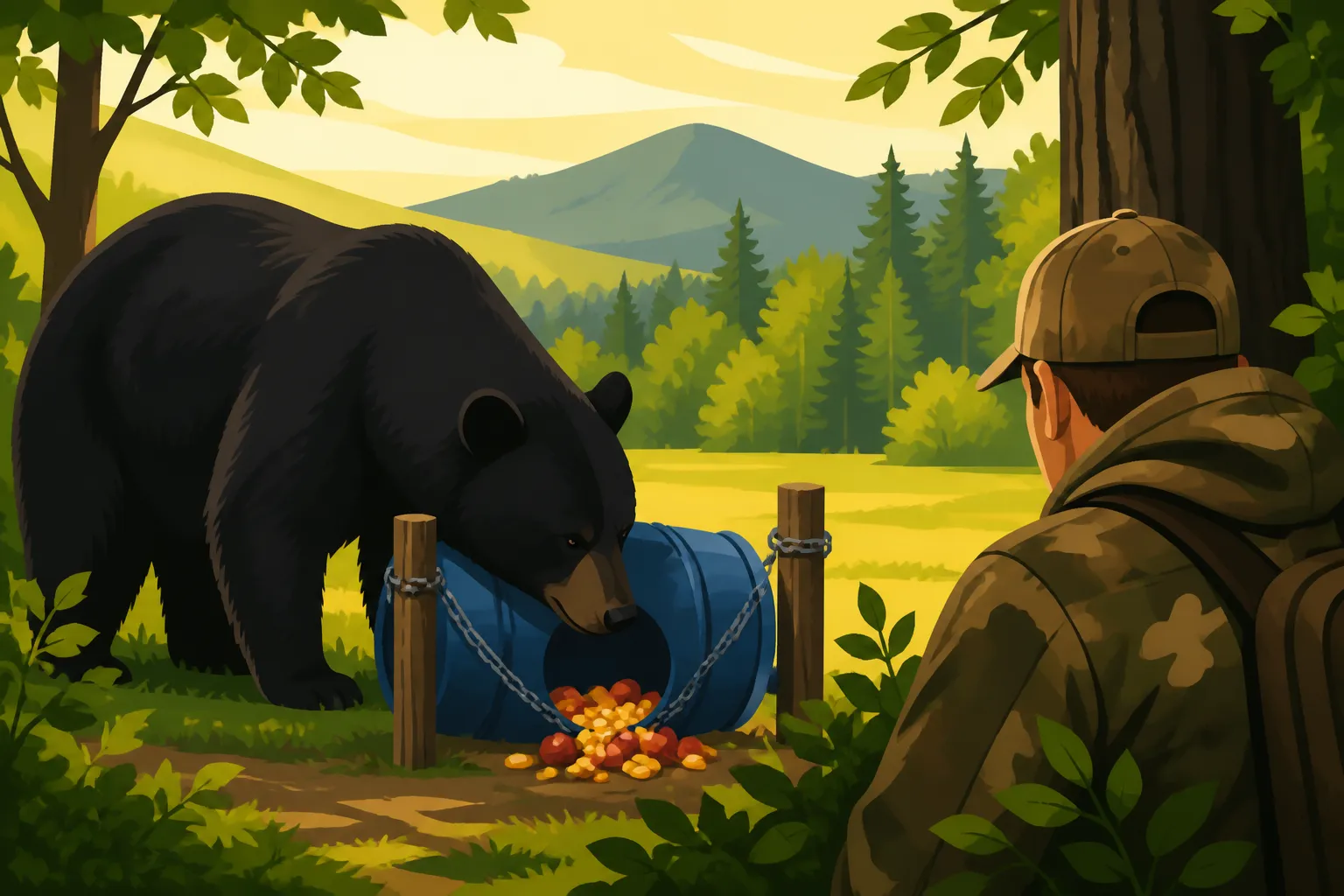
A crucial part of late summer baiting is managing the bait itself, especially with warmer temperatures. Using a sturdy Choosing a Bear Bait Container is non-negotiable. This isn't just about containment; it's about making the bait last longer, preventing smaller critters from devouring it too quickly, and requiring the bear to work for it, which keeps them coming back. Large metal drums with bolted lids, or heavy-duty plastic barrels secured with chains to trees, are common choices. You might also want to drive rebar stakes into the ground through the bottom of the barrel to prevent bears from easily rolling it away. This makes it challenging enough for bears to access, increasing the time they spend at the site and establishing a consistent feeding pattern. Setting up a robust and strategic Best Bear Bait Site Setup is vital for long-term success.
Effective Bait Selection and Management
The success of your late summer bear baiting hinges significantly on what you're offering and how you manage it. In Vermont, bears are natural opportunists, but they also have preferences, and you're competing with a bounty of natural foods as summer wanes. Your goal is to provide high-calorie, highly attractive bait that keeps them coming back, while also dealing with the challenges of spoilage and other wildlife.
High-Calorie, High-Attraction Baits
In late summer, bears are in full hyperphagia mode, meaning they are intensely focused on consuming as many calories as possible to build fat reserves for winter. This is your cue to offer them nutrient-dense, easily digestible foods. Sweets are almost always a hit. Think pastries, doughnuts, bread, cookies, and even sugary cereals. These are high in carbohydrates and fat, exactly what a bear's metabolism craves at this time of year. Maple syrup and molasses are also excellent choices, not just for their caloric value but for their strong, long-lasting scent, which can draw bears from a surprising distance.
Beyond sweets, certain processed foods can be highly effective. Dog food or various grains mixed with grease or cooking oil can add valuable fat content and create a greasy mess that bears will spend time licking up. Peanut butter is another fantastic option—it's high in fat, sticky, and its scent carries well. When thinking about quantity, don't skimp. You want enough bait to last a few days, but not so much that it spoils before a bear finds it. A good starting point is 5-10 gallons of mixed bait, adjusting as you monitor activity. Remember, the stronger the scent, the better, especially in the variable thermals of late summer, so consider spreading some of the more odorous items around the perimeter of your site to enhance its drawing power.
| Bait Type | Primary Appeal | Scent Profile | Longevity in Heat | Drawbacks |
|---|---|---|---|---|
| Pastries/Doughnuts | High sugar/fat | Strong/Sweet | Moderate | Attracts coons, can mold |
| Bread/Cereal | Carbohydrates | Moderate | Low | Spoils quickly, easily eaten |
| Maple Syrup/Molasses | Sugar/Strong Scent | Very Strong | High | Sticky, expensive if pure |
| Peanut Butter | High fat/Protein | Strong/Nutty | High | Cost, can attract squirrels/birds |
| Dog Food/Grains | Protein/Fat/Carbs | Moderate | Moderate | Attracts coyotes, takes time to eat |
| Apples/Pears | Natural sugar | Mild/Fruity | Low | Seasonal, spoils very fast |
Dealing with Spoilage and Unwanted Critters
Late summer temperatures in Vermont can be surprisingly warm, and this is your biggest enemy when it comes to bait spoilage. Perishable items like bread and pastries can mold quickly, especially if exposed to rain or direct sunlight. To combat this, aim to place bait in shaded areas and refresh your site frequently. Smaller, more frequent bait drops can be more effective than one massive drop that goes bad before a bear finds it. Incorporating non-perishable items that resist spoilage, like molasses or thick oils, can help extend the life of your site.
Beyond spoilage, you'll inevitably deal with other animals. Raccoons, opossums, squirrels, and even coyotes can quickly deplete your bait supply. This is where your Choosing a Bear Bait Container comes into play. A well-secured barrel or drum, perhaps with a smaller opening or a mechanism that requires some effort to access, will deter these smaller critters. You want the bait to be accessible to a bear but a challenge for everything else. You might even consider using game cameras to monitor your site, not just for bears, but to identify what other animals are hitting it and how quickly. This information is invaluable for adjusting your baiting strategy and knowing if you need to reinforce your container or switch up your bait mix.
Monitoring and Maintaining Your Bait Site
Once your bait site is established, the real work of monitoring and maintenance begins. This isn't a "set it and forget it" operation; successful bear baiting in Vermont requires consistent attention to ensure the bait remains attractive and active. Regular visits are crucial, but you also need to manage your presence carefully to avoid educating the bears or disrupting their patterns.
Trail Cameras and Remote Scouting
Trail cameras are your best friends in the world of bear baiting. They allow you to gather intelligence on what animals are visiting your site, at what times, and how frequently, all without needing to be physically present. Position your Best Trail Camera for a Bait Site strategically, facing the bait container, but also capturing a wider view of the approach trail. This helps you identify if the bear is coming in from a particular direction consistently. Look for models that offer good battery life and a fast trigger speed. For remote areas, cellular trail cameras can be a game-changer, sending you real-time photos directly to your phone. This means you know precisely when a bear is hitting your site, allowing you to plan your next visit or hunt with maximum efficiency.
When checking your cameras, try to be as stealthy as possible. Minimize noise, human scent, and visual disturbance. Approach your site from a different direction than you expect to hunt from, if possible, to keep your future stand entry route clean. If you use a mapping app like GoHunt, you can mark various approach routes and plan your visits accordingly, considering wind direction for each trip. These tools can help you understand Trail Camera Rules on Vermont Public Land and how to deploy them effectively while staying legal. The data from your cameras will not only confirm bear activity but also help you gauge bait consumption, allowing you to adjust the refill schedule.
Consistent Bait Refreshment and Scent Management
Regularly refreshing your bait site is paramount. A successful baiting program is built on consistency. Bears learn quickly where a reliable food source is, and if it's consistently replenished, they'll make it part of their routine. Aim to replenish your bait every few days, depending on how quickly it's being consumed and the ambient temperature. In late summer, with warmer weather, more frequent visits with smaller amounts of fresh bait might be more effective to combat spoilage. Always ensure there's something fresh and appealing available.
Scent management goes beyond just the bait itself. Every time you visit your site, you leave human scent, which can be alarming to bears, especially mature bruins. Wear clean clothing, rubber boots, and consider using scent-eliminating sprays on your outer layers. Try to make your visits quick and efficient, doing what needs to be done and getting out. Avoid unnecessary lingering, smoking, or making excessive noise. Establishing a consistent schedule for replenishment also helps. Bears are creatures of habit, and if they know the bait is refreshed every Monday and Thursday morning, they might adjust their visits around that. Observing Hunting Bear Through the Long September Season will quickly teach you the value of minimizing your human footprint. Your goal is to make the bait site feel as natural and unthreatened as possible, fostering a sense of safety for the bears, which will, in turn, increase your chances of a successful hunt when Filling an Early-Season Bear Permit becomes your priority.
Final Considerations for Late Summer Bear Baiting in Vermont
As late summer transitions into the cooler nights of early autumn, your bear baiting efforts lay the groundwork for a potentially successful hunting season. Beyond the logistics of bait, location, and monitoring, there are overarching ethical considerations and practical tips that can truly make or break your experience in the Vermont woods. It’s about more than just harvesting an animal; it’s about respecting the game, the land, and the hunting tradition.
Ethical Practices and Fair Chase
Baiting is a tool, and like any tool, it can be misused. When baiting for bears in Vermont, maintaining ethical hunting practices is crucial. This means adhering strictly to all regulations, ensuring your bait site does not become a nuisance to non-hunters or other wildlife, and always striving for a clean, humane harvest. Baiting provides an opportunity to observe bears and learn their patterns, giving you a chance to assess the animal properly before taking a shot. This could mean waiting for a specific size bear, or confirming it's not a sow with cubs—a common and vital ethical consideration when Judging a Legal Bear From a Sow With Cubs.
Fair chase remains an essential component of ethical hunting. While baiting attracts bears to a specific area, it should not remove the challenge or skill required for a successful hunt. Your stand placement, understanding of wind, patience, and shooting proficiency are still paramount. Always be prepared to pass on a shot if conditions aren't perfect or if you cannot make a clean, ethical kill. The goal is to create an opportunity, not to guarantee a harvest at all costs. This also extends to retrieving your game. If a bear is hit, put in the effort to track and recover it, no matter how challenging the terrain or how late it gets. Vermont's rugged landscape means this isn't always easy, but it's our responsibility as hunters.
Integrating Baiting with Hunting Strategy
Baiting a bear site in late summer is often just one piece of a larger hunting strategy, especially if you plan to hunt during Bear Hunting Vermont's Long September-to-November Season. The information you gain from your bait site—the times bears visit, their preferred approach routes, and their general demeanor—is invaluable. Use this intelligence to fine-tune your stand placement, plan your entry and exit routes, and select the optimal hunting times. For example, if your trail camera shows a mature bear consistently hitting the bait just before dark, you know exactly when to be on stand, silently, and ready.
Furthermore, don't rely solely on baiting. Bears in Vermont move, and they respond to natural food sources. Continue Scouting Vermont Public Land Before Season even as your bait site is active. Pay attention to mast crop conditions, such as beech nuts and acorns, and how they might influence bear movement away from or towards your bait. Consider pairing your baiting efforts with other bear hunting techniques, such as still-hunting nearby cover or even spot-and-stalk if the terrain allows, especially in larger, more open areas. The goal of a late summer bait site is to create a predictable pattern, giving you an advantage as the season progresses. It’s about gathering information and drawing them in, not just leaving out food.
Disclaimer
Please ensure you are fully aware of and compliant with all current Vermont Fish and Wildlife Department regulations regarding bear hunting and baiting before engaging in any hunting activities. Laws can change, and it is the individual hunter's responsibility to understand and abide by them. This guide provides general information and does not constitute legal advice.