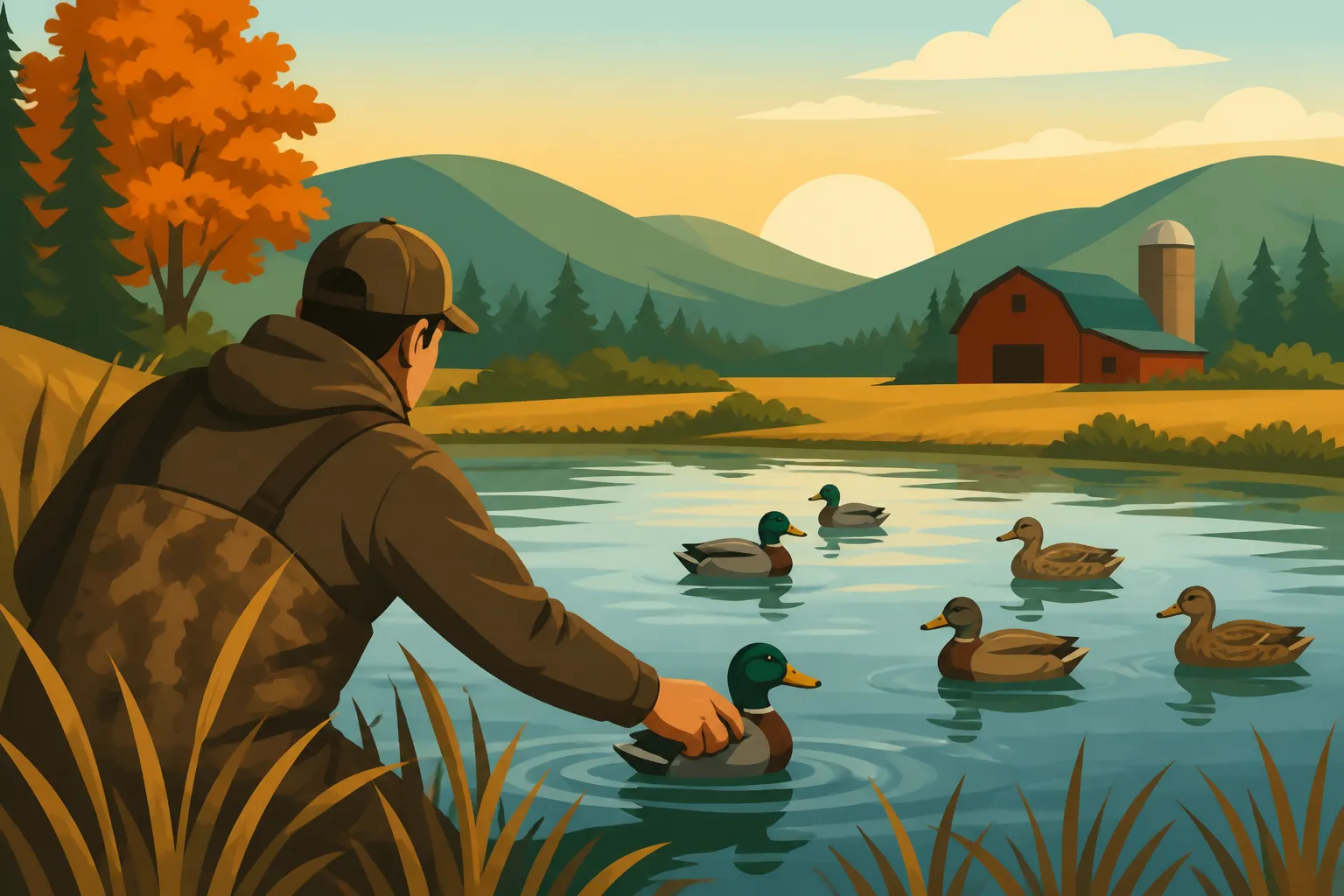
Setting Decoys on a Farm Pond
There's nothing quite like the crisp air of a Vermont autumn morning, the sun just barely thinking about peeking over the eastern ridges, and the hope of ducks dropping into your spread on a quiet farm pond. But let's be honest, those calm, small waters can be incredibly challenging. Ducks on farm ponds often get wise quickly, flying high and wary, making it feel like they can spot a fake a mile away. Setting decoys effectively on these smaller, often pressured waters is an art form, and this guide is here to break down exactly how to make your spread look irresistible to passing waterfowl.
Understanding the Farm Pond Environment
Before you even think about tossing out your first decoy, you need to become a student of the specific farm pond you're hunting. These aren't vast marshes or sprawling lakes; they're unique ecosystems with their own rules and dynamics. Ignoring these crucial details is often the first step to a frustrating, empty hunt.
Reading the Water and Surrounding Landscape
Every farm pond tells a story if you know how to read it. Pay close attention to the water's depth – some ponds are uniformly shallow, while others have distinct drop-offs or deeper sections where ducks might prefer to loaf. Look for areas of natural cover: clumps of cattails, stands of reeds, or even submerged brush can offer ducks a sense of security. These areas are often prime spots for your "resting" decoys. More importantly, consider the wind direction, which dictates how ducks will approach and land. They almost always land heading directly into the wind, using it like a runway. You also need to scout the sun's position throughout the morning. Hunting directly into the rising sun can create glare that makes your decoys look unnatural or, worse, silhouetted against the light, making them easily identifiable as fakes.
Beyond the immediate water, survey the surrounding landscape. Is there a harvested cornfield nearby? A patch of flooded timber? A green field planted for deer that ducks might also be using for forage? Ducks will often fly between feeding areas and safe loafing areas. Understanding these flight corridors and potential food sources can help you position your spread where birds are most likely to already be moving or looking for a place to settle. Knowing where to expect ducks to be flying can make all the difference in your success, so take the time to observe before you hunt.
Consider also the edges of the pond. Are there steep banks, or gentle slopes that allow for easy entry and exit from the water? Ducks, especially dabblers like mallards and wood ducks, often prefer these shallow, easy access points for feeding and preening. These subtle features can become natural funnels or attraction points, making them ideal locations to set a portion of your decoy spread or to concentrate your motion decoys.
Identifying Key Duck Species and Their Behaviors
Vermont farm ponds are magnets for specific duck species, and knowing their habits is paramount to setting an effective spread. Mallards are, of course, the quintessential farm pond duck. They're dabblers, meaning they feed in shallow water by tipping up, and they're relatively social. Wood ducks, with their incredible agility, also frequent smaller, timber-lined ponds, especially early in the season. You might also encounter Green-winged Teal or Black Ducks. Each species has preferred water depths, feeding habits, and flocking tendencies that influence how they react to decoys.
For instance, Mallards often congregate in larger, looser groups, preferring open water near cover. Wood ducks, on the other hand, might use tighter groups, often closer to the banks or overhanging trees. Tailoring your decoy selection and spacing to mirror the species you're targeting will make your spread much more convincing. If you’re seeing mostly mallards, don't fill your spread with pintail decoys; focus on what the birds in that area are actually doing and what they're looking for.
Observing how these specific ducks behave on the pond when they're undisturbed is perhaps your most valuable scouting tool. Do they land in a specific corner? Do they always raft up in the middle? Do they skirt the edges, picking through submerged vegetation? Mimicking these natural patterns with your decoys will make your setup blend seamlessly into their daily routine. This kind of detailed scouting and understanding of local bird behavior is something that services like GoHunt can help you log and review for future hunts, making you a more informed and adaptive hunter.
Assessing Hunting Pressure and Duck Skittishness
The reality of hunting ducks on smaller farm ponds in Vermont is that these birds often experience significant hunting pressure. Unlike vast public marshes, where birds might move from one unpressured area to another, farm pond ducks can become incredibly wary after just a few encounters with hunters. This skittishness requires a shift in your decoy strategy. A large, gaudy spread that might work on opening day in a remote flyway can actually alarm birds on a pressured farm pond.
If ducks are acting particularly shy, consider scaling back your decoy numbers. Sometimes, a smaller, more realistic spread of just half a dozen hyper-realistic decoys can be far more effective than two dozen less convincing ones. Focus on quality over quantity. Your goal isn't to create a massive party scene, but a small, safe-looking haven that a few weary ducks might feel comfortable dropping into. This is especially true as the season progresses and birds have seen it all.
Another factor is your concealment. Highly pressured ducks will flare at the slightest unnatural movement or outline. This means your blind setup and personal camouflage need to be impeccable. We'll delve into concealment later, but it's important to recognize that the level of pressure dictates not just your decoy strategy, but your entire hunting approach. Don't underestimate how smart these birds become. They've learned to avoid obvious setups, making subtle realism your best friend.
Decoy Spreads for Farm Ponds
Once you understand the pond and its resident ducks, it's time to put that knowledge into action by crafting a decoy spread that is both inviting and natural. There are several classic layouts that work well on farm ponds, but the key is to always be ready to adapt.
The "J" Hook or "U" Shape for Landing Zones
These classic decoy spreads are popular for a reason: they are incredibly effective at creating an inviting "pocket" or landing zone for incoming ducks. Both the "J" hook and "U" shape work by positioning decoys to form an open area directly in front of your blind, leading to a clear, calm patch of water where ducks feel safe to land. The open end of the "J" or "U" should always face directly into the wind, as this is the direction ducks will approach for landing.
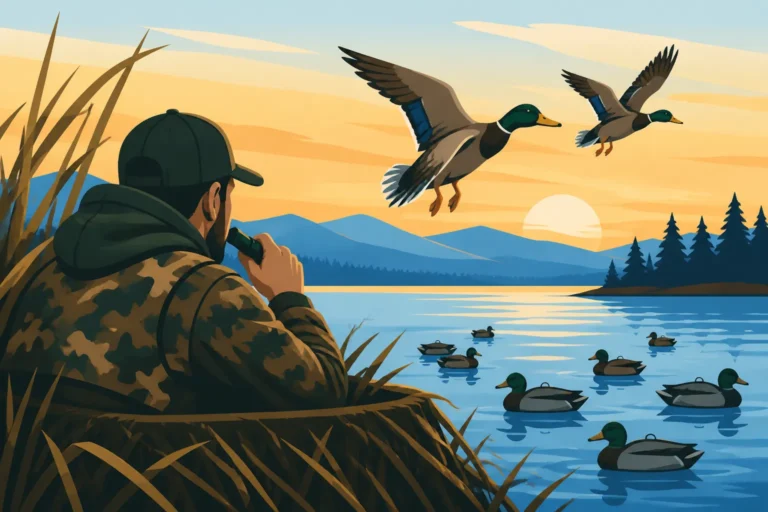
For a "J" hook, imagine the long arm of the "J" extending out from the bank or cover nearest your blind, curving gently back towards the opposite bank. The short arm of the "J" creates the downwind side of your landing zone. The "U" shape is similar but forms a wider, more enclosed pocket. Spacing is critical here; avoid placing decoys too close together. Ducks need room to land without feeling crowded. Leave at least a few feet between each decoy to mimic a natural flock spreading out to feed or rest. You can place your most active-looking decoys (feeders, preeners) closest to the open landing zone to suggest a safe, bustling environment.
| Spread Type | Description | Ideal Conditions | Key Benefit |
|---|---|---|---|
| J-Hook | Decoys form a 'J' shape, with the open hook facing into the wind. | Good for ponds with a clear wind direction and a designated landing area. | Creates a clear landing strip, guiding birds directly to the shooting zone. |
| U-Shape | Decoys form a 'U' shape, with the open end facing into the wind. | Versatile for various pond sizes; offers a wider, more inviting landing pocket. | Excellent for drawing birds into a specific zone, especially on slightly larger ponds. |
| Cluster | Small, tight groups of 3-5 decoys placed strategically. | Highly pressured birds, smaller ponds, or when mimicking resting groups. | Maximizes realism with fewer decoys, appears less threatening. |
| Loafing | Decoys scattered loosely, mimicking relaxed, resting birds. | Calm days, during mid-day lulls, or after birds have fed. | Conveys safety and tranquility, appealing to weary birds. |
Maximizing Realism with Mixed Species and Motion Decoys
To really sell your spread, you need to make it look as realistic as possible. This means incorporating a mix of species that you commonly see on Vermont farm ponds. Don't just set out all mallards if you know wood ducks frequent the area. A few wood duck decoys mixed in, especially near woody cover or the pond's edge, can add significant authenticity. Similarly, adding a black duck or two can break up the monotony and mimic the mixed flocks often seen. Remember, these birds travel together sometimes.
Motion decoys are an absolute game-changer on small, calm waters where static decoys can look lifeless. A spinning wing decoy (like a Mojo) can attract birds from a distance by mimicking a landing duck. However, on pressured farm ponds, sometimes these can be too aggressive and actually flare wary birds. Often, a jerk string setup, where you manually create ripples and movement among your existing decoys, is more subtle and incredibly effective. Even a simple swimmer decoy can add just enough motion to bring your spread to life. When choosing motion, consider the species. A flapping mallard wing works for mallards, but a subtle feeder butt decoy can suggest active feeding, which is universally appealing.
The key is balance. Too many motion decoys can look unnatural, especially on a small pond. One or two well-placed motion elements, combined with a natural mix of species and realistic poses (feeders, preeners, sentinels), will create a dynamic and believable scene. For more advanced decoy strategies, consider reading up on "Decoying Ducks on Lake Champlain" to understand how different sizes of water affect your setup.
Adapting Your Spread to Wind and Sun Conditions
Wind and sun are your two most influential factors when setting up a farm pond spread. As mentioned, ducks land into the wind, so your landing zone must be oriented correctly. If the wind shifts during your hunt (which it often does in Vermont's varied terrain), be prepared to adjust your spread. A quick reshuffle can make the difference between birds dropping in and circling endlessly out of range. Don't be afraid to pull up a few decoys and reposition them if the wind changes substantially.
The sun's position is equally important. Early morning hunts often mean dealing with the rising sun. Try to set your blind so the sun is at your back or to your side, illuminating your decoys but keeping you in shadow. If the sun is in the ducks' eyes as they approach, they'll have trouble seeing your spread clearly and might be more reluctant to commit. If the sun reflects off your decoys in an unnatural way, they'll pick up on that too. Experiment with placement to minimize glare and ensure your decoys look their best.
Consider also the water's surface. On a perfectly calm day, your decoys will look like they're painted on the water. This is when motion is most critical. Even a slight breeze creates ripples that add realism. If it's a very calm day, a jerk string is almost essential to create that lifelike movement that ducks expect to see on the water. For more details on adapting to conditions, consider the advice in "Hunting a Standing Apple Orchard" which touches on how local conditions impact game movement.
Strategic Placement and Execution
Even the most perfect decoy spread won't work if you're not hidden, or if you don't know how to interact with the birds. Strategic placement extends beyond the decoys themselves to every aspect of your hunt.
Concealment and Blind Selection
Farm ponds, by their very nature, often lack dense natural cover directly at the water's edge. This means your concealment game needs to be top-notch. A traditional permanent blind might work if you hunt the same pond repeatedly and the landowner is agreeable, but for most situations, portable options are key. A quality layout blind can be incredibly effective, especially if you're hunting from a field edge adjacent to the pond. These blinds virtually disappear into stubble or cut hay.
If you're hunting from a bank, consider a temporary blind made from natural materials. Branches, cattails, and brush collected from the immediate area can be woven into a natural-looking screen. The key is to break up your human outline completely. Even a small patch of unnatural color or a subtle glint can send wary ducks flaring. Ensure your blind material matches the surrounding vegetation as closely as possible. For guidance on creating effective cover, look into tips for "Brushing In a Blind on a Field Edge."
Remember, it's not just about hiding yourself; it's about hiding your gear, too. Don't leave your bright orange hunting pack sitting out in the open. Stash everything away inside your blind or under natural cover. The goal is to make your presence utterly undetectable to incoming birds until it's time to shoulder your shotgun.
Calling Techniques and Decoy Interaction
Calling can be a powerful tool, but on pressured farm ponds, it needs to be used judiciously. Over-calling is a common mistake that can send wary birds packing. Instead, think of your calls as a way to "talk" to the ducks, not shout at them. Start with soft, reassuring quacks or contented feeder calls when birds are distant, just enough to get their attention and make them aware of your spread.
As birds approach, observe their reaction. If they're cupping their wings and committing, you might not need to call at all. If they start to peel off or seem hesitant, a short, sharp greeting call or a comeback call can sometimes turn them around. Vary your calls; don't just blast out the same series over and over. Learn to do a feeder chatter, a contented cluck, and a single quack. These subtle sounds, combined with the visual appeal of your decoys, can be incredibly persuasive.
The interaction between calling and decoys is synergistic. Your calls draw attention, and your decoys provide the visual confirmation that it's safe to land. If you're using a jerk string, synchronize your calling with the decoy movement. A few soft quacks as your decoys stir on the water can paint a very convincing picture for circling ducks. For more general calling strategy, see "Calling a May Gobbler Off the Roost" – even though it's turkey specific, the principles of realistic, timely calling apply.
Retrieving Decoys and Post-Hunt Scouting
The hunt isn't truly over until your gear is packed up, and even then, there's more to learn. Efficient decoy retrieval is important for a few reasons. First, it respects the land you're hunting, leaving it as you found it. Second, it allows you to observe the pond environment without the pressure of an active hunt. As you pick up your decoys, take note of where ducks might have landed, where they've left droppings, or where new food sources might have become exposed.
This post-hunt observation is invaluable scouting. Did birds consistently land short of your spread? Did they swing wide on one side? This tells you a lot about how they perceive your setup and can inform your strategy for the next hunt. Did a certain part of the pond see more activity after you packed up? Was there a particular flight path you missed during your initial setup?
Consider using mapping apps, perhaps those enhanced by GoHunt, to mark these observations. Jot down notes about wind direction, sun position, and bird behavior. This kind of systematic record-keeping builds a deep understanding of your hunting spot and turns every outing into a learning experience. You might even discover new access points or hidden pockets that you overlooked previously, ensuring future hunts are even more productive.
Advanced Tips for Consistent Success
Becoming consistently successful on Vermont farm ponds requires more than just knowing where to put your decoys. It demands a holistic approach that integrates meticulous scouting, adaptive strategies, and sometimes, a minimalist mindset.
The Importance of Scouting and Observation
I can’t stress this enough: scouting is the single most important factor in consistent waterfowl hunting success, especially on smaller, pressured farm ponds. You can have the most expensive decoys and the best calls, but if you're not where the ducks want to be, it's all for naught. Before you ever set a decoy, spend time observing the pond. Drive by at different times of day (respecting private property, of course). Use binoculars or a spotting scope from a distance.
Look for flight paths: Where do the birds approach from? Where do they exit? Identify loafing areas—places where ducks simply rest and preen. These are often calm, sheltered corners. Pinpoint feeding areas, which are typically shallower sections with submerged vegetation or muddy bottoms. Notice what time of day the ducks are most active. Are they early risers, or do they prefer to visit the pond mid-morning or late afternoon? The more you observe, the more patterns you'll uncover, allowing you to fine-tune your setup and hunting times. Using aerial imagery from platforms like GoHunt can significantly aid in identifying key features like cover, open water, and potential flight paths before you even set foot near the pond. This pre-scouting is critical, especially when targeting specific areas for "Hunting the Youth Waterfowl Weekend."
Small Spreads and Minimalist Approaches
As touched upon earlier, a large, elaborate decoy spread can sometimes be counterproductive on pressured farm ponds. When ducks have been educated by hunters, they often become wary of anything that looks too "perfect" or unnatural. In these situations, a minimalist approach can be surprisingly effective. Instead of dozens of decoys, try a small spread of perhaps half a dozen to a dozen ultra-realistic decoys.
Focus on quality: choose decoys with exceptional detail, lifelike paint schemes, and natural poses (feeders, preeners). Arrange them in a loose, natural cluster, mimicking a small group of birds confidently feeding or resting. Add subtle motion with a jerk string, but avoid anything too flashy that might scream "trap!" This understated approach often appeals more to cautious birds, offering them a simple, safe-looking spot to land rather than an overwhelming flock that might trigger their suspicion. Sometimes, the less you put out, the more realistic it appears.
This minimalist strategy requires patience and confidence in your scouting. You're not relying on a massive visual draw, but rather on the subtle realism that whispers "safe" to a passing bird. It's a strategy that can pay off big when birds are otherwise ignoring larger, more aggressive spreads.
Incorporating Geese (If Present)
Many Vermont farm ponds host not only ducks but also resident Canada geese. If you've observed geese using the pond, incorporating a few goose decoys into your spread can significantly enhance its appeal. Geese are large, highly visible birds, and their presence can signal safety to ducks. Ducks often feel more secure landing near geese, as geese have excellent eyesight and are often the first to detect danger.
Place your goose decoys strategically on the bank or in shallow water near your duck spread. They act as a confidence builder, telling ducks, "Hey, if these big, wary geese are here, it must be safe." A few full-body goose decoys on the bank, along with your duck spread in the water, create a realistic scene that suggests a healthy, undisturbed feeding and loafing area. Just be sure the geese you're imitating are indeed present in the area; you don't want to create an unnatural scenario. This blend of species can be particularly effective on larger farm ponds or those with open field edges adjacent to the water, often seen when "Layout Blind Hunting a Champlain Valley Field."
Remember your bag limits and regulations for both ducks and geese in Vermont. Knowing the "Vermont Duck Daily Bag Limit" and "Vermont Waterfowl Zones and Seasons" is essential for a legal and ethical hunt.
Disclaimer
Hunting is an inherently dangerous activity. Always prioritize safety, follow all local and state regulations, and obtain proper licenses and permits before heading afield. This guide is for informational purposes only and does not supersede official hunting regulations or safety guidelines.