Hunting a Standing Corn Field for Deer
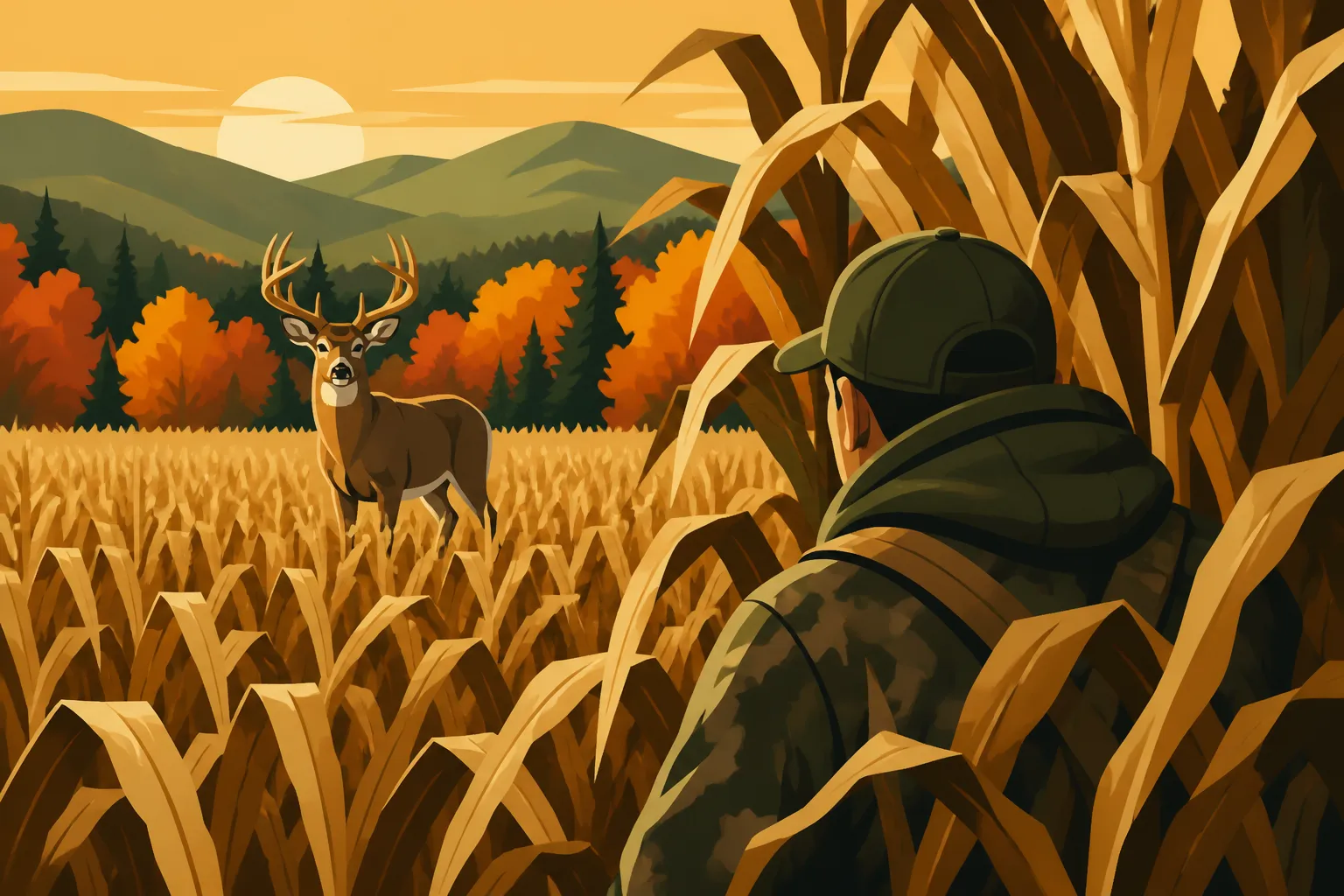
Hunting a standing corn field for deer in Vermont can feel like trying to find a ghost in a golden labyrinth. The sheer density of the stalks, combined with the abundant food source, offers deer unparalleled security and nutrition, often leaving hunters frustrated and empty-handed. This guide will delve deep into the nuances of tackling these challenging yet incredibly productive hunting grounds, offering strategies and insights to transform your next cornfield hunt into a successful one.
Understanding Deer Behavior in Standing Corn
Standing corn fields are not just food plots; they are entire ecosystems for white-tailed deer. These agricultural havens offer everything a deer needs to survive and thrive, creating unique patterns of behavior that hunters must understand to succeed.
Why Deer Love the Corn Fields
Imagine being a deer in Vermont. During the fall and early winter, a standing corn field represents the ultimate five-star resort. It provides a constant, high-energy food source as the kernels ripen and become easily digestible. But it's more than just a buffet. The tall, dense stalks offer unparalleled thermal cover, protecting deer from biting winds, early snowfalls, and even the midday sun. This cover also provides exceptional security from predators, including human hunters. A deer can disappear into a corn field just a few yards in and be virtually invisible, moving silently through the rows. This combination of food, cover, and security makes standing corn fields prime real estate for whitetails, especially when other food sources or cover options become scarce. They will often bed right in the corn, moving only when necessary, making them incredibly difficult to locate.
The Hunter's Challenge: Limited Visibility and Sound
For hunters, the same attributes that attract deer to standing corn make it an immense challenge. Visibility is drastically reduced, often to mere feet once you step more than a few rows in. This makes spotting deer, especially a wary buck, incredibly difficult, and tracking a wounded animal even harder. Furthermore, the dry stalks can be incredibly noisy to walk through, broadcasting your presence to every deer within earshot. Even a slight breeze can make the rustling corn sound like a stampede, masking your movements or, worse, drawing attention to them. The labyrinthine nature of the rows also disorients hunters, making it easy to lose your sense of direction or even forget where you parked your truck. This disorienting environment requires a completely different approach than hunting traditional Vermont hardwoods or open fields.
Scouting Strategies Before and During Season
Effective scouting is paramount when hunting standing corn. You can't just walk in blindly; you need a plan, and that plan starts long before you ever carry a weapon into the field.
Reading the Edges and Entry Points
The periphery of a standing corn field is where the story of deer movement begins. Deer rarely materialize out of thin air; they use specific entry and exit points, often dictated by surrounding cover, terrain features, or the path of least resistance. Look for well-worn trails leading into the corn from adjacent woods, creek bottoms, or fence lines. These trails are highways for deer and can indicate primary travel routes. Pay close attention to where these trails intersect with pinch points or natural funnels, as these are excellent ambush locations. Also, scout the edges for fresh droppings, tracks, and especially rubs or scrapes, which are indicators of buck activity. During the pre-season, before the corn gets too tall or dense, you might even spot deer feeding in the rows or crossing through low-lying areas. Sometimes, a deer will browse on the corn stalks themselves, leaving tell-tale broken stalks and nibbled leaves. When using mapping applications like GoHunt, zoom in on the field edges to identify these natural funnels and adjacent cover that deer might use for staging before entering the corn. This pre-visualization can save you countless hours of in-field scouting.
Utilizing Technology and Observation for In-Field Intel
Because physically entering a standing corn field can be disruptive and noisy, technology becomes an invaluable scouting tool. Trail cameras, placed along suspected entry points, along prominent trails just inside the corn, or at strategic intersections within the field, can provide round-the-clock intel on deer movement patterns, times, and even specific animals. Consider cellular trail cameras if your area has service, as they allow you to monitor activity remotely without disturbing the field. While drones are generally prohibited for hunting purposes in Vermont, using them to observe general field usage before season, where legal and ethical, can sometimes reveal patterns. However, the most effective "in-field" intel often comes from observation at a distance. Glass the field edges from a vantage point at dawn and dusk. Pay attention to where deer enter and exit, and watch for any subtle movements or rustling deep within the corn that might indicate bedding areas. Some hunters even climb nearby trees or use elevated observation posts to get a better view over the stalks, though this should only be done with utmost safety in mind. Remember that deer patterns can change quickly based on weather, hunting pressure, and the stage of corn maturity. Checking out our guide on Scouting Vermont Public Land Before Season can offer broader tips applicable to all habitats.
Effective Hunting Methods for Standing Corn
Hunting standing corn requires adapting your usual tactics. The dense environment demands patience, precise movements, and sometimes, a little teamwork.
Still-Hunting the Rows and Strategic Drives
Still-hunting through standing corn is arguably one of the most challenging, yet potentially rewarding, methods. It requires immense patience and an understanding of wind direction. You'll need to move extremely slowly, taking one or two steps, then stopping to scan every possible opening, listening intently for the subtle rustle of deer movement. Always hunt into the wind, if possible, to keep your scent from preceding you. The key is to move at a deer's pace, pausing for minutes at a time, allowing deer to relax if they've heard you, and giving you time to spot them before they spot you. Look for subtle variations in the corn—a slight bend in a stalk, an area where the light changes, or the glint of an antler.
Another highly effective method, especially on larger fields, is a strategic deer drive. This typically involves two or more hunters. "Pushers" walk through the corn, attempting to gently move deer towards "posters" positioned at known exit points or along natural funnels. The goal isn't to scare deer into a mad dash, but to nudge them slowly. This means pushers should move steadily but not aggressively, making just enough noise to encourage movement. Communication between pushers and posters is crucial for safety and effectiveness. This method is particularly useful in fields adjacent to thick cover or wooded areas, where deer will naturally try to escape. For more insights on group hunting, you might find our article on Deer Drives With Three or Four Hunters helpful, as it covers similar principles.
Stand Placement for Ambush Points
While still-hunting is active, setting up a stand is a more passive, ambush-style approach that can be incredibly effective when you've identified key deer movement patterns. The best stand locations are typically along the edges of the corn field, especially where deer habitually enter or exit. Look for pinch points created by topographical features, fences, or changes in vegetation. A stand overlooking a field edge that funnels deer towards a wooded bedding area or a water source can be deadly.
However, don't limit yourself to the very edge. If the corn field has an internal logging road, a power line cut, or a prominent low spot, a strategically placed ground blind or ladder stand inside the field (where legal and safe) can offer unexpected opportunities. For these internal setups, consider how you will access the stand silently and how your scent will disperse. Remember that your entry and exit routes must be carefully planned to avoid spooking deer. A well-brushed-in ground blind can offer excellent concealment within the field itself, allowing you to position yourself closer to internal deer trails. When considering your setup, remember the importance of Wind and Thermals in Steep Green Mountain Terrain, a principle that applies to flat corn fields just as much as it does to mountainous regions.
Wind and Thermal Considerations
No matter your chosen method, understanding wind and thermals is absolutely non-negotiable when hunting standing corn. Deer rely heavily on their sense of smell, and the dense corn stalks can create unpredictable air currents. Always try to hunt with the wind in your face or quartering to you, carrying your scent away from where you expect deer to approach or bed.
In corn fields, especially large ones, thermals can play a significant role, particularly during the early morning and late evening. As the sun rises, the ground and corn begin to warm, causing air to rise (updrafts). In the evening, as temperatures drop, the air cools and sinks (downdrafts). This means scent can be carried upwards or downwards, influencing how deer perceive your presence. If you're setting a stand on a slightly elevated section of a field, consider how these thermals will affect your scent cone at different times of the day. A helpful tip is to use a milkweed pod or a commercial wind checker frequently to monitor even subtle changes in air direction. This constant vigilance will help you make real-time adjustments to your approach, ensuring your scent doesn't betray your position. Many hunters, myself included, have found invaluable insights by pre-season scouting with tools like GoHunt, even for identifying subtle changes in terrain that might influence thermals.
Gear and Safety for Corn Country
Hunting standing corn presents unique challenges, making specific gear choices and rigorous safety protocols absolutely essential for a successful and safe experience.
Appropriate Clothing and Footwear
Walking through dense, rustling corn requires clothing that is both durable and quiet. Avoid noisy fabrics like stiff nylons or thick canvas that will crackle and rub with every step. Instead, opt for soft, quiet materials like fleece, wool, or brushed synthetics. Since corn stalks can be abrasive, choose pants and jacket materials that can withstand snags and tears. Layering is crucial, as you might start a still-hunt in cool morning air but warm up quickly from exertion, only to get cold again if you sit for an extended period. Our guide on Layering for Vermont's Long Hunting Season provides excellent advice on this.
Footwear is equally important. The ground inside corn fields can be uneven, muddy, or strewn with fallen stalks, which can trip you up. Waterproof boots with good ankle support are essential. You might be traversing damp soil or even small puddles, and keeping your feet dry will make a huge difference in comfort and focus. Traction is also key, as dry corn husks can be surprisingly slick underfoot.
Safety First: Visibility, Communication, and Shot Planning
Safety is paramount, especially when hunting dense cover like standing corn, where visibility is limited, and other hunters might be present. Always wear sufficient blaze orange, even if not legally required for the specific season or weapon you're using. A blaze orange vest or hat can be easily seen by other hunters, significantly reducing the risk of accidents. Refer to Vermont Blaze Orange Requirements for specific regulations. If you're hunting with a group, establish clear communication protocols before entering the field. Two-way radios are excellent for this, allowing you to coordinate movements and confirm positions.
Crucially, always know what's beyond your target. The limited visibility in standing corn means you must be absolutely certain of your backdrop before taking any shot. Never shoot at sound or movement. Identify your target clearly, and ensure there's no other hunter, farm equipment, or livestock behind it. Plan your shots carefully, aiming for clean, ethical kills, and be prepared for a potentially challenging track job if the deer travels deep into the corn. Using a GPS device or a robust mapping app on your phone (like GoHunt, which allows for offline map downloads) to mark your entry point and any trails you follow can be a lifesaver if you need to backtrack or recover a downed animal.
| Method | Pros | Cons | Best Conditions |
|---|---|---|---|
| Still-Hunting | Stealthy, good for wary deer | Extremely slow, physically demanding | Small to medium fields, light wind |
| Drives | Can push deer out of dense cover | Requires multiple hunters, coordination | Large fields, adjacent thick cover |
| Stand Hunting | Low impact, covers key travel routes | Requires pre-scouting, can be boring | Field edges, internal funnels, consistent deer patterns |
| Spot & Stalk | Exciting, adaptive | Very difficult in standing corn due to cover | Short corn (early season), very specific vantage points |
Deer Recovery and Post-Shot Strategy
Even with the best shot placement, deer often run a short distance, and in standing corn, even a short distance can feel like miles. After the shot, mark the exact spot where the deer was standing, or where you last saw it, with a piece of flagging tape or by noting a specific stalk or pattern. Give the deer some time, especially if it was a marginal hit, but don't wait too long in warmer temperatures.
Begin your track slowly and methodically. Look for blood, broken stalks, and tracks. In corn, often the most reliable sign isn't blood on the ground but rather blood smears on the lower stalks as the deer brushes past. If the blood trail peters out, expand your search in a spiral pattern or enlist the help of a well-trained tracking dog, which is legal in Vermont for deer recovery. An article on Blood Trailing After Dark in Vermont could provide valuable recovery tips, as tracking in corn often mimics the challenges of low light. Be prepared for a physically demanding recovery, possibly involving cutting paths through dense corn to access the deer.
The Vermont Corn Landscape
Vermont's agricultural landscape, particularly in regions like the Champlain Valley, offers numerous opportunities for hunting standing corn. These fields are often integrated into dairy farms, providing year-round food sources for local deer populations.
Identifying Productive Corn Fields
Not all corn fields are created equal. The most productive fields for deer hunting are typically those adjacent to good deer cover—woodlots, swamps, dense thickets, or creek bottoms. Isolated corn fields in wide-open expanses might attract deer, but they offer less security, and deer might only visit them under the cover of darkness. The size of the field also matters. Smaller fields, say 5-20 acres, can be hunted effectively with still-hunting or small drives. Larger fields, sometimes stretching for hundreds of acres, require more extensive planning and often a larger hunting party for drives.
Access is another critical factor. Many corn fields are on private land. Always secure proper permission from the landowner before stepping foot on their property. Building good relationships with farmers can unlock incredible hunting opportunities. They often welcome hunters who can help manage deer populations that can cause significant crop damage. In our region, often a Champlain Valley dairy farm edge will transition right into standing corn, offering prime hunting opportunities.
Adapting to Corn Harvest Cycles
One of the biggest variables when hunting standing corn is the harvest schedule. Farmers will typically harvest their corn in late fall, often from mid-October through November. This can dramatically change the hunting dynamics overnight. A field that was dense cover one day can become an open expanse of stubble the next.
When the corn is harvested, deer are forced to abandon their secure hideaway and seek cover and food elsewhere. This can push them into adjacent woodlots, making those areas temporarily hotter for hunting. It also makes remaining standing patches, especially if they are small or isolated, extremely attractive. After the harvest, deer will return to glean dropped ears of corn, making the cut fields excellent places for late-season hunting, often with a ground blind or by still-hunting the edges. The key is to be adaptable and scout constantly, understanding that the landscape can change rapidly. Our article on Entry Routes Through a Cut Cornfield details how deer use these fields post-harvest. This constant shift is part of what makes hunting Vermont such a dynamic and engaging pursuit, challenging hunters to stay on their toes season after season.
Disclaimer
Hunting is an inherently dangerous activity. Always prioritize safety, understand and follow all local and state hunting regulations, and obtain proper licenses and permits. The information provided in this guide is for informational purposes only and should not replace professional guidance or proper hunter education. Be mindful of property boundaries, respect landowners, and practice ethical hunting at all times.