Vermont Black Bear Denning Habits
When the colder winds sweep through the Green Mountains and the last of the autumn leaves fall, many of us wonder where Vermont's black bears disappear to. It's a question that perplexes both seasoned hunters and curious nature enthusiasts alike, especially since knowing their habits can give you an edge in understanding their movements. This guide will take a deep dive into the fascinating world of Vermont black bear denning habits, shedding light on where they go, why they go there, and what this means for anyone traversing their wild domain.
The Annual Winter Slumber: Understanding Vermont Black Bear Denning
Black bears in Vermont don't truly "hibernate" in the same way some other mammals do. Instead, they enter a state called torpor. This is a crucial distinction, especially for those of us who spend time in the woods during the late fall and early winter. While their heart rate, respiration, and metabolic rate drop significantly, their body temperature only decreases by about 7-12 degrees Fahrenheit, unlike true hibernators whose temperatures can plunge to near freezing. This means they're not in a deep, unresponsive sleep; they can be aroused relatively easily if disturbed, though they’d much rather stay snuggled up and conserving energy.
The primary driver for this annual torpor isn't just the cold, but the scarcity of food. Bears are opportunistic omnivores, and when Vermont's bountiful fall mast crops—like acorns and beechnuts—disappear under the snow, and insect activity ceases, their main food sources vanish. Denning allows them to survive these lean months by living off the fat reserves they diligently built up during the autumn hyperphagia phase, where they might consume 20,000 calories a day. Understanding this energy conservation strategy helps explain why they're so focused on feeding heavily right up until den entry, and why they'll emerge hungry come spring.
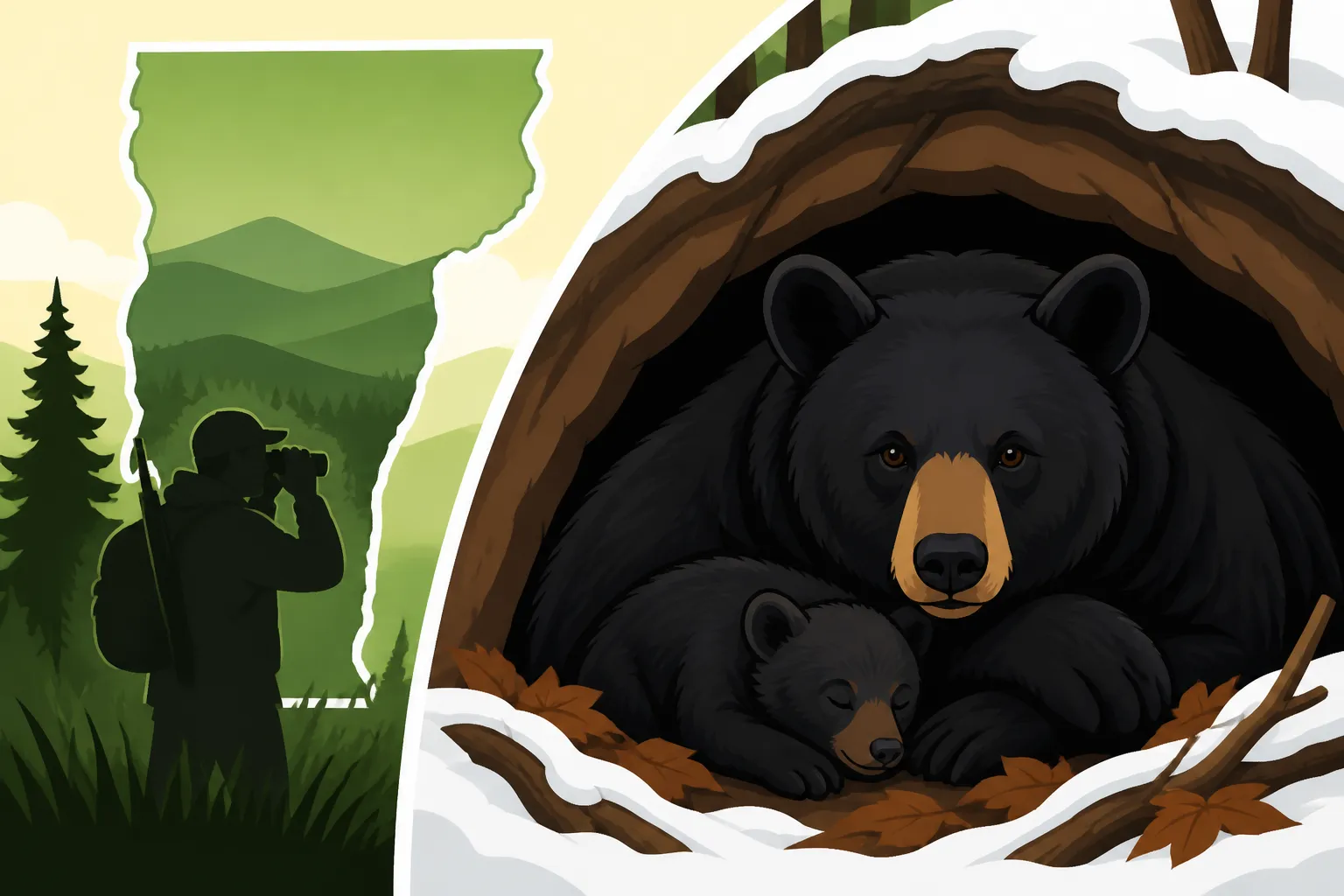
Interestingly, pregnant sows have the most profound denning experience. They give birth to their cubs in the warmth and security of the den, typically in late January or early February. The tiny, blind, and helpless cubs suckle while the mother remains in torpor, waking just enough to care for them. This incredible feat highlights the evolutionary advantage of denning, providing a safe, insulated nursery during the harshest part of the year, all while the mother expends minimal energy. For hunters, knowing this provides a deeper respect for these animals and reinforces the importance of ethical hunting practices, especially concerning sows with cubs. Judging a Legal Bear From a Sow With Cubs is always a critical skill.
Where Vermont's Bears Tucked In: Diverse Denning Habitats
Vermont's black bears are incredibly adaptable when it comes to choosing a den site. There isn't one single "perfect" type of den; instead, they utilize a variety of natural and sometimes even man-made features that offer protection from the elements and predators, and provide insulation. Their choices often reflect the available terrain and cover in different parts of the state.
One of the most common and classic denning locations, particularly in the rugged terrain of the Green Mountains or the rocky areas of the Northeast Kingdom, is a rock den. These can be shallow depressions under large boulders, deep crevices in cliff faces, or small caves. The rocks themselves offer excellent thermal mass, helping to maintain a more stable temperature inside the den, which is crucial for energy conservation. A bear will often line these with leaves, grass, or conifer branches to enhance insulation and comfort. When you're Scouting Vermont Public Land Before Season, keep an eye out for these types of natural rock features, as they often get reused year after year.
Another frequent choice for denning is within hollow logs or under the root masses of large, fallen trees. After a big hardwood or softwood topples, its root ball can create an impressive cavity, offering a secure and insulated space. Bears might excavate these areas further, creating a snug chamber. Similarly, large, hollow logs, especially those with decayed interiors, provide ready-made shelters. In dense softwood stands, particularly those with a lot of blowdown, bears can sometimes create dens simply by burrowing into thick brush piles or under a tangled mess of fallen timber. These "brush dens" might not offer the same rock-solid protection but can be surprisingly effective at insulating from snow and cold winds.
Sometimes, especially in areas with significant human impact, bears will choose less conventional sites. Abandoned culverts, old foundations, or even brush piles left by logging operations can serve as den sites. While bears prefer solitude, their adaptability means they will sometimes utilize whatever suitable cover is available, even if it's closer to human activity than we might expect. Knowing the diversity of den types helps hunters think like a bear when trying to predict their movements in the late season, or when considering where a bear might be holed up during a tracking effort. Finding Sign in Green Mountain Timber in the late fall could certainly include looking for potential den sites.
The Calendar of Hibernation: When Vermont Bears Den and Emerge
The timing of when Vermont black bears enter their dens and when they emerge is not fixed, but rather influenced by a complex interplay of environmental factors, primarily food availability and ambient temperature. However, we can observe general patterns that hold true for most of the state's bear population.
Typically, most adult bears in Vermont will begin to seek out and enter their dens in late November or early December. This timing coincides with a noticeable drop in consistent natural food sources and the onset of colder temperatures and regular snowfall. However, there are nuances. Pregnant sows, for instance, tend to be the first to den up, often as early as late October or early November, driven by the biological imperative to find a safe, undisturbed place to give birth. Their need for security and a stable environment for their developing cubs takes precedence, pushing them into their dens earlier than solitary males or barren females.
On the flip side, large, healthy males that have been very successful at packing on fat reserves might linger longer, taking advantage of any remaining food sources, or even just delaying the inevitable. I've known hunters who've encountered large boars still moving about well into December during Vermont's December Muzzleloader Season if the snow hasn't gotten too deep and a few late-season apples are still hanging on. These robust individuals have the fat stores to burn, allowing them more flexibility. The severity of the winter weather also plays a role; a sudden, deep freeze or heavy snowfall can accelerate denning for all bears, while a mild, open autumn might prolong their active foraging.
Emergence from the dens typically occurs in late March or early April, again varying by individual and by specific weather conditions. Males usually emerge first, eager to stretch their legs and find their first spring meals. Sows with new cubs will be among the last to leave their dens, waiting until the weather is consistently milder and there's a better chance of finding food for themselves while still protecting their vulnerable offspring. This period of early spring activity is a critical time for bears as they work to replenish lost weight and begin their annual foraging cycle anew. The shift from denning to active foraging marks a new phase in their annual rhythm, important for anyone studying or hunting these magnificent animals.
| Den Entry Period (General) | Den Exit Period (General) | Influencing Factors | Common Den Types |
|---|---|---|---|
| Late Nov – Early Dec | Late Mar – Early Apr | Food availability (mast crops, berries), severity of cold weather, snowfall depth, reproductive status (pregnant sows den earlier) | Rock crevices, hollow logs, root balls, brush piles, culverts |
Implications for Hunters: Scouting Denning Areas and Late-Season Strategy
For hunters, understanding black bear denning habits isn't just academic; it offers practical insights that can inform your scouting and hunting strategies, particularly during the late fall seasons. While you certainly aren't looking to disturb a denning bear, knowing where they might be going to den, or where they've denned in the past, can unlock valuable information about their pre-denning movements and preferred habitat.
In the weeks leading up to their den entry, bears are in a critical phase of hyperphagia, meaning they're eating almost constantly to build up fat reserves. This is when they are most active and often most predictable, as they focus heavily on remaining food sources. If you know that a certain rock outcrop or section of dense blowdown might be a favored denning area, you can then focus your scouting in the surrounding habitat for feeding sign – like broken branches in apple orchards, disturbed ground from grubbing for roots, or fresh scat loaded with beechnut husks. This can help you understand travel corridors and feeding patterns during the late-season archery or even the start of rifle season before they disappear. Using mapping applications like those offered by GoHunt can help you identify areas with rocky terrain or dense timber that might offer ideal denning habitat, allowing you to focus your pre-season scouting efforts on those key zones. Reading Aerial Photos for Green Mountain Deer can similarly be applied to bear sign, helping identify such features.
Finding an old den site can be a goldmine of information, even if it’s currently empty. Bears often reuse den sites, especially if they are secure, well-insulated, and in an undisturbed location. Discovering an old den during an off-season scouting trip means you've identified a spot that a bear, or perhaps even multiple bears over the years, has deemed safe for their long winter's nap. While you wouldn't hunt directly over a den, knowing its location allows you to strategize. What kind of food sources are nearby? What are the natural travel routes leading to and from that den? This knowledge helps you piece together the puzzle of bear movement in that specific area, giving you an advantage for future hunting seasons.
Furthermore, awareness of denning behavior helps emphasize ethical hunting during the late bear season, which in Vermont often runs right up until the end of November, sometimes even overlapping with rifle season. Hunting Bear Before the November Close is an active time. As bears get closer to den entry, they are heavily focused on feeding and sometimes less cautious. Hunters need to be particularly vigilant in identifying legal bears and avoiding sows with cubs, which are often the first to den and the most vulnerable. Understanding that a bear in late November is likely seeking a den means you are dealing with an animal under a different set of biological pressures than one encountered in early September. This nuanced understanding contributes to a more responsible and successful hunting experience overall.
Disclaimer
This article is for general informational purposes only and does not constitute professional advice. Laws, prices and regulations vary by location and change over time. Consult a qualified professional for guidance on your specific situation.