Vermont Timber Rattlesnake Range
It's no secret that when you're out hunting or just exploring the wilds of Vermont, you're always keeping an eye out for game animals or interesting tracks. But sometimes, what you don't want to stumble upon can be just as important to be aware of. One creature that often sparks a mix of fear and fascination is the timber rattlesnake, a species that calls a very specific, limited part of our beautiful state home. This guide is all about understanding where these elusive reptiles live in Vermont, what their habitat looks like, and how to safely enjoy our outdoors with respect for all its inhabitants.
Understanding Vermont's Timber Rattlesnake Presence
For many years, the timber rattlesnake in Vermont has been almost a mythical creature, spoken of in hushed tones by old-timers and sometimes dismissed as a relic of the past. But they are very much still a part of Vermont's natural heritage, though their presence is incredibly rare and geographically constrained. Knowing where they might be found is the first step in appreciating and safely coexisting with them.
The Elusive Nature of the Timber Rattlesnake
Let's be real, most Vermonters go their entire lives without ever seeing a timber rattlesnake, and that's by design. These aren't aggressive creatures looking for trouble; they're incredibly shy and reclusive. They'd much rather avoid human contact than engage with it. Their camouflage is superb, allowing them to blend seamlessly into leaf litter or rocky outcrops, making accidental encounters more likely than deliberate ones. When you consider their cryptic nature and their limited numbers, it's no wonder they remain so mysterious. They are also incredibly important to our ecosystem, acting as natural pest control, helping to keep rodent populations in check.
Historical Range and Current Strongholds
Historically, timber rattlesnakes likely had a wider, albeit still patchy, distribution across Vermont, primarily along the western and southern reaches of the state. Over time, due to habitat loss, human persecution, and environmental changes, their populations have dwindled dramatically. Today, their primary stronghold is found in a very specific region of Rutland County, particularly in areas characterized by rugged, rocky terrain, often with south-facing slopes. These isolated populations are incredibly vulnerable, which is why they are a state-listed endangered species. While there might be occasional unconfirmed sightings or even isolated individuals outside of these core areas, it's crucial to understand that their continued existence hinges on these specific, protected habitats.
Identifying Key Habitat and "No-Go" Zones for Hunters and Hikers
As hunters and outdoor enthusiasts, we spend a lot of time in the woods, often in places others avoid. This means we're more likely to stumble upon unique habitats, and potentially, unique creatures. Knowing what timber rattlesnake habitat looks like isn't about fostering fear; it's about being informed and responsible.
Prime Habitat: Ledges, Talus Slopes, and Sun-Drenched Areas
If you're out in the woods, especially in the western and southern parts of the state, and you come across steep, rocky ledges, particularly those with a south-facing aspect that catches a lot of sun, you're looking at potential rattlesnake country. These areas, often characterized by jumbled talus slopes (piles of broken rock) at the base of cliffs, provide perfect basking sites and crucial denning habitat. They love to warm up on sun-baked rocks. You'll also find them in mature deciduous forests, especially those with an open understory that allows sunlight to penetrate, or near old abandoned quarries. When you're Still-Hunting Green Mountain National Forest Timber or trying to locate where Vermont Bucks Bed in Thick Cover, always be mindful of these rocky areas. A good mapping app like GoHunt can help you identify these topographical features before you even set foot in the woods, allowing you to scout for potential hazards alongside deer sign.
Seasonal Movements and Denning Sites
Understanding the seasonal patterns of timber rattlesnakes is key to knowing when and where you might encounter them, or more likely, avoid them.
| Season | Activity | Typical Habitat | Hunter/Hiker Awareness |
|---|---|---|---|
| Spring (Late April – May) | Emergence from dens, basking, seeking mates | Sunny, rocky ledges near den sites | Higher chance of seeing them basking on exposed rocks. |
| Summer (June – August) | Dispersal from dens for foraging | Forests, rocky areas, sometimes near water | More spread out, but still preferring rocky, dense cover. Be extra vigilant when moving through brush or reaching into hidden spots. |
| Fall (September – October) | Return to communal den sites (hibernacula) | Moving towards established den locations | Increased movement as they seek winter shelter. |
| Winter (November – March) | Hibernation in dens | Deep rock crevices, underground dens | Very low chance of encounter as they are hibernating. |
During the spring and fall, when they are emerging from or returning to their communal den sites, often referred to as hibernacula, their movements are more concentrated. These dens are absolutely critical for their survival, and disturbing them is not only illegal but can be dangerous. As a hunter tracking a deer in late fall, like during Hunting Into the December Muzzleloader Close, you'd generally be less concerned about rattlesnakes due to their hibernation. However, in early fall, during the Hunting Vermont's Regular Archery Season Into December, they might still be active, especially on warmer days.
Safety and Coexistence: What to Do in Rattlesnake Country
Encountering a venomous snake can be unnerving, but knowledge is power. The goal isn't to be afraid of the woods; it's to be respectful and prepared. These encounters are rare, but knowing what to do can make all the difference.
Recognizing a Timber Rattlesnake and Its Warning Signs
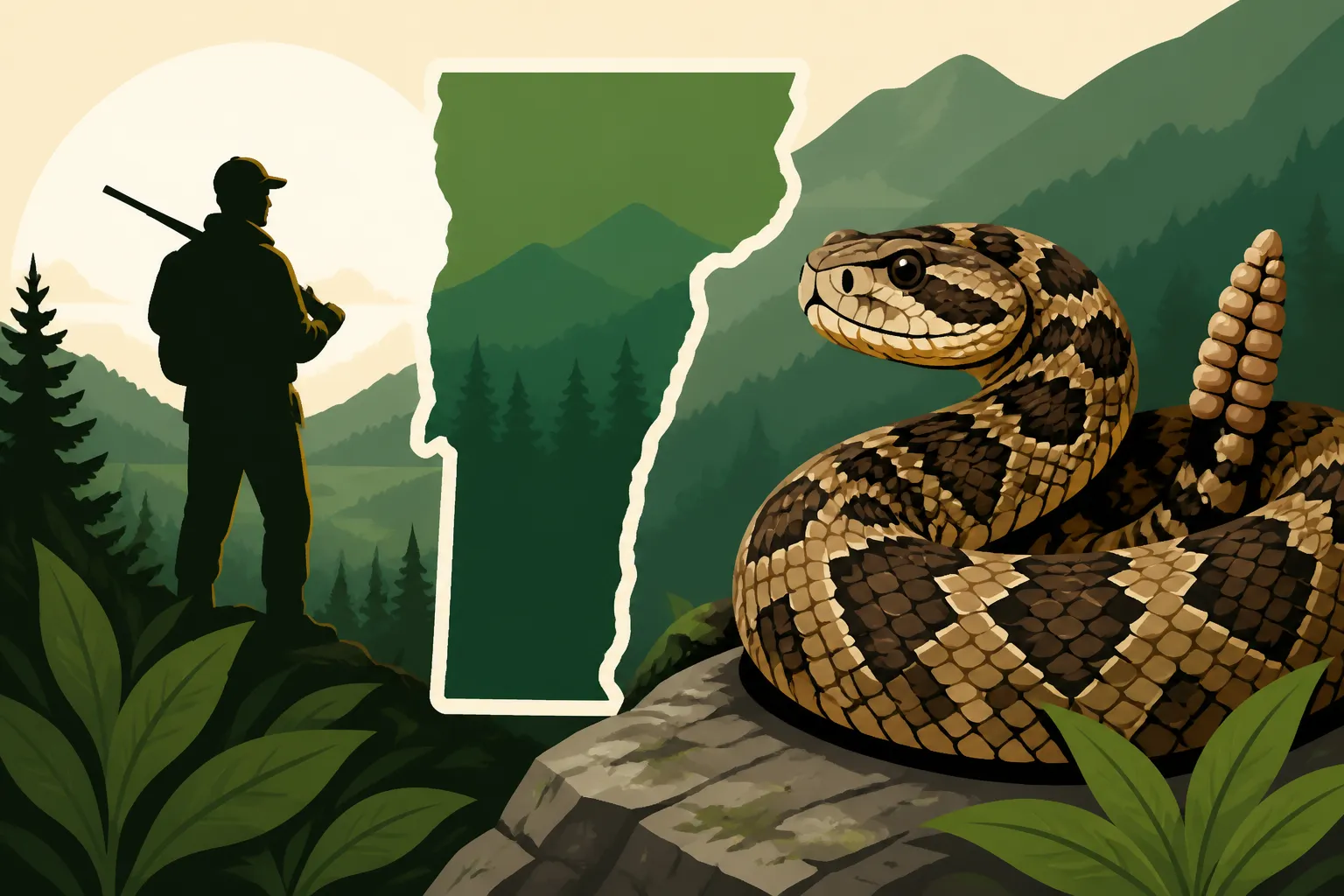
A timber rattlesnake is typically a large, heavy-bodied snake, often 3-5 feet long. They come in two color phases: a yellow phase with dark crossbands over a yellowish or tan body, and a black phase, which is much darker, sometimes almost entirely black, with faint crossbands. The most distinctive feature, of course, is the rattle on its tail. Their head is broad and triangular, much wider than their neck, with vertical pupils.
If you hear a rattle, stop immediately. Their rattle is a warning, a gift they give you to let you know you're too close. They coil into an S-shape, ready to strike, but only as a last resort if they feel threatened. They don't want to waste their venom on something they can't eat.
Best Practices for Hunters and Outdoor Enthusiasts
When you're out in areas known for rattlesnakes, or even just rocky, overgrown terrain, some common-sense practices can keep you safe:
- Watch Your Step: This sounds obvious, but keep your eyes on the ground, especially when stepping over logs, rocks, or through tall grass and thick brush.
- Wear Appropriate Footwear: High leather boots, especially snake boots, can offer significant protection if you accidentally step near one. You're probably already wearing good Boots for Green Mountain Ridge Terrain or Boots for Northeast Kingdom Bog Hunting, and that's a good start.
- Use a Stick or Trekking Pole: When moving through dense vegetation or reaching into dark crevices, use a stick to probe the area first.
- Never Reach Without Looking: This is critical. Don't reach under rocks, into brush piles, or into dark holes without thoroughly checking first. That shed antler might not be worth the risk!
- Give Them Space: If you encounter a rattlesnake, the best thing to do is slowly back away, giving it a wide berth. Do not try to move it, capture it, or harm it. Remember, these are protected animals.
- Stay Calm: Panicking can lead to accidents. Move away calmly and deliberately.
- Know Your Route: Using a mapping app like GoHunt can help you plan your movements and avoid unnecessary risks in particularly rocky or dense areas. It’s a great tool for Scouting Vermont Public Land Before Season and identifying terrain features.
- Report Sightings: If you do see a timber rattlesnake, especially outside of its known core range, report it to the Vermont Fish and Wildlife Department. This information is invaluable for conservation efforts.
Conservation Efforts and Legal Protections
Understanding the timber rattlesnake's precarious existence in Vermont helps us appreciate why their protection is so important. They are a fragile part of our state's biodiversity, and their future depends on informed human interaction and dedicated conservation.
Why They're Protected and Their Ecological Role
The timber rattlesnake is listed as endangered in Vermont, a designation that comes with strict legal protections. This status reflects their critically low population numbers and the ongoing threats they face, including habitat destruction, illegal collection, and fear-driven killing. Every individual rattlesnake in Vermont is precious. Ecologically, they play a vital role in keeping rodent populations in check, helping to maintain balance within their specific ecosystems. They are a natural predator to mice, voles, and other small mammals that can impact agricultural crops and carry diseases. Their presence indicates a healthy, functioning ecosystem.
Vermont's Approach to Rattlesnake Management
The Vermont Fish and Wildlife Department, along with other conservation partners, actively monitors timber rattlesnake populations and works to protect their critical habitats. This includes identifying and safeguarding den sites, conducting educational outreach to inform the public, and managing land to enhance suitable habitat. It's an ongoing effort that requires the cooperation of all outdoor users. Harming a timber rattlesnake is a serious offense under Vermont law, carrying significant penalties. The best management strategy is often simply leaving them undisturbed and respecting their very limited space. This proactive conservation approach is part of why Vermont's CWD-Free Deer Herd remains healthy, as the state takes all wildlife management seriously. Understanding specific areas, maybe even utilizing tools like GoHunt to visualize certain ecological zones, can aid in this respect.
Disclaimer
This article is for general informational purposes only and does not constitute professional advice. Laws, prices and regulations vary by location and change over time. Consult a qualified professional for guidance on your specific situation.