Vermont Buck Age Structure
Vermont buck age structure tracks male deer distribution across age classes to measure overall herd health and hunting quality.
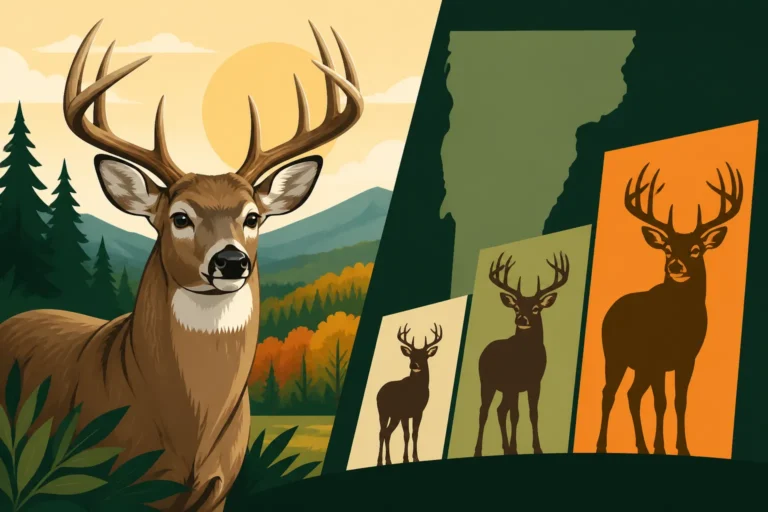
Vermont buck age structure tracks male deer distribution across age classes to measure overall herd health and hunting quality.
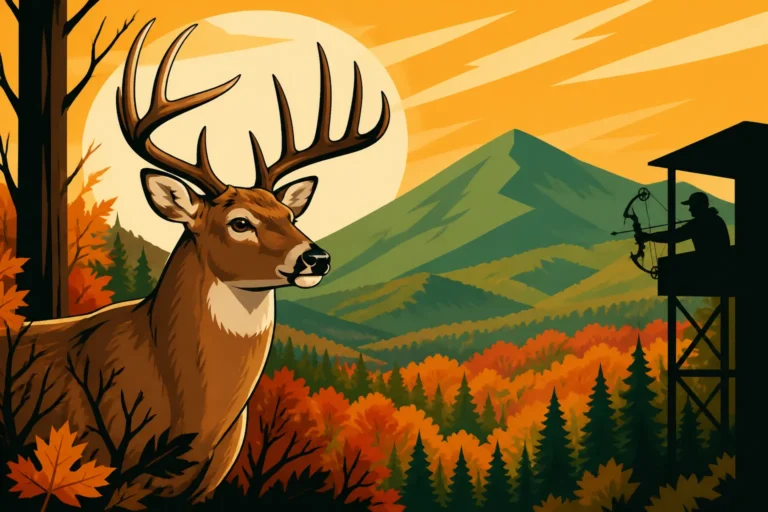
Vermont deer hunting timing for the rut depends on photoperiod daylight length, weather, moon phase, and hunter pressure.
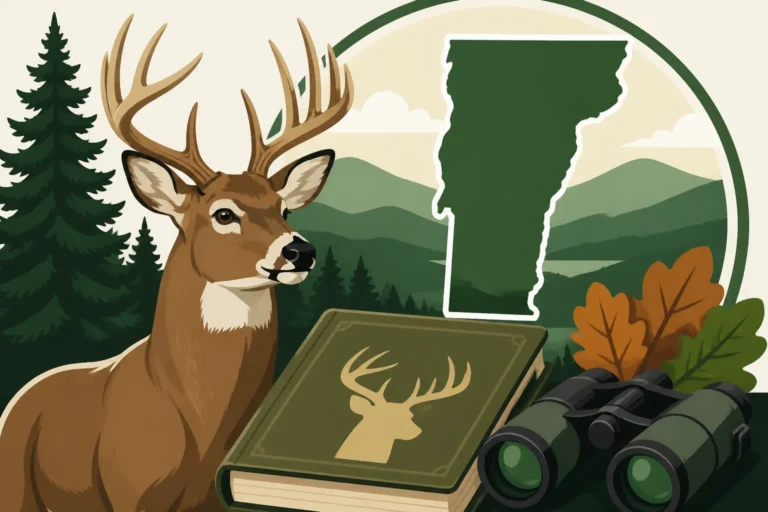
Vermont deer record book criteria, Boone and Crockett scores, and Pope and Young minimums for typical and non-typical racks.
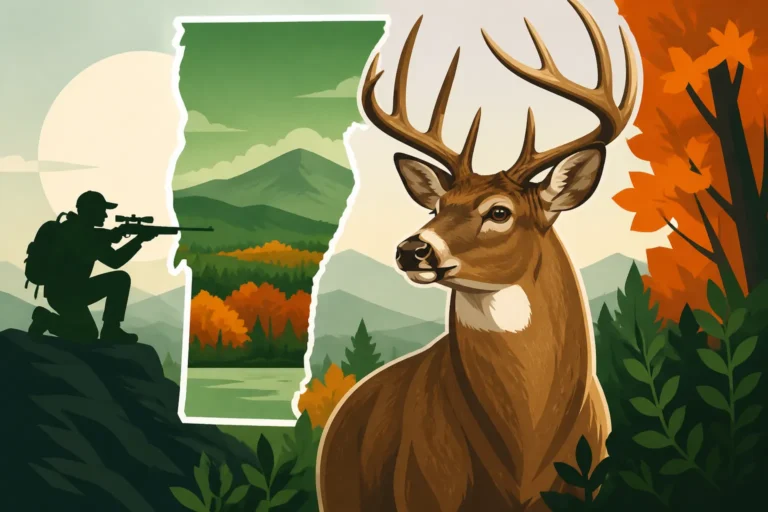
Vermont Boone and Crockett whitetails require understanding scoring rules, antler growth factors, and regional hunting realities.
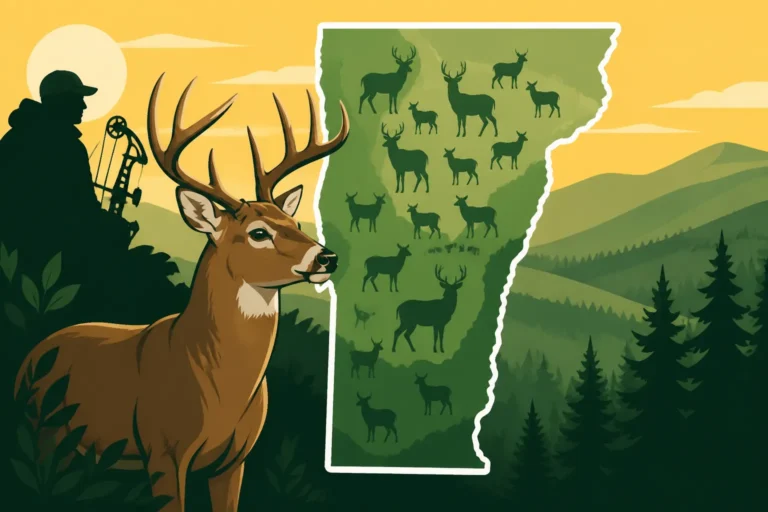
Northeast Kingdom deer density in Vermont involves low population numbers, requiring hunters to cover more ground and track subtle signs.
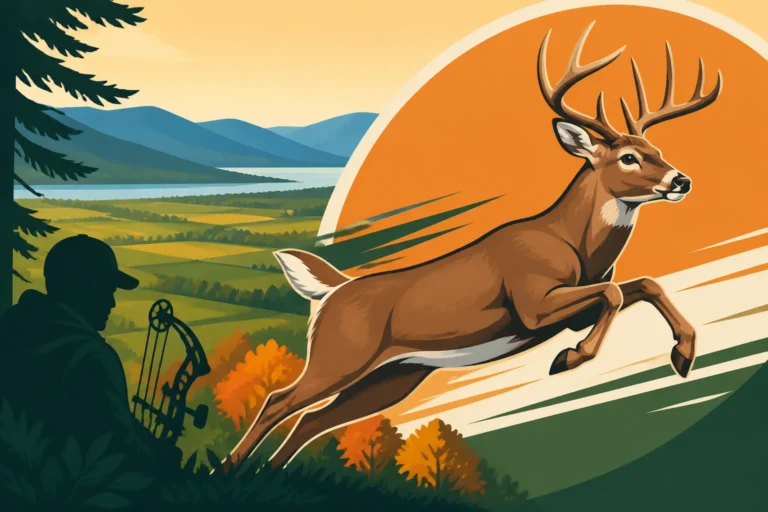
Champlain Valley deer grow larger and heavier antlers due to rich agricultural nutrition and diverse lower elevation habitats.
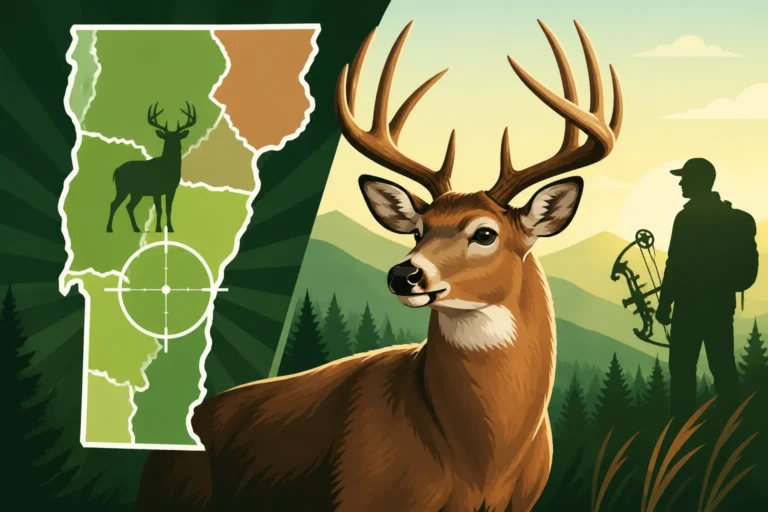
Vermont Wildlife Management Units provide specific locations and habitat details for harvesting mature 3.5 year old bucks.
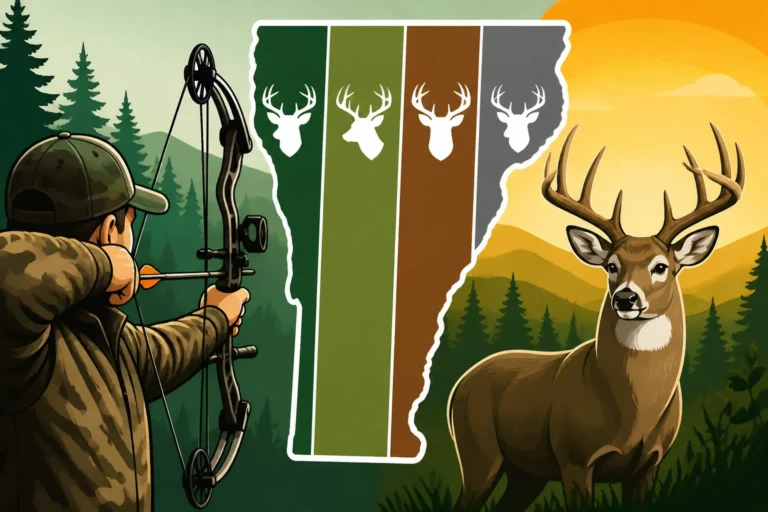
Vermont Wildlife Management Unit harvest reports and habitat factors reveal which regional areas produce the highest deer kills.
Vermont annual deer harvest numbers explain whitetail population health and guide hunting strategies across Wildlife Management Units.
Vermont deer herd size and population dynamics depend on winter severity indices, forest maturation, and changing agricultural practices.