Northeast Kingdom Deer Density
Stepping into the vast, wild expanse of Vermont's Northeast Kingdom, many hunters find themselves asking the same question: "Where are all the deer?" It's a legitimate concern. This sprawling region, known for its remote beauty and rugged terrain, often holds a very different deer population density compared to other parts of the state. This guide aims to demystify Northeast Kingdom deer density, helping you understand the unique challenges and opportunities this special area presents, and how to fine-tune your approach for success.
Understanding Deer Density in the Northeast Kingdom Context
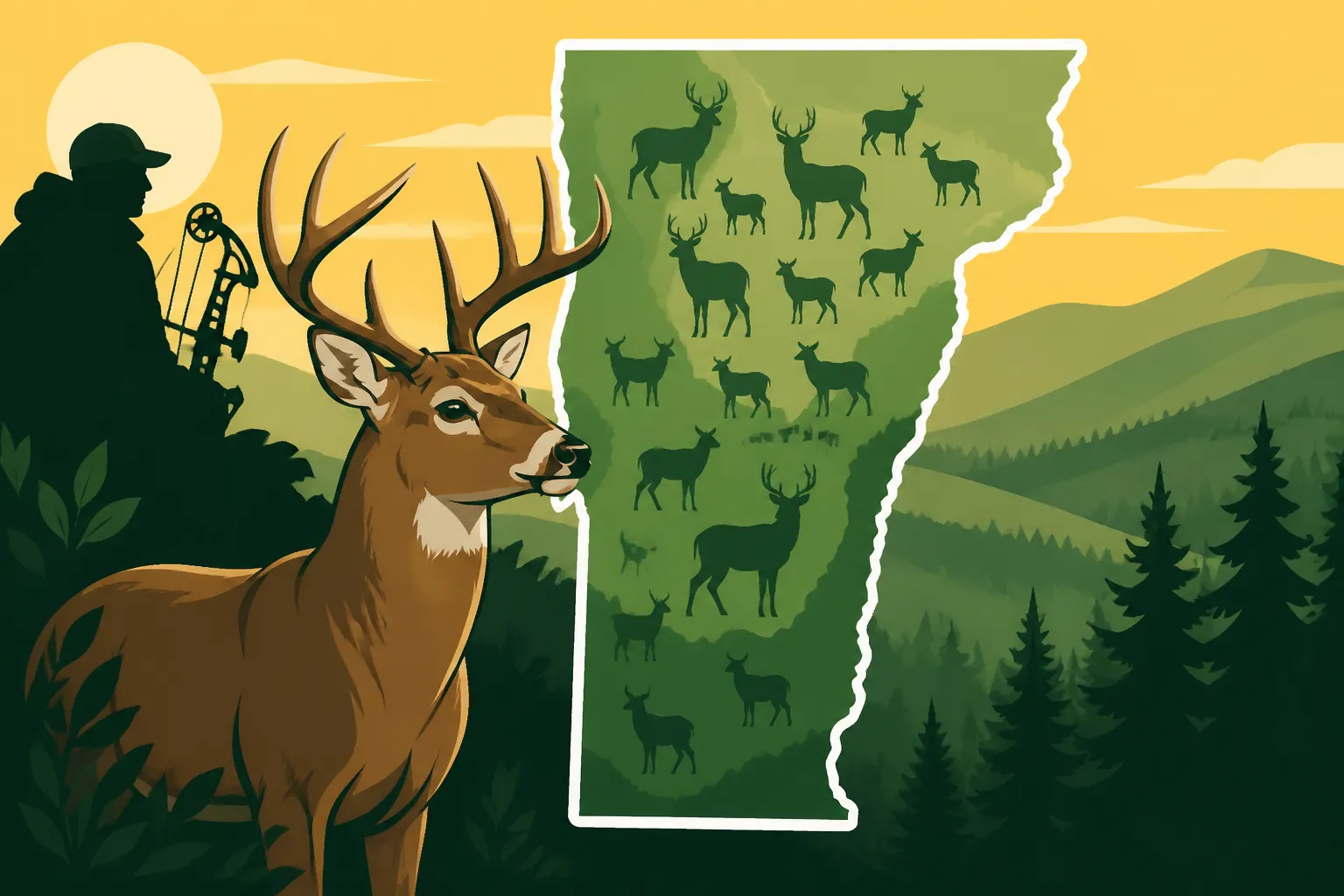
When we talk about "deer density," we're essentially referring to the number of deer living within a given area, usually expressed as deer per square mile. For a hunter, this isn't just an abstract biological statistic; it's a critical piece of information that profoundly impacts how you scout, plan, and ultimately hunt a particular region. In areas with high deer density, you might expect to see more deer, more sign, and perhaps have more encounters, making the hunt feel more target-rich. Conversely, low deer density areas demand a completely different mindset, often requiring more patience, more tracking, and a deeper understanding of deer behavior.
What "Low Density" Really Means for Hunters
In the Northeast Kingdom, "low density" isn't a suggestion; it's often the reality. Unlike the fertile river valleys or agricultural lands further south, the NEK's vast tracts of timber, steep hillsides, and sometimes harsh winter conditions mean deer populations naturally don't reach the same peaks. For a hunter, this translates into a few key realities. You won't typically see multiple deer crossing fields at dusk, nor will you necessarily find every ridge dotted with fresh rubs and scrapes. Instead, finding deer often means covering more ground, meticulously deciphering subtle sign, and focusing on specific micro-habitats that concentrate deer. It's less about the sheer number of deer and more about finding the right deer in the right places. It’s a hunt that rewards precision and persistence over casual observation.
Why Density Matters to Your Hunting Strategy
The density of the deer herd directly dictates your hunting strategy. If you're accustomed to Hunting a Champlain Valley Dairy Farm Edge where deer are abundant and predictable, you'll need to recalibrate when you venture north. In the NEK, a lower Northeast Kingdom deer density means that deer movements are often more dispersed, and "hot spots" can be few and far between. This isn't necessarily a bad thing; it just means your scouting, your patience, and your knowledge of deer ecology become even more paramount. A lower density often means less hunting pressure in general, which can lead to deer exhibiting more natural behaviors, but it also means you might not get a second chance if you make a mistake. Tools like GoHunt can provide valuable insights into historical harvest data by Wildlife Management Unit (WMU), giving you an edge in identifying areas that, despite overall lower density, consistently produce deer.
Factors Shaping Deer Density in Vermont's Northeast Kingdom
The Northeast Kingdom’s unique geography and climate play a massive role in dictating its deer population. It’s a complex interplay of habitat, weather, and other ecological factors that conspire to keep deer numbers in a different league compared to the more hospitable southern and western parts of Vermont. Understanding these factors is key to understanding the Northeast Kingdom deer density you'll encounter.
The Role of Habitat and Food Availability
The primary driver of any wildlife population is its habitat. The Northeast Kingdom is dominated by expansive, often unbroken tracts of softwood and hardwood forests, much of it rugged and remote. While this offers incredible cover, it's not always the most nutrient-rich environment for deer. Vast swaths of mature timber might not provide the diverse browse and understory growth that deer thrive on, especially compared to areas with more agricultural edges, younger timber cuts, or mast-producing oak stands. Food sources like acorns, apples, and varied forages are often less abundant and more scattered here.
Deer are browsers, meaning they prefer to nibble on a wide variety of young plants, shoots, and leaves. In dense, mature forests, this crucial browse can be scarce, pushing deer to seek out younger clear-cuts, old logging roads, or the edges of natural openings and beaver flowages where sunlight can reach the forest floor. You'll often find that even within the NEK, the highest deer concentrations will be in areas where timber management has created new growth or where natural disturbances have opened up the canopy. Without this vital food, the landscape simply can't support a high Northeast Kingdom deer density. This means that to find deer, you'll need to focus on identifying these specific pockets of rich habitat.
The Impact of Harsh Winters on Survival
Vermont winters are no joke, and they hit the Northeast Kingdom with particular ferocity. Deep snows, prolonged cold, and limited food sources are brutal realities for deer. This is where you really see the natural regulation of the deer herd at play. The severity of winter can dramatically impact overwinter survival rates, especially for fawns and older, weaker deer. A hard winter means more deer succumb to starvation, predation, or simply the sheer energy drain of moving through deep snow.
This struggle is precisely why the concept of Reading a Green Mountain Deer Yard is so critical in the NEK. Deer yards, typically dense stands of conifers like hemlock and spruce, provide crucial thermal cover and shelter from the deepest snow. Deer will migrate to these yards, sometimes from miles away, to survive the toughest months. While these yards offer temporary refuge, they also concentrate deer, leading to increased competition for food. A series of tough winters can significantly suppress the overall Northeast Kingdom deer density for years, as the herd struggles to rebuild. When you're scouting, paying attention to historical yarding areas, even in the off-season, can give you clues about where deer might try to survive and potentially congregate during the hunting season's fringes. The deep snows and cold further north play a major role in How Deep Snow Affects Vermont Deer Survival.
Predation and Competition from Other Species
While habitat and winter are huge factors, predation also plays a role in keeping Northeast Kingdom deer density in check. Coyotes are prevalent throughout Vermont, and they are opportunistic predators, with fawns being particularly vulnerable. While coyotes rarely decimate an entire deer herd, they do contribute to natural mortality, especially in areas where deer are already struggling due to poor habitat or harsh conditions.
Beyond direct predation, deer in the NEK also face competition from other large herbivores, most notably moose. The Northeast Kingdom is famously known for Moose in Vermont's Northeast Kingdom, and while their diets aren't identical to deer, there is some overlap, especially in areas with limited browse. While moose populations are managed, their presence means more mouths to feed in a landscape that already offers less sustenance than other regions. Understanding the broader ecosystem, including the presence of predators and other large game, helps paint a more complete picture of why Northeast Kingdom deer density is what it is.
Practical Hunting Strategies for Lower Density NEK Areas
Hunting in the Northeast Kingdom demands a more thoughtful and deliberate approach than you might employ in higher-density areas. It’s not about finding a field and waiting; it’s about becoming a true woodsman, reading the landscape, and understanding the subtle movements of deer in a vast, wild setting.
Mastering Still-Hunting and Tracking
With lower Northeast Kingdom deer density, the classic sit-and-wait strategy can be a test of extreme patience. While sitting a key funnel or food source can certainly pay off, the sheer amount of ground you'd need to cover to find those spots often necessitates a more active approach. This is where still-hunting and tracking truly shine.
Still-hunting involves moving through the woods incredibly slowly, pausing frequently, and scrutinizing every detail. You're not just walking; you're hunting with every step, looking for fresh tracks, subtle rubs on smaller saplings, disturbed leaves, or the flick of an ear. It’s about being observant and moving with the wind and thermals in your favor. This method allows you to cover more ground than a stand hunt, while still maintaining stealth. When conditions allow, such as a fresh dusting of snow, tracking becomes an invaluable skill. Learning to differentiate between fresh and old tracks, understanding gait, and anticipating where a deer might be heading – perhaps towards a thick bedding area or a small, overlooked food patch – can significantly increase your odds. For those who embrace the challenge, it can be a deeply rewarding way to connect with the landscape and the animals. Consider how this active approach might differ from Hunting Vermont's Regular Archery Season Into December, where sitting over a food source might be more productive in other regions.
Focusing on Micro-Habitats and Pinch Points
In a landscape where deer are dispersed, the key to success is identifying the small areas where they do concentrate. These micro-habitats and pinch points become critical. Instead of looking for deer everywhere, you're looking for the places that deer have to use, or prefer to use, due to terrain, cover, or food availability.
Think about saddles between ridges, especially those connecting bedding areas to feeding zones. Consider the edges of beaver flowages, where new growth provides food, or small clear-cuts that offer both browse and cover. Look for the junctions of different timber types, such as where a dense softwood stand meets an open hardwood ridge. Creek bottoms can also act as natural travel corridors, funnelling deer movement. Even subtle changes in elevation, like a small bench on a steep hillside, can be a preferred bedding location. A good mapping app, combined with thorough pre-season scouting, will be your best friend here. GoHunt's mapping features, for example, can help you identify these subtle terrain changes and potential travel corridors, allowing you to focus your efforts where they'll be most effective, even if the overall Northeast Kingdom deer density is low. This precise approach is crucial for finding success when Hunting a Ridge-Top Saddle for Rutting Bucks in such terrain.
The Art of Patience and Persistence
Ultimately, hunting in the Northeast Kingdom with its lower deer density boils down to patience and persistence. You might not see deer every sit, or even every day, and that's okay. The rewards here often come to those who put in the time, who are willing to hike further, scout harder, and stay on stand longer.
It’s about trusting your scouting, believing in the spots you've identified, and being ready when the opportunity finally arises. The deer you encounter in the NEK are often less pressured and more wary, making the challenge even greater but the reward even sweeter. Don't get discouraged by the lack of abundant sign you might be used to elsewhere. Every track, every rub, every subtle indication of deer presence is a victory in itself. Embrace the quiet solitude, the immense beauty of the region, and the deep satisfaction of earning your deer in one of Vermont's wildest places. This persistence is a hallmark of success when Cold-Weather Sitting Strategy in the Northeast Kingdom is required.
Comparing Northeast Kingdom Deer Numbers to Other Vermont Regions
To truly appreciate the unique nature of Northeast Kingdom deer density, it’s helpful to put it into perspective by comparing it to other regions within Vermont. The differences aren't just minor variations; they represent fundamentally different ecological landscapes that shape how deer thrive, or struggle, across the state.
Deer Density Across Vermont's WMUs
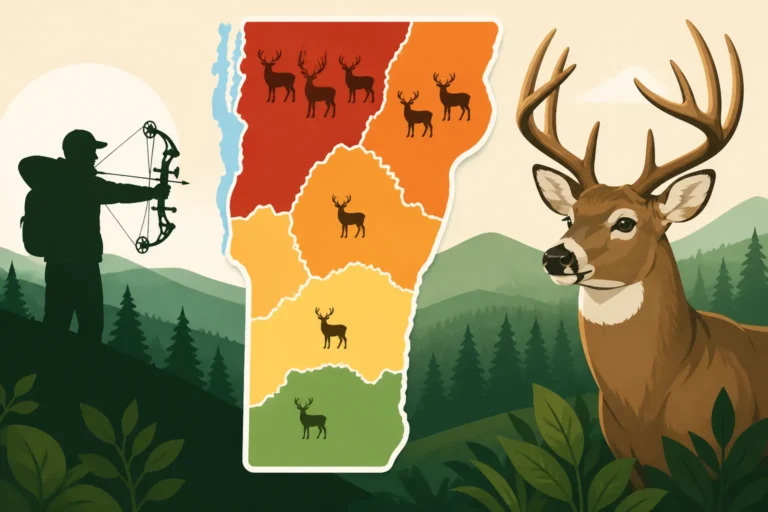
Vermont is divided into numerous Wildlife Management Units (WMUs), each with its own specific habitat characteristics and deer management goals. When you look at deer density across these WMUs, a clear pattern emerges. WMUs in the Champlain Valley, for instance, often boast the highest deer densities. These areas benefit from a mix of agricultural fields, fertile woodlands, and milder winters, providing abundant food and cover. Similarly, parts of the Southern Vermont foothills, with their diverse hardwood forests and less extreme winters, can also support robust deer populations.
| Vermont Region | Typical Habitat Profile | General Deer Density Trend | Hunting Approach Implications |
|---|---|---|---|
| Northeast Kingdom | Vast, remote softwood/hardwood forests, harsh winters | Low to Moderate (Patchy) | Still-hunting, focus on micro-habitats, high persistence |
| Champlain Valley | Agriculture, mixed woodlands, milder winters | High | Stand hunting over food, predictable movement, higher encounters |
| Green Mountains | Steep, rugged forests, high elevation, harsh winters | Moderate to Low | Similar to NEK, focus on transition zones, elevation thermals |
| Connecticut River Valley | Mix of agriculture, river bottomlands, forests | Moderate to High | Combination of stand and still-hunting, diverse habitat |
| Southern Vermont | Diverse hardwoods, less extreme winters, some agriculture | Moderate to High | Stand hunting, focus on mast crops, funnels |
The Northeast Kingdom, in contrast, consistently falls into the lower end of the density spectrum. This isn't a reflection of poor management, but rather an acknowledgment of the environmental realities of the region. The remote, big woods nature of the NEK simply doesn't have the carrying capacity for the same number of deer per square mile as a rich agricultural valley. This variation is a critical aspect of Vermont Deer Population Estimate and how wildlife biologists approach deer management, setting permit allocations and season structures accordingly.
Why the NEK Differs from the Champlain Valley
The stark difference between Northeast Kingdom deer density and that of the Champlain Valley is a perfect illustration of how diverse Vermont's hunting landscape truly is. The Champlain Valley benefits from extensive farmland, which provides incredibly rich and abundant food sources like corn, alfalfa, and soybeans. This agricultural bounty translates directly into healthier, often larger deer, and significantly higher population densities. Milder winters, protected by the valley effect, also contribute to higher overwinter survival rates.
In the NEK, you’re dealing with a different beast entirely. We’re talking about Hunting the Northeast Kingdom which is largely forested wilderness, with far less agriculture. The primary food sources are natural browse, mast crops (when available), and early successional growth from timber harvests or natural events. While these sustain deer, they don't provide the same nutritional punch or abundance as agricultural crops. Furthermore, the extreme cold and deep snows that characterize Northeast Kingdom winters put immense pressure on the deer herd, preventing it from reaching the same population levels as its southern counterparts. This isn't to say the NEK doesn't have good deer, but the numbers and the conditions under which you find them are distinctly different. When considering Vermont Deer Herd Size holistically, these regional variations are critically important.
Implications for Harvest Numbers and Success Rates
The disparity in deer density naturally leads to variations in harvest numbers and hunter success rates across the state. WMUs with higher deer populations, like those in the Champlain Valley, typically see higher overall deer harvests and often higher hunter success rates, simply because there are more deer available. Hunters might have more opportunities, see more deer on camera, and have a greater chance of filling a tag.
In the Northeast Kingdom, while individual hunters can and do experience fantastic success, the overall harvest numbers per square mile tend to be lower. This isn't a sign of failure; it simply reflects the lower Northeast Kingdom deer density. Success in the NEK often means one well-executed hunt for a hard-earned deer, rather than multiple encounters. It means celebrating the challenge and the experience as much as the harvest itself. For hunters willing to embrace this unique challenge, the NEK offers a truly wild hunting experience, where the sense of accomplishment is amplified by the rugged beauty and remoteness of the region. Being aware of this going in, and using resources like GoHunt to analyze historical success by specific WMU within the NEK, can help manage expectations and refine your hunting strategy. This understanding also factors into broader discussions about Vermont Deer Harvest Records and how they are interpreted.
Disclaimer
This article is for general informational purposes only and does not constitute professional advice. Laws, prices and regulations vary by location and change over time. Consult a qualified professional for guidance on your specific situation.