Vermont Spring Turkey Harvest Numbers
For many of us who eagerly anticipate the vibrant chorus of gobblers echoing through Vermont's awakening woods, the spring turkey season is a deeply cherished tradition. But beyond the thrill of the hunt, there's often a nagging question: how well are we really doing? Are the populations healthy? How do our efforts stack up against last year's, or even against hunters in other parts of the state? It can feel like a guessing game, especially when you're just looking at your own experiences. This guide is here to pull back the curtain on Vermont's spring turkey harvest numbers, helping you understand what these vital statistics mean, how they're gathered, and most importantly, how you can use this knowledge to become a more informed and successful turkey hunter.
Understanding Vermont's Spring Turkey Harvest Data
When you hear talk of "harvest numbers," it's easy to just think of it as a simple tally of birds taken. But for those of us invested in the health of Vermont's wild turkey population and the future of our hunting opportunities, these numbers represent so much more. They are a critical tool, a narrative woven from thousands of individual hunting experiences that, when viewed collectively, paints a detailed picture of the state of our spring gobbler resource.
What the Harvest Numbers Truly Represent
Harvest numbers are more than just a count; they're a pulse check on the health and vitality of Vermont's wild turkey population. Each gobbler registered tells a story, reflecting breeding success from previous years, the health of poults growing into jakes and mature gobblers, and the overall carrying capacity of the land they inhabit. A banner harvest year might indicate a particularly mild winter, a great mast crop, or high poult survival, leading to a surplus of birds. Conversely, a lower harvest isn't always a dire sign; sometimes it simply reflects environmental factors like a late spring snowstorm, or perhaps less hunter effort due to poor weather, rather than a decline in the bird population itself.
The Vermont Fish & Wildlife Department uses this data as a cornerstone for wildlife management. It’s crucial for biologists to monitor population trends, assess the effectiveness of current management strategies, and make informed decisions about future season structures and permit allocations. This careful analysis ensures that hunting remains sustainable, allowing us to pursue these magnificent birds for generations to come. Without this data, management would be a shot in the dark, and our hunting opportunities could be jeopardized.
Ultimately, understanding these underlying factors helps us temper our own expectations in the field. It helps us appreciate the effort required to tag a bird, especially on a tough year, and recognizes the broader impact of our hunting ethics on the resource. When we see the bigger picture, it reinforces our role as stewards of Vermont's wildlife.
The Process: How Vermont Collects Harvest Information
For the system to work, every hunter plays a vital role in data collection. After you've successfully harvested a spring gobbler, your next step is to register that bird according to Vermont Fish & Wildlife regulations. This is often an incredibly straightforward process, designed for hunter convenience. You can typically register your harvest online through the Vermont Fish & Wildlife portal, via a dedicated mobile app on your smartphone, or at one of the traditional physical check stations found across the state. The ease of online and app reporting has significantly streamlined this, making it simple to fulfill your obligation even when you're deep in the woods or far from a physical station. It’s important to remember that this isn't just a formality; it's a legal requirement and a critical contribution to conservation. For similar reporting requirements in other seasons, check out Reporting a Deer Through Vermont's App.
During the registration process, you'll be asked to provide specific details about your harvest. This typically includes the date of harvest, the Wildlife Management Unit (WMU) where the bird was taken, the bird's sex (it should be a gobbler or a jake in the spring season), its weight, and measurements of its spurs and beard. Each piece of this data is carefully considered by biologists. For example, spur length and beard length can give insights into the age structure of the harvested population, while weight can reflect overall health and habitat quality. This comprehensive dataset allows biologists to track the age structure, physical condition, and overall health of the turkey population.
Accurate and timely reporting is absolutely crucial. Incorrect or delayed reporting can skew the data, leading to misinterpretations of population health or hunting pressure. Imagine if many hunters simply didn't report; the official numbers would drastically underestimate the true harvest, potentially leading to incorrect management decisions in the future. As hunters, our honest and prompt participation is a vital contribution to the long-term health and sustainability of Vermont's wild turkey resource.
Why WMU-Specific Data Matters So Much
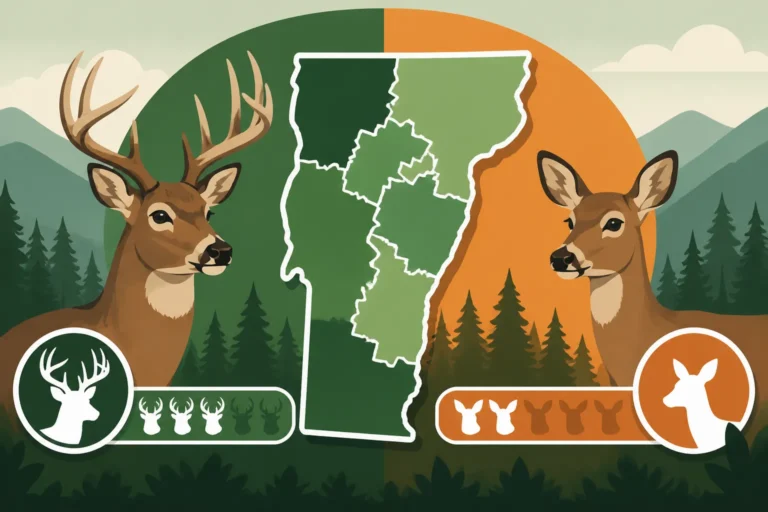
Vermont isn't a homogenous landscape, and neither are its wild turkey populations. That's why the state is divided into Wildlife Management Units (WMUs). These geographical divisions are crucial because they allow for localized management and more precise analysis of harvest data. Looking at a general statewide spring turkey harvest number can be incredibly misleading if you're planning to hunt in a specific region, because turkey populations, habitat quality, and hunting pressure vary dramatically from one WMU to another.
Consider the stark differences across Vermont. A high overall harvest in the rich, fertile farmlands and smaller woodlots of the Champlain Valley, for instance, might mask significantly lower numbers in the more rugged, densely forested and less agricultural regions of the Green Mountains or the Northeast Kingdom. Turkeys thrive where food is abundant and habitat provides good nesting and roosting cover. These localized differences in habitat, weather patterns, and even landowner access directly dictate where birds thrive and, consequently, where hunters might find more or less success. Understanding these local dynamics is far more valuable than a generalized statewide statistic.
This is precisely where detailed, WMU-specific data becomes an invaluable asset for the discerning hunter. While a service like GoHunt can offer tools to visualize and analyze historical harvest data across different WMUs, even a careful review of state reports will highlight these disparities. By drilling down into the specific WMU you plan to hunt, or where you've hunted in the past, you gain far more actionable insights than simply glancing at the statewide aggregate. This granular approach is absolutely key to developing a sound, informed, and ultimately more successful hunting strategy tailored to your chosen area. The rules for other species also often vary by WMU, such as Vermont Fall Turkey WMU Rules.
Deciphering the Trends: What Influences Spring Gobbler Success?
Spring turkey hunting is a dance with nature, and many factors outside of a hunter's control can swing the pendulum of success. Understanding these influences, from the caprices of Vermont's weather to the long-term impacts of habitat health, is key to interpreting harvest data and setting realistic expectations for your time in the woods.
The Unpredictable Hand of Vermont Weather
Weather is arguably one of the most significant, yet uncontrollable, factors affecting spring turkey harvests. A mild, early spring with consistent temperatures can lead to earlier gobbling activity and a more predictable breeding season, making birds more vocal and potentially easier to locate and call in. Hunters often report higher success when conditions are stable and favorable. Conversely, a prolonged cold snap, heavy late-season snow, or even unusually heavy rains can delay the breeding cycle, suppress gobbling activity, and understandably make hunters less inclined to spend long hours in the woods, all of which contribute to lower harvest numbers.
More specifically, persistent rain and strong winds can dramatically impact the hunt. Heavy rain can not only silence birds and make movement difficult and noisy for hunters, but it can also make birds less willing to leave their roosts or strut in open areas. Strong winds carry sound away, making it difficult for you to hear distant gobblers, and equally challenging for gobblers to hear your calls. These less-than-ideal conditions often lead to reduced hunter effort and, consequently, a dip in the harvest statistics for that period. Think about those miserable, wet opening days – many hunters simply don't stick it out, even if birds are present.
Turkeys, like all wildlife, are incredibly adaptive to their environment, and that includes the weather. During adverse conditions, they might stick to roosts longer, feed in more sheltered areas, or simply become less responsive to calls, conserving energy. Mature gobblers, in particular, can become incredibly wary. Understanding these behavioral shifts, which are often directly influenced by the daily and seasonal weather patterns, is paramount. Even if for deer, the principles of understanding Wind and Thermals in Steep Green Mountain Terrain can apply to knowing how sound travels and where birds might hold up.
Habitat Health and Mast Crop Fluctuations
The health of Vermont's wild turkey population, and by extension, spring turkey harvest numbers, is critically linked to the quality of their habitat and the availability of food sources, especially hard mast like acorns and beech nuts. A strong mast crop year in the fall provides an abundant and easily accessible food source through the challenging winter months. This translates directly to better overwinter survival rates for hens and poults, meaning more birds enter the spring season in good condition. Ultimately, more healthy poults surviving into adulthood means a larger cohort of jakes and mature gobblers available for hunters in subsequent spring seasons.
Conversely, a poor mast crop year can have detrimental effects that ripple through the population for years. When natural food sources are scarce, turkeys face increased nutritional stress, leading to higher winter mortality rates, especially among younger birds. Hens entering the spring breeding season might be in poorer condition, which can lead to reduced reproductive success and lower poult survival. Fewer poults growing to maturity directly translates to fewer jakes and mature gobblers for hunters in the following years. This long-term trend, observable through analyses of harvest data, underscores the fundamental importance of healthy, diverse forest ecosystems. Hunters often see lower deer numbers in the same circumstances, so understanding Hunting After a Poor Acorn Year can be insightful.
Beyond mast crops, the overall diversity and quality of turkey habitat play a crucial role. Areas that feature a mosaic of mature hardwoods (for mast and roosting), open fields or clearings (for bugging, strutting, and nesting), and dense softwood stands (for thermal cover and refuge) tend to support healthier and denser turkey populations. This varied landscape provides everything turkeys need throughout their life cycle, creating robust populations that can sustain higher harvest numbers. The direct correlation between habitat quality and the birds' life cycle makes it a fundamental driver of harvest success, and thus, a key factor in interpreting annual harvest statistics.
The Challenge of Hunting Pressure on Gobbler Behavior
Spring turkey hunting is incredibly popular in Vermont, and with that popularity comes an inherent level of hunting pressure. Increased hunter numbers, particularly in easily accessible public lands or areas close to population centers, inevitably influence gobbler behavior. Mature gobblers, known for their cunning, quickly learn and become "educated." They might become less vocal on the roost, respond hesitantly or silently to calls, or choose to move to thick, less accessible cover immediately after flying down, rather than strutting openly.
This hunting pressure can significantly alter turkey patterns. Birds in heavily hunted areas often become more wary, sometimes even becoming nocturnal, moving mostly before or after legal hunting hours. They may also become "call-shy," associating the sounds of a hen call with human presence and danger rather than a potential mate. This means that even in WMUs with healthy turkey numbers, success rates can be noticeably lower if the birds are under intense pressure. It’s a common frustration for hunters to know birds are around but simply can't get them to respond.
When interpreting harvest data, understanding the role of hunting pressure is absolutely vital. A WMU with seemingly low harvest numbers might not necessarily lack birds; it could simply mean the birds are exceedingly difficult to hunt due to high pressure. This distinction highlights why scouting, patience, and adapting your strategy (such as using more subtle calling, employing different setup locations, or hunting less accessible terrain) become absolutely paramount. Recognizing When Vermont Gobblers Go Quiet in Late May due to pressure is a prime example of this challenge.
Leveraging Harvest Data for a Smarter Spring Hunt
Spring turkey harvest data isn't just for biologists; it's a powerful tool that you, as a hunter, can use to refine your strategy, choose better hunting spots, and increase your chances of success. By digging into these numbers, you can move beyond guesswork and make more informed decisions before you even step foot in the woods.
Pinpointing Consistently Productive WMUs
One of the most direct and actionable ways to use spring turkey harvest data is to identify Wildlife Management Units that consistently show higher turkey harvest numbers year after year. While a single record year can sometimes be an anomaly driven by specific conditions, a sustained pattern of strong harvests suggests a truly healthy, robust, and often huntable turkey population in that specific WMU. This kind of homework, done before the season, truly pays dividends.
However, don't just fixate on the WMU with the highest raw numbers. It's crucial to look deeper. Sometimes, a WMU might have a decent total harvest but an extremely high number of hunter days logged, which means a lower individual success rate for the average hunter. Instead, focus on WMUs that demonstrate a good "gobbler per square mile" metric or, even better, a consistently solid success percentage for hunters who went out. These metrics often indicate areas with better habitat quality or perhaps less intense pressure relative to the bird numbers, making your individual chances of success higher.
Tools and resources like those offered by GoHunt can be incredibly valuable here, as they often aggregate and present this historical WMU-specific data in an easily digestible format. This allows you to quickly compare units, spot long-term trends, and identify potential hotspots without having to sift through pages of raw state reports. This kind of analytical approach can be instrumental in deciding where to concentrate your scouting and hunting efforts, especially if you have the flexibility to hunt multiple WMUs within the state.
Strategizing Your Hunt Timing
Harvest data often reveals fascinating patterns in when birds are most vulnerable or active within the spring season. For example, many state reports show a significant peak in harvest during the first week or two of the season. This period typically coincides with the height of gobblers' breeding activity, making them most vocal, most aggressive, and most responsive to calls. For many hunters, this opening window is when they focus their primary efforts, taking advantage of these highly active birds.
However, if you prefer less crowded woods or if the early season is marred by a severe cold front or prolonged bad weather, the data might also suggest a secondary peak in later weeks. This could happen as breeding cycles adjust, or as birds become slightly less pressured after the initial rush of hunters subsides. By analyzing historical daily or weekly harvest trends, you can make an educated guess about when the best windows for success might be, given typical conditions for the current year. It’s about more than just knowing Vermont Spring Turkey Season Dates; it’s about understanding the internal rhythms of the season.
It's not just about when most birds are taken, but also understanding when they are taken relative to conditions. If historical data shows a clear dip in harvest during a cold, rainy stretch in one year, but a significant rebound when the weather broke a few days later, you can apply that knowledge to your current season. If the forecast looks grim for opening week, you might choose to wait for a more favorable weather window later in the season, knowing that historical data suggests success is still possible. This adaptive timing, informed by past data, can truly be a game-changer.
Differentiating Between Total Harvest and Success Rate
When you first glance at a spring turkey harvest report, it’s easy to be drawn to the largest "total harvest" number and assume that WMU is the ultimate turkey paradise. However, this headline number, while impressive, doesn't always tell the full story. Total harvest simply reflects the sheer number of birds taken, but it doesn't account for how many hunters were in the woods, how many days they spent hunting, or the overall effort expended. A high total harvest could simply mean a massive influx of hunters, not necessarily easier hunting.
This is where the "success rate" (often presented as a percentage of hunters who bagged a bird, or birds per hunter) provides a much more accurate and personal picture of your likelihood of individual success. A WMU with a high total harvest but a surprisingly low success rate might indicate that a large number of hunters are trying, but only a fraction are actually filling their tags. This scenario often points to high hunting pressure or particularly wary birds, making consistent success more challenging.
Conversely, a WMU with a moderate total harvest but a consistently high success rate could be a diamond in the rough. This scenario often suggests a healthy, robust turkey population combined with manageable hunting pressure, leading to a more "hunter-friendly" experience where your chances of hearing birds, calling them in, and having successful setups are significantly higher. Always look for both metrics when reviewing harvest data. This distinction is crucial for setting realistic expectations and choosing your hunting grounds wisely, especially when you consider that Vermont Resident-Only Two-Bird Turkey Limit applies to residents, allowing for multiple opportunities if successful.
Beyond the Data: Essential Tactics for Spring Turkey Hunting
While harvest data provides an invaluable macro-level view of Vermont’s spring turkey landscape, it's just one piece of the puzzle. To truly maximize your chances, you need to combine that knowledge with hands-on effort and proven field tactics. The most successful hunters blend data-driven decisions with diligent preparation and adaptability in the woods.
The Indispensable Value of Pre-Season Scouting
Even with the most comprehensive harvest data in hand, nothing, and I mean nothing, replaces good old-fashioned boots-on-the-ground scouting. Long before the spring season even opens, you should be out in the woods, not with a shotgun, but with your ears and eyes wide open. Listen for gobblers on the roost at first light, identify potential strut zones in open fields or clearings, and look for fresh tracks, droppings, or dusting bowls. This direct, real-time observation confirms what the statistical data suggests and provides you with specific, actionable intelligence about where the birds are actually hanging out.
Conducting early morning listening sessions from roadsides, then physically walking potential hunting areas, will give you an unparalleled understanding of where birds are currently active and what their patterns might be. Look for visual signs: fresh scratching in the leaf litter where they've been feeding, dusting bowls in dry soil, and piles of droppings or scattered feathers under preferred roost trees. This kind of diligent pre-season effort is what transforms theoretical harvest numbers into concrete opportunities in the field. It allows you to tailor your entry and setup points perfectly. Even though it's deer-focused, the spirit of Scouting Vermont Public Land Before Season is exactly what you need for turkeys.
Digital tools, such as those integrated into platforms like GoHunt, can significantly enhance your scouting efforts. They allow you to mark waypoints for identified roosts, feeding areas, travel corridors, and potential setup spots directly on aerial maps. This digital layer, combined with your physical presence in the woods, creates a powerful strategy, letting you visualize the terrain and anticipate turkey movement patterns before you ever shoulder your shotgun. This fusion of technology and traditional woodsmanship is a modern hunter's edge.
Mastering the Art of Calling and Adaptability
Once you've located birds through your scouting and data analysis, your calling ability—and, perhaps even more importantly, your adaptability—become paramount. Spring gobblers are notoriously fickle. What works brilliantly one day might not elicit a peep the next, and what entices one gobbler might send another sprinting in the opposite direction. Therefore, it's wise to have a variety of calls at your disposal: a reliable slate call, a versatile box call, and several diaphragm calls to produce different tones and volumes. Practice different vocalizations, from soft tree yelps and contented clucks to aggressive cutting and excited fly-down cackles. For instance, Calling a May Gobbler Off the Roost requires a specific touch.
The true key to success, however, is to constantly listen to the turkey and respond accordingly. Is he hot and coming in fast, or is he hung up at a distance and shy? Does he prefer soft, subtle clucks, or does he need to be fired up with aggressive cutting and yelps? Knowing when to be aggressive and when to back off, when to use a long, excited sequence, or when to simply let him come to quiet clucks and purrs, is a skill honed over many seasons and countless interactions. This nuanced understanding of turkey behavior will be far more effective than simply blasting out calls hoping for a response.
Don't be afraid to change your setup or calling position if a gobbler hangs up or skirts your location. Sometimes, a slight repositioning—especially if you can get out of sight and call from a new angle, making him think the "hen" has moved—can be the trick that brings him those last crucial yards. Remember that turkeys possess incredible eyesight, so minimizing movement, breaking up your silhouette, and being patient are just as important as your calling prowess. Thinking about Decoy Placement for Pressured Spring Birds can also influence how you set up and call.
The Essentials: Reliable Gear and Unwavering Patience
Beyond the intricate strategies and data analysis, some fundamental elements remain constant in spring turkey hunting. Having the right gear certainly helps: a reliable shotgun that's been patterned correctly for your chosen load, comfortable camouflage that effectively blends into Vermont's diverse spring foliage, and a good set of calls that you're proficient with. Don't overlook practical items like a comfortable cushion for long sits, a Thermacell to keep the early season black flies and mosquitoes at bay, and a good pair of binoculars to scan for approaching birds without moving. For practical setup advice, consider articles like Setting Up Against a Big Sugar Maple.
However, even more critical than the tangible gear you carry is the intangible virtue of patience. This is perhaps the most essential tool in a spring turkey hunter's arsenal. Turkeys operate on their own schedule, and it's almost never yours. A gobbler might go completely silent for an hour after sounding off on the roost, only to suddenly reappear from an unexpected direction. Waiting out a silent period, or holding your position for what feels like an eternity after making a call, often makes the difference between a missed opportunity and a filled tag. Rushing things, making noise, or moving too soon are common mistakes that quickly educate birds.
Combine this unwavering patience with sheer perseverance. Not every hunt will be successful, and not every gobbler will play by the rules. You'll have days where nothing responds, and days where birds hang up just out of range. But by consistently applying informed strategies based on harvest data, continually scouting, refining your calling techniques, and exercising profound patience in the field, you dramatically increase your odds of success on Vermont's wily spring gobblers. It's a journey, not a destination, and every moment spent in the woods, whether successful or not, adds to your experience and understanding.
Vermont Spring Turkey Harvest Insights (Hypothetical Data)
To illustrate how harvest numbers can vary and what different metrics might tell you, here's a hypothetical look at spring turkey harvest data for a few different Vermont WMUs across two recent seasons. Remember, these numbers are illustrative; always check the latest official reports from the Vermont Fish & Wildlife Department for actual figures.
| WMU | Year | Total Harvest (Gobblers) | Hunter Participation (Approx.) | Harvest per Hunter | Average Weight (lbs) | Avg. Beard Length (inches) |
|---|---|---|---|---|---|---|
| A | 2023 | 125 | 200 | 0.63 | 18.5 | 9.2 |
| A | 2024 | 110 | 180 | 0.61 | 19.0 | 9.5 |
| B | 2023 | 90 | 100 | 0.90 | 19.8 | 10.1 |
| B | 2024 | 95 | 105 | 0.90 | 19.5 | 9.8 |
| C | 2023 | 180 | 350 | 0.51 | 17.9 | 8.8 |
| C | 2024 | 165 | 320 | 0.52 | 18.2 | 9.0 |
Interpreting this hypothetical table:
- WMU A: Shows consistent harvest and hunter participation. While not the highest total harvest, the harvest per hunter is respectable. This might suggest a stable population and moderate pressure.
- WMU B: Despite lower total harvest numbers compared to WMU C, WMU B has a very high harvest per hunter. This could indicate a strong turkey population relative to hunting pressure, or particularly effective habitat, making it a potentially attractive option for hunters seeking higher individual success odds.
- WMU C: Boasts the highest total harvest, but also the highest hunter participation, resulting in a lower harvest per hunter. This might be an area with a large turkey population, but also significant hunting pressure, meaning you'll have more competition in the woods. While there are lots of birds taken, your individual chances of success might be slightly lower compared to WMU B.
This kind of analysis helps you make informed choices about where to hunt, balancing potential bird numbers with the likely hunting pressure.
Disclaimer
This article is for general informational purposes only and does not constitute professional advice. Laws, prices and regulations vary by location and change over time. Consult a qualified professional for guidance on your specific situation.