Vermont Deer Vehicle Collisions
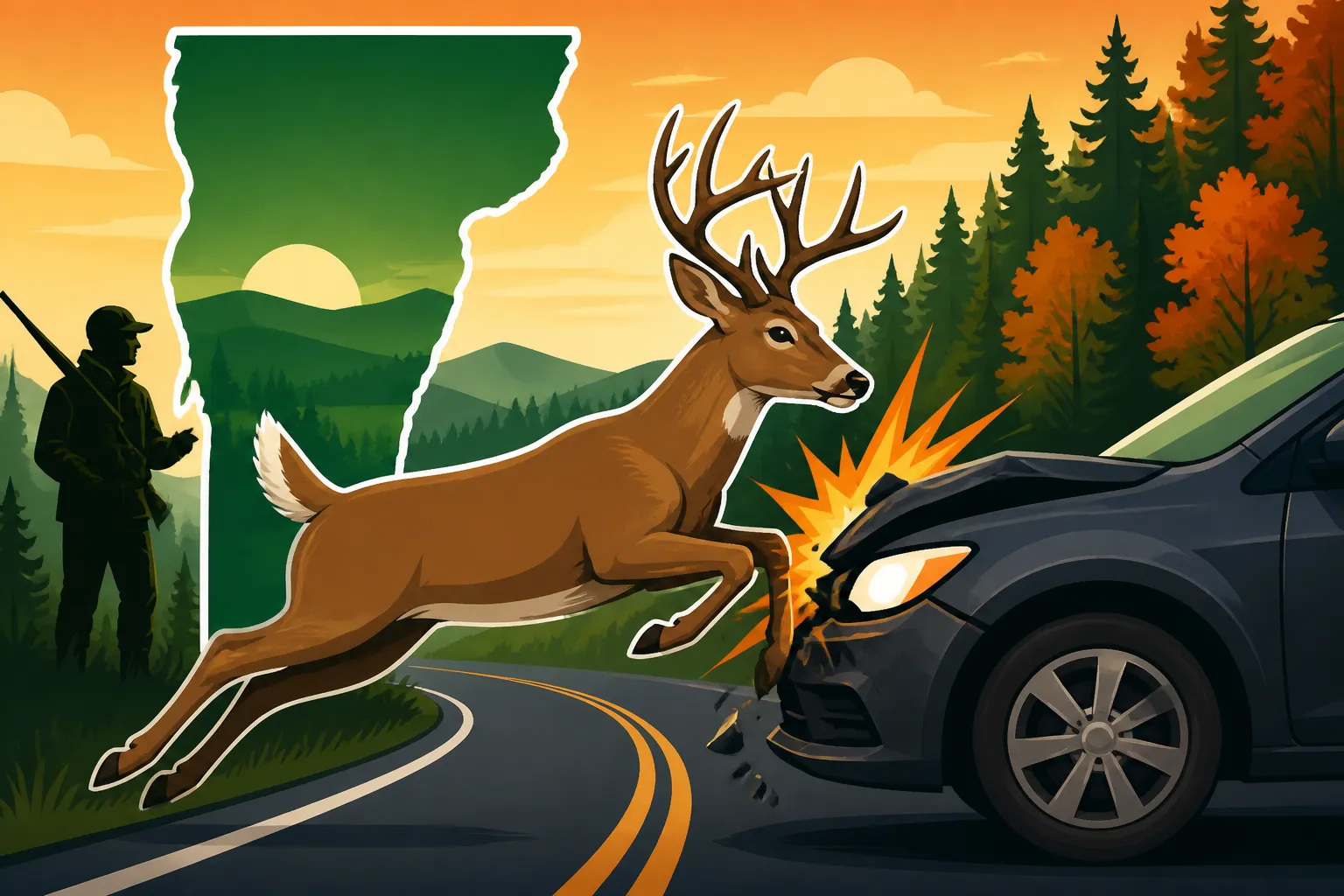
Few things are quite as startling, or as potentially devastating, as a deer suddenly darting into your path on a Vermont road. We've all seen the warning signs, or heard the stories, but when it happens to you, the reality hits hard – an unexpected impact that can leave you shaken, your vehicle damaged, and sometimes, far worse. This guide is here to help you understand why these collisions are so common in our beautiful state, identify the highest risk times and places, and equip you with practical strategies to avoid becoming another statistic, ensuring you and your loved ones stay safer on Vermont's roads.
Understanding Why Deer-Vehicle Collisions Happen in Vermont
It's easy to blame the deer, but the truth is, deer-vehicle collisions are a complex issue rooted in a blend of deer behavior, habitat, and human infrastructure. In Vermont, where our landscape is a mosaic of dense forests, open agricultural fields, and winding roads, the chances of encountering a whitetail are inherently high. These aren't just random acts of nature; there are very specific reasons why deer find themselves in harm's way on our highways and back roads.
Deer Movement Patterns and Habitat Pressures
Deer are creatures of habit, driven by a few fundamental needs: food, water, and shelter. Their daily lives involve moving between bedding areas in thick cover and feeding grounds, which might be an agricultural field, a regenerating clear-cut, or a stand of mast-producing hardwoods. These movements often lead them across roads that fragment their habitat. Consider a deer that beds down in a secluded patch of woods only to cross a busy road each evening to browse on the tender shoots in a farmer's field. It's a routine movement for the deer, but a perilous one for both the animal and passing motorists.
Furthermore, development in Vermont, while often charming, has pushed housing and commercial areas further into what was once prime deer habitat. As suburban and rural residential areas expand, the interface between deer territory and human activity grows. This means more roads cutting through migration corridors and more homes built right on the edge of prime deer feeding or bedding areas. This constant pressure on their natural range forces deer to adapt, often by navigating increasingly busy roadways. You can dive deeper into understanding the overall Vermont Deer Herd Size to get a sense of the population dynamics that contribute to these encounters.
The Influence of Farming and Seasonal Changes
Vermont's rich agricultural heritage plays a significant role in deer movement, particularly during certain times of the year. Farms, with their readily available crops like corn, alfalfa, and soybeans, are irresistible food sources for deer. A standing cornfield provides not only a buffet but also excellent cover, making it a natural magnet for deer. However, when these fields are harvested, suddenly that food source and cover disappear, forcing deer to seek sustenance elsewhere and often exposing them to new travel routes that cross roads. This is a yearly cycle that shifts deer patterns dramatically, making areas that were once safe corridors suddenly dangerous.
Seasonal changes, beyond just agricultural cycles, also dictate deer behavior. As winter approaches, deer will begin to concentrate in sheltered areas known as Vermont Deer Wintering Yards Explained, seeking thermal cover to survive the cold. The migration to and from these yards often involves crossing roads. Conversely, in the spring, deer disperse from these yards, once again increasing their movement across the landscape. Hunters often use mapping tools like GoHunt to identify these terrain features and predict deer movement, and these same tools can be invaluable for motorists looking to understand potential crossing points. Knowing where deer are likely to be, whether it's Hunting a Champlain Valley Dairy Farm Edge or dense softwood near a river, can give you a critical heads-up.
Peak Times and Locations for Deer Encounters on Vermont Roads
While deer-vehicle collisions can happen at any time, understanding the specific windows of highest risk is crucial for staying safe. It's not just about luck; it's about anticipating when and where deer are most likely to cross your path.
The Dawn and Dusk Danger Zones
Without a doubt, the most dangerous times to be on Vermont roads, in terms of deer encounters, are around dawn and dusk. This isn't just an old wives' tale; it's rooted in deer biology. Whitetails are crepuscular animals, meaning they are most active during these low-light periods. They're typically moving from their bedding areas to their feeding grounds in the evening, and then back again in the morning.
During these hours, visibility for drivers is significantly reduced. The sun might be in your eyes, shadows can be long and misleading, and the natural camouflage of a deer makes them incredibly difficult to spot against the dim backdrop of the woods or a field edge. A deer that might be visible at 500 yards in midday sun can seemingly materialize out of nowhere at 50 feet when the light is fading. This is when patience, reduced speed, and heightened awareness become paramount. It's also important to consider the overall Vermont Buck Age Structure, as younger, more erratic bucks might be less predictable during these periods.
Seasonal Hotspots: The October and November Rut
If dawn and dusk are the daily danger zones, then October and November are the seasonal collision peaks in Vermont. This period coincides with the whitetail rut, the breeding season for deer. During the rut, bucks become singularly focused on finding does, often abandoning their typical cautious behavior. They might travel greater distances, be active at unusual times of the day, and cross roads without hesitation, their minds preoccupied. Does, in turn, are trying to avoid persistent bucks and may also be more erratic in their movements.
This heightened activity, combined with shorter daylight hours and often poor weather conditions like rain, fog, or early snow, creates a perfect storm for deer-vehicle collisions. It's not uncommon to see multiple deer crossing signs in areas known for heavy rut activity, but even off the beaten path, every road becomes a potential crossing point. This intense period means you should exercise extreme caution throughout the state, whether you're driving through the open fields of the Champlain Valley or the denser woods of the Northeast Kingdom. If you want to know more about this critical period, check out our guide on When the Vermont Rut Peaks.
To give you a clearer picture, here's a breakdown of when you need to be most vigilant:
| Time of Day | Season | Primary Reason for Increased Activity | Risk Level |
|---|---|---|---|
| Dawn | Year-Round | Deer moving from feeding to bedding | High |
| Dusk | Year-Round | Deer moving from bedding to feeding | High |
| Night | Year-Round | Some nocturnal activity, especially on full moons | Moderate |
| Midday | October-November | Rutting bucks actively seeking does | Moderate |
| Midday | Year-Round | Low, but still possible | Low |
Geographic Risk Areas in Vermont
While collisions can happen anywhere, certain areas in Vermont statistically see more deer-vehicle incidents. Generally, these are corridors where human development and deer habitat intersect most frequently. Major routes like Interstate 91 and Route 7, which traverse long stretches of rural landscape, often rank high. The valleys, where farming and human population centers are denser, tend to concentrate deer and traffic. The Champlain Valley, for example, with its mix of agriculture and sprawling woodlots, is known for its higher Deer Density by Vermont Region, making it a prime area for deer activity near roads.
Beyond major highways, any road bordered by woods, agricultural fields, or even residential areas with good cover nearby presents a risk. Areas around river bottoms, where deer often travel along natural corridors, or where logging has recently occurred, creating new browse, can be particularly hazardous. When using apps like GoHunt to check out public or private land, take a moment to notice where major roads intersect natural travel funnels, like a narrow strip of timber connecting two larger woodlots. These are the spots you need to be extra vigilant, even if they're not marked with a specific "deer crossing" sign.
Practical Strategies for Avoiding Deer Collisions
Knowing when and where deer-vehicle collisions are most likely is the first step; the second is actively adopting strategies to prevent them. It’s about more than just slowing down; it’s about a proactive, defensive mindset behind the wheel.
Defensive Driving Techniques
The most effective strategy is always defensive driving. This means driving at a speed appropriate for conditions and being constantly aware of your surroundings, especially in rural areas or during those peak dawn and dusk hours. It sounds simple, but it requires discipline. Your eyes should be scanning the shoulders of the road and the treeline ahead, not just the asphalt immediately in front of you. Deer often appear suddenly, so giving yourself more reaction time by reducing speed is paramount.
When driving at night, use your high beams whenever possible and safe to do so. The extra illumination extends your sight distance, giving you a better chance to spot eyes reflecting in the distance or the outline of a deer near the road. If you see one deer, assume there are more. Deer rarely travel alone; often, one will dart out, followed by others. If you spot a deer on the side of the road, flash your lights quickly; sometimes, this can spook them away. But always be prepared for the opposite reaction – a deer freezing in place or bolting into your path. This careful approach is equally important whether you are simply commuting or heading out for a hunt during the Vermont's New Archery-Rifle Overlap Rule.
What to Do If a Collision Is Unavoidable
Despite your best efforts, sometimes a deer collision is simply unavoidable. In these terrifying moments, your reaction can significantly impact your safety. The primary advice is not to swerve. While your instinct might be to swerve to avoid the animal, this can lead to far more dangerous outcomes, such as hitting another vehicle, a tree, or rolling your car. It's often safer to brake firmly and maintain control of your steering wheel, hitting the deer head-on if necessary. Modern vehicles are designed with crumple zones to absorb impact, and a controlled, straight-line collision with an animal is often less dangerous than an uncontrolled swerve into an immovable object or oncoming traffic.
Of course, this is easier said than done in the heat of the moment. That's why being aware of the risk before it happens is so important. By being prepared mentally, you increase your chances of making the safest decision under pressure. Remember, your safety and the safety of your passengers always come first.
Understanding the Efficacy of Deer Deterrents
You've probably seen or heard about various deer deterrents, from ultrasonic whistles to specific types of fencing. It's important to approach these with a dose of realism. While some methods might offer marginal benefits in very specific, controlled circumstances, there is little scientific evidence to suggest that common deer whistles, for example, are effective at preventing collisions. The sound they emit is often outside the hearing range of deer, or not loud enough to elicit a response in a vehicle traveling at speed.
Instead of relying on these devices, focus on proven strategies like reducing speed, increasing vigilance, and using your headlights effectively. For landowners, physical barriers like well-maintained fences or habitat modification away from road edges can be more effective for keeping deer away from specific areas, but these aren't practical for general roadway safety. Hunters often use tools like GoHunt to understand deer movement, and these insights can translate to safer driving by showing you where deer trails and crossing points are most prevalent.
What to Do After a Deer Collision (If the Unthinkable Happens)
Even with all the precautions, a deer-vehicle collision can still occur. Knowing what steps to take immediately afterward can protect you, your passengers, and ensure you comply with Vermont law.
Prioritizing Safety and Reporting the Incident
The very first thing you must do after hitting a deer is to assess the situation for safety. Pull your vehicle over to the side of the road, away from traffic, and turn on your hazard lights. If possible, exit your vehicle only when it is safe to do so. Check yourself and any passengers for injuries, and if anyone is hurt, call 911 immediately. Your personal safety is paramount, and a damaged vehicle can still be a dangerous place, especially on a busy road.
Once you've ensured everyone's safety, you should contact local law enforcement or the Vermont State Police. While hitting a deer isn't necessarily a "crime," it's an accident that involves property damage and, potentially, an injured animal. The police can help manage traffic, fill out an accident report, and advise you on what to do with the animal. This report will also be crucial for your insurance claim. Take photos of the scene, the deer, and the damage to your vehicle for your insurance company. Remember, laws vary, but you can find information on general guidelines for Registering a Vermont Deer Online for legal harvest, though collision salvage is a different procedure.
Handling the Animal and Legal Considerations
When it comes to the deer itself, resist the urge to approach an injured animal. A wounded deer can be unpredictable and dangerous, capable of inflicting serious injury with its antlers or hooves. It's best to let law enforcement or animal control handle the animal. In Vermont, if you hit and kill a deer, you generally have the option to salvage the carcass for consumption, but specific regulations apply. You'll need to contact law enforcement to obtain a tag or permit for the salvaged deer. This isn't like a regular hunting harvest, so don't assume you can just toss it in the truck. You can look into the Vermont CWD Prevention Rules to understand why proper reporting and handling of deer carcasses is so important for wildlife management.
Your insurance company will need details about the incident, including the police report number. Comprehensive coverage on your auto insurance policy typically covers deer-vehicle collisions, but it's always best to review your specific policy. Document everything: the time, location, road conditions, and any witnesses. This thoroughness will help streamline the claims process during an already stressful time.
Vehicle Damage and Repair
After the immediate aftermath, you'll need to deal with your vehicle. Even what seems like a minor impact can cause significant underlying damage, affecting your radiator, suspension, or frame. It's crucial to have your vehicle inspected by a qualified mechanic before driving it any significant distance. What might look like cosmetic damage could hide structural issues that compromise your safety. Consider the stress on the vehicle during events like Deer Drives With Three or Four Hunters, and you can imagine the force of an actual collision.
Navigating repairs and insurance claims can be a headache, but remember to stay organized with all documentation. While a deer collision is an unfortunate event, being prepared for the possibility and knowing how to react responsibly can minimize the negative impacts, allowing you to get back on the road safely and legally. Always prioritize safety, follow legal requirements, and get your vehicle thoroughly checked before resuming your travels on Vermont's beautiful, but sometimes deer-laden, roads.
Disclaimer
This article is for general informational purposes only and does not constitute professional advice. Laws, prices and regulations vary by location and change over time. Consult a qualified professional for guidance on your specific situation.