Vermont Predator Impact on Fawn Recruitment
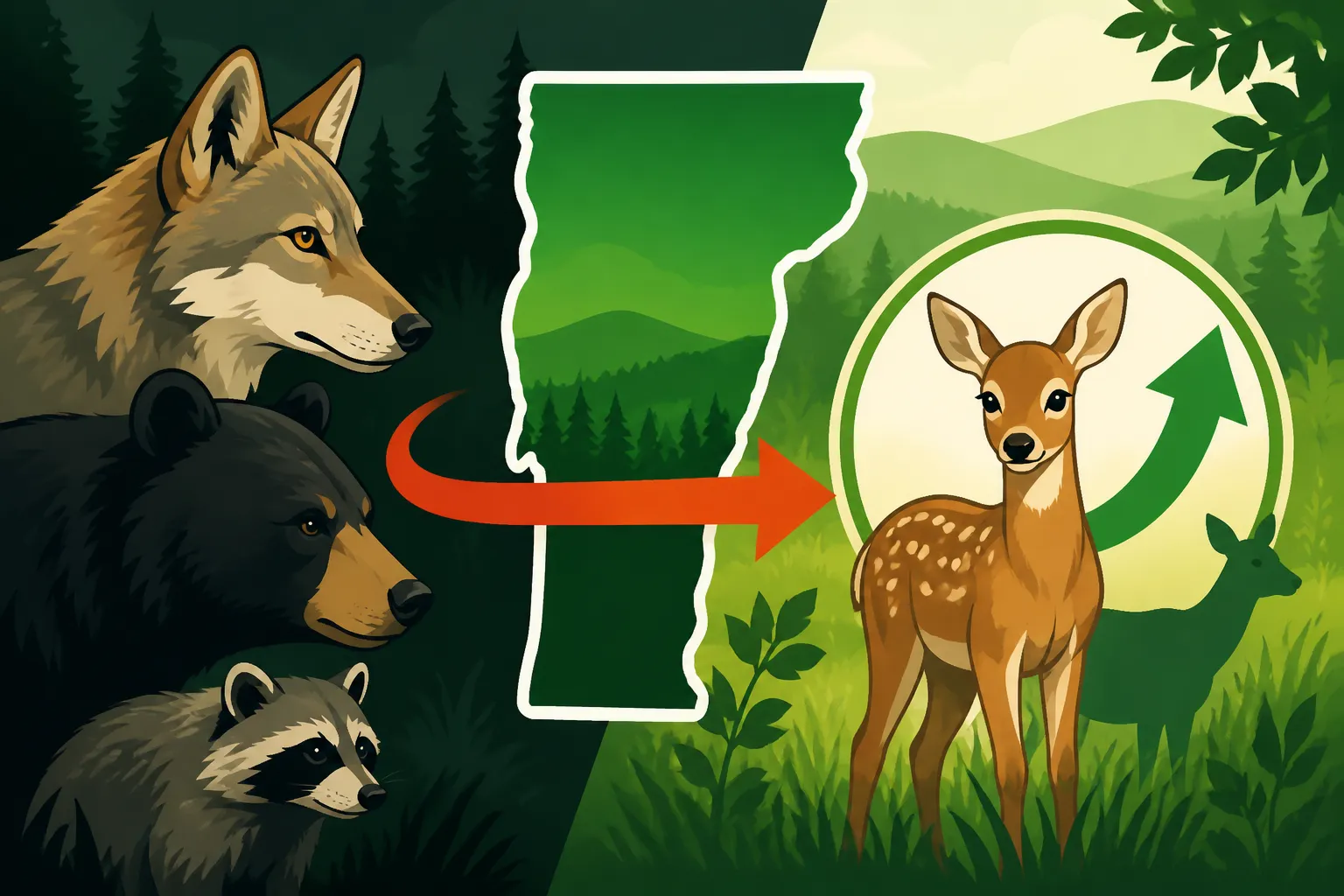
It's a tough pill to swallow for many Vermont deer hunters: you put in the scouting, you brave the weather, you understand the season dates, and still, the deer numbers in your favorite woodlot just aren't what they used to be. One of the most common frustrations I hear is the perceived lack of young deer, the future of the herd, showing up each year. It leads to questions about what's happening out there, and often, the conversation turns to predators. This guide is here to shed some light on a topic that weighs heavily on our minds: the impact of predators on fawn recruitment in Vermont, helping you understand the complex dynamics at play and how it influences our deer herd.
Understanding Fawn Recruitment in Vermont
When we talk about the health of Vermont's deer herd, it's easy to focus on the big bucks or the overall population numbers. But truly understanding where the herd is headed requires a deeper dive, especially into something called "fawn recruitment." This might sound like jargon, but it's absolutely vital, and it’s a topic that directly impacts the number of deer you see (or don't see) in the woods each season.
What is Fawn Recruitment and Why Does it Matter?
Fawn recruitment refers to the number of fawns born in a given year that survive to reach sexual maturity and enter the breeding population, essentially becoming part of the adult herd. Think of it as the nursery class for the deer population. If too few fawns make it through their first year, then regardless of how many does are dropping fawns, your deer population will eventually decline. It's not just about how many fawns are born, but how many actually recruit into the next generation.
This matters immensely for hunters because it directly affects future hunting opportunities. A strong recruitment rate means a healthy, growing, or stable herd with plenty of deer for years to come. A low recruitment rate, on the other hand, can signal a declining population, potentially leading to reduced hunting tags, shorter seasons, or tougher hunting conditions down the road. It's the lifeblood of the herd, and without successful recruitment, all other efforts to manage deer can fall short. White-Tailed Deer Across Vermont are a resilient species, but they are not immune to challenges in fawn survival.
Factors Influencing Fawn Survival Beyond Predation
While predation is a major player, it's certainly not the only factor that dictates whether a fawn makes it to its first birthday. The world is a tough place for a tiny, vulnerable fawn, and many other elements contribute to their survival chances. Understanding these helps us paint a more complete picture.
Habitat quality, for instance, is huge. Does giving birth in areas with dense, protective cover have a much better chance of hiding their fawns from hungry eyes than those in sparse woods. Abundant food sources for the doe also play a role, as a well-nourished doe can produce healthier fawns and lactate more effectively. If a doe is struggling to find food, her fawns might be born weaker, making them more susceptible to everything, including predators and disease.
Weather also plays a significant, though unpredictable, role. A late spring snowstorm or prolonged periods of cold, wet weather can be devastating to newborn fawns, especially if they are already stressed. Additionally, the overall health of the doe population, including disease prevalence and nutritional status, directly impacts the vigor and survival rates of their offspring. Human factors, such as habitat fragmentation or vehicle collisions, can also subtly impact fawn survival by reducing safe areas or impacting doe populations.
The Main Predators of Vermont Fawns
When we talk about predators affecting our deer herd, specific animals often come to mind. In Vermont, certain species are definitely more impactful on fawn recruitment than others. It's not always a simple equation, but understanding who the main players are and their typical methods can provide valuable insight.
Coyote: The Primary Threat
Without a doubt, the eastern coyote often tops the list when hunters discuss fawn predation in Vermont. These highly adaptable canids are common across the state, from the deep woods of the Northeast Kingdom to the edges of Champlain Valley farmlands. Coyotes are incredibly opportunistic predators. While they'll certainly chase down an adult deer, especially during harsh winter conditions, a newborn fawn represents an easy meal with minimal risk.
Coyotes often patrol known deer birthing areas or travel corridors in late spring and early summer, actively seeking out vulnerable fawns. Their keen sense of smell, combined with their ability to work individually or in small packs, makes them incredibly efficient at finding fawns that are bedded down and relying on camouflage. Studies in various regions have shown that coyotes can account for a significant percentage of fawn mortality, sometimes being the single largest cause of death for fawns in their first few weeks of life. Their population in Vermont is robust, and they are masters of survival, making their impact a consistent factor year after year. Coyotes and Predators in Vermont are a permanent fixture in our landscape.
Black Bear: Opportunistic Predators
While coyotes are often the most consistent threat, Vermont's black bear population also plays a role in fawn recruitment. Black bears aren't typically "deer hunters" in the same way coyotes are; they're more opportunistic omnivores. However, a bear stumbling upon a newborn fawn, especially one hidden in dense cover, isn't going to pass up an easy protein-packed meal.
In late spring and early summer, when bears are emerging from dens and looking for easily accessible food sources, fawns can definitely be on their menu. A sow with cubs, particularly, will capitalize on any calorie-rich opportunity she finds to support her young. While their impact might not be as widespread or consistent as coyotes, their presence in areas with high deer density can certainly contribute to fawn mortality. You'll often find bear sign, like scat full of berries, but don't discount their potential for scavenging or outright predation on young, helpless fawns. Vermont black bear population estimate shows a healthy and growing bear population, meaning their encounters with fawns are not uncommon.
Other Potential Predators
Beyond coyotes and black bears, there are a few other animals that can, on occasion, prey on fawns, though their overall impact on recruitment is generally considered less significant. Bobcats, for example, are efficient predators that primarily target smaller game like rabbits and grouse. However, a bobcat certainly wouldn't turn down a vulnerable fawn if the opportunity arose. Their stealth and quickness could make them effective predators in certain situations, but their lower population densities compared to coyotes mean their overall influence is usually localized.
Fishers, those elusive members of the weasel family, are also incredibly fierce predators, but their typical prey base is even smaller than bobcats, focusing on porcupines, squirrels, and snowshoe hares. While theoretically capable of killing a very young fawn, it's not a common occurrence. Domestic dogs, particularly those that are allowed to roam freely, can also cause significant damage to fawn populations. An unleashed dog running through a birthing area can stress does, displace fawns, or even directly kill them. However, this is largely a preventable problem tied to irresponsible pet ownership rather than a natural predator-prey dynamic.
Dynamics of Predator-Prey Relationships and Fawn Recruitment
Understanding which predators are out there is just one piece of the puzzle. The real complexity lies in how these predator-prey relationships actually function within the larger ecosystem of Vermont. It’s not a static picture, and many subtle factors can shift the balance, sometimes dramatically impacting how many fawns survive.
The Role of Habitat and Landscape
Habitat isn't just a place for deer to live; it's their defense system. The quality and availability of suitable habitat play a monumental role in how effectively fawns can evade predators. Areas with dense understory, thickets, and abundant cover provide crucial hiding spots for newborn fawns, allowing them to remain undetected during their most vulnerable weeks. Think of those deep, almost impenetrable pockets of softwoods or briar patches—those are sanctuaries for fawns.
Conversely, fragmented landscapes or areas with sparse cover leave fawns exposed, making them easier targets for coyotes and bears. If a doe is forced to give birth in a less-than-ideal spot due to habitat loss or pressure, her fawns’ chances of survival drop significantly. Factors like extensive logging without adequate regeneration, or widespread development, can diminish these critical fawning grounds, inadvertently tipping the scales in favor of predators. Reading a Green Mountain Deer Yard isn't just about winter survival, it's about understanding the year-round importance of diverse habitat.
Compensatory vs. Additive Mortality
This is where things get really interesting and, frankly, a bit academic, but it's crucial for understanding predator impact. When predators take fawns, are they just taking animals that would have died anyway (compensatory mortality), or are they reducing the overall population beyond what natural factors would (additive mortality)?
-
Compensatory Mortality: This theory suggests that predators primarily remove the "doomed surplus"—fawns that are weak, sick, or genetically less fit, and thus would likely succumb to disease, starvation, or other environmental stressors even without predators. In this scenario, predation might not significantly reduce the overall deer population in the long run, as those fawns weren't likely to recruit into the breeding herd anyway. It's tough to hear, but nature can be brutal in its efficiency.
-
Additive Mortality: This occurs when predation directly reduces the population beyond what would naturally happen. Here, healthy, robust fawns are being killed by predators, effectively removing them from the potential breeding population. If predation is additive, it can lead to a measurable decline in deer numbers and impact recruitment rates, which is a major concern for hunters.
The reality in Vermont, like most places, is often a mix of both. During periods of abundant fawns and good habitat, some predation might be compensatory. However, in areas with high predator densities, poor fawn habitat, or already stressed deer populations, predation is far more likely to be additive, meaning fewer deer for everyone.
Human Influence on Predator Dynamics
We, as humans and especially as hunters, have a profound, albeit sometimes indirect, impact on these predator-prey dynamics. Our land use decisions, from agricultural practices to urban sprawl, constantly reshape the landscape, which in turn influences where deer can safely fawn and where predators can thrive.
Hunting pressure on deer can also shift the balance. If doe harvest is too high, it might reduce the overall fawn crop, leaving fewer fawns to compensate for predation. Conversely, managing predator populations, such as through regulated coyote hunting seasons, can potentially alleviate some pressure on fawns, especially in localized areas. However, this is a complex issue, and the effectiveness of predator control on deer populations is often debated and highly dependent on local conditions. Our presence, our trails, our roads, even our attitudes towards various species, all contribute to the intricate web of life that determines fawn survival in Vermont.
How Hunters Can Understand and Adapt
As hunters, we're not just spectators; we're active participants and stewards of the land. Understanding the impact of predators on fawn recruitment empowers us to be more effective in our own pursuits and more informed advocates for our deer herd. It's about looking at the big picture and adapting our strategies.
Interpreting Local Deer Sign and Predator Activity
Successful hunting often boils down to being a good observer. It's not enough to just look for deer tracks; you need to be constantly aware of all the activity in the woods. When you're Scouting Vermont Public Land Before Season, or even on private parcels, don't just focus on rubs and scrapes. Look for coyote scat, which often contains deer hair, especially during late spring and summer. Observe tracks, not just deer, but also coyote and bear, noting where they're intersecting. Are coyotes regularly using a particular travel corridor that leads to a known fawning thicket?
Pay attention to changes in deer behavior. If deer are consistently nervous in a particular area, it might be due to increased predator presence. Learning to differentiate between compensatory and additive mortality can be challenging in the field, but if you consistently find very little fawn sign in areas that historically produced strong fawn crops, it's a good indicator that something might be off. This holistic approach to scouting helps you build a more accurate picture of what’s truly happening on your hunting grounds. Reading Vermont Mud for Fresh Deer Movement can tell you a lot about both prey and predator alike.
Using Data to Inform Hunting Strategies
In today's world, we have more tools at our fingertips than ever before to help us understand game populations and make informed decisions. While direct fawn recruitment data might be hard to come by for a specific woodlot, state agencies collect a wealth of information that can provide clues. Looking at Vermont Deer Harvest Records for your specific Wildlife Management Unit (WMU) over several years can reveal trends in deer age structure, including the proportion of young deer. A consistent decline in younger age classes might point to recruitment issues.
Mapping tools and platforms like GoHunt can be invaluable here. You can use their mapping features to analyze different habitat types, identifying dense cover that might serve as critical fawning habitat versus more open areas. By cross-referencing this with historical observations or even reported predator sightings (if available through community data or local knowledge), you can start to form hypotheses about where fawns might be most vulnerable. GoHunt's data layers can help you visualize topographical features like saddles and funnels, which are not only deer travel routes but also common ambush points for predators. Using GoHunt to track historical weather patterns, especially during fawning season, can also add another dimension to your understanding.
Predator Management and Ethical Considerations
The question of predator management is often contentious, but it's one that hunters regularly grapple with, especially when fawn recruitment is a concern. In Vermont, coyotes are classified as furbearers and can be hunted throughout much of the year, with specific regulations in place. For hunters concerned about localized fawn predation, Coyote Calling Vermont Farm Country or deep woods can be a way to potentially reduce pressure.
However, it's important to approach predator management ethically and with respect for the animal. We're not looking to eradicate any species, but rather to manage populations as part of a balanced ecosystem. It's about understanding that every animal has its place and role. For example, some hunters choose to focus on coyote hunting in late winter or early spring, specifically before fawning season, to try and reduce the local coyote population ahead of the fawns' arrival. This is an active choice made by individuals, often driven by a deep concern for the deer herd. Ultimately, our adaptation as hunters means being thoughtful, knowledgeable, and always striving to be responsible participants in the natural world.
| Predator Species | Primary Impact on Fawns | Typical Habitat | Hunting/Management Considerations |
|---|---|---|---|
| Coyote | High (direct predation) | Widespread | Year-round hunting, calling |
| Black Bear | Moderate (opportunistic) | Forested areas | Regulated hunting season, baiting rules |
| Bobcat | Low (occasional predation) | Forested areas | Regulated trapping/hunting |
| Domestic Dog | Variable (high locally) | Near human habitation | Leash laws, responsible pet ownership |
Disclaimer
This article is for general informational purposes only and does not constitute professional advice. Laws, prices and regulations vary by location and change over time. Consult a qualified professional for guidance on your specific situation.