White-Tailed Deer Across Vermont
Hunting white-tailed deer in Vermont can feel like solving a complex puzzle, with changing regulations, diverse terrain, and a sometimes-elusive quarry. Many of us arrive in the woods with questions about where the deer are, what they're eating, and how to adapt our strategies to Vermont's unique landscape. This comprehensive guide is here to unravel the mysteries of Vermont's whitetail herd, helping you understand their behavior, preferred habitats, and the most effective ways to pursue them throughout the state.
Understanding Vermont's Deer Herd Dynamics
If you've spent any time hunting in Vermont, you know that our deer herd isn't a monolith. What you see in the lowlands of the Champlain Valley can be vastly different from the high country of the Green Mountains or the rugged expanses of the Northeast Kingdom. Understanding these dynamics is crucial for any hunter hoping to fill a tag. It's not just about luck; it's about knowing where the deer are, why they're there, and what factors are shaping their lives.
Population Estimates and Trends
It's easy to get frustrated when you spend days in the woods and barely see a track, let alone a deer. But believe it or not, Vermont's white-tailed deer population is generally healthy and well-managed, though it fluctuates with various environmental pressures and human influences. The Vermont Fish & Wildlife Department works tirelessly to monitor the herd through various methods, including harvest data, hunter surveys, and winter severity indices. Their goal isn't just to count deer, but to ensure a sustainable population that provides ample hunting opportunities while minimizing impacts on forests and agricultural lands.
For instance, the overall Vermont Deer Population Estimate usually hovers around a healthy number, but this isn't static. Harsh winters with deep, prolonged snow cover, like those we sometimes experience in the higher elevations, can lead to increased winter mortality, especially among fawns and older deer. Conversely, mild winters often result in higher fawn survival rates, which can boost the population in subsequent years. Habitat changes, logging practices, and even the abundance of mast crops (like acorns and beechnuts) also play a significant role in where deer are found and how well they reproduce. These factors make it essential for us as hunters to stay informed and adapt, rather than relying on outdated assumptions.
Regional Differences in Deer Density
One of the biggest lessons I've learned over the years is that "Vermont deer" isn't a single concept. The deer densities and even the physical characteristics of deer can vary dramatically from one part of the state to another. You might drive just an hour and find yourself in an entirely different deer world. This variation is a direct result of diverse habitats, agricultural patterns, and winter conditions.
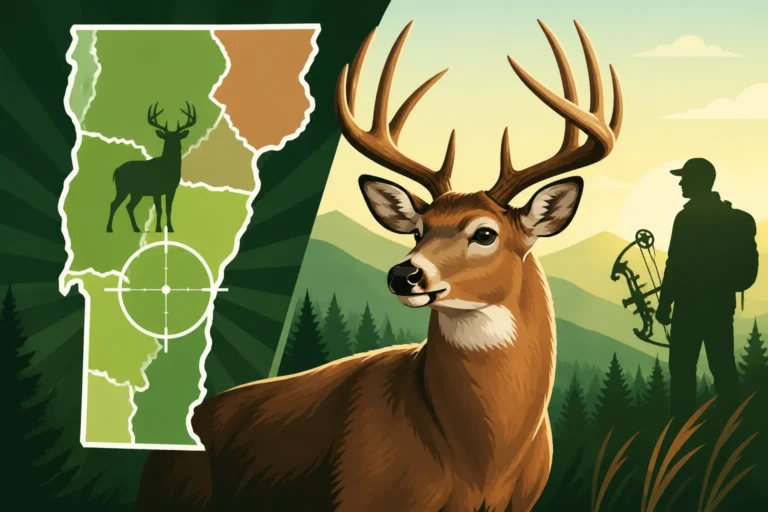
Take the Champlain Valley, for example. Here, you'll find extensive agricultural fields, hardwood bottoms, and relatively milder winters. This combination provides abundant food sources and more moderate wintering conditions, often leading to a higher deer density compared to the rugged interior. It's also where you might hear veteran hunters talk about Why Champlain Valley Deer Run Bigger – more consistent nutrition can lead to larger body sizes and impressive antler growth. On the other hand, venture into the higher elevations of the Green Mountains or the remote logging country of the Northeast Kingdom, and you'll encounter a different story. Deer density can be lower, winter conditions are more severe, and food sources might be less concentrated. Here, deer often rely more heavily on traditional deer wintering areas (deer yards) during the colder months, seeking shelter in dense conifer stands. Understanding these Deer Density by Vermont Region nuances is paramount for planning your hunt and setting realistic expectations. A successful hunt in the Champlain Valley might involve sitting on a field edge, while a successful hunt in the Kingdom might mean miles of tracking through snow.
How Winter Weather Impacts Survival
Vermont winters are beautiful, but they can be brutal, especially for our deer herd. The severity of winter weather is arguably the single most significant natural factor influencing deer survival and, consequently, population trends. When the snow piles up deep and stays for extended periods, it creates immense challenges for deer. Deep snow makes it incredibly difficult for deer to move around and access vital food sources. They burn more energy just trying to travel, which means they need to consume more calories to maintain their body temperature, calories that are often buried under a blanket of white.
This is why deer yards are so critical in Vermont. These are typically dense stands of conifers (like hemlock, spruce, and fir) that provide overhead cover, intercepting snow and creating shallower conditions on the forest floor. Deer congregate in these yards, often traveling long distances to reach them, where they can conserve energy and find what limited browse is available. The longer and colder the winter, the more stress the deer endure, leading to increased mortality, particularly among fawns and older, weaker animals. A string of mild winters can lead to a booming deer population, while a couple of severe winters can knock numbers back significantly. For us as hunters, this means paying attention to winter severity reports. Knowing if deer have had a tough winter can inform our strategies for the upcoming seasons, helping us understand where deer might be concentrated and how healthy the herd is. It's all part of respecting the cycle of nature that our deer live by.
The Lifecycle and Behavior of Vermont Whitetails
To consistently find and harvest deer in Vermont, you need to think like a deer. That means understanding their annual calendar, from the frantic energy of the rut to the quiet, energy-conserving days of winter. Their behaviors are deeply rooted in survival, driven by the need to find food, avoid predators, and reproduce. Neglecting these fundamental aspects of their lives is like trying to drive a car without knowing where the gas pedal is.
Rutting Behavior and Timing Across the State
Ah, the rut! It's the time of year that gets every deer hunter's heart pumping, but it's not a single, statewide event that happens on one specific day. While there's a general timeframe, the intensity and peak of rutting activity can vary even within Vermont. Generally, the rut – the breeding season for white-tailed deer – typically kicks into high gear in early to mid-November, coinciding perfectly with our rifle season. However, preliminary scraping and rubbing activity, often called the pre-rut, can begin much earlier, sometimes even in late September or early October, especially with cooler temperatures.
The peak of the rut, when bucks are most actively seeking does, is usually a window of about two weeks, making Hunting the Rut in Early-to-Mid November incredibly productive for many hunters. During this period, bucks are less cautious, often moving throughout the day, covering significant ground in search of receptive does. You'll see increased daylight activity, fresh rubs and scrapes, and bucks chasing does with a single-minded intensity. Knowing When the Vermont Rut Peaks in your specific hunting area can be a game-changer. Factors like local deer density, the age structure of the buck herd, and even acorn crops can slightly shift the timing and intensity. For example, in areas with a more balanced buck-to-doe ratio, the rut might be more condensed and intense, as bucks don't have to cover as much ground to find a mate.
Deer Feeding Habits and Preferred Forage
If you want to find deer, you need to find food. It sounds simple, but Vermont's diverse landscape offers a huge array of food sources, and understanding what deer prefer, and when, is key. Their diet changes throughout the year, driven by availability and nutritional needs. In spring and summer, deer feast on lush green vegetation – new growth, forbs, and agricultural crops like alfalfa or clover. As fall approaches, their focus shifts dramatically.
This is when hard mast (acorns, beechnuts) and soft mast (apples, berries) become critical. A strong acorn crop, particularly from red oaks that hold their nuts later, can dictate deer movement for weeks. Similarly, an old apple orchard, even one long forgotten, can be a major draw. As winter sets in, their diet becomes more restricted, relying heavily on browse – twigs, buds, and bark from woody plants. Evergreens like hemlock, cedar, and balsam fir can also provide sustenance in a pinch, especially in deer yards. Understanding these seasonal shifts and scouting for abundant Late-Season Food Sources for Vermont Whitetails is essential. Using a mapping tool like GoHunt can help you identify potential food sources like old orchards, agricultural fields, or even specific timber stands that might hold a good mast crop. If you know what they're eating, you know where they'll be.
Bedding Areas and Habitat Preferences
Deer don't just wander aimlessly; they have preferred places to rest and feel secure. Identifying these bedding areas is crucial for understanding deer movement patterns, especially when planning a still-hunt or stand placement. Bedding areas are typically chosen for security and comfort, offering thermal cover from the elements and a good vantage point or escape route from predators.
In Vermont, bedding cover can take many forms. In agricultural areas of the Champlain Valley, deer might bed in thick brush along field edges, dense conifer swamps, or even standing cornfields. Up in the Green Mountains, they'll often seek out thick clear-cuts with dense saplings and brush, or heavy softwood pockets on ridge tops and benches that offer protection from wind and snow. When you're Reading a Green Mountain Deer Yard you're essentially identifying a major winter bedding and survival zone. The ideal bedding area provides dense cover that makes a deer feel hidden, but also allows them to detect danger with their senses of smell, sight, and hearing. This often means bedding on leeward slopes (out of the wind) or sunny south-facing slopes in cold weather, or in cool, shaded areas during warmer weather. Learning to recognize these types of cover and understanding how deer use them in different conditions will allow you to predict their movements between bedding and feeding areas, giving you a significant advantage.
Navigating Vermont's Diverse Deer Habitats
Hunting in Vermont is anything but monotonous when it comes to terrain. From the fertile river valleys to the rugged mountain peaks, each region presents its own set of challenges and unique opportunities for deer hunters. You can't approach every piece of Vermont ground with the same strategy and expect consistent success. Knowing your habitat is as important as knowing your game.
Hunting the Champlain Valley's Farm Edges
The Champlain Valley is a hunter's paradox. It's often where you find the highest deer densities, thanks to abundant agriculture providing a year-round buffet. But it's also heavily populated, and finding permission on private land can be a challenge. Still, for those who do get access, hunting farm edges can be incredibly productive. Deer thrive on the edges where agricultural fields meet woodlots, brushy fencerows, or wetland fringes. These transitional zones offer both food and cover in close proximity, making them prime travel corridors.
When you're Hunting a Champlain Valley Dairy Farm Edge, you're often looking at a blend of open fields (corn, hay, soybeans) bordered by dense hardwoods, softwoods, or thickets. Deer will often stage in these thickets before entering fields to feed at dusk, and retreat to them at dawn. Your strategy here might involve setting up a ground blind or treestand along a well-used trail connecting a bedding area to a food source. Patience is key, as deer often wait for low light to move into open areas. Using topographical maps or apps like GoHunt can help you identify subtle funnels, pinch points, or cover that deer will use to travel safely, even in relatively open country. Respecting landowners and their property is paramount in these areas, and securing permission early is your best bet for success.
Tackling the Green Mountain National Forest Terrain
For many, the Green Mountain National Forest is the quintessential Vermont hunting experience. It's vast, wild, and incredibly challenging. Forget sitting over a food plot; this is big woods hunting where physical fitness, navigation skills, and a deep understanding of deer behavior are your greatest assets. Deer densities can be lower here, and deer tend to be more spread out, making it feel like finding a needle in a haystack.
Hunting Vermont's Green Mountain National Forest often involves significant hiking, traversing steep slopes, dense timber, and remote basins. Deer here rely heavily on natural food sources like acorns, beechnuts, and browse. They'll also use elevation to their advantage, often bedding on higher benches or ridge tops during the day to catch thermals and watch for danger, then descending to feed in valleys or draws. Focus your scouting efforts on identifying natural funnels, saddles between ridges, creek bottoms, and areas with good mast crops. Learning to interpret wind and thermals in steep terrain is critical, as scent control becomes even more challenging. Still-hunting slowly through promising habitat, covering ground quietly and observing intently, can be very effective. This isn't a quick hunt; it's an immersive experience that rewards persistence and a willingness to explore.
Exploring the Northeast Kingdom's Wild Lands
The Northeast Kingdom lives up to its name – it's a wild, rugged, and often remote corner of Vermont. It's characterized by expansive forests, numerous bogs, remote ponds, and less human population pressure than other regions. For the adventurous hunter, the Kingdom offers an opportunity to truly get away from it all and pursue deer that might see very little human interaction.
Deer in the Northeast Kingdom face harsher winters and often rely on vast tracts of timber for cover and food. You'll find a mix of mature hardwoods, extensive softwood swamps, and regenerating clear-cuts. Identifying deer movement in these areas can be tricky, as sign might be less concentrated. Focus on finding edges where different habitat types meet, such as the transition from a mature hardwood ridge to a cedar swamp, or the edge of a recent timber harvest that's now growing up with dense browse. Access can be a challenge, with many gated logging roads and limited public access points. However, for those willing to put in the legwork, the rewards can be significant. The deer here are often lean and tough, truly wild animals. Using offline mapping features on platforms like GoHunt can be invaluable in these remote areas where cell service is often nonexistent, helping you navigate and mark potential hotspots or escape routes.
Key Seasons for Pursuing Vermont Whitetails
Vermont offers hunters a remarkable variety of deer seasons, each with its own character, challenges, and rewards. From the quiet stealth of early archery to the excitement of the rifle season and the strategic patience of muzzleloader hunting, understanding the nuances of each window is vital for maximizing your success and time afield. It's about knowing when to be where, and with what equipment.
Expanded and Regular Archery Opportunities
Archery season in Vermont offers a long, relatively quiet window to pursue deer, stretching from early fall into early winter. This extended period actually comprises two distinct phases: the Expanded Archery Season and the Regular Archery Season. The Expanded Archery Season usually kicks off in early September in designated urban and suburban zones, offering unique opportunities to hunt deer where they might be more concentrated but also more wary due to human proximity. It's often an antlerless-only hunt, making it a great chance to fill the freezer early and contribute to population management in specific areas. You can learn more about When Vermont's Expanded Archery Season Opens and its specific rules.
The Regular Archery Season, however, is a statewide opportunity that typically begins in October and runs right into December, overlapping with both rifle and muzzleloader seasons. This means bowhunters have a fantastic opportunity to be in the woods for an extended period, witnessing the pre-rut, the rut, and even late-season movements. Early in the regular season, deer are often still on summer patterns, focused on available food sources like acorns or apples. As the season progresses into November, the rut energizes buck activity. Later in December, it becomes a late-season food hunt. This extended period requires versatility: early on, stealth and scent control are paramount, while during the rut, aggressive calling can be effective. Hunting the Regular Archery Opener in October presents a unique set of challenges and rewards, often involving warm weather and deer still in summer patterns.
The Intense November Rifle Season
For many Vermont hunters, the November Rifle Season is the main event. It's a short, intense two-week period that usually falls right in the heart of the breeding season, making it a time of high activity and high hunter numbers. This is when bucks are most active, often chasing does with less caution, providing excellent opportunities for encounters. The crisp, often cold November air, combined with the turning leaves or even early snow, creates an iconic Vermont hunting experience.
However, with this excitement comes increased pressure. Hunters from across the state, and many non-residents, converge on popular public and private lands. This means deer are often on high alert, and traditional daytime patterns can be disrupted. Successful rifle hunting in November often involves understanding pressure and seeking out areas where deer can escape. This might mean walking deeper into public lands, targeting thick cover that other hunters avoid, or employing deer drive tactics with a group of friends. Hunting Vermont's November Rifle Opener is a classic tradition, but success often hinges on knowing how to adapt to hunter density. It's also critical to review Vermont Rifle Season Dates and ensure you're aware of blaze orange requirements, which are mandatory for all hunters during this period, regardless of weapon. Safety and visibility are paramount when so many hunters are in the woods.
Muzzleloader Challenges in Late Fall and Early Winter
Following the rifle season, Vermont offers two muzzleloader opportunities, each presenting its own unique set of challenges and a chance to extend your deer season. The first is a shorter antlerless-only muzzleloader window in October, specifically designed to help manage the doe population in certain Wildlife Management Units (WMUs). This is an excellent opportunity to fill the freezer before the main seasons.
The primary Muzzleloader Season, however, typically runs for about a week to ten days in early to mid-December, after rifle season has closed. This is a colder, often snowy affair, and it requires a different kind of patience and strategy. Deer at this time are typically focused almost exclusively on food sources and conserving energy. The rut is over, and bucks are recovering, making them less prone to responding to calls. Success during Hunting Vermont's December Muzzleloader Season often comes down to scouting for late-season food, such as standing corn, brassicas in a food plot (if hunting private land), or reliable browse in dense winter cover. Fresh snow can be your best friend, allowing you to track deer and identify their travel corridors. The challenge of keeping your powder dry in cold, damp conditions, combined with the single-shot nature of most muzzleloaders, adds an extra layer of difficulty and satisfaction to this late-season pursuit. It’s a true test of woodsmanship, rewarding those who are willing to brave the elements and put in the quiet, focused effort.
Essential Strategies for Vermont Deer Hunters
No matter how many years you've hunted, there's always something new to learn when it comes to white-tailed deer. They're incredibly adaptable creatures, and successful hunting often comes down to adapting our strategies to their behaviors and the local conditions. Beyond just pulling the trigger, it's about the entire process, from pre-season preparation to in-the-moment decision-making.
Scouting and Reading Deer Sign
I cannot stress this enough: scouting is the single most important component of consistent deer hunting success. You can have the best gear, the perfect camo, and be an Olympic-level marksman, but if you're not where the deer are, it's all for naught. Scouting isn't just a pre-season activity; it's an ongoing process that should happen before, during, and even after the season.
Start your scouting long before the season opens, ideally in late winter or early spring after snow melt. This is a fantastic time to Scouting Vermont Public Land Before Season because the lack of foliage makes it easier to see old rubs, scrapes, and most importantly, deer trails that are heavily used. Focus on identifying pinch points, funnels between different habitat types, and distinct travel corridors. Use mapping tools like GoHunt to mark potential stand locations, bedding areas, and food sources. During the season, focus on fresh sign: recently opened scrapes, fresh rubs on saplings, and most importantly, fresh tracks. Learn to distinguish between old and new sign, and understand what different types of sign tell you. A heavy deer trail leading to a standing apple orchard in October tells a very different story than a series of small buck rubs along a cedar swamp in November. Don't be afraid to put boots on the ground, even in areas you think you know well, as deer patterns can shift from year to year based on food availability and pressure.
Effective Stand Placement and Still-Hunting Techniques
Once you've done your scouting, the next critical step is to decide how you'll hunt. Will you sit and wait, or will you move and hunt actively? Both have their place in Vermont deer hunting. Stand placement, whether a treestand or a ground blind, is about intercepting deer where they naturally travel. This means identifying the precise location along a trail, funnel, or feeding area where you'll have the best shot opportunity with the wind in your favor.
When setting up a stand, consider prevailing wind direction, sun position (especially at dawn and dusk), and your entry and exit routes to avoid spooking deer. Think about what a deer will be doing when it walks past your stand. Will it be feeding? Moving slowly through cover? Chasing a doe? Your setup should account for that. On the other hand, still-hunting is an art form, requiring immense patience and a keen eye. It's about moving through the woods so slowly and quietly that you essentially become part of the environment, observing and listening more than moving. In the Green Mountain National Forest, where deer densities can be lower and cover extensive, still-hunting slowly and meticulously through promising habitat can often be more effective than sitting in a stand that might never have a deer pass by. Focus on pausing frequently, using your binoculars, and looking for horizontal lines in a vertical world – the tell-tale sign of a deer's back or legs. It's an exhausting but incredibly rewarding way to hunt.
Utilizing Calls and Lures (and Understanding Vermont's Rules)
Adding calls and lures to your arsenal can be a powerful way to increase your chances, especially during the rut. However, like any tool, they need to be used correctly and, importantly, legally. Vermont has specific regulations regarding certain types of lures, so it's vital to stay informed.
When it comes to calls, grunt tubes and rattling antlers are probably the most popular. Rattling and Grunting Vermont Bucks can be incredibly effective during the peak of the rut, when bucks are actively seeking out other deer. Grunt calls mimic the vocalizations of both bucks and does, drawing in curious deer. Rattling, on the other hand, imitates the sound of two bucks fighting, appealing to a buck's territorial instincts or curiosity. The key is to match the intensity and volume of your calls to the situation and the time of year. Early in the season, subtle grunts might be best, while during the rut, more aggressive rattling can pay off.
However, a crucial piece of information for Vermont hunters is the state's ban on natural urine-based deer lures. This regulation is part of Vermont's proactive efforts to prevent the spread of Chronic Wasting Disease (CWD). CWD is a fatal neurological disease that affects deer and other cervids, and it's a major concern for wildlife managers across North America. The ban on natural lures is a preventative measure because CWD prions (the infectious agents) can be shed in urine and other bodily fluids. So, if you're using scents, make sure they are synthetic, not natural. Always check the latest Vermont's CWD Prevention Rules to ensure you're in compliance and doing your part to protect our deer herd.
Managing Your Harvest and Contributing to Conservation
The moment you harvest a deer is often a mix of excitement, relief, and gratitude. But the work doesn't stop there. Proper game care and adherence to reporting regulations are not just legal requirements; they're ethical responsibilities that every Vermont hunter shares. Our actions, from the field to the game processor, directly contribute to the health of the herd and the future of hunting.
Field Dressing and Meat Care in Varying Conditions
Once your deer is on the ground, the clock starts ticking, especially in Vermont's often-variable weather. Proper field dressing is essential for preserving the quality of the meat. The goal is to quickly remove the entrails to allow the carcass to cool down as rapidly as possible, inhibiting bacterial growth. This is particularly crucial if you've harvested a deer during warmer early season archery hunts or on an unseasonably warm November day.
If it's a warm day, try to get the deer completely field dressed within 30-60 minutes. Get the carcass opened up, roll it to drain excess blood, and if possible, prop the chest cavity open to facilitate airflow. In colder weather, you might have a bit more leeway, but the principle remains the same: cool it down. If you're on a long pack out from a remote Green Mountain location, consider quartering the animal in the field to make it more manageable. Ensure you have sharp knives, gloves, and a plan for how you'll get the deer out. Don't forget that if you plan on taking your deer to a processor, make sure to find one that is reliable and has good reviews. Remember, your responsibility extends beyond the shot; it includes treating the animal with respect and ensuring its meat is properly cared for.
Understanding Vermont's Deer Reporting Requirements
Vermont has a mandatory deer reporting system, and it's something every hunter needs to be familiar with. This system is crucial for the Vermont Fish & Wildlife Department to accurately track harvest numbers, monitor population trends, and make informed management decisions for future seasons. Failing to report your deer is not only illegal but also undermines the data collection efforts that benefit all hunters.
Historically, hunters would bring their deer to official game check stations. While some check stations still operate, especially in areas with high deer densities or for specific biological sampling, the system has largely transitioned to online and app-based reporting. You can usually report your deer through the Vermont Fish & Wildlife Department's online portal or their official mobile app. This makes it incredibly convenient, even if you're in a remote location. Ensure you understand The Vermont Deer Reporting Deadline, which is typically within 48 hours of harvest. Before reporting, you'll need to locate the deer tag that came with your license and follow the instructions carefully, providing details such as the date of harvest, WMU, sex of the deer, and whether it was antlered or antlerless. This information is then used by biologists to gauge the health and demographics of the herd in various parts of the state, directly influencing future regulations and permit allocations.
CWD Prevention and Ethical Practices
Chronic Wasting Disease (CWD) is a major concern for wildlife agencies across North America, and Vermont has been proactive in implementing measures to keep our deer herd CWD-free. While Vermont currently remains free of CWD, the disease has been detected in neighboring states and Canadian provinces. As hunters, we have a critical role to play in preventing its introduction and spread.
The most significant measure Vermont has implemented is the ban on natural urine-based deer lures, as mentioned earlier. Beyond that, there are strict Vermont Carcass Import Restrictions. If you harvest a deer, moose, or elk in another state or province where CWD is present, you cannot bring certain parts of that animal back into Vermont. Generally, this means you can only import deboned meat, antlers (cleaned of any brain tissue), hides (without the head), and finished taxidermy mounts. This is because CWD prions are concentrated in the brain, spinal cord, and lymphatic tissues. The Vermont Fish & Wildlife Department also conducts ongoing CWD surveillance, often requesting samples from harvested deer, particularly in specific high-risk areas or during certain seasons. Participating in these voluntary testing efforts, if requested, is another way to contribute to the health of our herd. Ethical hunting practices, such as proper disposal of carcass remains (not leaving them near roads or in high-traffic areas where they could be spread), are also vital. By staying informed, following regulations, and participating in conservation efforts, we can help ensure Vermont's deer remain healthy for generations to come.
Common Challenges and Troubleshooting
Hunting white-tailed deer in Vermont is rarely without its curveballs. The landscape, the weather, and the deer themselves can throw unexpected challenges your way. But for every obstacle, there's usually a way to adapt and overcome. The key is to recognize these challenges and have a few strategies in your back pocket.
Dealing with Hunting Pressure on Public Land
One of the most common frustrations, especially during the rifle season, is hunting pressure on Vermont's public lands. You arrive at your favorite spot only to find multiple vehicles already parked, or you hear distant shots and realize others are working the same area. This pressure can make deer incredibly wary, pushing them into thicker cover or causing them to become almost entirely nocturnal.
The solution isn't always to avoid public land, but to learn how to deal with the pressure. One strategy is to simply walk farther. Most hunters will only venture a certain distance from a road or parking area. By being willing to put in the extra mile or two, you can often find pockets of less pressured deer. Look for natural barriers that deter other hunters, such as steep ravines, dense swamps, or thick blowdowns. These are often where deer will seek refuge. Another approach is to use the pressure to your advantage. If you know other hunters are pushing deer in a certain direction, you can sometimes position yourself along an escape route or a natural funnel that pressured deer are likely to use. Tools like GoHunt can help you identify less accessible parcels of public land, or areas with difficult terrain that might see fewer boots on the ground. Also, consider hunting during weekdays rather than weekends, or later in the season when some of the initial rush has died down.
Adapting to Changing Weather Patterns
Vermont weather is famously unpredictable. You can start your day in crisp, cool autumn air and find yourself battling freezing rain or a sudden snow squall by afternoon. These changing weather patterns directly impact deer behavior, and successful hunters know how to adapt their tactics accordingly.
Cold fronts, for example, often stimulate deer movement. The day or two leading up to a front, or immediately after it passes and temperatures drop, can be prime hunting conditions. Deer will often feed heavily before a storm, sensing the coming change. During heavy rain or snow, deer tend to hunker down in thick cover, moving very little. If you're out in these conditions, focus on still-hunting dense bedding areas very slowly. Wind is another critical factor. Deer will almost always bed or travel with the wind in their favor, allowing them to smell approaching danger. They'll also seek shelter from strong winds, often bedding on the leeward side of ridges or in thick conifer stands. Understanding Wind and Thermals in Steep Green Mountain Terrain is crucial. On extremely cold days, deer will prioritize staying warm, often feeding during the warmest parts of the day and seeking sun-drenched slopes. Being prepared with appropriate layering gear is essential – a good set of rain gear, insulated boots, and proper base layers can mean the difference between staying in the woods and heading back to camp early.
Overcoming Low Deer Density Areas
While some parts of Vermont boast healthy deer numbers, there are certainly regions, particularly in the higher elevations and some parts of the Northeast Kingdom, where deer density is naturally lower. This can be incredibly frustrating, making it feel like you're hunting in a ghost town. But low density doesn't mean no deer; it just means you need to be more strategic and patient.
In low-density areas, deer are often more spread out, and their movements might be less predictable. This is where extensive scouting, covering a lot of ground, and focusing on the most promising habitat becomes paramount. Instead of looking for a heavily used trail, you might be looking for subtle signs like scattered tracks, a few rubs, or droppings that indicate a deer has been through the area. Focus on finding micro-habitats that offer a concentration of resources: a small patch of acorns, a forgotten apple tree, or a particularly thick stand of cover in an otherwise open forest. Still-hunting becomes a more viable tactic than sitting, allowing you to cover more ground and increase your chances of stumbling upon a deer. Being patient and willing to put in the time is also key. In these areas, one deer sighting in a day might be considered a success, and one shot opportunity a gift. Don't get discouraged; instead, see it as an opportunity to sharpen your woodsmanship and track down a truly wild Vermont whitetail.
The Future of Deer Hunting in Vermont
Hunting white-tailed deer in Vermont isn't just a seasonal pastime; it's a deep-rooted tradition and a vital component of wildlife management and conservation in the Green Mountain State. The future of this tradition, and the health of our deer herd, depends on ongoing efforts in habitat improvement, hunter education, and community engagement.
Habitat Initiatives and Their Impact
Maintaining healthy deer populations is inextricably linked to maintaining healthy habitat. Vermont's diverse landscape provides a rich mosaic of forests, agricultural lands, and wetlands, but these habitats are constantly changing due to natural succession, timber harvesting, and human development. State agencies, private landowners, and conservation organizations are actively involved in various habitat initiatives designed to benefit deer and other wildlife.
For example, selective timber harvesting practices can create early successional growth, which provides critical browse and cover for deer. Prescribed burns, though less common in Vermont than in some other states, can also rejuvenate forest understories. Efforts to plant food plots on private land, while not a substitute for natural habitat, can supplement deer diets and concentrate deer for hunters. Additionally, programs focused on protecting and restoring deer wintering areas (deer yards) are crucial, especially as climate change brings more variable winter conditions. These habitat initiatives often involve collaboration with private landowners, offering technical assistance and incentives to manage their properties in ways that support wildlife. As hunters, supporting land conservation efforts and understanding the impact of habitat management are ways we can contribute to a thriving deer population for years to come.
Hunter Education and Recruitment Efforts
The future of deer hunting in Vermont, and indeed across the country, also hinges on the next generation of hunters. With declining participation rates in some areas, efforts to educate new hunters and recruit young people are more important than ever. The Vermont Fish & Wildlife Department, along with various non-profit organizations, offers comprehensive hunter education courses that cover not only firearm safety and regulations but also ethics, wildlife biology, and conservation principles.
Programs like Vermont Mentored Youth Hunting Rules are designed to introduce young people to the outdoors in a safe and supportive environment, pairing them with experienced adult mentors. These mentored hunts provide invaluable hands-on experience, fostering a love for hunting and a deep respect for wildlife. Beyond youth, there's also a growing focus on recruiting adult-onset hunters, recognizing that many individuals, regardless of age, may be interested in hunting as a way to connect with nature and source their own food. Encouraging responsible hunting, promoting ethical behavior, and sharing our knowledge and passion with newcomers are critical roles we all play. By ensuring that new hunters are well-trained, knowledgeable, and committed to conservation, we can help safeguard the future of white-tailed deer hunting in Vermont.
Disclaimer
Please note that hunting regulations, seasons, and licensing requirements can change annually. Always consult the most current Vermont Fish & Wildlife Department regulations before planning your hunt. The information provided in this guide is for general educational purposes and should not be considered a substitute for official state regulations.